


Daniel Avery, the electronic music producer and DJ of note, has turned his indie roots into a love for all things electronic, especially club music and ambient tracks. From his debut Drone Logic, via mixes (and club nights) for the famous London club Fabric, all the way through to his recently released Tremor album, there has been a thread of experimentation and exploration within these genres, as well as a spine of the guitar music he grew up loving—a thread he tends not to travel alone.
Mentored by the legendary Andrew Weatherall, Daniel Avery has charted a path of collaboration throughout his musical career to date, including work with such names as Kelly Lee Owens, HAAi, Metronomy, Little Boots, Erol Alkan, Alessandro Cortini (of Nine Inch Nails fame), among many others.
I talked to Daniel recently to discuss not just his fascinating recent release, Tremor, and the significance relating to the choice of the title, but also the idea behind his love of collaboration, acts that have acted as inspiration to his sound, even managing to get an idea of who he would possibly like to work with in the future.
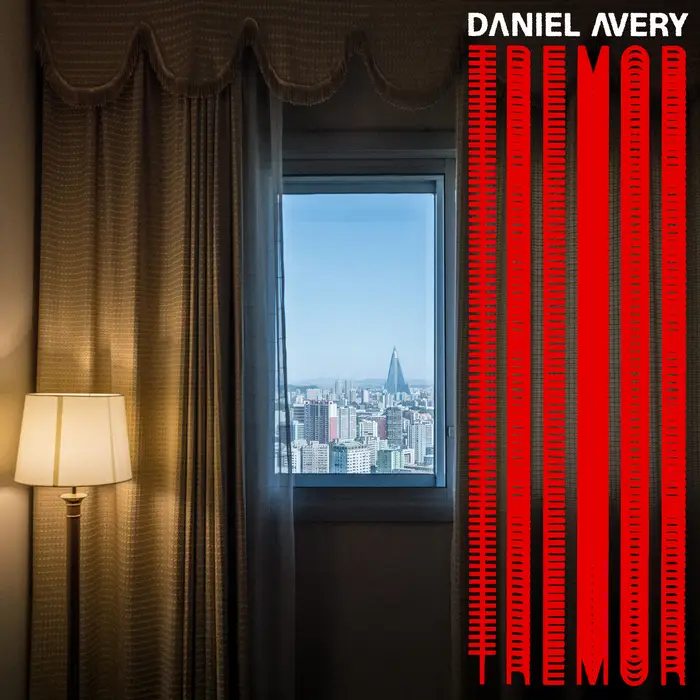
Mykadelica: Tremor is your sixth album. How is it different from your previous ones, would you say?
Daniel Avery: Well, it's interesting. I've been going back through everything I've done over the past 10 to 15 years. I really feel as if this is the culmination of all my musical influences, from way back, even when I was a teenager. I've always loved collaboration, and my first loves were shoegaze music, guitar music, and ambient drone music. I think they've always been there in my music, but on this album, everything's been pushed right to the forefront. That's how I view it. It's interesting because when you are on the inside of something, it doesn't always feel like things are changing because you are just there every step of the way. This has felt like a natural process for me, and in many ways it's felt like I've come home. It feels very homely to me, this record, returning to so many of my original influences.
Mykadelica: Did you have a clear idea of how you wanted the album to sound before you started, or was it more of a discovery process?
Daniel Avery: It was a discovery. I was experimenting with different ideas. I knew I wanted to make something with vocalists, but I didn't really have a clear idea of how it would turn out. I guess what I can say is that from the very early moments, I knew I wanted to create this world of Tremor that went back to lots of my early influences. There were lots of visual references, as important as the music, things that I grew up with like David Lynch or David Fincher films, Chris Cunningham, Aphex Twin . . . all of that world. And then other musical artists who I'm not directly influenced by, but the way they presented things as a teenager really drew me in—so like Nick Cave or PJ Harvey, or Portishead. What I'm trying to say here is that all of those things share these shadowy yet inviting characteristics that I fell in love with as a teenager. So I didn't know exactly how my record was going to turn out, but as soon as I started down that path, everything started forming. I wanted to make my version of that world.
Mykadelica: I've never heard an album title that has suited an album more. Where did you come up with the idea of Tremor?
Daniel Avery: Well, interestingly enough, this album's been called Tremor since those early inceptions. That word has always been hanging over this piece of work, even when it was just in its early stages. I love how the word itself is small and little, yet it has so many different meanings and a lot of power. I love how ‘tremor’ could be something big, like an earthquake, or it could be something really small, something rattling on a table. It also connects to the world of distortion, and I love its warmth, the power of noise in music, and the beauty hidden within it. ‘Tremor’ could also be something terrifying, but also be an oncoming train that's bringing a loved one to see you, and it could be a very exciting feeling. The ‘tremor’ of, I don’t know, like a football ground, or a gig where it feels like the walls are vibrating, I just love all of those connotations. So it's been called Tremor forever. I'm glad you picked up on that because I feel it has fitted the mood from the very beginning.
Mykadelica: Before we dive into the music itself, could you tell me about the creative process behind it? I'm interested in how you collaborate.
Daniel Avery: It's been a real mixture, I've only worked with people I admire greatly and trust—and I love their work. I spoke to them about the wider world I was trying to create with the album, and again, that came back to visual cues and general feelings. From there, I was keen to let these artists put their own stamp on the world I was creating. So, some of the collaborations happened remotely, just sending ideas back and forth. Some of them happened in the studio, building stuff together from the ground up. But all of them happened very naturally and organically. Whilst I set the table and the scene of this world I was trying to create, the process was very organic, and everyone was throwing ideas into it, and I'm so happy with how that came about. I found it inspiring. I feel really energized by this album.
Mykadelica: I read that this has been one of your best experiences making an album.
Daniel Avery: I think so, yeah. It’s something I keep returning to—this idea of coming home in some way. It's sort of landing back in familiar territory, yet also creating something that feels like a new version of what I've done before. These are all influences of mine that have always been present, but this feels like there's been a certain gravitational pull with this record. It's been really enjoyable to be part of.
Mykadelica: The album to me seems vast—with ambient moments, full-on dark, bass-y moments, and then you've got all of the collaborators you bring in as well. It almost seems like world-building. How did you manage to put it all together?
Daniel Avery: That's my favorite thing about music in general, and this is something I fell in love with as a fan of music growing up: anyone who could create a world that was wider and more expansive than simply that album itself. From photos and artwork to music videos and even writing, it was just something I was drawn to as a kid and wanted to add to what I was doing as well. This is why I firmly believe in the power of physical music, and also the idea of a long-form album, and I'm talking about music in general here, not just mine—you could hand someone an album, and it can change their life. It could shape the path they're going down, or they might discover a new scene, start going out to different places, make connections, or discover an author or a director. That’s always so fascinating to me.
It was an interesting experience doing the record because, even though I knew how I wanted the overall atmosphere to turn out, I didn't put any pressure on myself. At no point was I saying, "I need a more techno song here, I need a quieter song here." Everything just really formed very naturally. I think having that freedom and being able to relax into the creation of the album is what makes it flow well. It seems a bit trite and naff to say when you hear artists say a record formed in front of them, because obviously a lot of hard work goes into it, but I do believe in the power of, if you relax, then you are going to be more genuine as an artist. Really, that's the only goal ever; that's something I've just held onto in the making of it.
Mykadelica: People say they can define their lives by the songs they were listening to at the time, don't they?
Daniel Avery: I think so. I think that's a really special thing, and yeah, it's something I've always been drawn to and interested in.
Mykadelica: The album seems to work as a coherent whole, with tracks running into each other and overlapping.
Daniel Avery: Yeah, it was designed to be listened to in full. Again, it's how I grew up with albums. I love any kind of art, and in particular albums that feel like you are being taken into someone else's world for an hour. It can almost seem like entering someone else's dream and all the different sides of that. The idea that there might be an ambient moment, a quiet moment, and then there can be a noisy moment, but you could draw a line through all of them. To be more abstract about it, that's just what life feels like—there are tough moments, there are joyous moments, and the power of art is that it can enable us to be part of that.
Mykadelica: Back to the idea of collaboration. I do get the sense that you like collaborating with people and what that brings out. This album is out on Domino, and they have quite a roster—are there any artists on there you would like to collaborate with?
Daniel Avery: I'm a big fan of Domino and everything they have done, for sure. I loved the Wet Leg album this year. Alison Mosshart is a Domino artist herself. Yeah, that was a huge one for me. I've loved The Kills from the very first time I heard them, in 2003 or whatever. It's just nice being on a label like Domino; it's full of genuine artists who have maintained a sort of independent spirit. Yeah, there are so many. I love Anna Calvi, I love Cat Power. I feel very lucky to be on Domino and very at home at the same time.
Mykadelica: That brings me nicely to the track "Greasy off the Racing Line" (featuring the previously mentioned Alison Mosshart). It’s an amazing track which stands out from the flow of the rest of the album, starting with a spoken-word intro before introducing a deep bassline and raw growl. What was it like to make?
Daniel Avery: It was so exciting. Alison's voice is familiar to me and has been for over 20 years. It was a real dream come true to work with her, and she has an unbelievable rock-star charisma and energy. From the early stages of that record, it really felt like a sort of—it's hard to describe—like a lightning rod or something. There is this thunderous energy to that track that I knew had to go right dead center in the middle. It was like a lightning mast in the middle of the album. I also like how it has extreme moments of quiet and loud, which is something that I've always just really loved in music, too. It's one of the heaviest things I've ever made, but also one of my favorites.
Mykadelica: What do you find most enjoyable about making songs? Coming up with an idea, letting the other person come up with the song, or do the lyrics appear while you do the music?
Daniel Avery: The answer is all of the above. But really, the thing that ties it all together for me, my favorite and the thing that I find most exciting about collaboration, is when two or more artists come together and create something that none of them would make on their own, and something new comes out of that collaboration. It’s incredibly inspiring. To take that idea further, the thing that really drives me, it always has done, and continues to do so, is being able to make a collection of work, like a body of work, an album, an EP or whatever it may be—a live show—that is going to last, that feels bigger than me, that is going to last beyond me. That's very much the case with a record. Something that is hopefully going to be handed down between friends and even across generations. Something about that sort of eternal nature of that music is really what feels best to me. If I could choose just one thing that I do, it would be to continue to make albums; that would be top, number one, without a question.
Mykadelica: Onto the title track "Tremor"—not a collaboration, just you. It must hold such meaning.
Daniel Avery: It's an interesting one because at first it was intended as a collaboration, but I got towards the end of creating the album, and just kept listening to a demo of that track. I was so excited by it because it sounded like I could hear so many of my influences in there, but at the same time. I could entirely hear my own musical voice within it. I got to the point where I thought this could just be entirely me. I also like this sort of respite towards the end of the album, where there are no vocalists. To me, I can hear in it Smashing Pumpkins, My Bloody Valentine, Sonic Youth, but also the electronics within it. I can hear the influence of someone like Björk or maybe Autechre. It's not trying to be any of those artists, but I can hear all of it there. For me, it had to be called "Tremor." It had to be the title track. It really signified the album for me.
Mykadelica: It's a standout track for sure. Based around your love of collaboration and opening up the whole musical world to you, are there any artists that you are yet to work with who would be on your wishlist to do so?
Daniel Avery: Yeah, there are so many. It's important for me to say that I've loved making this record so much and I've loved being in this world, creating this record so much, that there's definitely going to be more like this. I can safely say that it really feels inspiring to me, so let me run off a wishlist.
I could say Josh Homme from Queens of the Stone Age, or Robert Smith from The Cure. The other thing I'm very excited about is that there are so many exciting, new acts and bands at the moment. It was important for me to include bands like New Dad or Bdrmm on this album, new acts coming through who I feel really passionate about. And there are so many guitar bands coming through right now. There's a band called Glixen that I really love. I really love the band Model/Actriz—I thought their album this year was fantastic.
There are so many, it really feels like the possibilities are somewhat endless, and I'm just going to keep going, man, I'm gonna keep going. It's a good sign that things feel like they're in a good place. Sometimes you can get to the end of an album, and you can be exhausted, but I actually feel the opposite right now. I feel so energized by it.
Check out more like this:


Comments