


Hello! This is Talk Of The Tonearm, our weekly rumination on the interviews and stories that made our online mag tick for the past several days. New York's avant-disco downtown scene, manic Japanese-Italian prog-core, mindfucked digital-sonix, and boxing jazzmen all make appearances. Can you dig it? Dig in:
Surface Noise
In anticipation of tomorrow's livestream event with Richard King, author of Travels Over Feeling: Arthur Russell – A Life, we revisited a conversation from September 2022 between LP and Steven Hall. Steven arrived in New York City just in time for the downtown scene explosion of the early '80s. He became a protégé of the legendary beat poet Allen Ginsberg, who introduced Steven to Arthur Russell. The two immediately formed a close friendship and working relationship, playing together in many of Russell's projects, with Steven contributing to such classics as "Tell You Today" and "Is It All Over My Face?"
Steven reveals the peaks and valleys of Russell's creative confidence, a familiar story for any working artist. Steven also discusses his activities since Russell's untimely passing—the band Arthur's Landing and his solo effort Nirosta Steel—which all carry the memories of the prolific but guarded artistic giant.
The conversation also offers a peek into a fertile period of New York's underground music scene when disco was making way for post-punk flavors. The transition period led to many incredible bands straddling the line between danceability and the avant-garde. Of course, this moment spawned Arthur Russell's Dinosaur L and Loose Joints combos. Also in this orbit were fantastic acts like ESG, Liquid Liquid, The Contortions, and Konk. Most of these weren't known outside of New York in their times, but the inventiveness and appeal of the sound, as well as a resurgence through bands like LCD Soundsystem, has propelled them all into cult-like status.
 Lawrence Peryer
Playback: Impressario Michael Dorf now runs City Winery and charity tributes at Carnegie Hall (such as the recent one honoring Patti Smith), but before this, he was the founder of the hallowed Knitting Factory on Houston Street. The Knit (as it was lovingly called) carried on the cross-pollinating spirit of the downtown NY scene. Says Dorf in our interview, "Wednesdays was poetry, Thursdays was jazz, and weekends were rock and everything in between.""
Japan's Ruins and Italy's Zu are both known for uncompromising music that featured hard-to-believe musicianship, manic, explosive energy, and edge-of-chaos precision. Zu's Massimo Pupillo helpfully (?) describes what's going on: "It's like extreme metal, extreme hardcore, and extreme prog all at once." The two bands combined forces, with Ruins drummer and vocalist Tatsuya Yoshida joining Zu bassist Massimo Pupillo and saxophonist Luca T. Mai, for a thunderous combo that could only be called RuinsZu. Playing interpretations from the catalogs of both bands, the trio thundered through Europe for a couple dozen memorable gigs before landing at Turin's Jazzisdead Festival. The gig was recorded and released by Subsound Records, and our contributor Michael Centronespoke to Massimo all about it.
A compelling facet of RuinsZu is Tatsuya Yoshida's vocals, which are delivered in a "cosmic and multidimensional language" of Yoshida's design. This strange tongue was certainly inspired by Kobaïan, the language invented in the 1960s by Christian Vander of French progressive rock group Magma, which Yoshida holds as an influence. Kobaïan has its own grammar and extensive vocabulary, used across Magma's entire discography to tell a science fiction story about humans fleeing Earth to settle on the planet Kobaïa. Vander has claimed he can actually think in Kobaïan.
 Michael Centrone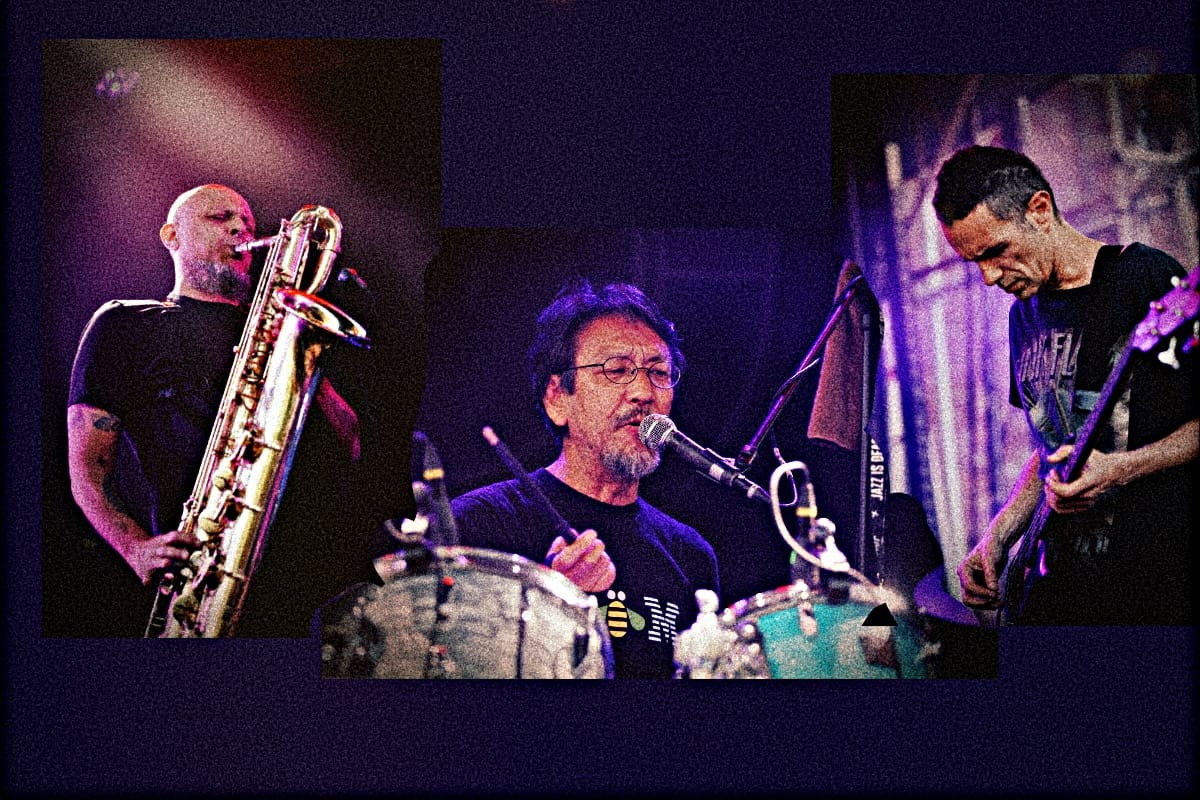
Playback: In Arina Korenyu's interview with Colin Self, he discusses incorporating Polari into songs on the album r∞L4nGc—Polari being a code language historically used by marginalized queer communities. Unlike Yoshida's "cosmic language," Polari was a real secret language, but both serve similar functions of creating alternative modes of expression outside mainstream linguistic frameworks.
The Tonearm contributor and Mondo 2000 co-founder R.U. Sirius sat in the interviewee chair to discuss The Smarter Kings of Deliria, a new, self-released album that aims to hammer a "rusty 9-inch nail into the fontanelle of the 2025 zeitgeist." Sirius speaks at length about how his work consistently creates "self-subverting protest lyrics" that are simultaneously left-leaning yet "wrong and twisted." As an artist, Sirius plays with the concept of authenticity in music and critically engages how technologists have navigated the promises and perils of digital transformation. Any conversation with R.U. Sirius is bound to be compelling and full of ideas, and this one is no exception.
Sirius also mentions how his mindset evolved out of the absurdist political theater of the Yippies, whose humor functioned not just as commentary but as activism. One band no doubt had an influece were The Fugs, founded by Ed Sanders and Tuli Kupferberg in 1964. As The Fugs, they stablished a template for mixing provocative humor, political commentary, and boundary-pushing performance years before the Yippie movement formally began. Songs like "CIA Man" and “Kill for Peace" used biting satire to critique the Vietnam War and other urgent issues of the day. With R.U. Sirius's musical commentary, songs like "I'm Against NFTs" and "President Mussolini Makes The Planes Run On Time" show how the satirical approach of The Fugs has evolved to address contemporary digital and political realities while upholding the historical mix of provocation and playfulness.
 Lawrence Peryer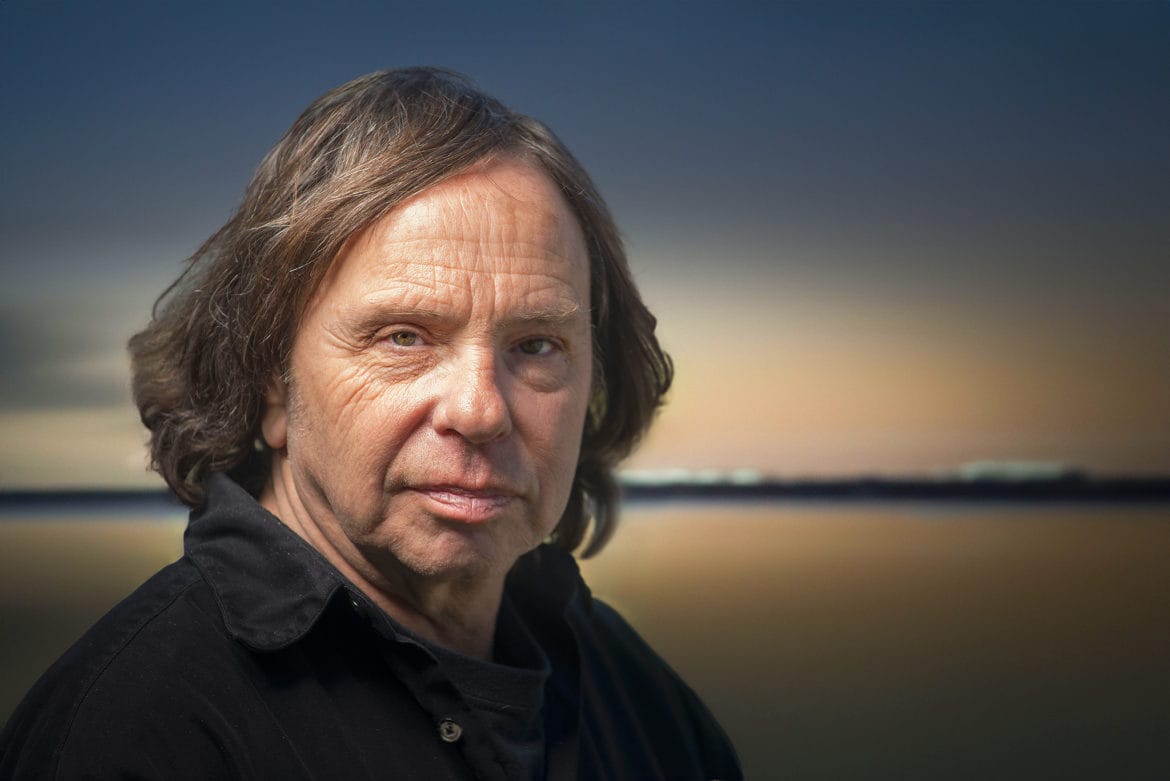
Playback: We spoke with author Christoph Dallach about Neu Klang, his book on Krautrock, which describes how German experimental musicians used absurdism and unconventional sounds to break from both Anglo-American rock conventions and Germany's problematic past. Their musical approach—sometimes playful and strange—became a way to imagine alternative futures and reject inherited cultural trauma.
Saxophonist Noah Preminger practices an admirable work ethic, with nearly two dozen recordings as a leader since his first album in 2008 and a twice-a-week residency in Boston that he's held for 12 years. Part of his secret is to insist on work that excites him. As Preminger says in our interview, "It's not like we're doing it for the money or fame. That's for your twenties to have those dreams and aspirations. When you hit your thirties, it's like, okay, just put your head down, do your work, and be excited about the stuff you're doing." Good advice.
An amount of risk-taking is also key, which has come up in several of our conversations with artists. Preminger takes risks in changing musical themes and styles, with albums spanning from post-bop traditions to explorations of Mississippi Delta blues to politically-charged protest music to his latest, which offers his take on the jazz ballad. But Preminger also enjoys taking risks and charging his adrenaline in his non-musical life. He actively participates in activities like boxing, skydiving, skiing, and competitive gaming. Undoubtedly, these high-octane pursuits fuel an inspiration that drives Preminger's prolific musical output.
Of course, Preminger isn't the only one. Miles Davis was an amateur boxer who trained regularly at Gleason's Gym in New York, and John Coltrane was an avid swimmer who found physical exertion meditative. And research on jazz musicians' brains during improvisation reveals deactivation in the prefrontal cortex (the brain's "editor")—similar to what happens in extreme sports. Maybe there's something to this.
 Lawrence Peryer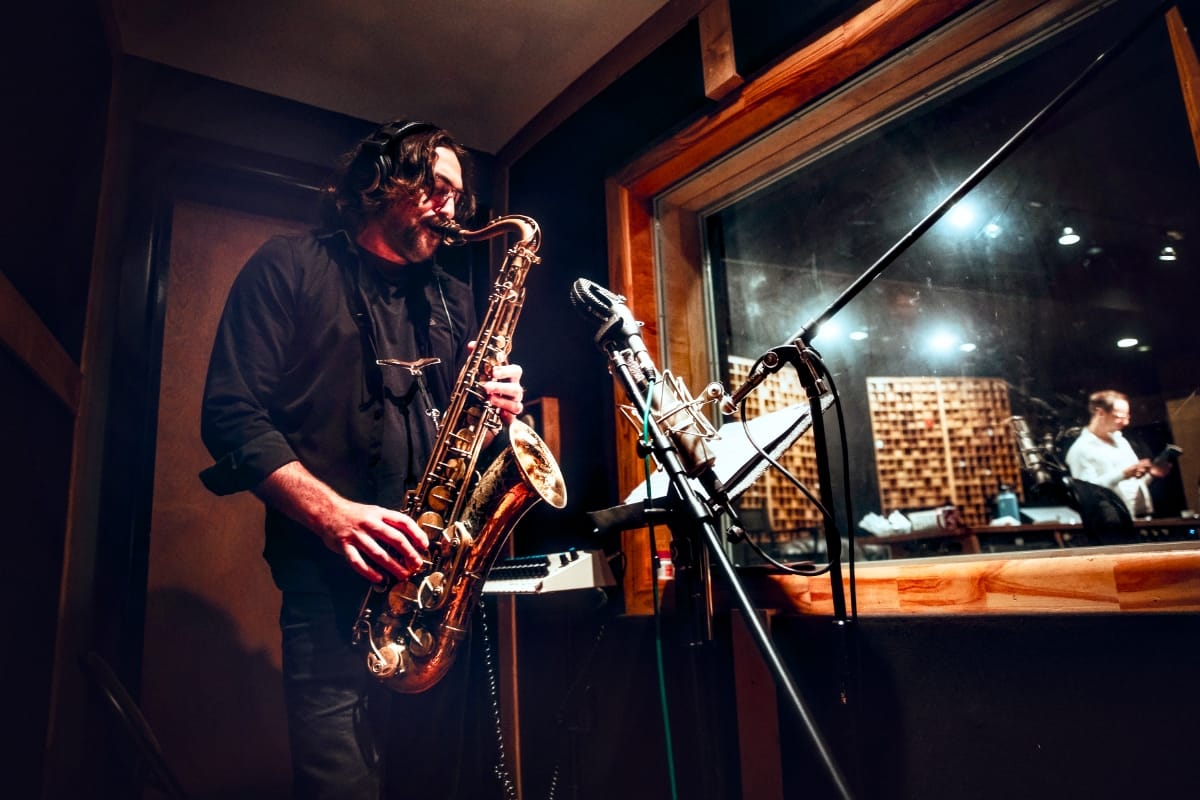
Playback: This line of thought made me think of Michael Centrone's interview with drummer Ken Schalk. Schalk explained how he introduces exertion into his on-stage performance. His technique emphasizes using the entire body efficiently, treating rhythm as a physical discipline akin to martial arts.

The Hit Parade
- Here's a fantastic music recommendation from LP: Kneebody's Reach captures the band's taut, telepathic musicianship in full effect. Ben Wendel's saxophone phrases on "Repeat After Me" spiral above Nate Wood's locked-in rhythms, with his simultaneous bass and drum playing (founding bassist Kaveh Rastegar left the group to pursue other projects) creating a foundation that feels both precise and elastic. The quartet setup strips away excess, allowing Adam Benjamin's keyboard textures on "Glimmer" to sparkle, particularly with his use of the Una Corda piano. Shane Endsley's trumpet work on "Natural Bridge" pulls from American fiddle traditions without sounding derivative, while his composition "Top Hat" swings with playful nods to jazz-age aesthetics. Another standout is "Lo Hi," originally conceived for a Tune-Yards collaboration. The music feels immediate and intimate; listeners can hear the five-day recording session's energy in the spontaneous interplay. These four musicians cross state lines from Brooklyn to Denver to Reno to make music together, and that determined commitment to their collective sound comes through in every track. (LP)
- I need to calm down, so I'm revisiting Opening Space, a five-year-old album from Open Spaces on the Oakland-based ambient label Constellation Tatsu. Its Bandcamp release date of March 3, 2020, may seem prescient—mere days before the initial pandemic lockdowns—as producer and audio engineer Chris Hancock explores placing his music in imaginary environments. It wouldn’t be long before contemplating environments outside our four walls was a hot new trend. Open Spaces, the project name, designates Chris’s experiments in 360 audio, including heady-sounding technologies like, as noted on his blog, “binaural recording and ambisonic spatialisation software.” The opening track—”Opening Spaces,” natch—is a salvo of an example, flitting bird songs right out of Herzog’s jungle accompany a warm, harmonium-like drone before nature gets reversed. Time travel, expressed best as sonic art form. It’s a generous production on its own merit, but it must have sounded downright ebullient in its time within the confines of closed-in spaces.
- I noted a couple of newsletters ago that Dave Allen, bass-slinger for Gang of Four and Shriekback, sadly passed away. I knew Dave and had many memorable and meaningful encounters with him, and I wrote about some of these in a remembrance on my 8sided.blog.
- As mentioned above, there's a livestream conversation taking place tomorrow with author Richard King. He'll join LP to discuss the book Travels Over Feeling: Arthur Russell – A Life along with the legacy and influence of the late, great artist/celloist/songwriter/poet/vocalist/etc. The livestream takes place on Tuesday, April 22, at 2 PM ET and 11 AM PT. You are encouraged to join us and ask Richard questions. It's a free event—go here for more info or register now.
- LP is hitting the road, to Connecticut and New York City. If you would like to meet up in person, you can find him at Lowlands Bar in Brooklyn on Monday, April 28. He will be there by about 8:00 PM ET to catch Spotlight On alum Kevin Sun and his band. Stop by for a night of great music and company.
Deep Cuts
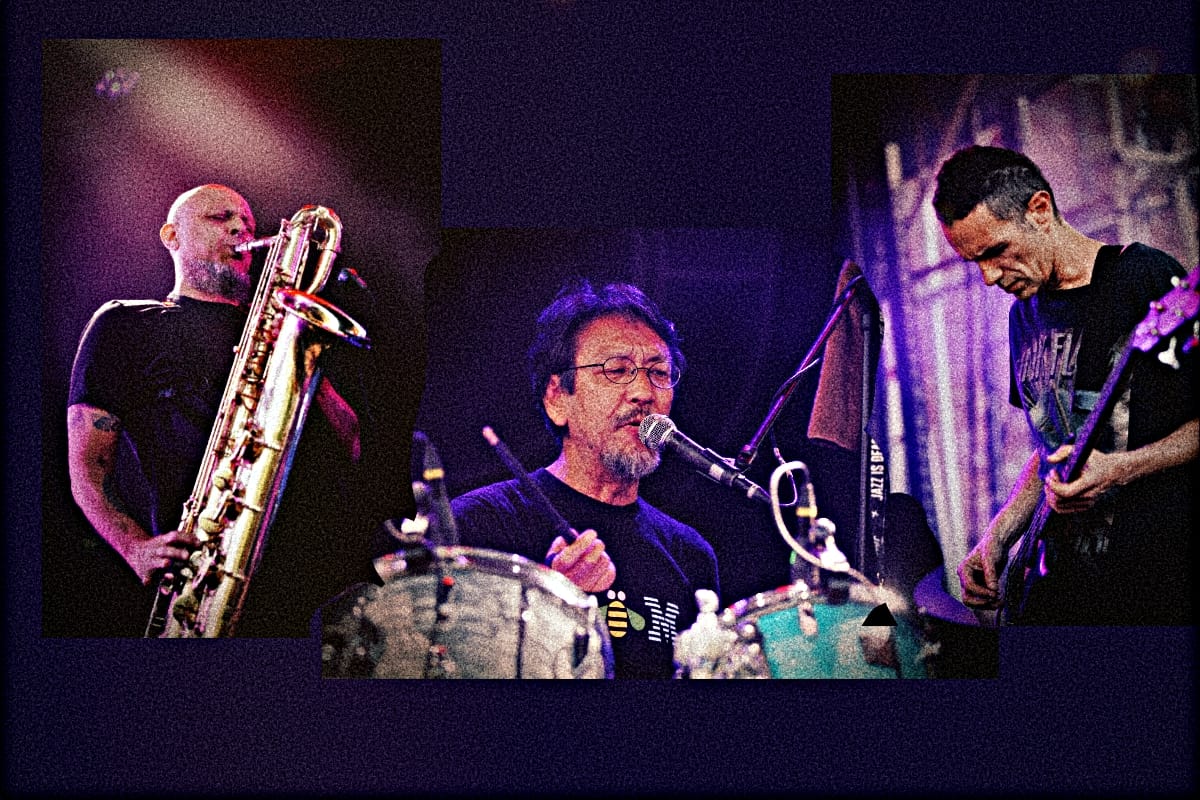
I see that The Black Watch has a new album—the band's 25th!—on the way. Here's the first single, "Achilles Past," and the album, For All The World, is set to appear on the 20th of June on ATOM Records. Last summer, I spoke with band constant John Andrew Fredrick and asked him for something he loves that more people should know about:
I would have to choose a book, which will be very difficult because I could say several books on any given day. They’re my favorite books, but I’m a freak for Dr. Johnson, Samuel Johnson, the most profound essayist in English and the composer of the first solid dictionary in English. I think he was one of the most, if not the most interesting people ever. I’ve read Boswell’s Life of Johnson many times and I’ve read all the biographies of him and all of his writings. I’m an 18th-century letters guy, and I think we could learn so much, especially his essay The Rambler. These are essays about how to live one’s life and the psychology therein. I urge everybody to look at Johnson’s Rambler essays for more clues on living life to the fullest and most moral. But yeah, I’m a freak for Dr. Johnson. My stack of Johnsonniana is just ridiculous.
Run-Out Groove
Thank you for subscribing to Talk Of The Tonearm and being a supporter and good buddy when it comes to our "online journal of unexpected music and culture." There's so much good stuff on the way that we can't wait to tell you about. In the meantime, please share this newsletter with a pal and spread the word of The Tonearm far and wide. That's the most surefire way of showing you like what we do and your effort makes us all tingly inside.
And—one more time—please join us for tomorrow's free livestream event where we'll talk about Arthur Russell with author Richard King. I wanna see all my friends at once.
Thanks again and I'll be back next week. 🚀
Connect with The Tonearm:


Comments