


Ahoy and welcome to your anticipated Sunday edition of the Talk Of The Tonearm newsletter, a weekly service that dissects recent stories from our online journal while giving you way too many links to click. I'm Michael, your guide through this enlightening morass of what the kids call 'content' but we call 'the good stuff.' I'm happy to see you here again. And with my always sincere greeting out of the way, let's dive right in:
Surface Noise
 Lawrence Peryer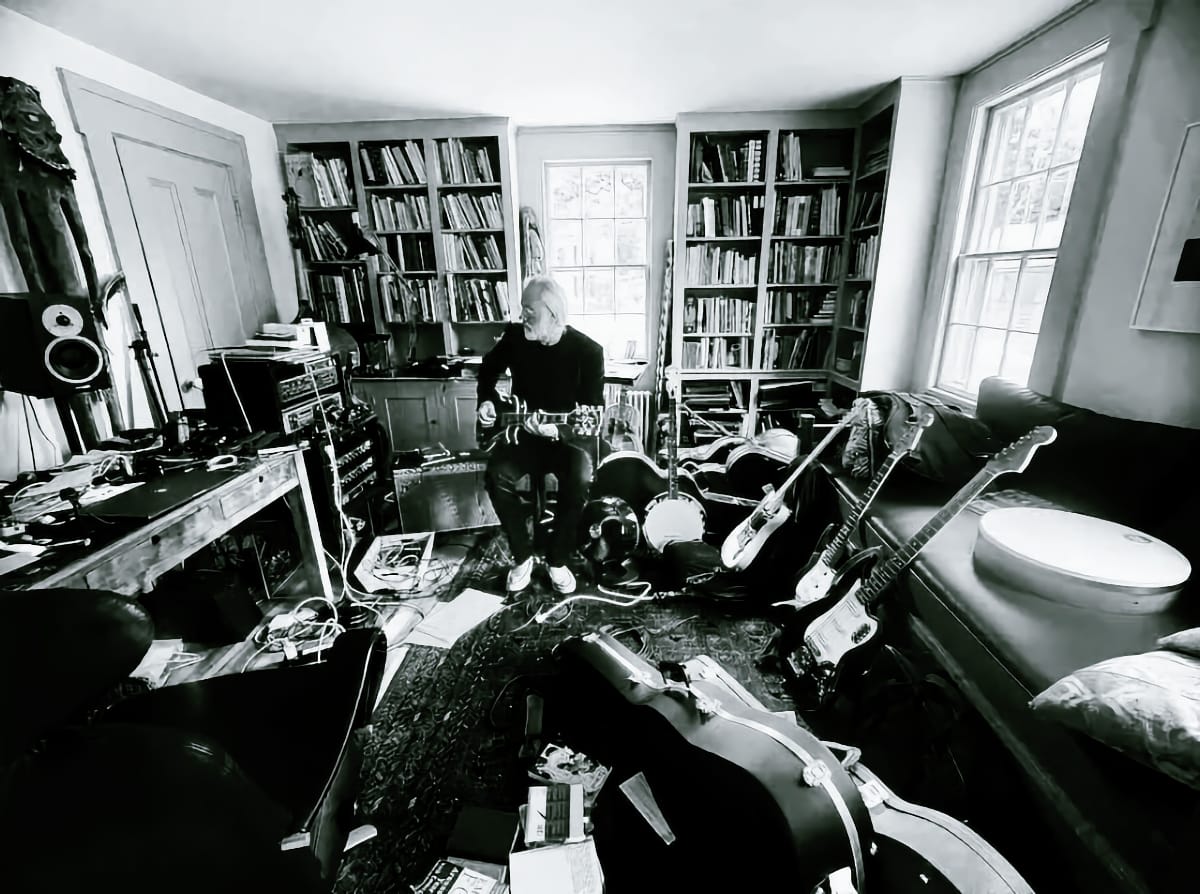
Guitarist Knox Chandler recorded the beautiful local phenomenon of a nightly frog chorus outside his Connecticut home near the Long Island Sound. Listening back, Chandler was stunned to imagine "a symphony" complete with counterpoint, register variations, and compositional structure. Unassumingly, Chandler followed a tradition of sound archivists who document the Earth’s acoustic heritage, though his frogs represent something increasingly rare: ecological recovery rather than decline.
Bernie Krause has chased natural soundscapes for over fifty years, accumulating more than 5,000 hours of recordings from environments worldwide. The sobering reality of his archive is that over 70% of those recorded habitats have since been damaged or destroyed entirely, making him an inadvertent curator of the extinct. Cornell's Macaulay Library contains over a million recordings dating back to 1929, increasingly used for forensic ecology and comparing recordings from the same locations across decades. Alternatively, researchers have discovered that nature recordings can help heal damaged ecosystems. Australian marine biologists play the sounds of thriving coral reefs through underwater speakers to attract fish back to bleached areas. At the same time, European rewilding projects use bird songs to encourage species to return to reforested areas.
Chandler's robust frog chorus is encouraging, capturing a diversity of species, including, as he notes, "peepers and bullfrogs." Chandler accompanied his amphibious collaborators through his Soundribbons technique, resulting in "Mars on a Half Moon Rising," a highlight of Knox Chandler's great new album The Sound. Sound archivists race to document vanishing ecosystems for their sonic museums, but Chandler's frog symphony suggests another path: awareness of our ecosystem through creative collaboration between human and non-human music-makers, celebrating the spaces where natural abundance still thrives.
Playback: Daniel Fortin Finds New Voices on 'Cannon' → Jazz bassist Daniel Fortin informed us that "music is one of the best places to find real, intentional silence these days" and spoke about creating "moments of stillness and stasis." This reminds me of the contemplative quality present in both Chandler's ‘frog symphony’ and the quiet attention and patience required in capturing environmental sound art.
 Michael Donaldson
For all his love and devotion to the majesty of Ennio Morricone, London producer Raz Olsher has a confession: “… the first time I heard it, actually, [was] on the Orb track, and then I later found out it was a Morricone tune." He's describing an encounter with the haunting harmonica from Once Upon a Time in the West—not through Sergio Leone's dusty epic, but through The Orb's 1990 electronica classic "Little Fluffy Clouds." It's like reverse discovery, placing Olsher among many others in his generational chain, where sampling in electronic music becomes a gateway drug to the source. In Leone's original film context, the harmonica riff builds tension as a countdown to violence. The Orb, however, converted the cinematic suspense into meditative drift. Thus, we find an entire generation that encounters film music backwards: Portishead fans discover Lalo Schifrin through "Sour Times," Burial enthusiasts hunt down the Ghost Dog samples, and electronic artists become unintentional historians.
Olsher's album Craters of the Lost Souls is the next step in this chain, as he's creating original 'cinematic' music presented as imagined film scores. His fictional Wyoming gunslinger saga inhabits a barren landscape that exists only in sound. Now, Olsher's distinctive, musician-played Western themes may also invite future sampling. Gorgeous tracks like "Pacific Dreaming" possess a cyclical, meditative quality that lends itself to playful digital appropriation.
If that happens, Craters of the Lost Souls becomes both culmination and beginning, the endpoint of Olsher's reverse discovery process and the potential starting point for someone else's. The cycle continues, waiting for the next producer to sample the sample of the sampler, extending the chain into eras and genres that none of the original artists could have imagined.
Playback: From Elaste to Compost Records — Michael Reinboth's Hybrid Esthetics → Compost Records' Michael Reinboth explained to The Tonearm how he encourages his artists to sample from old music and bring it to a modern context—precisely the kind of backward-looking discovery process that creates new starting points for future artists. Reinboth positions himself as a curatorial force that facilitates these reverse discoveries, connecting contemporary producers with historical sources that become springboards for entirely new musical directions.
 Michael Centrone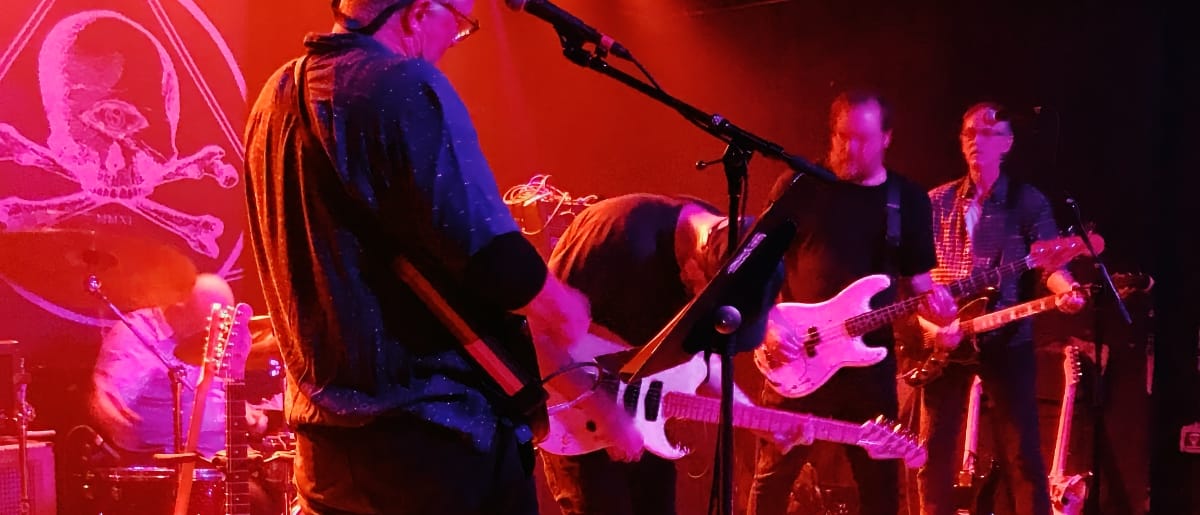
Arad Evans mentions that The Whimbrels arrive at venues with "fifteen different guitars," referencing an experimental tradition that began in the lofts of 1980s downtown Manhattan. Rather than excess, the act is systematic, related to the application of compositional mathematics to electric guitar ensembles. Evans was a longtime member of Glenn Branca's guitar orchestra, which employed numbered tuning systems and treated each instrument as a component in a larger harmonic machine. Guitar 1 might be tuned to provide the fundamental frequency, Guitar 2 the perfect fifth, Guitar 3 the octave, creating chord structures outside of fingered positions. The result could be ten guitarists playing a single note and producing a chord at maximum volume.
On a smaller but no less effective scale, The Whimbrels' "triple-guitar assault" is also a controlled experiment in harmonic stacking, where Evans and Norman Westberg's alternate tunings transmit this acoustic phenomenon within the confines of rock clubs. Evans mentions how these tunings "unlock sounds from the guitar that you otherwise would never find," which is a direct descendant of Branca's exploration of hidden frequencies. Of course, there are challenges: Evans describes buying single-gauge strings by the dozen and making sure he's "wearing the right guitar when you count off the song." The wrong guitar at the wrong moment disrupts the entire show.
When things go right—which is far more often than not—The Whimbrels promise audiences will "feel the floor bounce." The volume is part of that, but also the physical impact of calculated acoustic interactions, mathematics you can feel in your chest. The chaos is real, but it's organized chaos: mathematics disguised as mayhem, precision masquerading as punk rock power.
Playback: Disappearing Act — Tal Yahalom's Generous Guitar Moves → Tal Yahalom's compositional process centers on distributing musical ideas across different instruments to create "mirror images" of the same material in distinctive voices. Yahalom explicitly mentions his draw to "complex harmonic and rhythmic ideas,” which are made to feel natural and inevitable through thoughtful placement, much like The Whimbrels bring volume and precision to intuitive rock music.
The Hit Parade
- Habibi Funk's latest compilation, A Selection of Music from Libyan Tapes, opens a window into Libya’s cassette underground through fifteen tracks that capture the country’s musical resilience during the late 1980s through the early 2000s. It's a lovingly curated collection of overlooked gems and local classics (Habibi Funk's stock-in-trade) that thrived despite political constraints and limited exposure. The collection brings together artists such as Ahmed Ben Ali, Cheb Bakr, Khaled Al Melody, and the Sons of Africa Band, whose work spans reggae rhythms, synth-heavy disco grooves, gritty pop, house, and emotive funk—a vibrant collision of genres that reflects Libya's unique sonic landscape during the cassette era. Many of these recordings were recovered from the now-demolished TK7 cassette factory in Sousse, Tunisia. Meanwhile, others were digitized in a Cairo hotel room in 2021, where nearly 100 tapes were transferred over three intensive days using a high-grade cassette deck. The music, often recorded in makeshift home studios, reflects Libya's position as a cultural crossroads where North African rhythms meet Arab melodies and deep African roots. Reggae also takes on a distinctly local flavor through the slowed-down cadence of traditional shaabi beats. The compilation is another crucial release on Habibi Funk, celebrating obscure artists who, against the odds, created a self-sufficient recording culture that produced sounds as diverse as they are captivating.
- Via the Music From Memory imprint, N Kramer and Magnus Bang Olsen's Pastoral Blend presents an eight-track meditation on the meeting point between analog warmth and digital fragmentation. The duo's collaborative process centers on Bang Olsen's emotive pedal steel guitar, which Kramer captures and manipulates through chopped and screwed techniques, reversing, looping, and echoing while never entirely severing connections to traditional origins. Lonesome pedal steel riffs appear like radio snippets, tuning into a faraway station, while the title track brings to mind a rural countryside version of Fripp & Eno's Evening Star—a chiming loveliness that invites feelings of stargazing. Each song maintains its distinct character rather than dissolving into ambient wash, thanks to differing sonic ideas applied to each track: "Orb" offers swelling pulsations that calm as much as they haunt, while "Harvest" and "Agrarian Dawn" ground the listener in themes of landscape and nostalgia. The album achieves a delicate equilibrium between the rustic and the processed, merging the intimacy of instrumental Americana with glitchy, textural processing. It’s been a beautiful listen on this Sunday morning.
- Short Bits: Terence Hannum of the influential post-metal band Locrian is the guest on this week's Spotlight On podcast, and the conversation is as delightfully filled with music nerdery as can be. • Here's a gift link to a nice article in the NY Times about Erik Satie. • How to Weather the Storm • "Please do not consider the amount of herbs involved excessive. Master PAUL McCARTNEY’s intentions are positive." • Jenn D’Eugenio owns 54 different vinyl pressings (so far!) of Black Sabbath's Master of Reality. • “We don’t want our music killing people. We don’t want our success being tied to AI battle tech.” • A nice essay on the late Lalo Schifrin's Latin American music connections. • There is now a thing called a 'baby rave.'
A Shout from the 'Sky
Run-Out Groove
Thanks again for reading! If you have a pal who might also like to see what we're up to, please forward this newsletter to their email hidey-hole. You can also share it online using the 'View in browser' link at the top. Who knew? Once again, I would love to hear your comments, whether enthusiastically glowing or just moderately glowing, and you can reply to this newsletter or contact us here. What or who should we cover in a future edition of The Tonearm? The suggestion box isn't even half full, so let's take care of that.
OK! Stay safe and strong and do what you can to keep that spring in your step. I realize things aren't that 'springy' these days, but we should do what we can, especially when we're around those who mean the most to us. Cool beans. I'll see you next week! 🚀
Connect with The Tonearm:


Comments