


Bill Evans is one of the most important figures in jazz. While he had more than his share of personal difficulties, Evans nonetheless managed to create some of the most lasting music in the canon. And that doesn't even touch on his formidable work as a sideman (though even the use of that term does him a disservice) for band leaders such as Miles Davis, and his collaborations with artists including Tony Bennett.
Yet even against the backdrop of his acclaimed body of work, Evans' albums leading the Bill Evans Trio stand as a kind of pinnacle. The fourth lineup of that threesome—Evans on piano plus drummer Paul Motian and upright bassist Scott LaFaro—released a comparatively slim body of work: a couple of studio sets and some live recordings—before LaFaro's tragic and untimely death in a vehicle accident (he was 25).
So a new set—Haunted Heart: The Legendary Riverside Studio Recordings—brings together two of the Trio's albums (Portrait in Jazz from 1961 and 1962's Explorations) plus all extant outtakes and alternate recordings from those sessions. It is a gift to modern-day listeners. The beautifully packaged 3CD collection (also available on vinyl, which was unavailable for review) features "Bill Evans: The Origin of an Original," a liner note essay by jazz authority and journalist Eugene Holley Jr. I spoke with Holley about the new release and the significance of that trio with LaFaro.
Note: While I love a lot of jazz—and cover a fair bit of it in reviews and features—it's a somewhat rare occasion in which I find myself in freewheeling conversation with a true jazz scholar, someone who knows and understands far more about the idiom than I could ever hope to. As such, the following is an edited transcript of a mere portion of our conversation.
Bill Kopp: How and when did you first encounter the music of Bill Evans?
Eugene Holley Jr.: It was circa 1984. I was working in a record store in Washington, D.C. The jazz buyer at the time put on the [1959 Miles Davis] album Kind of Blue. It was my first time hearing it. I was in my mid-20s, and I had heard jazz all my life; I appreciated it, but I was coming more from listening to the contemporary soul adaptations of jazz fusion: Grover Washington, The Crusaders, Donald Byrd. Being born in the '60s and listening to pop music, I didn't have the ears to appreciate acoustic music that was recorded. Because when you're listening to popular music of that day, that sound is mixed, compressed, flanged, and reverbed; by the time you hear it on the record, you're not really hearing what an acoustic instrument sounds like. And when you do hear an acoustic instrument, it can sound kind of flat.
So, of course, I was blown away by the beauty of Kind of Blue. But what really blew me away was when I heard Bill Evans for the first time. I'd heard piano music before, but I'd never heard chords and harmonies that stayed with me after the music stopped playing. Evans' harmonies had a way of haunting me long after the needle was off the record. I never heard anything like that before. And that record started my exploration of jazz. I decided, "Let me get every album by everybody on this record." My first Bill Evans album was Explorations. And when I heard that studio album with Paul Motian and Scott LaFaro, that was it for me. I've been listening to him ever since.
Bill: How do you think that Bill Evans' deep immersion in classical music informed his own style of composition and playing?
Eugene: I think it was a substantial component of his musicianship. I think his absorption of Ravel and Debussy really informed his music's haunting quality.
Bill: I've read that Scott LaFaro and Paul Motian didn't always get along. Assuming that there's something to that, how did that energy manifest itself in the studio?
Eugene: It wouldn't be the first time that a great group had individuals who didn't get along. What makes a group like that special is how they manage that tension: Do they manage it in a way that makes music or makes something else?
I think that the friction between members of the Bill Evans Trio was worked out in such a way that friction became something else. You know, it takes friction to make a diamond. I can quote the great Wayne Shorter, who said, "A plane can't fly without resistance." From what I've read, LaFaro was a fiery kind of cat. And if he was anything like his playing, I could see how that could ruffle feathers.
But I think whatever friction there was in the band was negated by the beauty and the sublimity of the music.
Bill: How do you think that the studio sessions by this trio differ in character, if at all, from the live recordings that they made?
Eugene: Usually when a musician—in the jazz context or even in the pop context—makes a live recording, the tempo tends to be faster. But when a great one like Ahmad Jamal recorded in the studio, he sounded the same. He could create that live mentality in a studio.
And I think the Bill Evans Trio does the same thing. There is a difference when they're playing in front of people, but it's very fine. They're so well-tuned together that it's almost the same. When you listen to the Sunday at the Village Vanguard recordings—which were made right after these studio recordings—the audience is so quiet. But you can feel their intensity; you can feel that they're listening.
And those musicians are listening also, because music is a two-way street. To answer your question, I think the trio is so well-tuned, well-prepared, and well-inspired that there's almost no difference between the studio recordings and the live recordings.
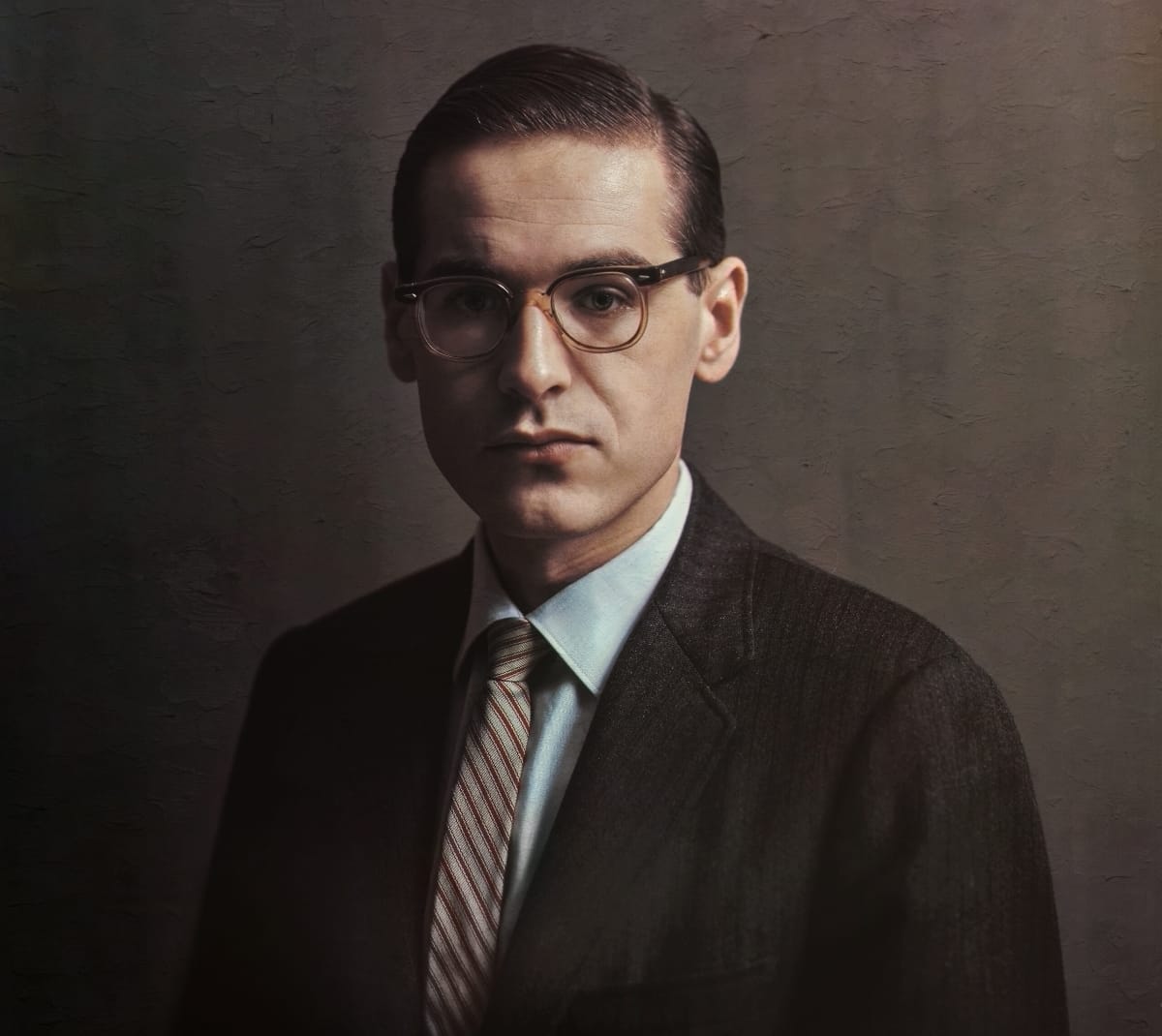
Bill: What can we learn and experience by hearing the alternate takes that are on this new Haunted Heart set?
Eugene: What you learn from alternate takes in the jazz context is very important. Because sometimes when you hear the final product on a recording, you tend to freeze that moment of inspiration and improvisation, almost like it's an arrangement.
When you hear the alternate takes of the Bill Evans Trio in this particular context, what you're hearing is what these guys were coming up with at the speed of sound. And sometimes those alternate takes could have been the take. I've talked with musicians who have been around for decades, and some of their work has been reissued with alternate takes. And they'll say, "You know, 30 years ago, I went with what was released, but I might have put the alternate take on if we were doing it today." So I think what you hear with Bill Evans, Scott, and Paul is the beauty of theme, variation, and improvisation in those alternate takes.
Bill: What do you see as the enduring legacy of that trio that made Portrait in Jazz, Explorations, Sunday at the Village Vanguard, and Waltz for Debby?
Eugene: They were individuals who came together from different parts of the jazz idiom, and in a very brief time, they were able to come up with a way of playing jazz that was not necessarily revolutionary, but evolutionary. It was not a break from how jazz trios were performed before, but what Bill, Scott, and Paul did was create in the jazz trio arrangement idiom a kind of circular improvisation in group performance that hadn't been done and sustained at that level.
Jazz has a forward propulsion to it; that's what we call swing. But they added a multi-directional component to that forward direction. It still was swing, but it was swing in a circular, communal sense.
Check out more like this:
 Lawrence Peryer
 Bill Kopp


Comments