


All aboard this week's edition of the Talk Of The Tonearm newsletter, your weekly round-up of happenings on our online journal, along with bonus bits that only you, faithful newsletter subscriber, are granted to see. There's so much happening in here, and I'm shuddering with excitement. Please dig in at your leisure, click a link or two, and enjoy!
Queued Up

Peter Knight and Hand to Earth — Drawn Together by a Thread
It may not be possible for musician Peter Knight to fully reconcile his awareness of being part of Australia's settler class, but he does openly accept it with the aim of imagining a better world. Knight plays trumpet and electronics in the quintet Hand To Earth, which also includes Wágilak song keepers Daniel and David Wilfred. Knight's interview with Lawrence Peryer is instructive and enlightening, introducing us to Wágilak words like 'raki.' Raki is a string that is woven into traditional dilly bags, but is also used metaphorically to describe an aspirational string "that draws us all together to dance, to sing, and to celebrate." Knight succinctly explains, "We all become part of the story, so it's not as if Aboriginal musicians are performing for us or that we are supporting them to perform their songs. We are part of the song altogether." Hand To Earth's latest album Ŋurru Wäŋa imagines this world and, indeed, it's a world we should all hope to live in.
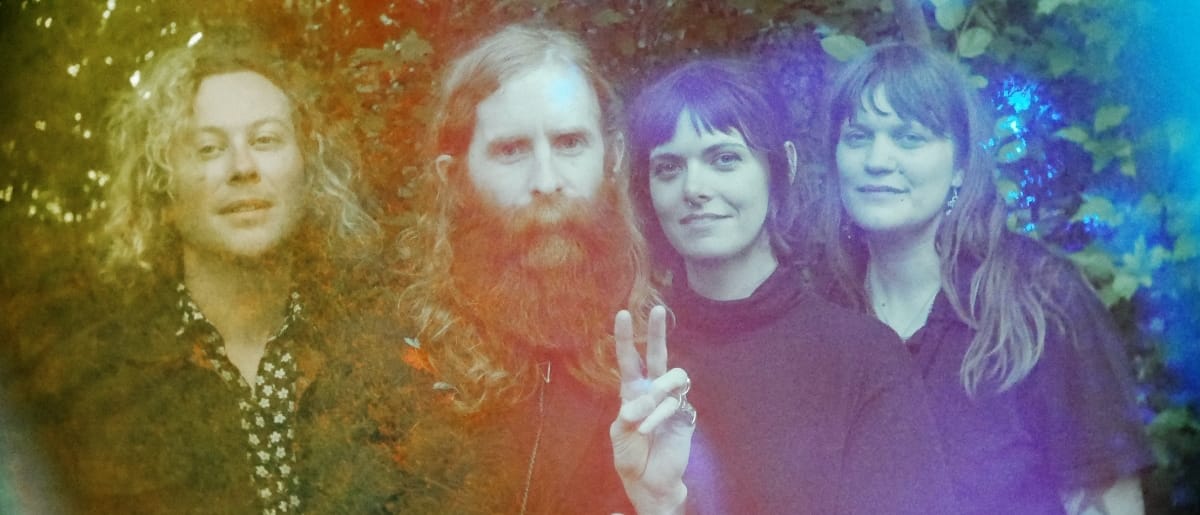
Two Moons Over Columbus — Saintseneca's World of Song
In an interview with Saintseneca's Zac Little, both interviewee and interviewer, writer Damien Joyce, express frustration with the commodification of culture. "We don't get to engage with music that isn't made to be a product," says Little, admitting much of his youthful dismissal of country music as a genre was because of the syrupy productions and 'rhinestone cowboys' that dominated the mainstream. With maturity, and perhaps the advent of frictionless exposure to the history of recorded music, Little began to appreciate the rougher edges of country and folk as beacons of exemplary songwriting and storytelling. The discovery helped break a writer's block, and Saintseneca's latest album, the ambitious 21-song Highwalllow & Supermoon Songs, has more than a touch of country influence alongside the occasional sampled breakbeat. As for the folk spirit, it promises an even deeper traditional thread for Saintseneca. "Music is a vector of community and a means of socializing and connecting with others," Little says. "That's the more essential kind of elemental thing about it." Correct!
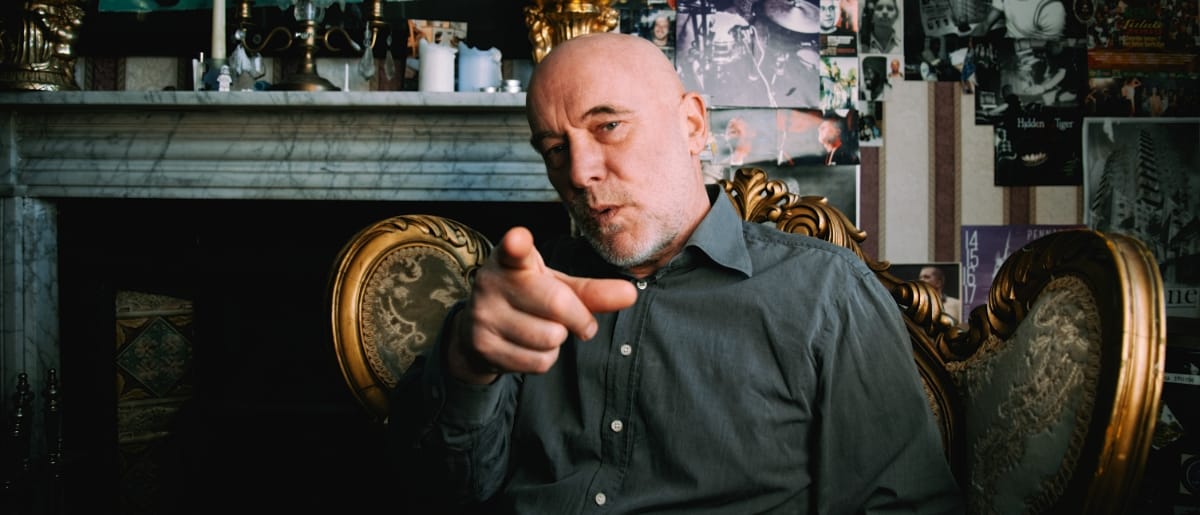
Everything is Everything — Adrian Sherwood's Resistance in Dub
"All the things that I like are those things instilled in me by the likes of Lee 'Scratch' Perry, who's like a naughty child and wanted mischief and fun in his sound." That's his dub majesty, Adrian Sherwood, talking about what inspired him to become a revered master of his chosen musical instrument. Rather than a piano or a saxophone or anything else you might guess, Sherwood's instrument is the twenty-four channel mixing board (or 'desk,' as Sherwood and his UK brethren are more likely to say). Many consider Perry the originator of this unlikely art form, and rare footage of the man behind the controls never fails to fascinate. While the aforementioned folk music might be "putting new words to old melodies," dub passes down old techniques and vibrations to today's music producers. Sherwood has played a major part in making sure the sacred act of 'playing the desk' is still recognized in an age where mixing desks are no longer a necessity. "[I'm always] doing an analog mix with my hands," says Sherwood. "And that's a little bit of a dying art. But I advocate that, and I think anybody who plays with live mixing and can get to do that really gets the interplay."

Slip of the Tongue — Lea Bertucci's Hidden Language
Lea Bertucci’s latest work suggests that clarity has become a privilege in our misinformation-deluged era. The masses—all of us—no longer have easy access to 'the straight facts.' We may be partly to blame for adopting social media as the primary conduit for communication with our friends and the world of information, but it’s not as if there isn’t a vested corporate and political interest in our collective unmooring. "We have forgotten how to talk to each other," Bertucci tells Jonah Evans in a fascinating interview. Bertucci's new album, The Oracle, hazes its sung and spoken language to re-invite the listener into the intentional and somewhat forgotten act of understanding. We do have the ability to sieve and interpret our inputs, rather than lying supine and docile underneath the information firehose. Exercising that skill (which, only now, is perversely seen as a 'skill') is our necessity. Says Bertucci, "Obscuring words in the way that I do on the record is part of that, trying to figure out how to communicate."

The Unboxed Television — Yasujirō Ozu's Post-War Vision of Consumerism
Xeno-Masculinity and the Return of Physical Music
We're introducing a couple of recurring series (don't call them columns!) on The Tonearm, encouraging our writers to offer opinions, insights, and off-kilter perspectives on their current obsessions. With Backspin, our writers revisit a work from the past, examining it through a contemporary lens. Bill Cooper did just that, placing Japanese director Yasujirō Ozu's 1959 comedy film Good Morning in the context of today's techno-anxiety. And then there's Surface Noise (longtime readers of the newsletter may now nod in recognition), where I invite The Tonearm's writers to stake out a (possibly) controversial position about our modern culture. Anthony David Vernon, who is thankfully not a stranger to this sort of discourse, lays out the proposition that a renewed fascination with physical media is not only a display of masculinity, but it also subverts and blurs that masculinity. Heady stuff, and there's more to come.
Outside Track
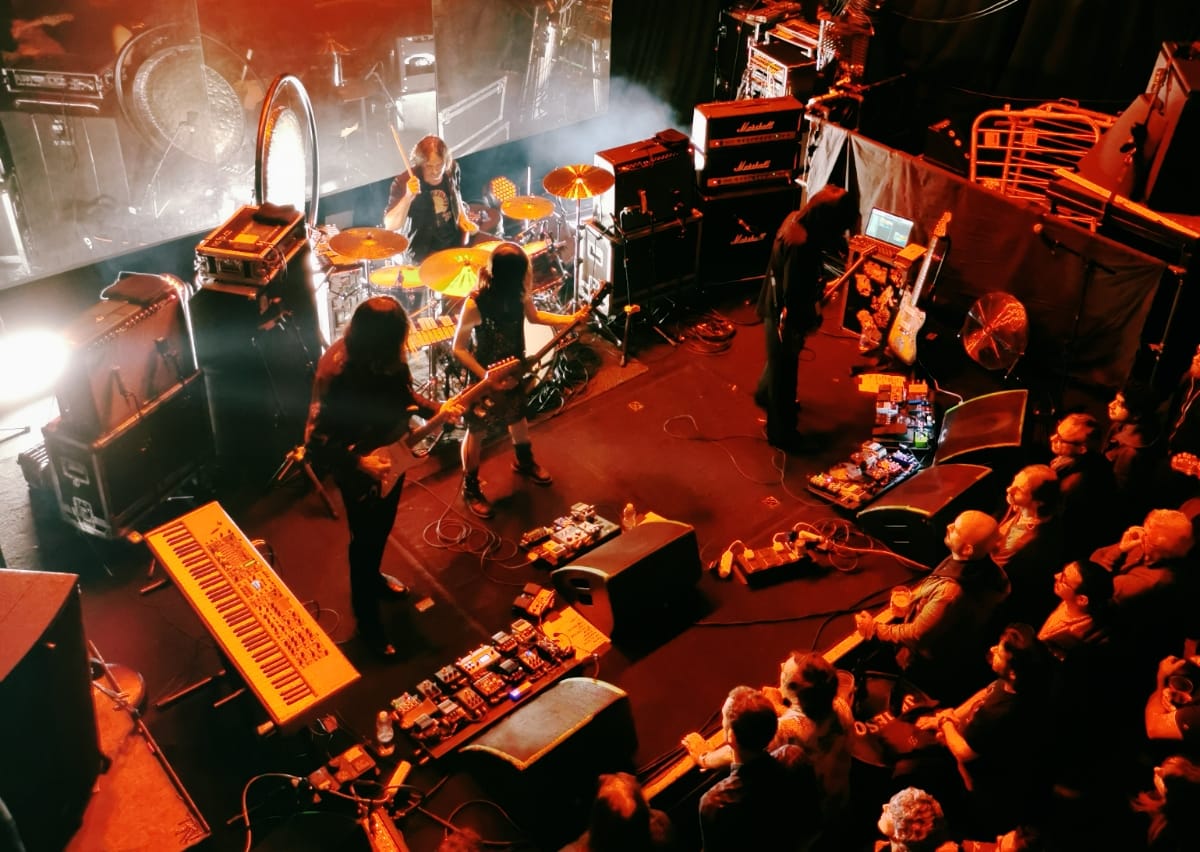
Our Dublin correspondent Damien Joyce filed the following report after seeing the band MONO perform at the Button Factory:
I went to see MONO play last Saturday night in Dublin as part of their Oath tour. The Tokyo-based band was founded in 1999 and has toured the world since, but it was my first time seeing them perform live. At times during the performance, it felt like being totally immersed in a cinematic experience—as if I were alongside a protagonist in a movie, transported somewhere through their dramatic and compelling layering of sonic textures with their ambient post-rock sound.
With an instrumental band and no front person, your focus tends to bounce from one performer to another as they share the attention. Each member of the quartet was mesmerizing. At one point, guitarist Takaakira "Taka" Goto used a drumstick across his guitar to achieve a particular sound and tinkered with his pedalboard at various times for added effect. Hideki "Yoda" Suematsu was wrapped up in a shoegazing posture, while bassist Tamaki Kunishi appeared locked in step with drummer Dahm (Dahm Majuri Cipolla), almost marching on the spot before rocking out. Dahm was incredible to watch for his power and subtlety at the drum kit, as the band conveyed emotions that words cannot express.
MONO take delight in playing live, and the audience responded—lots of swaying and nodding heads in unison as song after song led to a crescendo of noise until the massive gong hit brought the show to a close. They were simply amazing. If you don't get an opportunity to catch them on tour, check out their anniversary live album, which is incredible as well.
A Shout from the 'Sky
The Hit Parade
- Have you heard the news? The Spotlight On podcast is now The Tonearm podcast! After 277 episodes as Spotlight On (and also Spot Lyte On, long story), we've decided to connect the site and the show, two hearts finally beating as one. There's also a snazzy new version of the theme song, recorded by our friend Burdy (who was [is?] one half of Pork Recordings act Baby Mammoth). This first episode under The Tonearm moniker features conversations with four winners of the Jazz Forward Award. From the show notes: "Ed Trefzger from JazzWeek tracks radio airplay across North America, giving artists and their teams vital exposure data. Jesús Pérezagua’s Oh! Jazz streams live performances from clubs globally, bringing the world’s jazz rooms to your screen of choice. Thomas Marriott’s Seattle Jazz Fellowship revives local jazz culture through community-focused programming. And Eddie Lee’s Sligo Jazz Project transforms an Irish town into Europe’s most inclusive jazz education festival each summer." Tune in!
- Can't get enough of the silken tones of our podcast host, Lawrence Peryer? You’ll be pleased to know that he's also a recurring host of The Buzz, the podcast of the Jazz Journalists Association. The latest episode is a special one, featuring fond musical remembrances, recorded in 2023, with veteran jazz writers Bill Milkowski, Rick Mitchell, and Howard Mandel. From first album purchases to legendary festival moments, they share the records and live performances that impacted them. As Lawrence says, it's a reminder of "why we fell in love with music in the first place." Check it out.
- Short Bits: Newly uploaded high-quality footage of Kraftwerk performing on Midnight Special in 1975. Outstanding. • Our friends over at Tedium wonder why musicians are usually pretty terrible at on-stage banter. • A nice NY Times article on the mystique of Meg White (gift link). • Hank Shteamer tracks down his favorite music 'zine. • Bandcamp Daily surveys The Roots Radics. • The Quietus revisits Grace Jones‘ Slave To The Rhythm at 40. • Watch two artists we've written about on The Tonearm, Squanderes and Lea Bertucci, performing on the same bill at Brooklyn's Roulette Intermedium. • Oh, yeah, and it's the one-year anniversary of The Tonearm. 🎂
Run-Out Groove
I'll close out with a quick question: do you like to write about music, talk to musicians, and are one of those adorable freaks who listen to an experimental racket (free jazz, sound art, outsider noise, etc.) most of the time? If so, please check this out.
Thank you for reading this week's newsletter. Did anything stand out? Perhaps we helped you make a discovery? Or is there something we missed you'd like to see in here? Let us know! Reply to this email or contact us here. And, as I like to remind our Tonearm fam, sharing this newsletter (or our articles) with your friends is the numero uno best way to support what we do.
The holiday season is just around the corner—don't panic! You'll get everything done on time. Let good tunes (and The Tonearm) be your guide. Right on. I'll see you here again next week. 🚀
Connect with The Tonearm:


Comments