


Ahoy, dear reader! We're making our way through the hot August nights and I've cooled off just long enough to present the latest edition of our meandering missive, the weekly Talk Of The Tonearm newsletter. My promise to you: I dig deep into a few of our recent interviews and stories, quickly followed by a flurry of recommendations that'll fill the end of your weekend with curiosity and accrued wisdom. Cultural enlightenment or your money back. Well, not really, but we'll be tangentially mentioning money at the end of this email. Until then, let's get this show on the road:
Surface Noise
 Michael Donaldson
Andy McCluskey's confession that he has "a soft spot for fascist propaganda art" says something about electronic music's subversive appeal. The frontman for Orchestral Manoeuvres in the Dark is referencing a tradition of aesthetic hijacking that stretches back to the Situationists of 1960s Paris. Guy Debord and his collaborators pioneered détournement, the practice of taking mass media imagery and twisting it to create new meanings. John Heartfield had done this decades earlier, transforming Nazi propaganda photos into grotesque anti-fascist collages. McCluskey and Paul Humphreys practiced their own détournement project, borrowing the cold precision of industrial machinery and corporate design for songs about love, loss, and political resistance. The stark Peter Saville album covers of OMD's early releases also appropriated the aesthetic language of power while commenting against it.
Kraftwerk had shown the way, taking post-war Germany's industrial sounds—the rhythmic pounding of assembly lines, the mechanical efficiency of rebuilding—and making them serve humanistic ends. Part of the timely charm of "Autobahn" was that it transformed the industrial into the poetic. OMD's "Enola Gay" went a few steps further, using a military code name and bouncy melody to critique the very nuclear warfare it referenced. The song commandeers the oppressor's language to question the oppression, making horror more stark through musical contrast. McCluskey's recent "Bauhaus Staircase" lyric about "kicking down fascist art" continues this tradition, using violent imagery against the ideology that pioneered such aesthetics.
OMD's early label home, Factory Records, operated as a détournement machine, with Saville's designs referencing everything from Soviet constructivism to corporate annual reports, seemingly out of place within Manchester's underground scene. Both influenced and independent of Saville, a similar design aesthetic quickly spread throughout the musical movement we now call post-punk, especially in the more electronic and industrial offshoots. McCluskey's admission about fascist art's seductive power thus highlights one of electronic music's greatest achievements: consistently taking the sounds and imagery of authoritarianism and turning them against themselves, forcing the mechanical to recognize humanity.
Playback: Inside Brüder Selke & Midori Hirano's Musical Laboratory → The Selke brothers, raised in East Berlin during the GDR's twilight, describe how their childhood exposure to socialist imagery and "exotic" Western album covers shaped their musical mindset. Their current work involves taking classical instrumentation and placing it within electronic contexts, which we can interpret as a form of cultural détournement versus conservative traditions.
 Lawrence Peryer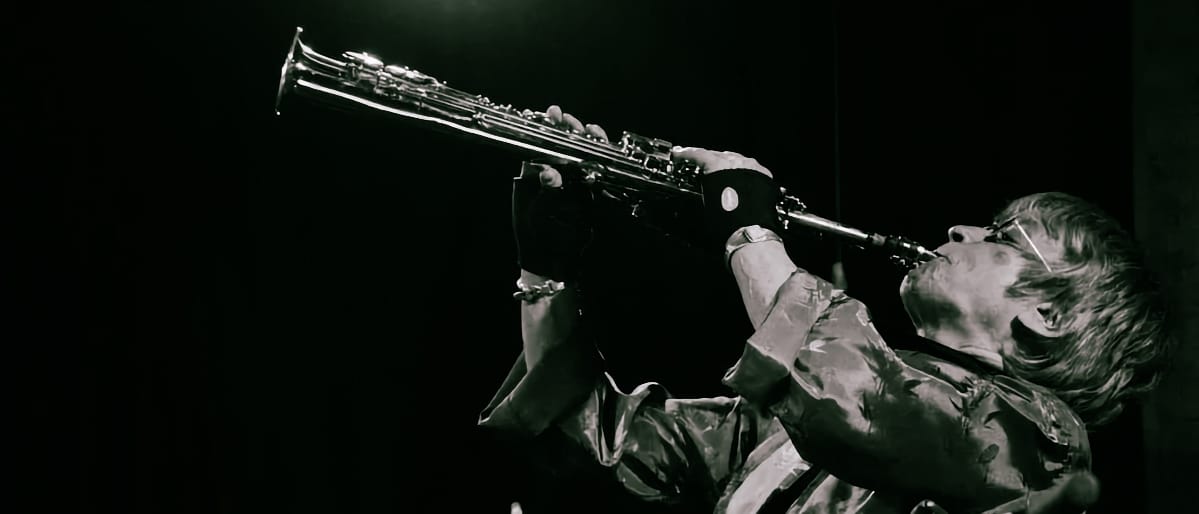
Jane Ira Bloom recalls hearing astronaut John Young's words at the NASA Space Center: "No matter how many photographs you take, no matter how much information you might get about what it's like to be on the moon, nothing can communicate the shades of gray that I saw anywhere close to what it was by looking at these photographs. It's in the realm of artists to try to help communicate to you what I saw and felt." And for over six decades, NASA has espoused that only artists could express and decode the wonder of space exploration for the masses. Under administrator Robert Schulman's leadership, the agency began inviting painters, sculptors, and experimentalists to witness rocket launches, observe astronaut training, and create works about the cosmic experience.
Even though commissioned by the government, the artists often didn't play it safe. James Wyeth painted astronauts eating breakfast and getting medical checkups, capturing the strange normalcy surrounding their far-out occupation. Robert McCall created room-sized psychedelic murals that inspired Hollywood's depiction of outer space. Annie Leibovitz documented the astronauts with intimate, humanistic portraits. And conceptual artist John Divola treated rocket launches as abstract light phenomena, focusing on exhaust trails and atmospheric distortions rather than the mechanics of space flight. Some artists created works so challenging that they remain in storage today, deemed too 'out there' for public display.
Through the album Songs In Space, Bloom connects her work with immersive audio and spatial composition to this tradition. She attempts to realize the incomprehensible by imagining music in zero gravity and using silence to help the brain process three-dimensional sound. The NASA Art Program, which Bloom participated in at one point, produced thousands of pieces—from traditional paintings to musical works to installations that anticipated virtual reality. It's upsetting that this type of visionary arts funding is likely now a thing of the past. How amazing that there was a time when the U.S. government sent artists to rocket launches to help citizens contemplate their place in the cosmos.
Playback: Stephan Thelen Warms Up to Musical Mathematics → Thelen, a mathematician-turned-composer, uses geometric principles and polyrhythms to create emotionally resonant music. This is a bold artistic expression of something otherwise mathematical and the scientific, resembling how NASA-commissioned artists used creative interpretations to translate the mechanics of space travel into human understanding.
 Gabriel Kennedy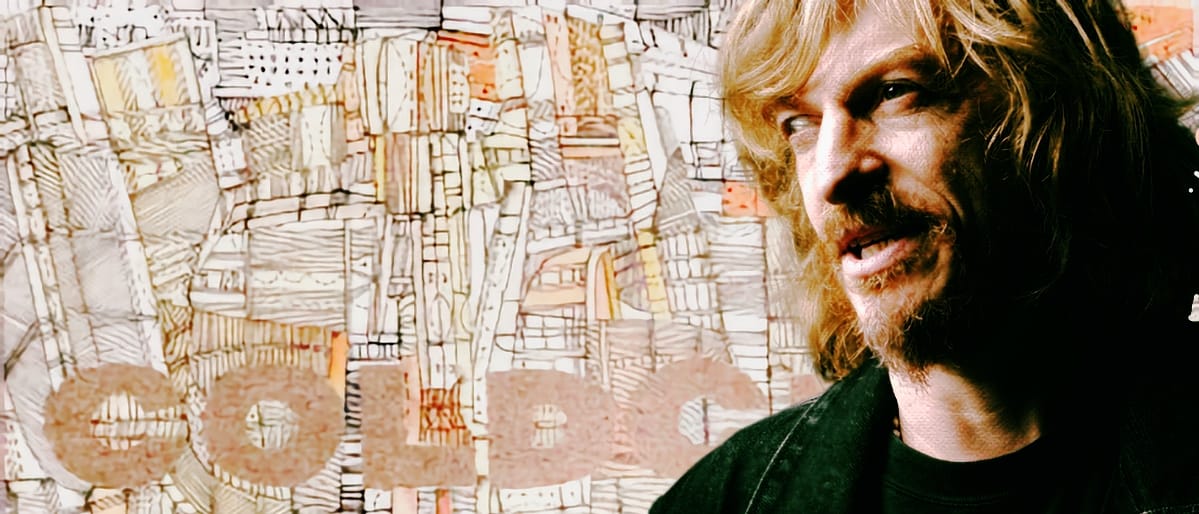
Matt Black talks matter-of-factly of sampling Francis E. Dec's ravings about "the computer gangster god that controls your terrified TV slaves" for Coldcut's "Everything Is Under Control." Dec—a disbarred New York lawyer who spent decades mass-mailing paranoid manifestos about the "Worldwide Mad Deadly Communist Gangster Computer God"—never intended to become a cornerstone of underground culture, but let's just say Black isn't the first one to sample these rants. Dec's unhinged proclamations about mind control and invisible moon cities abruptly appeared in experimental music for decades, catching the attention of William S. Burroughs and Genesis P-Orridge, who featured Dec's rants on Psychic TV's Ultrahouse album. Artists mining the cultural margins can't resist the prolific yet desperate output of a paranoid mind.
Dec's visual style—relentless ALL CAPS typewriting, stream-of-consciousness paranoia, repetitive apocalyptic phrases—was aped by punk zines, early internet culture, and the pioneers of meme aesthetics (Church of Subgenius, anyone?). There's a grammar of desperation that feels eerily familiar to anyone watching conspiracy theories spread across social media. The incoherence that marked Dec's mental illness is now a recognizable, and arguably no more sane, language of information overload.
Artists like Coldcut see Dec's obsession with electronic surveillance and mind control as prophetic social criticism. His "Frankenstein Radio Controls" and "Computer God Containment Policy" seem like dark anticipations of surveillance capitalism and algorithmic manipulation. It's evident that Black didn't include Dec in his sample production library as a novelty. Coldcut's remix culture philosophy found an embodiment of how underground culture transforms discarded materials into art, preserving Francis E. Dec's warnings about the covert systems that shape our digital lives.
Playback: Electric Dreams Made Real — Tamiko Thiel on the Connection Machine → Tamiko Thiel's design of the Connection Machine as a mysterious black cube with thousands of blinking lights might have added to Dec's obsessions with electronic control systems. But Thiel's conscious design choice to keep the machine below human eye level "so it would feel like a member of the family rather than an overlord" responds to the same technological anxieties Dec articulated.
The Hit Parade
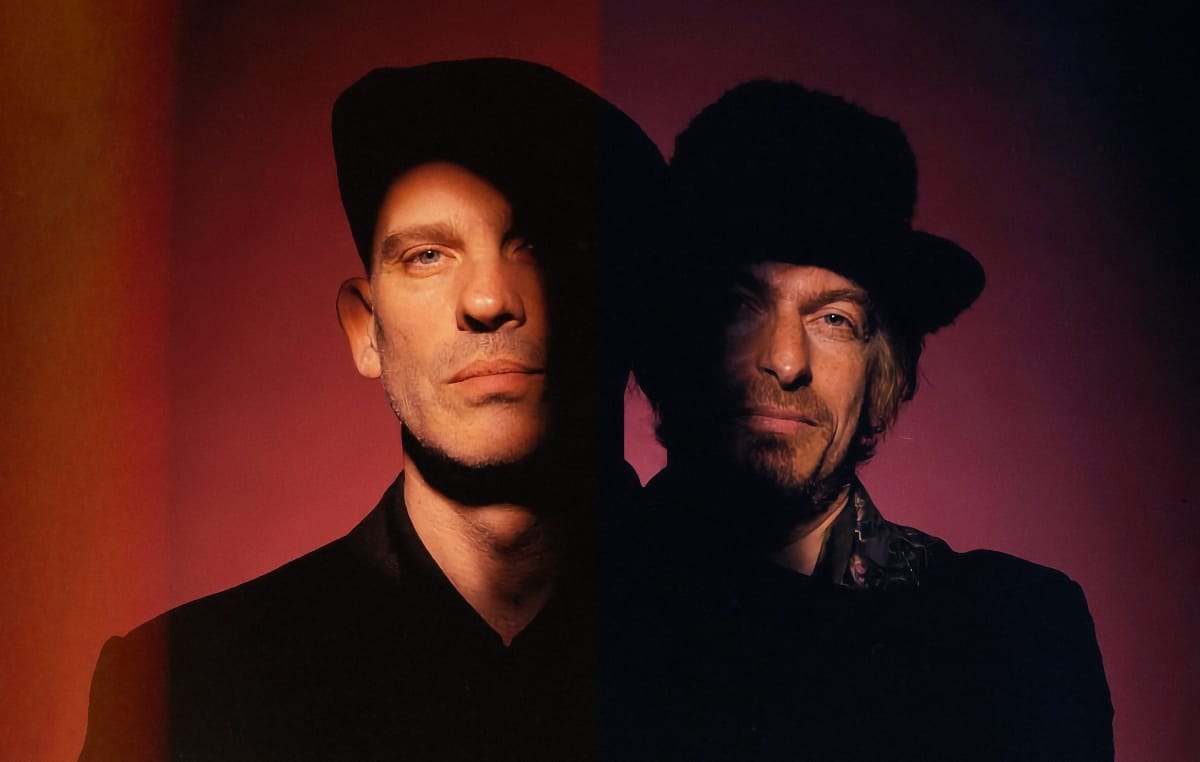
- After thirteen years, Adrian Sherwood returns with The Collapse of Everything, an album of ominous dub vibrations where the tempos are generally slow but the message is bright and clear—I and I, on the verge of collapse. The dramatist at the controls has reemerged with a personal work, defiantly studio-constructing while grieving the loss of collaborators Mark Stewart and Keith LeBlanc. "The Well is Poisoned (Dub)" identifies the world view, frustrated and disappointed in how On-U's idea of cultural unification hasn't caught on with the world at large—it's a song that's rigid and cranky, studio alarms and explosions booming through a swamp of instrumentation and a beat that's worn down from all the fighting, yet ultimately comes off as resilient. There's still On-U's trademark humor found in titles like "Spaghetti Best Western"—nodding to Morricone with love and an endearing obviousness—and the squelchy low-riding skank of "Dub Inspector." The experimental reach peaks on "Spirits (Further Education)," all stereo effects and sparseness, hinting with hesitation at the oncoming revelation awaiting us all. In his interview with The Tonearm, Sherwood told me he finds the dub audience "perhaps leaning towards caring about the planet a lot more than most human beings." Thus, this album rewards that community with sounds straight from the source, drawn through decades of collaborative tales and gallons of compressed air blown into crackling mixing desk faders. Sherwood's tried and true techniques have grown into widescreen atmospheres that flow like a film score, and he expressively translates personal loss into a universal meditation on collapse and renewal. Welcome back, selector.
- Short Bits: The surprising difference between modular synthesis and audio plug-in design might be that the software designer wants things simpler and more accessible. Aqeel Aadam, working in both those worlds, discusses his road to adopting this philosophy on the latest episode of the Spotlight On podcast. • Here's an *excellent* interview that ties together so much for me: the punk rock/electronic music connection, the importance of 'zine culture, the underground music history of Florida's I-4 corridor—all told by my longtime pal Peter Wohelski. • Ann Powers on What We Lose in the Gamification of Music • I will never grow tired of essays on Soviet-era bootleg records made from discarded X-rays. • If you like drums, percussion, and audio weirdness, you're going to love Kansai Bruises, Valentina Magaletti's new collaborative album with YPY (aka Koshiro Hino of Goat). • 'Question for the class: what are your favorite multi-artist compilation albums?'
Deep Cuts
You may recall that in a past newsletter I asked contributor Brook Ellingwood to answer the question: "What's something you love that more people should know about?" He generously gave a list of answers. I'm going to dip into another one of his loved selections, a book that sounds so remarkably good that I've added it to my queue:
The novel The Gone-Away World (2008). Author Nick Harkaway conjures a post-apocalyptic planet reshaped by a war fought with "go-away bombs" that strip matter of the information that defines what it is. The resulting informationless "stuff" soaks up information from anyone who comes in contact with it, and becomes whatever they are thinking of. The closest thing to a governmental authority is the Jorgmond corporation which maintains a globe-encircling pipe from which it sprays its own information onto the stuff in the form of a substance called "FOX." The book's final twist brilliantly caps off this wild ride.
Brook also suggested that I create an archive of past newsletters for those who missed installments. That's a nice thought. This will become a reality soon, easily accessible on The Tonearm.
Run-Out Groove
I'll talk more about this in the future (though not annoyingly so, I promise), but we just soft-launched our supporter program on The Tonearm. You can check it out on the site's front page (scroll down a little). It's a mere five bucks a month to support what we're doing and help keep our site ad-free. The majority of those funds will go toward paying our writers. There are no membership perks yet, just the warm glow of tending the engine of independent music journalism, but we'll have some surprises soon.
Even if you're not on board with that (yet!), I still enthusiastically thank you for reading this newsletter. Tell a friend! Forward this email to someone groovy or post the 'View in browser' link at the top on the social media machine. Every gesture is appreciated in the land of The Tonearm.
I also want to hear from you. Particularly on my mind this week: what supporter-only perks would entice you to become a paying member? What would you like to see from us? Please let me know by responding to this email or contact us here.
I will now leave you with this video of Karlheinz Stockhausen's Helicopter String Quartet. Last Friday was his birth anniversary. A special shout out to my boss at Camelot Music who told sixteen-year-old me to grab Stockhausen's Hymnen from the cut-out bin. You really messed me up, dude. All right—stay safe and sane(ish) and I'll see you next week! 🚀
Connect with The Tonearm:


Comments