


Even for the most seasoned listeners, there is always a tinge of the mythical in improvised music. What force can move a person, or a group of people, to stand on stage or in a studio and move to make a sound that resists definition or replication? Best of all is the inability of an audience to ever really expect what improvisation may offer them. The result may be a glorious, catapulting moment of acrobatics, like Paganini's violin improvisations. It may be a moment of perfect communion between audience and musicians, like Aretha Franklin's seven-minute rendition of "Dr. Feelgood" at Fillmore West. It may be an error that morphs unexpectedly into something funnier and more delicious to listen to than it could ever have been if it had gone off without a hitch, like Ella Fitzgerald forgetting the lyrics to "Mack the Knife" at the Deutschlandhalle in 1960. It might even be the best-selling piano album of all time, played on an old, out-of-tune baby grand Bösendorfer by a miserable and exhausted pianist.
Whatever it is, it feels impossible to recreate or even to explain, which is, of course, the attraction it offers. Improvised music has an element of alchemy to it. A musician may sacrifice some things, yes. But it is far from a Faustian bargain. What they get in return is irresistible: a sort of cosmic alignment, a product of circumstance; something that they know can never really be done again.
When he was finally prevailed upon to transcribe his famous Köln Concert, Keith Jarrett explained his reluctance: the music, he said, was improvised "on a certain night and should go as quickly as it comes." Even with the technology that has allowed us to commit certain acts of improvisation to memory and listen to them over and over, this fleeting feeling remains. It remains still as we learn and uncover new ways to talk back to ourselves.
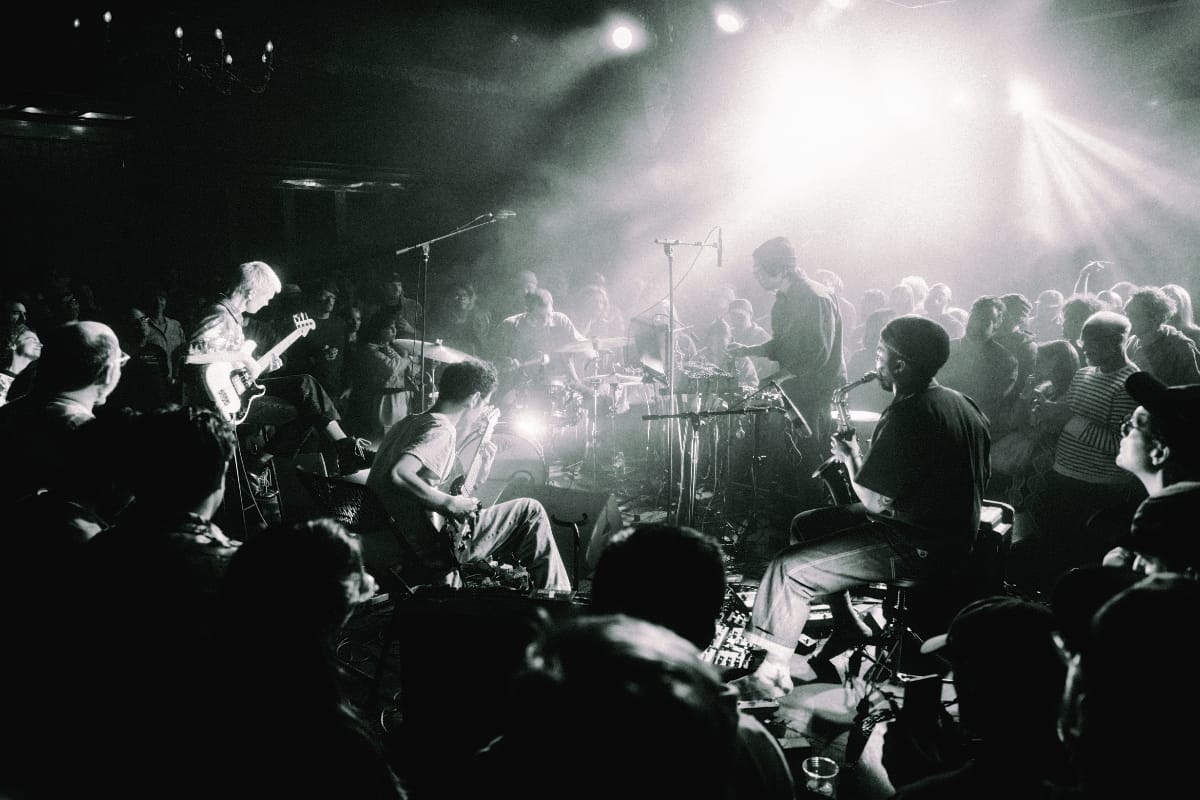
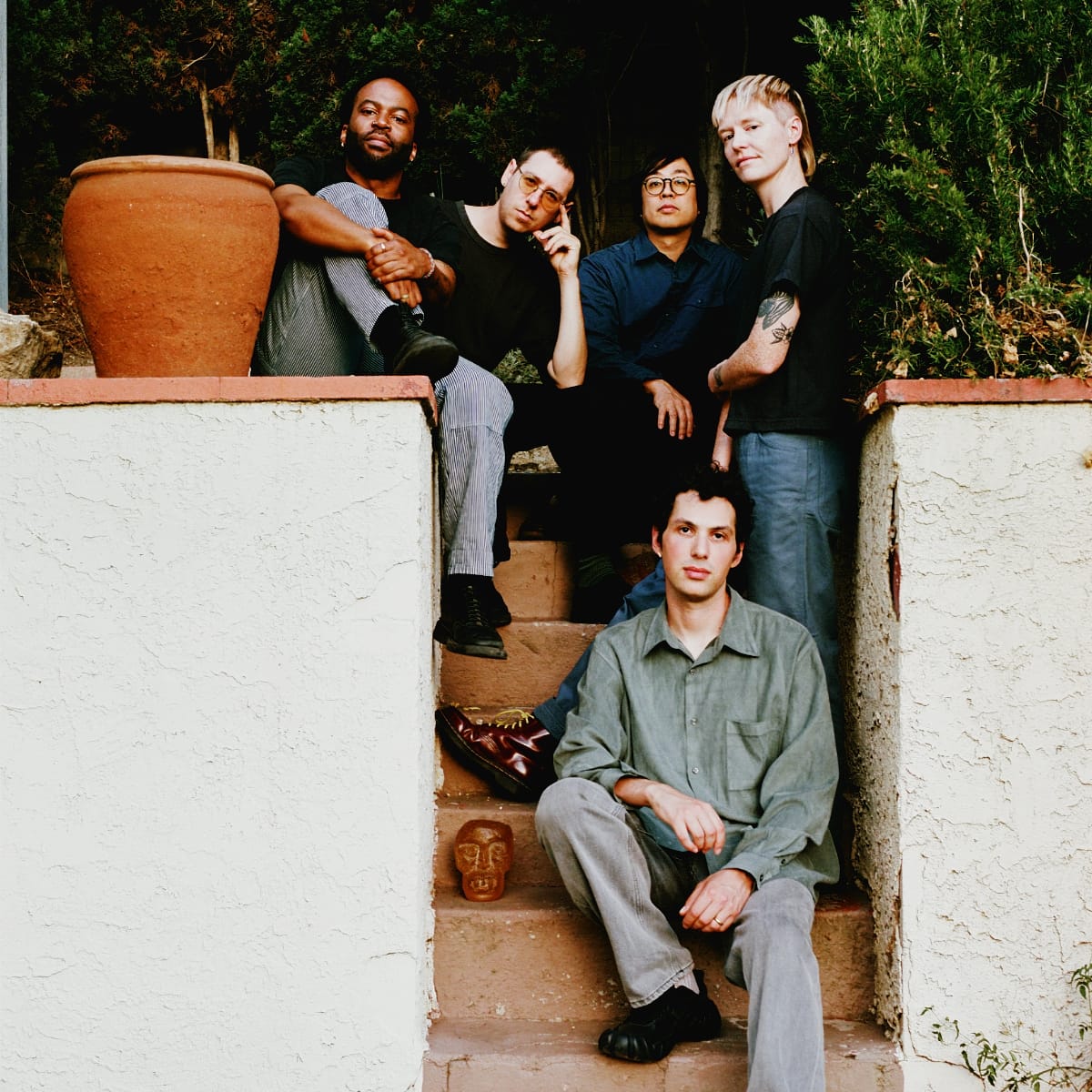
Los Angeles quintet SML are more of a supergroup. Comprised of bassist Anna Butterss, synthesist Jeremiah Chiu, saxophonist Josh Johnson, Booker Stardrum on percussion, and Gregory Uhlmann on guitar, the five are a set of luminary session musicians who have long formed the backbone of a host of music scenes in their home base and beyond. And they're well versed in the ephemeral art of improvisation. The music that they create is always a product of their live performances, and the music on them is curious and elastic, throbbing with a desire to speak and to listen. The dialogue they speak is not just with each other, or even with their audience, but with past and former selves. Their debut album, Small Medium Large, was more of a stab in the dark. It was made up of a collection of long-form improvisations at the now-closed but still-adored cocktail bar Enfield Tennis Academy in Los Angeles. It served primarily as a recording of discovery: the group were discovering each other (they had not, in fact, really met before their sets at ETA); they were discovering the space they could occupy together; they were discovering the sounds that they could make as a group, and how those could be different from the sounds they made as individuals.
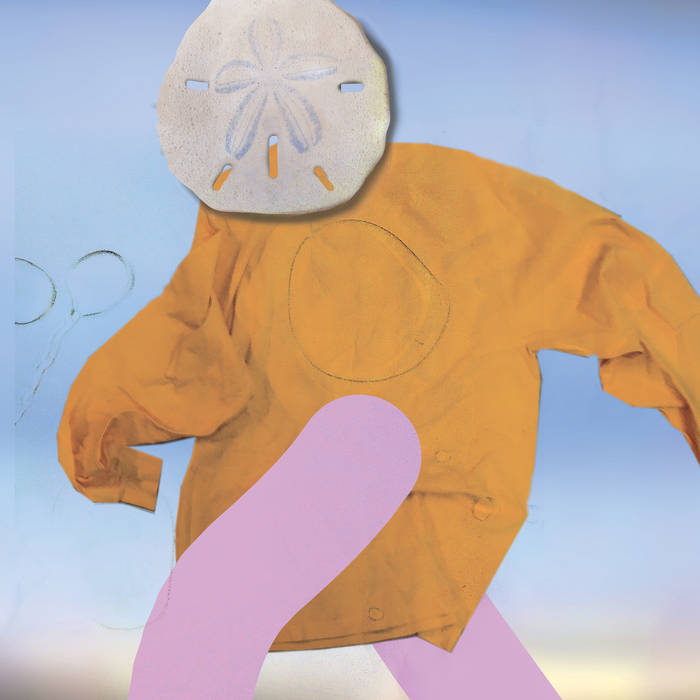
How You Been (released at the end of 2025 on International Anthem Records) is still a kind of audible experimentation, not least because it involved taking an array of live recordings and chopping and cutting them to create something both familiar and new. In their use of looping, cutting, and stitching, the group take cues from an array of influences. There are the electric years of Miles Davis, of course; Kamasi Washington's wild, sprawling ambition; Jeff Parker's experimentations and labelmate Makaya McCraven's interest in using technology to manipulate his own improvisations. And the music itself sounds like a weird hybrid of innumerable sounds. On How You Been, there are moments that could just as easily have been pulled off by Herbie Hancock as Kraftwerk or Oval. But there is something else, unique, to SML's work, that has revealed itself even more on How You Been: a feeling of swimming farther and diving deeper, until the sound doubles back on itself and extends into an almost infinite loop of movement and feeling. Often, it becomes impossible to identify whose sound is whose. Other times, it is ultra clear: the woozy, floating saxophone of Johnson in dialogue with itself along the backdrop of Butterss's thrumming bass on "Chicago Three," or the clean, concise hit of Stardrum's percussion on "Taking out the Trash," or the stranger and more playful sounds of Uhlmann and Chiu on "Moving Walkway" or "Old Mythh." In all cases, there is a unity of purpose that has distilled their sound into this: a forty-three-minute-long trip into another universe, with the clarity and strength of a shot of whiskey.
I sat down with three-fifths of SML—Stardrum, Uhlmann, and Jeremiah Chiu—at the Church of Sound in Clapton, London (which, by day, is St. James the Great's Church) in November 2025. They had just opened for Makaya McCraven at KOKO the night before, and were preparing for their own gig that evening to launch How You Been. Our conversation has been edited for clarity and length.
Mariam Abdel-Razek: Congratulations on the album, which is sounding beautiful. I wanted to start by talking about its genesis—was there that second album pressure? How did you want it to be different, or how did you want it to stand alongside the first album?
Jeremiah Chiu: I like this question of second album pressure, because we're such an unconventional group that we don't have the same sort of "sophomore album, we have to steer away from the slump." We were excited to venture on to another thing, and continue the process. We had played six or eight shows after the first album [Small Medium Large] was released—in LA, Chicago, New York, New Orleans. And they were recorded in multi-track, which was a huge difference for us compared to the first record. So even just having stems to work with, versus a stereo mix from the live shows, gave us a new batch of opportunities to listen through that stuff and work it into material. I don't know that we were anticipating anything specific from this second-album approach other than, like, just continuing . . . ?
Gregory Uhlmann: We all went off in our studios, and we would tinker around and then send each other things. Whereas on the first, Jeremiah would do a lot of cutting. But this one was much more spread out. Like: "Go dream of what you could think the record could be." And that was really interesting, seeing how everyone came back with a different idea about it. So I feel like it felt kind of easy, in the way that we could all just respond to each other. No one was daunted by that question.
Booker Stardrum: Yeah, because we already had the body of work. It was all these live performances. So it was really just a matter of finding it. In some ways, it was more collaborative than the last one because everybody came in and made edits, and in other ways, it was a little more independent. We didn't really sit together at a computer the way we did on the first one, making some decisions together. People made decisions independently, and then there were stages of production.
Jeremiah: And we actually had too much material this time. I think having some level of restriction is the most helpful thing. Because you're like, "Here's the stuff. Here's the deadline. Let's all go forth and come back and see what we can do and then cut it off at a certain point," and not endlessly tinkering.
Mariam: Avoiding the paradox of choice.
Booker: Yeah. There was not endless tinkering, and that's cool.
Jeremiah: There's definitely a lot of lost gems in there somewhere that'll resurface one day.
Gregory: That's another record.
Booker: We had to make choices about what we kept and what we left behind.
Mariam: That's always part of the album process, right? Making those sometimes hard choices, especially as a group. It sounds like there was a real dialogue there. What was the shift from Jeremiah taking the lead on a lot of the production on the first album to this one being more collaborative?
Jeremiah: The thing that's so unique about this group is that everyone does have solo projects, and so we're all producers that can craft and make something wholly on our own. You hear that more on this one, because there are different worlds that come together. Josh [Johnson, saxophone] did an amazing job at the end, gluing and mixing stuff cohesively. It does always help to have some kind of glue all the way through the process. You know, the first time we basically had Bryce [Gonzales, who was the house engineer at Enfield Tennis Academy in LA, where SML's debut album was recorded]. He had his approach, had his way of engineering a record that sounds incredible. And this time, we have a mix of venues, microphones, rooms, and the like that come into the fold.
Mariam: Was there a guiding principle to putting together the album? Bearing in mind that a lack of principle can be a principle.
Booker: I think that if Anna [Butterss, bassist] and Josh were here . . .
Jeremiah: (laughing) That's what I was going to say, too.
Booker: . . . they would say that we explicitly wanted the record to sound different from the live performances, and get a different outcome than just a live band playing a live cut, through various production techniques. But we have different takes—the two songs I edited lean more on the live performance. And then Josh has a couple of pieces on there that sound nothing like the live performance. He really took them and went off and produced a whole new sort of sound—collage-type pieces.
Jeremiah: Yeah. The live performances and the final cuts are two distinct things, I think. It hasn't been super intentional. It's just the nature of how it's come together. You have eight sets of material, which is over eight hours of stuff to sift through, sometimes two sets a night. So we didn't want to put a record out that was basically saying, "Here's this boxset of eight hours of music." We wanted something that said, "Here's this distilled, very concise expression of what we do." Those are two different things.
Gregory: With the first record, it was really searching for those moments [of distillation]. We were wondering if we had enough. But with this one, it was about whittling it down to the absolute best parts.
Jeremiah: Yeah, for a record that goes track to track. Coherently.
Gregory: Right. To make it different. We weren't doing super long cuts because this was an exciting new opportunity to use a lot of different material.
Mariam: You've touched on this already, but you all work on other projects, sometimes with each other in different iterations. What makes an SML project 'SML,' apart from the fact that you're all together?
Booker: You sort of said it—the five of us coming together and playing together. I think it brings out a certain way that we all play. It's kind of hard to put my finger on, at least for me personally. When I do a solo set or other projects, I might incorporate more electronics or have a laptop in front of me, something like that. I don't do any of that in this group. I play drums and percussion.
Jeremiah: You don't yet.
Booker: (laughing) Not yet. Because there's a lot going on between Jeremiah, Greg, and Josh. They're all synced together; it's an organism of its own. So at least personally, I really enjoy being able to just dance around that. That's cool.
Gregory: I think the ethos, too, is a big part [of what makes a thing SML]. Playing all together as a group, and making this thing . . . not necessarily being like, "There's a soloist now," or, "Now I'm comping." It's much more of, "How can we make this piece as a group and disappear into each other's sounds?"
Booker: Yeah, I feel like that's a crucial point. Folding into each other's sounds is a huge part of it. Greg very rarely rips a conventional guitar solo, for example. Same for me—I'm playing drums, but I'm not playing very conventional beats. I'm always interacting with Jeremiah's sequences because he's playing a lot of percussive sounds as well.
Jeremiah: And as a non-jazz musician, I am incapable of comp.
Booker: It's become more of a band as we've become more of a band. Most of the shows we've played happened after we put out our first record. Our first record just came from three concerts. And one of them, Anna, and I weren't even there. The band name, 'small, medium, large,' came from this idea that…
Mariam: That you could play in all different iterations.
Booker: Yeah, exactly. And it's evolved as we've played together more.
Mariam: That occurred to me last night at the KOKO gig, because at your merch stand, someone was asking, "Why is it called 'small medium large'?" And someone from your label explained it, and he seemed very satisfied with the answer. It was probably the first time anyone's ever asked about a band name and gotten a straight answer.
Gregory: It's the most logical band name ever.
Mariam: That's an award.
Gregory: We're thinking about changing it to just: Group of Five.
Mariam: Or just: Large.
Jeremiah: Party of five.
Booker: Gang of Five. Yeah, we know you've heard of a Gang of Four, but…
Mariam: That's vaguely menacing, actually.
Booker: (pleased by this) Yeah, it is.
Mariam: I wanted to talk a little bit about how you play live, because it's obviously very different from a traditional jazz ensemble where you have a lead sheet, or solos, and then you're going to vamp however many bars. How do you approach that? What is it that you go on and do on stage?
Jeremiah: Well, Anna preferred that we not talk about it before we hit the stage. So that meant we were all learning from each other as we started to play together. And Booker and I preferred to discuss things earlier on before we hit the stage, in a more normal fashion. (Laughs.) But Anna was like, "Let's just play." But the point was not to throw anyone in a direction, but to be fully present from the get-go. So you have to listen. And I think that's actually what we do the most: listening to each other. There are often moments when we don't know who's making what sound. But it is pretty free-form, otherwise, in the sense that we're just . . . going.
Gregory: I guess one very technical thing that I think sometimes people don't realize is that we are tethered to Jeremiah, which is an interesting point.
Jeremiah: It's synced to a clock.
Gregory: So Josh and I have a clock coming in [for instance], so we can sync to each other. So it becomes a joint sequence at some point. And then we go in and out of that at times.
Jeremiah: But otherwise, everyone has different ways to do things that you wouldn't expect. And I think that oftentimes we'll see reviews or see stuff [where people say,] "Oh, I think this is what was happening." And it's like, actually not at all what was happening. But that's the enjoyable part.
Mariam: It takes the fun out of it, if you're trying to guess what's going on, right? You just have to surrender to the sound.
Jeremiah: But we are starting to expand what that [sound] can be from show to show. We're about to do three nights in Zebulon back in LA, as the record release shows. We're gonna have Bryce Gonzales there again to record, and it's a home base for us, so we know we can sit there for three nights and work something out entirely new in front of audiences. And so there's already a little bit of chatter, just like, "Oh, maybe I'll just bring something totally different than I normally would bring or play, just to see what happens in the fold in front of people." Which is fun. That's the magic of it. We don't even know what's gonna happen.
Mariam: Speaking of LA as your home base. How does that feed into your music? What do you see as being 'LA'?
Gregory: LA is so vast, and there's so much. But there was this period that we've talked about a lot, at ETA, this spot where Jeff Parker started his residency; there was just a real scene that grew out of that. That's where we recorded our first record. I feel like we all found each other at that spot, and it was a gathering place, and that became a very specific scene, but also brought in a lot of different people from different musical worlds. Maybe more jazz people, or more people in rock bands, or various musicians. I see it as growing out of that.
Mariam: It's so nice to hear how important the venues are in that respect.
Jeremiah: We definitely need more venues.
Gregory: Having a meeting place.
Jeremiah: LA definitely needs more spaces to play that are mid-size or smaller. Because they aren't always there, and it takes a huge amount of effort to get them going.
Mariam: And money.
Jeremiah: Yeah, exactly. The infrastructure isn't there. I mean, when I moved to LA, the beat scene was the contemporary community. And Chicago has such a huge community of very dedicated freak jazz and quite intense music. And I think I was seeking that out a little bit, so the obvious thing was, "Oh, Jeff Parker's from Chicago, I'm going to start going to his Monday night at ETA." And I just started to see improvised music in a different way, which I don't think was happening the same way in LA at that time.
I do feel it's hard to pinpoint exactly what's happening in LA at all times, since there's a lot going on, but I do know that we're intentionally trying to move forward. If we work something out, let's just try the next thing, try the next thing, keep on trying to push our comfort zones, push into places that we're exploring. And maybe that is the experimental ethos.
Check out more like this:
 Lawrence Peryer
 Lawrence Peryer


Comments