


The Tonearm contributor Brook Ellingwood's piece on Teenage Kicks in a Warzone had me thinking all week about unlikely, or maybe even unintentional, acts of political deviance. As Brook says about his article, "I’m writing about rebellion that doesn’t look like rebellion, about winning the future by rejecting the present you’ve been handed." The Undertones did songs about chocolate and girls—nothing that would ever get construed as overly political. But that the band, and the record shop they revolved around, Good Vibrations, attracted and accepted those from both sides of the Troubles could be interpreted as a political statement.
Last week's interview with On-U Sound's Adrian Sherwood revealed something similar. I asked Adrian about the politics of Dub Syndicate and other music he produces. He responded that the scene around On-U is inherently political: "If you go to dub dances or sound system dances, the bulk of the crowd tends to be quite politically aware, perhaps leaning towards caring about the planet a lot more than most human beings, and, you know, vegetarian or conscious people. So, I think the dub arena was one of the most conscious collectives going."
In Questlove's excellent documentary about Sly and the Family Stone, there's a section where the band gets flack as their popularity grows for not being overtly political. Though they responded with more activist messaging in some songs, the band pointed out that their existence as a multi-racial, multi-gendered unit was radical in itself. This was quite true in 1966. I don't doubt the Family Stone's make-up changed at least a few minds about what a band, or even a 'chosen family,' could be. Many of those minds probably belonged to people normally resistant to explicit politics in their music.
And I'm also thinking about the two nights that the four members of R.E.M. joined Michael Shannon and his band on stage. Can you even imagine how much money R.E.M. turns down every other day to do reunion shows or tours? Here they are, still friends, all still able to perform, only coming together when it’s convenient and fun. The Coachella organizers must be having aneurysms. Do I see this as a political statement? It's not intentional—again, they're just having fun—but in a way, this moment screams in the face of today's grifter-infested discourse: It doesn't all have to be about money! (OK—I'll have to eat these words if, once this newsletter goes out, it's announced that R.E.M. are reforming for a massive corporate-sponsored tour. I hope not!)
As Brook clarifies in his piece, there is an important role—especially now—for art that is clearly and loudly political. But, like everything, there are tones and colors, and subtle statements of example are often the most contagious. Just the act of creating art or living to appreciate it is an assertion in troubled times. Not all of us are comfortable, skilled, or even knowledgeable enough for bold political declarations in our art, but that doesn't mean we're left out of the conversation.
It is important to remain outspoken, aware, and optimistically angry. And showing how a life is better lived, whether through our chosen family, by congregating with like-minded souls, or by expressing ourselves without capitalist aims, is also a notable and worthy action for these interesting times.
This Week's Highlights
This was a busy week on The Tonearm, with a flurry of excellent articles from our contributors. Our newest staff addition is Sam Bradley, who specializes in all things indie, Americana, and bluegrass. Sam's inaugural interview for our site features Portland musician James Cook, known for the homemade instrumentation of Trashcan Joe and, now, a classic-style singer/songwriter album under the moniker Captain's Audio Project. James talks about why many songs on Waiting For The Moon are inspired by the outdoors and camping (very Oregonian, I think!) and how his trusted instrument for this music is a 1931 National Tenor Guitar. Jealous.
 Sam Bradley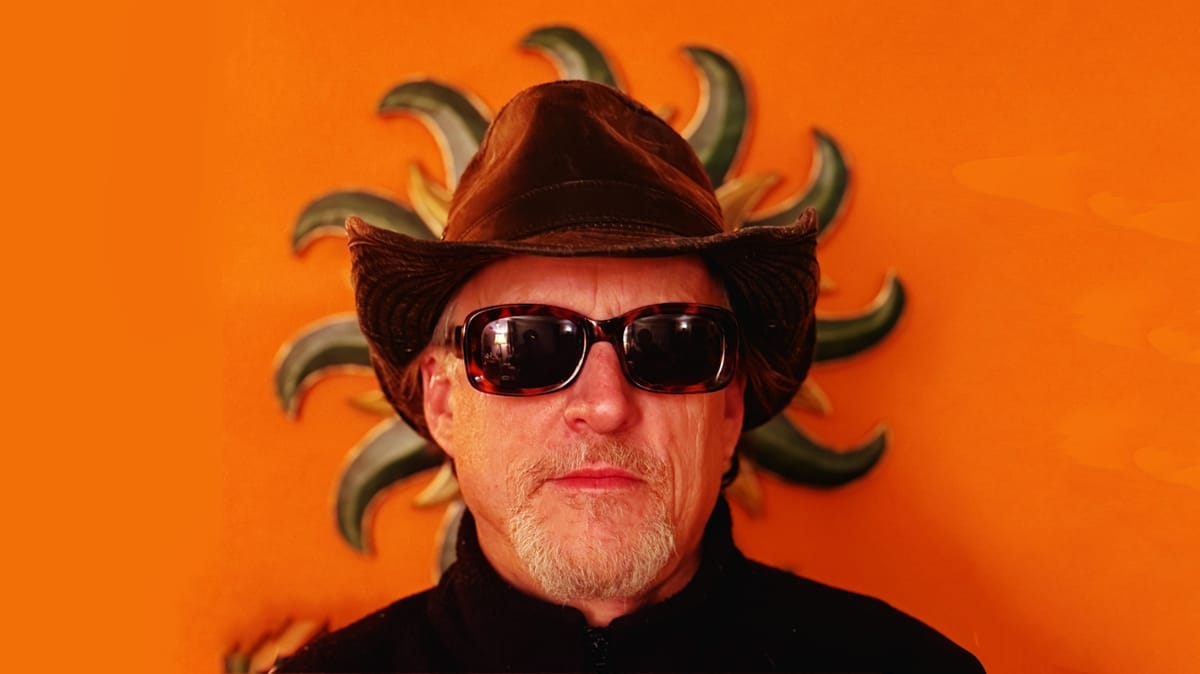
Miguel Bustamante joined us this week for an interesting discussion with Daniel Michel, producer and leader of the Colombian 10-piece La BOA (Bogotá Orquesta Afrobeat). The combo had the rare and honored opportunity to base their latest album around unused drum tracks from the late and revered Tony Allen, best known as Fela Kuti’s rhythmatist. That album, La BOA meets Tony Allen, is pure pleasure, as is this interview. Says Miguel: "Being of Colombian descent, having the opportunity to prepare this interview for the site was a genuine treat for me."
 Miguel Angel Bustamante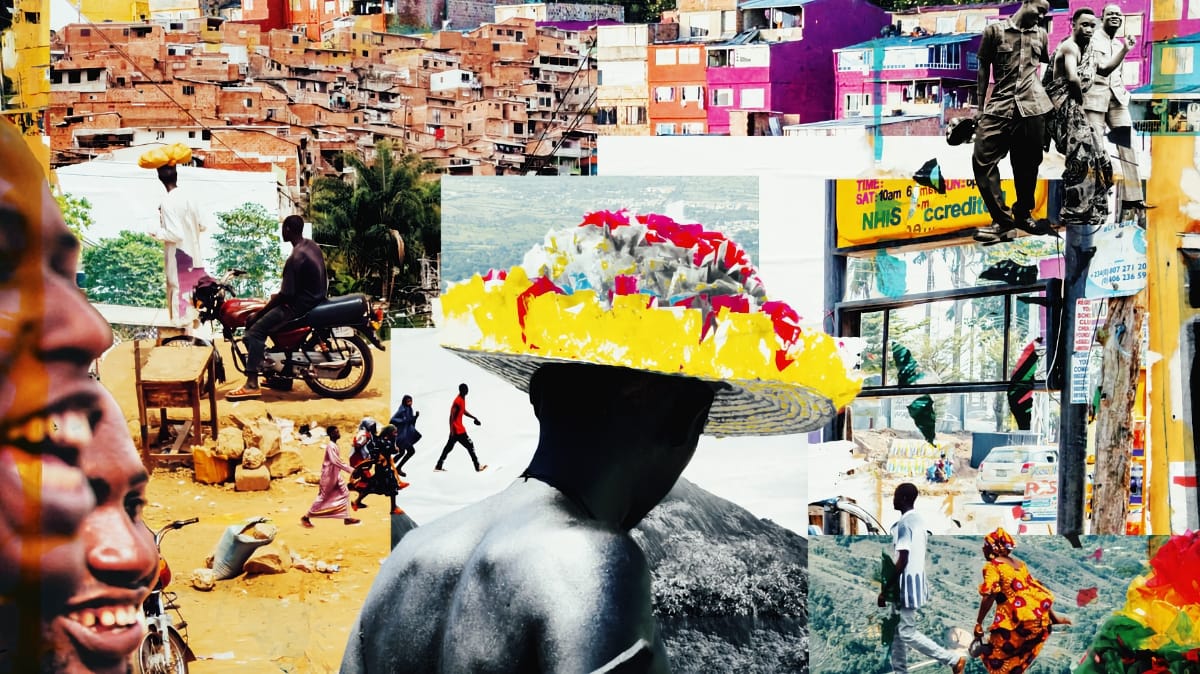
Not only did we feature music inspired by camping this week, but an article inspired by camping, as well. Brook Ellingwood's meditation on Ireland's Troubles period, the movie (and record shop) Good Vibrations, and the built-in activism of North Ireland's punk movement was inspired by a camp-out with two Irish friends. Here’s more from Brook on this excellent article: "What I’m really writing about isn’t Northern Ireland. I’m writing about relationships between art and politics, between those who create and those who destroy."
 Brook Ellingwood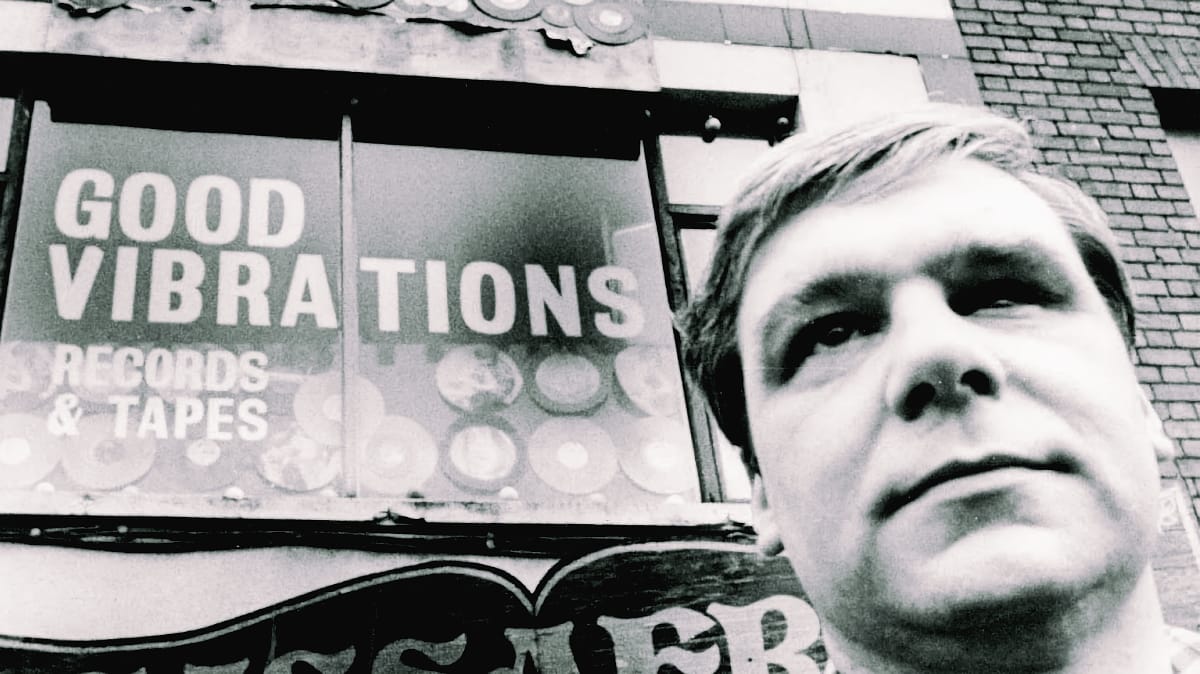
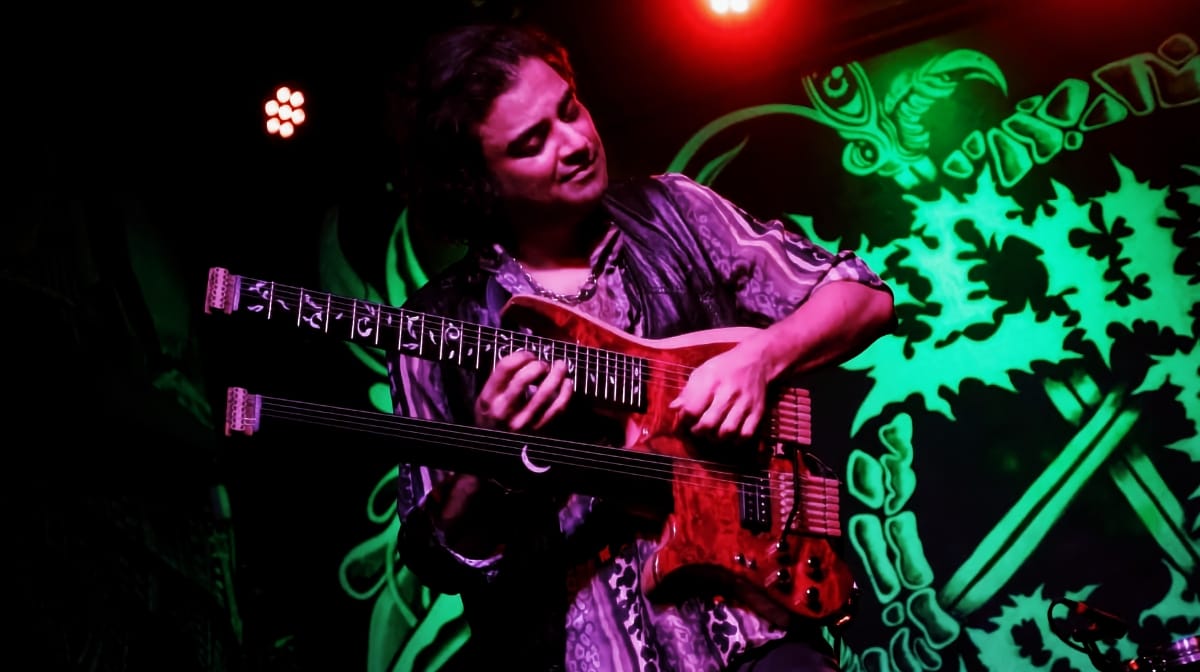
Anupam Shobhakar's story is a lot of fun. A bona fide metalhead in a Slayer shirt, teenage Anupam was fatefully seated in the front row for a concert by sarod master Ustad Ali Akbar Khan. Cue the epiphany! Anupam quickly focused his attention from the electric guitar to the sarod. But then he devised a dream instrument to combine both loves: "The final design features twin seven-string necks—one fretted, one fretless. With a low B on both necks, Shobhakar gets four equal octaves that work perfectly for Western harmony and Indian microtonality." Read on as LP tells you more.
 Lawrence Peryer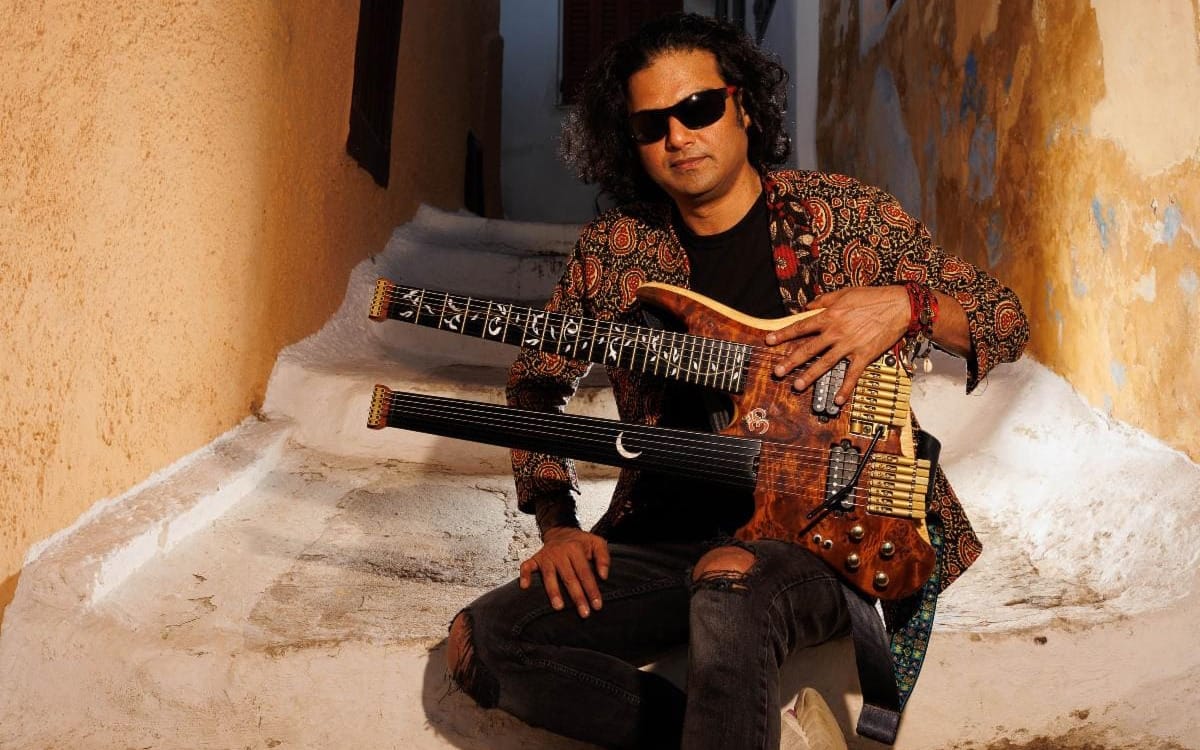
LP also hosted author Cary Baker on the most recent episode of the Spotlight On podcast. Cary has written the definitive tome on street musicians, Down on the Corner: Adventures in Busking and Street Music. This interview is filled with fascinating nuggets of how busking shaped music history and how street music is more important than ever for building artistic communities and enhancing urban life. Cary is so passionate about this topic, and it's a joy listening to him talk about it. You can read the interview or listen to the full podcast on The Tonearm.
 Lawrence Peryer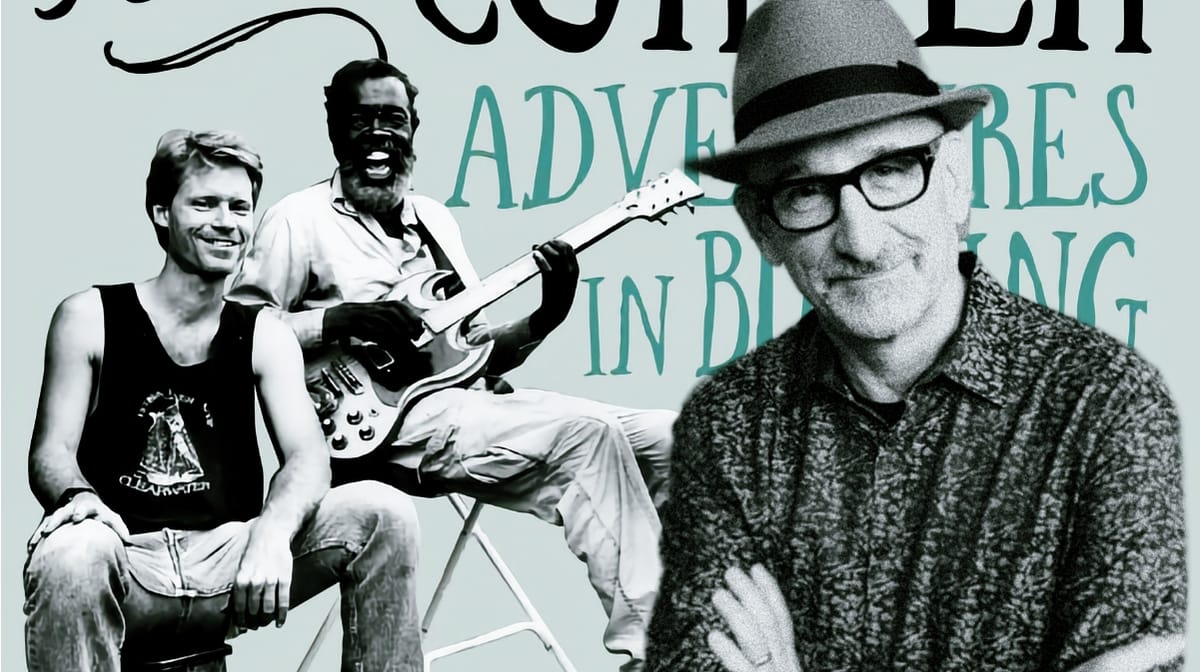
Intake Moderation
- Damon Kurowski (of this terrific newsletter) and Naomi Yang (who makes movies) are known as the rhythm section of Galaxie 500 as well as the members of the act named (checks notes) Damon and Naomi. Did you know they also run an independent press, Exact Change, that "publishes books of experimental literature with an emphasis on Surrealism, Dada, Pataphysics, and other nineteenth and twentieth century avant-garde art movements"? Now you do! And I pre-ordered the just-announced Immemory: Gutenberg Version, a book version of Chris Marker's multimedia memoir. Chris Marker directed massively influential films like La Jetée and Sans Soleil. The ideas in his movies often come off as provactive essays of their own, so I enthusiastically anticipate reading this book. Check out Exact Change's other offerings, too.
- A few months after David Bowie's 2016 passing, his record label released The Gouster, which was essentially v1.0 of what ultimately became Young Americans. The tracks on The Gouster are not rare or unheard—all were released as singles or on Young Americans—but the mixes and running order create the illusion of a "great lost album." Young Americans is celebrating its 50th anniversary and the always-insightful Chris O'Leary has a terrific essay on that era in Bowie's career. If you enjoy Chris's writing, you might want to check out the talk he gave at LP's invitation at the Bowie 75 store in New York. Chris went deep into Bowie, Eno, and the making of their 'reunion' record, 1.Outside.
- This week my personal jukebox is playing "Mistakes On Purpose," the slinky new single from Move 78 (a previous podcast guest), the '70s lounge/library music/soundtrack for driving a convertable along the Amalfi Coast album L'Ora Del Cocktail by Alessandroni E Il Suo Complesso, and a fantastic reissued album from the trio of Masahiko Togashi, Don Cherry, and Charlie Haden titled Session In Paris Vol. 1 "Song of Soil". That one sent me on a Don Cherry kick for a few days. Oh, and for some reason, I wrote about Television's self-titled 1992 album on my blog.

Something We Love
We enjoy eschewing the algorithm and directly asking folks to tell us something they love. Here are a couple of recent answers:
Zë Nigro (Enjoy the Silence — The Natural World of Zé Nigro): I recommend an album by an artist I produced last year, Malu Magri. The album is called Morrendo de Prazer. I am very proud of this release by this incredible singer and songwriter who is releasing her first album. I am also watching the Netflix series Cien Años de Soledad based on the classic novel by Gabriel García Márquez. It is a fantastic story about a city that is created in the middle of the jungle in Colombia. The book is wonderful, and the series is very well made. It is very interesting how the city grows and the personal issues and political questions develop alongside it. It's definitely worth watching.
Daniel Michel of La BOA (From Lagos to Bogotá — La BOA's Rhythmic Dialogue with Tony Allen): Something I really love is an album I think everyone should know about: Batata y su Rumba Palenquera - Radio Bakongo. Although this album was released in 2003, it is a jewel from Master Batata, one of Colombia's drum legends. It is one of the most influential albums of the independent scene and a good start for people interested in the music of the Caribbean coast of Colombia.
Thanks for reading this third issue of Talk Of The Tonearm. Got a quick moment? Please tell us what you think and if there's anything you'd like to see in these newsletters. Have you another moment, perhaps? Well, if it strikes your fancy, please share this newsletter or one of our articles with an appreciative friend. That always means a lot and adds fuel to our creative fire.
This is Michael, your friendly ghost host, signing off. I'll see you next week! 🚀


Comments