


Ahoy, all! We've landed on another Sunday edition of Talk Of The Tonearm, the weekly newsletter where I ponder deeper meanings in a selection of interviews and stories recently published on the site. This time, the connections somehow coalesced around the theme of constraints: embracing them for creative inspiration, mostly, but also the act of breaking free of them when necessary. My present constraint is time, as I need to get this newsletter sent out, so with that prompt, here we go!
Surface Noise
 Lawrence Peryer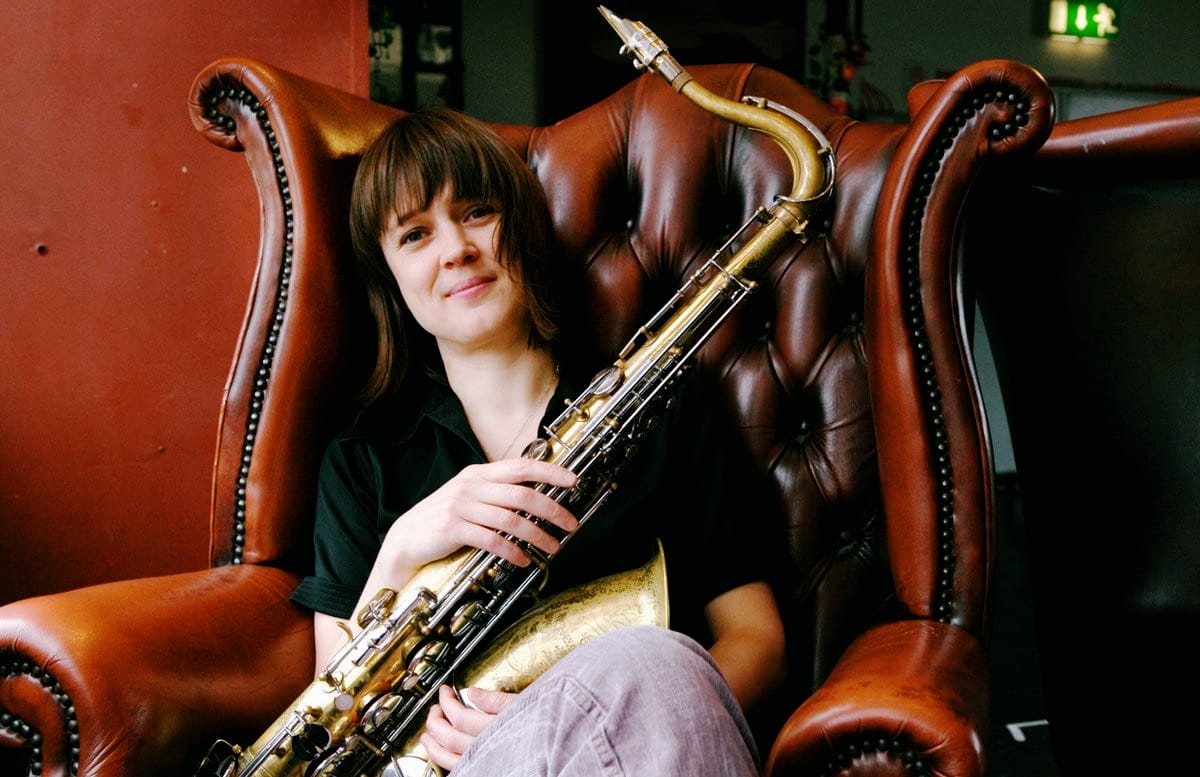
Erica Hunt's "Mood Librarian" poems function as modern koans—brief, enigmatic statements that resist rational interpretation and may help rewire the mind. By using the poems as the backbone of her album Purposing the Air, composer Ingrid Laubrock is connected to a largely unknown underground of composers and writers who used mathematical constraints to trigger breakthrough moments. A koan like "What is the sound of one hand clapping?" short-circuits rational thought to access deeper understanding, just as constraints force creative solutions by breaking habitual patterns.
The connection begins with surrealist Raymond Queneau, co-founder of the French literary group Oulipo in 1960. Queneau was a serious mathematician who believed numerical patterns could serve as doorways to the unconscious. His "N+7" technique, which replaces every noun with the seventh noun following it in the dictionary, creates semantic nonsense that somehow unlocks new meaning through systematic chance. Tom Johnson, who studied in Paris and directly absorbed Oulipian techniques, became perhaps the most explicit musical practitioner of this mathematical mysticism. His "Counting Duets" force performers to count in overlapping mathematical patterns while playing, creating a meditative state through numerical constraint. The repetitive counting functions like a mantra while the overlapping patterns create impossible-to-predict musical outcomes.
Laubrock describes her compositional process as limiting herself to "one idea or maybe two ideas" per poem, treating the sixty fragments as a space where "thoughts kind of puff through your consciousness." This follows the tradition of using constraint as a liberation tool. The artificial limitation forces Laubrock to distill each setting to its essence, creating what she calls "a fun meditation, a game." Like Johnson's systematic chord progressions or Queneau's combinatorial sonnets, the constraint becomes a collaborator rather than a restriction. It's also a container where something larger than an individual can emerge. Hunt's original fragments already contained this paradox—as Laubrock notes, "There's no clear meaning in many of them," yet they somehow communicate tangible emotions. The fragments amplify the mystery by creating musical space around the enigma.
Playback: Dirt in the Machine — Hiroki Chiba Joins Hinode Tapes for 'Ita' → Hinode Tapes restrict their instrumentation to four players, force themselves to record directly to four-track analog tape without overdubs, and intentionally limit each musician to a single track. The four-track recording constraint removes the safety net of endless overdubbing or editing, which creates a meditative necessity where musicians must be fully present in each take.
 Chaz Underriner
In classical music, dead composers offer something invaluable to institutions: complete predictability. Beethoven will never demand higher royalties, challenge a conductor's interpretation, or express political opinions that might alienate donors. Meanwhile, we judge contemporary music against an artificially curated highlight reel, wondering why today's composers can't match the consistent genius of previous eras. This is partly what composer Kory Reeder—still alive!—means when he describes classical music as a "death cult."
Listeners often mistake familiarity for quality, conditioning themselves to hear Bach as "naturally" more sophisticated than any living composer. Each generation falls into this same temporal trap, dismissing contemporary work while lionizing the music of their youth. And living composers threaten this comfort in fundamental ways. They might evolve, contradict their earlier work, or resist being pinned down to a single aesthetic. Reeder himself embodies this institutional nightmare. He's a composer who writes 163 pieces in a decade, releases albums on Bandcamp, and treats string quartets as experiments rather than monuments.
Perhaps most subversively, Reeder's prolific output suggests that great art might not require decades of agonizing revision. His rejection of "peer pressure from dead people" is creative liberation that also rejects an entire economic system built on artistic necrophilia. The death cult of classical music persists because it serves powerful interests, such as institutions that profit from predictable programming, educators who prefer teaching closed canons, and audiences who find comfort in familiar hierarchies. But as Reeder demonstrates, liberation might be as simple as refusing to accept that corpses make better artists than the living.
Playback: Bomba Meets Bebop — The Afro-Puerto Rican Fusion of Alex ‘Apolo' Ayala → Alex 'Apolo' Ayala describes feeling overwhelmed by the weight of jazz tradition and questioning where he fits within established musical hierarchies. His solution: refusing to be intimidated by the pressure from dead masters and instead focusing on his own authentic voice by embracing his cultural influences.
 Lawrence Peryer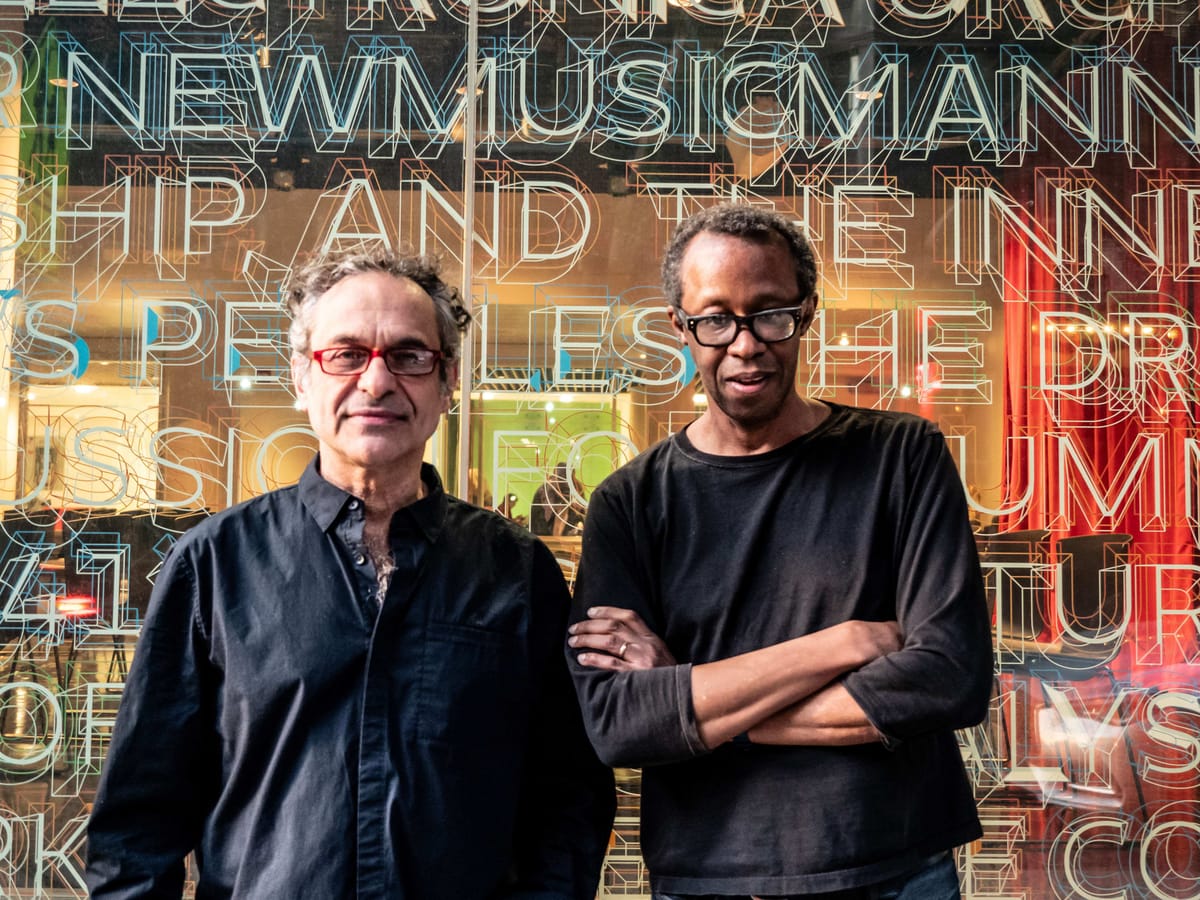
Lawrence Peryer's vanished interview with Matthew Shipp and Ivo Perelman was, in hindsight, an elegant accident. Peryer found himself occupying a similar creative space that defines his subjects' forty-six albums together: working without a safety net, building something coherent from fragments, trusting that meaning would somehow coalesce from the process itself. His reconstruction method directly mirrors how Shipp and Perelman approach their music, demanding what Perelman calls "spontaneity and reaction" while avoiding "preconceived ideas."
The symmetry runs deeper than mere irony. Both the lost interview and the duo's new album Armageddon Flower represent what Clifford Allen calls "music of necessity," where constraints force entirely new pathways into view. The technical failure becomes a creative constraint as powerful as the album's deliberate absence of percussion, which Shipp describes as creating "more control over the space and time." Jerry Garcia once celebrated the Grateful Dead's "beautiful mistakes"—blown amplifiers and broken strings that forced the band into unexpected musical territory they would have never intentionally explored.
In the end, both the lost interview and Armageddon Flower offer models for creative resilience. Our most authentic work might come not from perfect conditions but from embracing what Perelman calls "infinite variables." The technical failure transforms journalism into improvisation, where the writer must trust that something meaningful will arise from honest engagement with present circumstances, however unexpected. The accident becomes not just an obstacle to overcome but a pathway that requires courage to follow where it leads.
Playback: Electric Relaxation — Cinephonic's Return to Turntable Jazz → When realizing his latest album as Cinephonic, Pierre Chrétien's process involved recording a complete jazz trio album and then deconstructing it through sampling and manipulation. New compositions formed through intentionally breaking apart Chrétien's own acoustic recordings, building coherent meaning from fragments.

The Hit Parade
- The voices of Jolanda Moletta and Karen Vogt catalyze the elegiac, otherworldly tones of Sea-Swallowed Wands, their latest collaboration that builds on their stunning Longform Editions debut with even more ambitious results. Both artists bring extensive discographies—Moletta through labels like Whitelabelrecs and Ambientologist, Vogt via Waxing Crescent and Stella Frequencies, plus her work as co-founder of dream-pop outfit Heligoland—but together they create something truly magic-like. These are "vocal explorations and improvisations made while heavily under the influence of the sea and the moon," and that oceanic pull permeates every moment of the wordless choral domain they inhabit. A noticeable asset is their attention to what they call "the little noises, clicks, breaths, crackles, and physical movements." These quiet details (!) make one acutely aware of breath as instrument and of voice as vulnerable human expression rather than processed ethereal wash. The result is expansive yet weightless, as if these seaside improvisation sessions captured something from the spirit world. As their music plays, I feel ghosts gathering around us.
- Uncertain times flail even further into uncertainty, so a double dose of calming music seems appropriate. Thus: Boris Billier's Edge Angles, his debut for Whitelabrecs under the Aries Mond alias. Here, Billier, whose background spans environmental sound art, theatre, and installation, abandons the precise atmospheric work that marked his releases on Eilean Rec and IIKKI for something far more precarious and alive. These nine contemporary pieces were inspired by 'stolen moments,' such as raw piano lines captured in single takes and sudden ideas seized before they could vanish into the daily routine. Billier’s multidisciplinary experience enables him to concoct quotidian sound sources with hints of the surreal and out-of-place. He describes his process here as akin to slide sports, where split-second decisions determine whether you maintain elegant control or tumble into complete collapse. The album feels genuinely spontaneous in a way that imperfection becomes a pathway to intimacy rather than something to correct. Wabi-sabi music, anyone?
- Short Bits: John Andrew Fredrick of the never-ending and consistently great band The Black Watch is the guest on this week’s episode of the Spotlight On podcast. I think it’s one of the funniest episodes we’ve released. • For a different podcast experience, the ‘copyright’ episode of In Our Time is fascinating and terribly informative. • On her birthday, here’s a gift link to this beautifully designed New York Times piece on Octavia Butler. • This week’s edition of Kyle Chayka’s One Thing newsletter contains a daring self-plug for The Tonearm. • Via Bandcamp: Not Even War Can Stifle Ukraine’s Punk Rock Spirit. • In Sheep’s Clothing highlights immigration rights organizations and the multiculturalism of Los Angeles’s music scene.
Deep Cuts
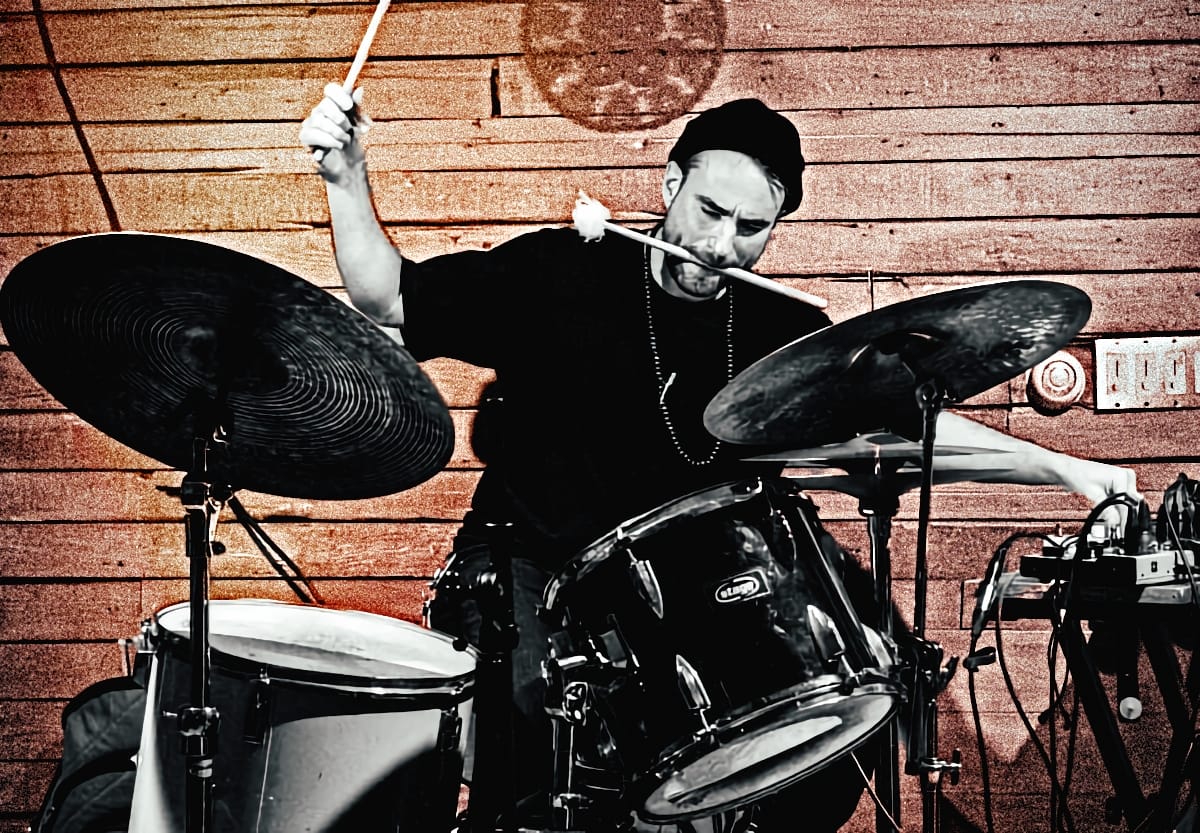
Jazz drummer extraordinaire Devin Gray kindly took a break from his busy schedule to answer the question, "What’s something you love that more people should know about?"
I'd like to share with you what continues to consistently be most important in my life: people and music.
This may sound clichéd coming from a musician, but I truly love listening to music every day, and I encourage everyone I talk to to do the same more often. I believe that through the act of listening (ideally with others and building community), we allow ourselves to open up more honestly to everything, which in turn provides us with more positive responses to framing our world in a healthier way of living. Simply put, hearing music brings joy and healing to our minds and bodies, and I think the world needs more positive vibrations everywhere, especially during these modern times.
I’m a musician, but before that, I became a music fan. One project I started during the pandemic and have continued with is curating a weekly playlist of new releases. At first, it may sound simple, but when you connect this deeply to the people and music idea, it becomes heavy very quickly. The two criteria that inform the playlist space are: I only add current releases from 2025 (an endless challenge to keep up with both the selecting and listening sides), and I generally only add people with whom I have had some form of direct contact in my real life. As a result, the list is highly personalized by nature, but it doesn’t only include friends or friends of friends; it also includes newly discovered artists via friends, as well as folks I know or have met but are not yet familiar with their music. The latter is key because it creates a space where I don't only listen to what I know, but also allow for the unknown, all the while trying to share this collection of music with the people in my life.
I am often listening to this list on shuffle and love it when I hear something I don’t recognize, and it moves me on a deep level, only to find out who it was later. It gives my ears a new perspective, and I love this self-built, personalized blindfold test experience.
Lastly, please support the music that moves you; you will thank yourself. Bandcamp is the best fair-trade option to support artists’ work directly. And always remember, you are what you (eat) listen to.
Here is the playlist link; however, I can’t publicly endorse the use of Spotify due to the obvious incorrect remuneration of artists' work. (Editor’s note: Here’s a Qobuz mirror of the playlist I just created.)
Devin Gray’s Bandcamp page is filled with amazing music, but, for starters, I recommend Melt All the Guns II.
Run-Out Groove
Thanks once again for reading through this installment of Talk Of The Tonearm. I hope you found many things to think about and numerous links to click with enthusiasm. I'd love to know your opinions and if there's anything I should talk about in a future edition. Just reply to this email or contact us here. We're also adding contributors to our elite and slowly expanding Tonearm team, so please reach out if that's of interest to you as well.
Do not forward this newsletter to one (or more) friends that you think would like it. And by all means, do not suggest that they should subscribe. And absolutely do not post a link to this newsletter or any stories from The Tonearm on those social media monoliths. It's not like spreading the word is the best way to help out and support what we're doing here at The Tonearm. Don't do it!
I think that's what the kids call 'reverse psychology.'
I hope you're having a good weekend, getting your mind of all the freaking craziness with gorgeous tunes and fine friends. How about we meet here again next Sunday? Deal? All right, then. I'll see you next week! 🚀
Connect with The Tonearm:


Comments