


Hello, gorgeous newsletter reader, and happy Sunday. This is your weekly dose of Talk Of The Tonearm, a run-down of stories and tall tales that appeared on our site over the past week. There are also some crafty recommendations and a terrific new podcast episode that I can't wait to tell you about. Here we go:
Queued Up
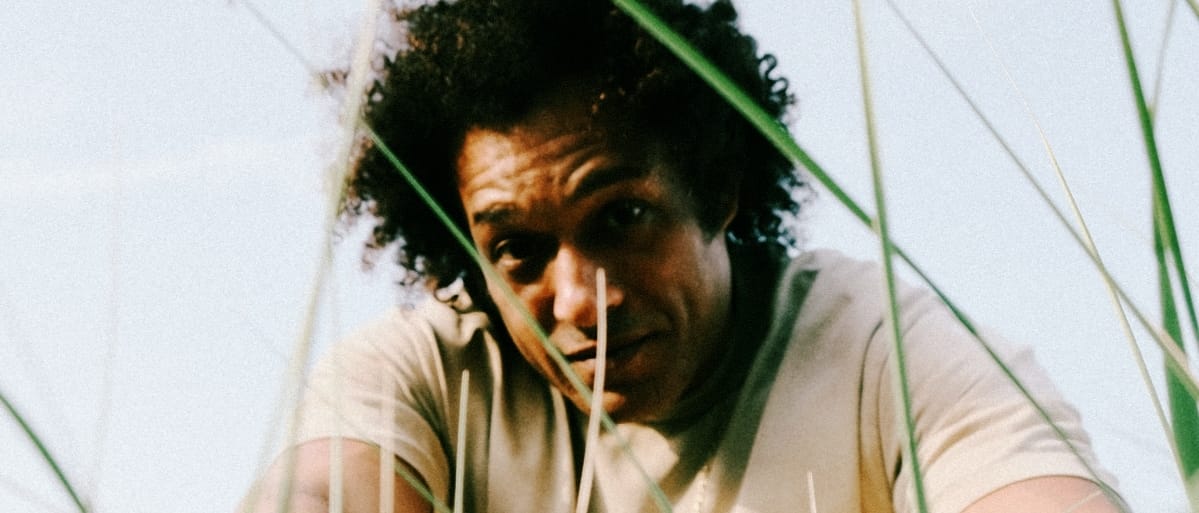
Makaya McCraven in the Present Tense
Off the Record compiles four EPs from fully improvised concerts recorded with drummer Makaya McCraven between 2015 and 2025 in underground Chicago venues and New York jazz clubs. Sam Bradley spoke with McCraven about how this project operates outside of commercial necessity, instead emphasizing "the participatory nature" of music-making—the unrepeatable exchange between musicians and audiences sharing the same air. "We are all just living in real time, trying to figure shit out," McCraven explains, framing improvisation not as a jazz technique but as the natural state of being. The conversation touches on McCraven's formative years in Western Massachusetts, where proximity to Yusef Lateef, Archie Shepp, and Marion Brown shaped his understanding of jazz as rooted in Black American innovation. A move to Chicago provided space to develop without the pressure toward homogeneity or the aggressive social navigation required in scenes like New York City's, where "young people are badass musicians and also hungry." McCraven also positions the intimate, imperfect recordings on Off the Record as a form of resistance to screen-mediated 'content.' "What an AI band can't do? They can't play a live show," he offers, arguing that the power of improvised music lies in its vulnerability and presence, and that those qualities emphatically refuse virtualization.
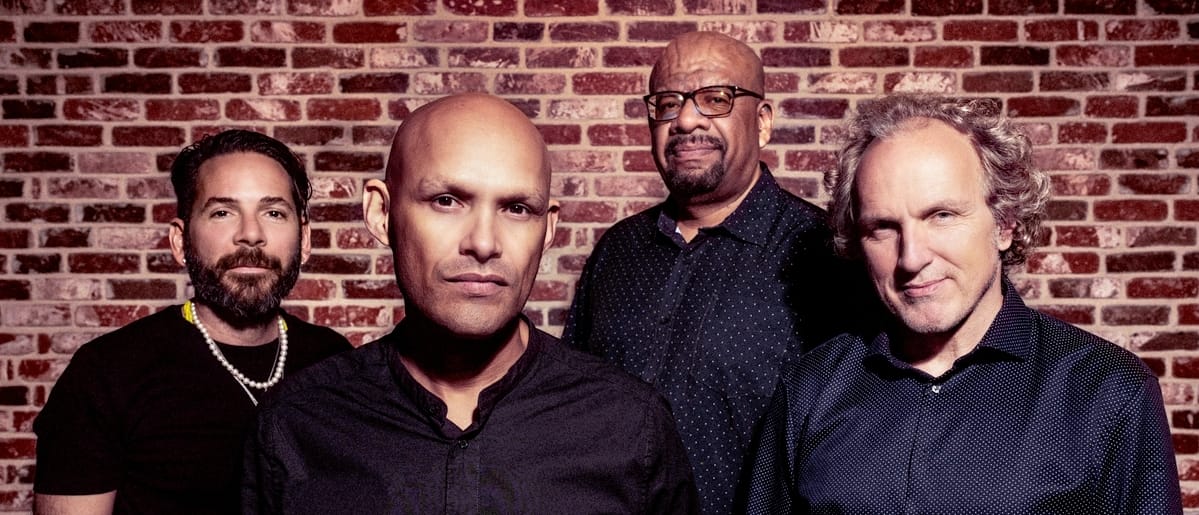
From San Juan to Seventh Avenue — Miguel Zenón's Vanguard Moment
After two decades together, Miguel Zenón's quartet finally documents their live chemistry on Vanguardia Subterránea, recorded over two nights at the hallowed space known as the Village Vanguard. Lawrence Peryer spoke with the MacArthur Fellow about the album's origins and what it takes to keep a band intact that long, no small feat given how rarely a band stays together for even just a few years. The repertoire mixes family tributes and covers of classic compositions with conceptual experiments like "Coordenadas," which encodes the Vanguard's geographical coordinates and each musician's birthplace into pitches. Zenón completely reimagines Willie Colón and Héctor Lavoe's "El Día de Mi Suerte," drawing on remembered teenage drives through San Juan listening to salsa records that became "deep within my DNA." The conversation covers Zenón's thinking on band dynamics—"a personal connection and that personal chemistry are as important, if not more important, than musical dexterity"—and stretches into his Golden City project, which musically expressed immigrant experiences. This leads to the topic of artistic responsibility, and Zenón puts it plainly: "I see it as a responsibility to call out things that you see wrong in the world and use your platform, your art, your means of communication to voice them."
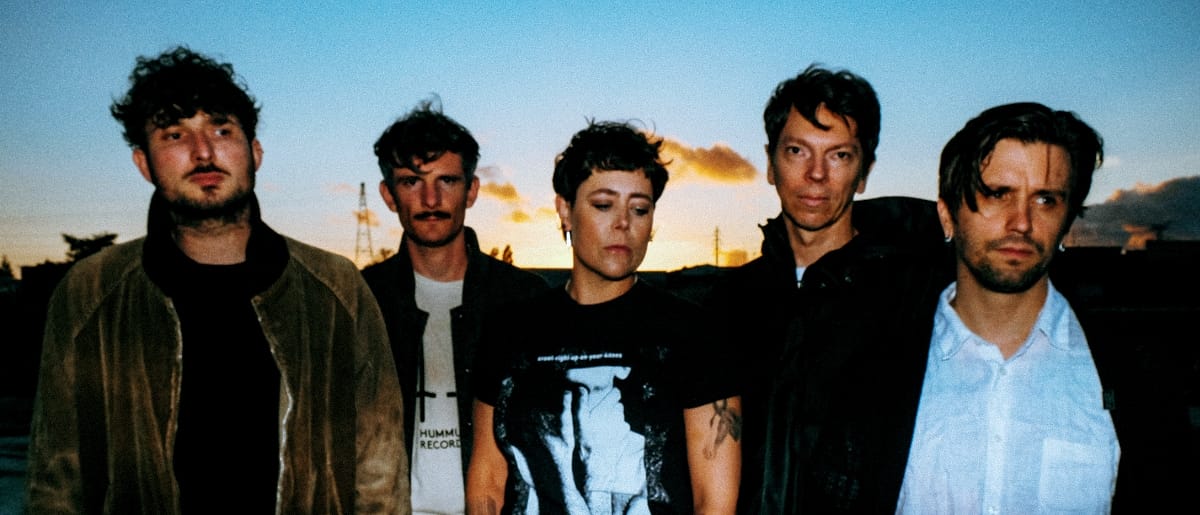
Pain Magazine's 'Violent God' and the Radical Urgency of DIY
Violent God, the debut album from Pain Magazine, began as a no-pressure experiment between industrial techno duo Maelstrom & Louisahhh, 'one-man electro-acoustic looping machine' Quentin Sauvé, and post-hardcore band Birds in Row. What started as a one-off to produce maybe one song became a series of sessions that yielded a full album, recorded in separate rooms with musicians swapping positions and trading ideas. Louisahhh succinctly expressed the attitude behind the project to The Tonearm's Jonah Evans, telling him, "If you're not enjoying the process, what are you fucking doing?" The album's raw urgency—the aesthetic described as "lo-fi or anything like that"—comes partly from circumstance: no proper vocal booth, no fancy mic stands, everything captured in the instant. Bart of Birds in Row adamantly states the DIY punk ethos that "there is no merit, and there is no talent," rejecting natural ability in favor of accessibility. There was also a need to escape from industry pressures, a chance to make music "like we used to do when we were teenagers, trying things in our room." Louisahhh also notes how the rawness of the Violent God sessions exposed difficult-to-confront emotions and carried bell hooks's philosophy: liberation won’t be easy, but it remains possible. "Stay out of the results, stay in the process," she advises, "and don't forget to fucking enjoy it."
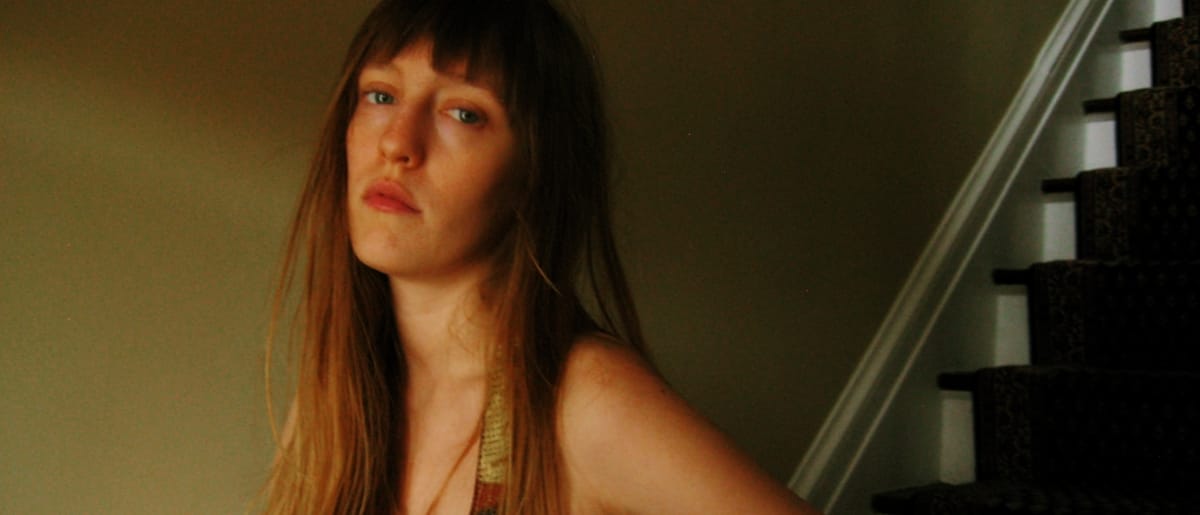
The Cardinal Voice of Anastasia Coope
Anastasia Coope's mezzo-soprano voice is cardinal and self-governed, as Steven Garnett aptly describes it. Her new EP, DOT, recorded over nine days in Oregon, mixes her education in visual art with music that's spartan yet textured. Garnett introduces us to a creative process that mirrors Coope's painting practice: she enters with blueprints but embraces spontaneity, adding low-volume instrumental layers she calls "weather" without disrupting the recordings' geography. When discussing quality in art, Coope makes a striking connection to neighborhood construction visible from her window: "The ideology that quality can exist without the injection of creative human thought seems wrong." She divides art into true and untrue, using her instinctive reactions to refocus toward what she finds real. Though she jokes about the devil's presence in bad art, her actual foundation is family—multigenerational gatherings and the assurance of being supported. Coope knows what to do with the dissected remnants of True and False ideas: stitch them into something genuinely her own.
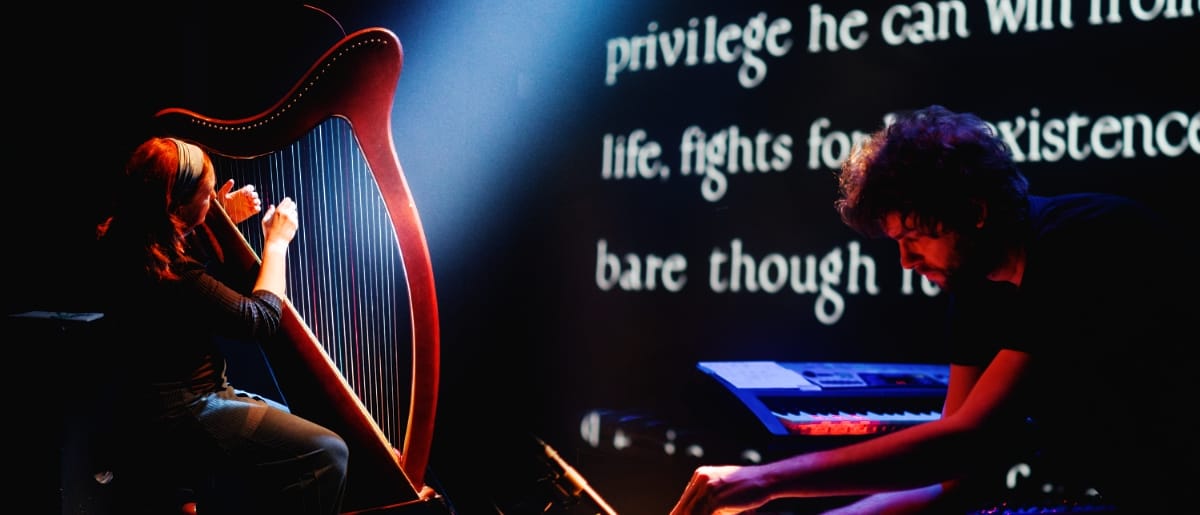
The Cinematic Snowdrops of Christine Ott and Mathieu Gabry
ARAN, the final installment of Snowdrops' ambitious trilogy, scoring Robert Flaherty's documentary films, was recorded in a single take at Strasbourg's Cheval Blanc venue. Lawrence Peryer spoke with Christine Ott and Mathieu Gabry about the hour-plus score that finds the duo improvising along to Flaherty's 1934 portrait of Irish fishing families. Ott borrowed her friend's harp just one month before the premiere and impulsively added it to her arsenal of piano, ondes Martenot, and theremin. Gabry contributes his self-built "drone box" and, notably, an €8 secondhand children's keyboard whose light-up keys accompany "The Fishing Line." Their music, created to follow the emotional moments of the film rather than simply mimic the action, still features repetitive loops and harp glissandos for a young fisherman's precise casting, and theremin sounds echoing animal cries during a hallucinatory shark hunt. "It's all a question of balance," Ott explains about avoiding the pitfall of emphasizing what's already in the image, "and I believe that it's up to the music not to weigh the film down."
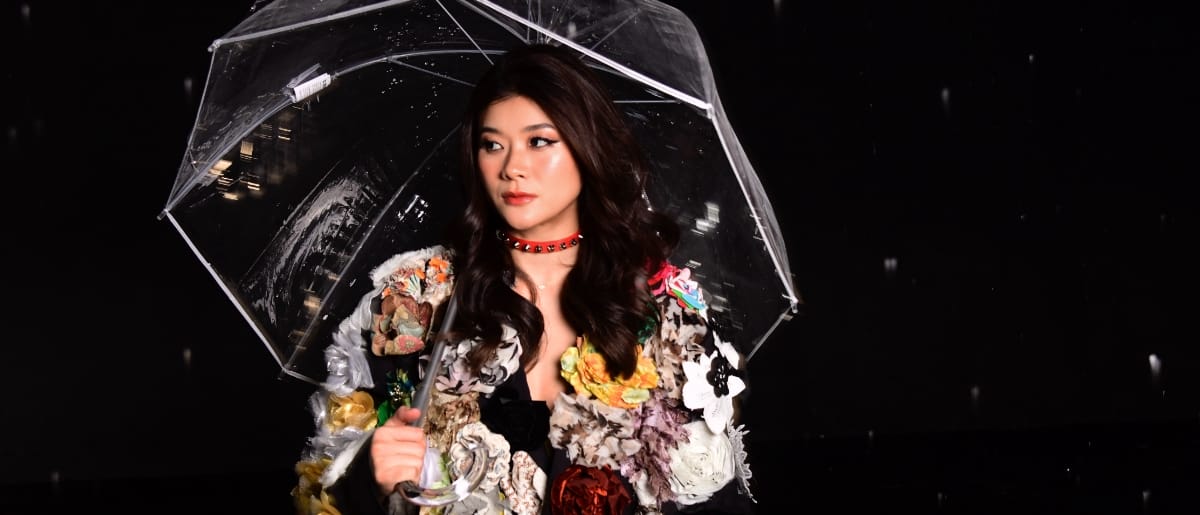
The Ephemeral Becomes Audible on Erika Dohi's 'Myth of Tomorrow'
Erika Dohi's Myth of Tomorrow confronts aloneness, and its roots are in pandemic isolation turned into a meditation practice. The album prominently features rare synthesizers like the 1940s Ondioline and the Fairlight CMI (which sounds "different every time we hear it," according to Dohi) as well as astrological frameworks and field recordings of neighbors banging pots for first responders. The album's song titles serve as guideposts: "Ame Onna" references Japanese folklore about women who bring rain everywhere, reframed as permission to cry; "Aratani" captures vivid memories of her grandfather's final days in Osaka, absence commenting on impermanence; and "Saturn Square Venus" maps the astrological transit of restriction meeting beauty onto piano and violin. The album's final track preserves an April 2020 improvisation interrupted by her neighbors' pot-banging, which felt like "cheerleading for me," transforming loneliness into collective courage—beautiful, hopeful stuff.
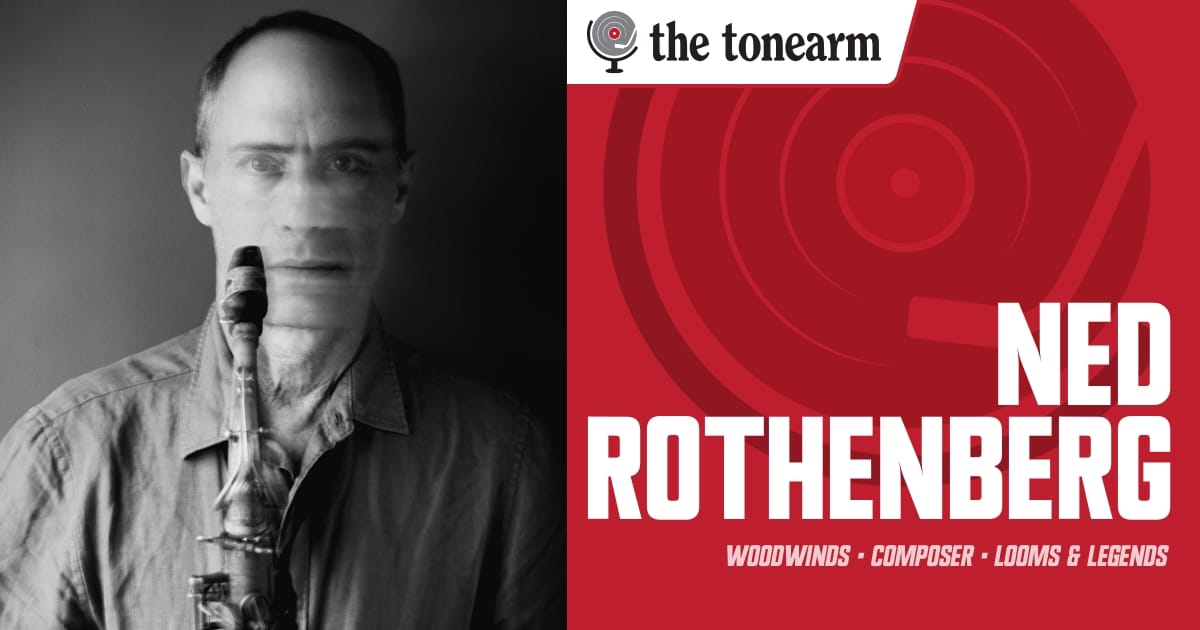
Solo Improvisation in Bizarre Times
Today's new episode of The Tonearm Podcast features Ned Rothenberg on the heels of Looms and Legends, his first solo album in thirteen years. Lawrence Peryer's conversation with the multi-instrumentalist reveals a musician committed to extending woodwind language through circular breathing, multiphonics, and microtonal organization across alto saxophone, clarinets, and shakuhachi flute. Rothenberg describes his aesthetic as "future primitivism," positioning his technical explorations as sounds that might belong to some undiscovered culture whose traditions center on circular breathing through reed instruments. He's remarkably candid about the importance of context in making extended techniques meaningful: "Multiphonics are a good example. What are they by themselves? Well, they're mostly ugly and out of tune." The conversation addresses art's role during turbulent times, with Rothenberg pushing back against TikTok culture while acknowledging that artists aren’t political leaders, though he insists, “We need art to stay sane" and champions curiosity as essential, describing its absence as "a deadly, almost terminal illness." Tune in!
Outside Track
The Tonearm's Garrett Schumann and Arina Korenyu recommend a book and a film, respectively, in hopes of sending you off into a more imaginative realm than this one.
Garrett Schumann: Trust, the 2022 Pulitzer Prize-winning novel by Argentine-American writer Heran Diaz, is almost impossible to describe. It embraces an unusual form wherein the story is told through four invented documents that coexist within the world of the narrative: an excerpt from a historical novel, a draft of one character's unpublished autobiography, an excerpt from another character's memoir, and, finally, a third character's diary. Diaz dazzles in the way he realizes this delicate structure by giving each authorial voice and format a distinctive, lived-in, and believable tone. But Trust is also difficult to describe because it is deeply mysterious in ways I would hate to spoil. A long-time social media acquaintance, the highly talented electronic musician and sound designer Berrak Nil, recommended it to me when I asked for an engrossing read. Trust absolutely delivered and sucked me in even though, for a long time, I had no idea where it was going to go.
Arina Korenyu: I know Poor Things isn’t new, but I finally got around to watching it this week —and I was absolutely blown away. The Victorian aesthetics, Emma Stone’s highly accurate performance, and the stunning camera work shook me up greatly. As a woman, I’ve always found the history of “hysteria” diagnoses and the brutal ways women were mutilated deeply painful, so it was powerful to see a film that explores those themes with such surreal beauty and intensity. It’s dark and unsettling in that unmistakable Yorgos Lanthimos way, but also inspiring and liberating.
Short Bits
I'm listening to Barbican Heights, a new EP from Adrian Sherwood along with members of African Headcharge and Speakers Corner Quartet. The second and fourth tracks are particularly special. • Hank Shteamer's terrific tribute to the late drumming legend Jack DeJohnette. • I really like how Patti Smith continually refers to her audience as 'the people' rather than 'my fans' in this podcast interview. • "'I feel that I know free jazz as a spirit,' [Neneh Cherry] writes [in the foreword to Now Jazz Now]. 'I’ve thought about it as a commitment and a necessity, such as food.'" The Guardian's Alexis Petridis decides to dive into free jazz. • R.I.P. to the great Jimmy Cliff. Here's a gift link to the NY Times obituary.
Run-Out Groove
Working through a long holiday weekend often feels like sleepwalking through a marathon. Sometimes, miraculously, you even make it to the finish line. Thanks for reading our humble weekly email missive. Please share it, or your favorite story from The Tonearm, with discerning friends or perhaps your not-so-discerning social media feed. And don't hesitate to get in touch if you have a suggestion, comment, or recommendation—reply to this email or contact us here.
This week I'm keeping my words lean and mean. Frankly, I'm pooped. I'm going to spend the rest of this Sunday listening to music and poking through my Readwise queue. How about you? Be sure to take it easy, whatever your potential exploit, and, as always, I'll see you again here next week. 🚀
Connect with The Tonearm:


Comments