


Ahoy and greetings! It's time to cozy up to another edition of the Talk Of The Tonearm newsletter. Each Sunday, I, your handy editor of all things Tonearm-y, squeeze the unexpected juice out of recent articles and interviews that appear on our humble (but juicy!) website. Now, without any unnecessary ado, let's get right into it:
Surface Noise
 Lawrence Peryer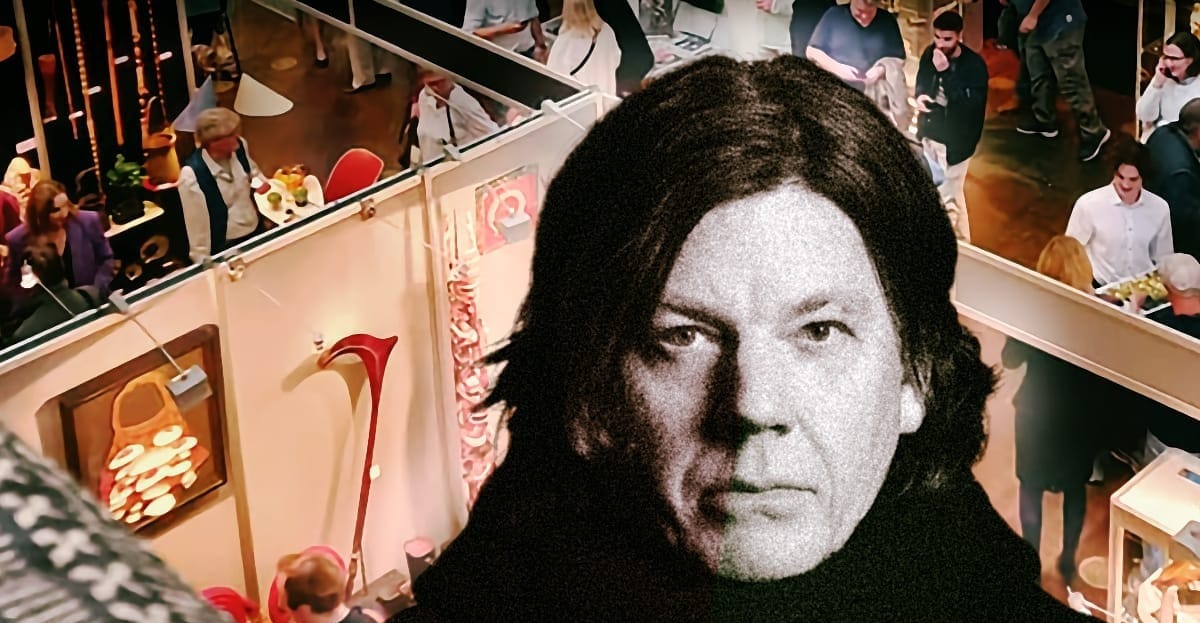
John Andrew Fredrick of The Black Watch desires to "remain in a kind of mist." This connects him to a creative tradition that treats uncertainty as revolutionary rather than a weakness. This tradition has a name, coined by John Keats in 1817: negative capability—the quality that allows one to remain "in uncertainties, mysteries, doubts, without any irritable reaching after fact and reason." Keats saw this capacity for sustained unknowing as Shakespeare's greatest strength, the ability to inhabit contradictory truths without needing to resolve them. Fredrick embodies this principle through his refusal to explain his prolific output or his supposed inability to provide technical details of his creative process. He describes songwriting as emerging from dreams, understanding that too much analysis might pollute his creative well.
Contemporary artists practicing negative capability actively protect the ambiguity of their work, recognizing it as an inseparable part of the art. David Lynch's adamant refusal to explain his films preserves the multiple interpretations that give them an uncanny power. Aphex Twin takes this resistance further, deliberately obscuring his music's place in time through multiple aliases and contradictory information. To this end, the studio becomes a kind of mist-space where artists (and their listeners) trust hidden processes. Fredrick operates similarly, refusing to plot out his albums thematically: "I dunno what they have to do with each other at all," he says about For All The World's twenty-one songs. This isn't artistic apathy but the intentional act of creative unknowing.
The resistance aspect of this approach strikes against our culture's hostility to ambiguity, where every creative choice is often justified through interviews and social media posts. Fredrick identifies the enemy of negative capability in social "know-it-alls" who treat uncertainty as a problem to be solved rather than an ingredient for perennial artworks. Fredrick's insistence on making demands of The Black Watch's listeners—asking for a double album's sustained attention in an era of fractured focus—extends this resistance into consumption itself. As a fan of the mysterious myself, I agree that art's greatest power lies not in what it reveals, but in what it allows to remain unknown.
Playback: Enjoy the Silence — The Natural World of Zé Nigro → Zé Nigro's creative method resists analysis—songs emerge through intuitive processes where compositions might start on one instrument but find their true voice on another, with final decisions coming from the ‘soul’ rather than the hands. Like Fredrick, Zé Nigro refuses to force creative understanding, instead allowing art to develop organically.
 Peter Thomas Webb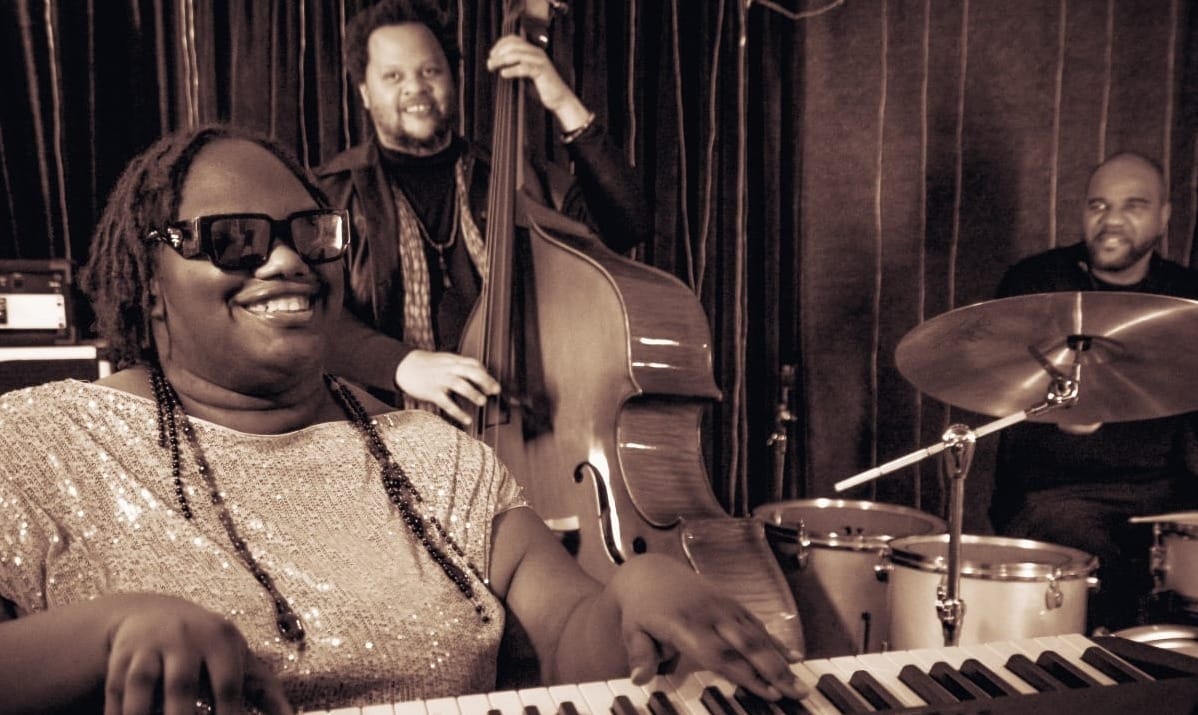
Brittany Davis describes the "Ancestors" interludes on her new album Black Thunder as living "in the analog spaces in our lives." These ancestors, she explains, exist "between the push and pull of existence" and in vulnerable moments when we feel lifted by love while aware of our precarious position in the world. For Davis, these emotional places are built from proximity, distance, and the spaces between notes. This awareness musically connects Davis to a lineage of blind musicians interpreting subtle layers in a recording that others might miss. These artists often possess a heightened sense of room itself as an expressive instrument, silence as a compositional element, and proximity as a vital component of the finished song.
Blind recording artists sometimes develop an acute sensitivity to acoustic environments, whereas sighted musicians often focus solely on notes and melodies. For example, Ray Charles and Stevie Wonder were especially choosy about microphones and their placement, a concern traditionally left to trained recording engineers. Brittany Davis's description of being "plugged in" and serving as a "conduit" suggests the same spatial sensitivity. Her album's gospel-inflected interludes adopt the same function as room tone and ambient space, providing the breathing room—the analog spaces—where deeper emotional and spiritual content can appear. In the digital age, Davis reminds us why those spaces matter and why the contributions of blind musicians remain essential to understanding recorded sound as a three-dimensional, inhabited medium.
Playback: Ripple Effects — Chaz Underriner's Immersive Water Music → Chaz Underriner's use of 10.5 surround sound and his focus on creating "immersive sensory environments" connect to a sort of heightened spatial awareness. Underriner describes landscapes as requiring "subjective experience" and human perception to exist, enforcing the potential idea of sound recording as a spatial, lived-in place.
 Michael Donaldson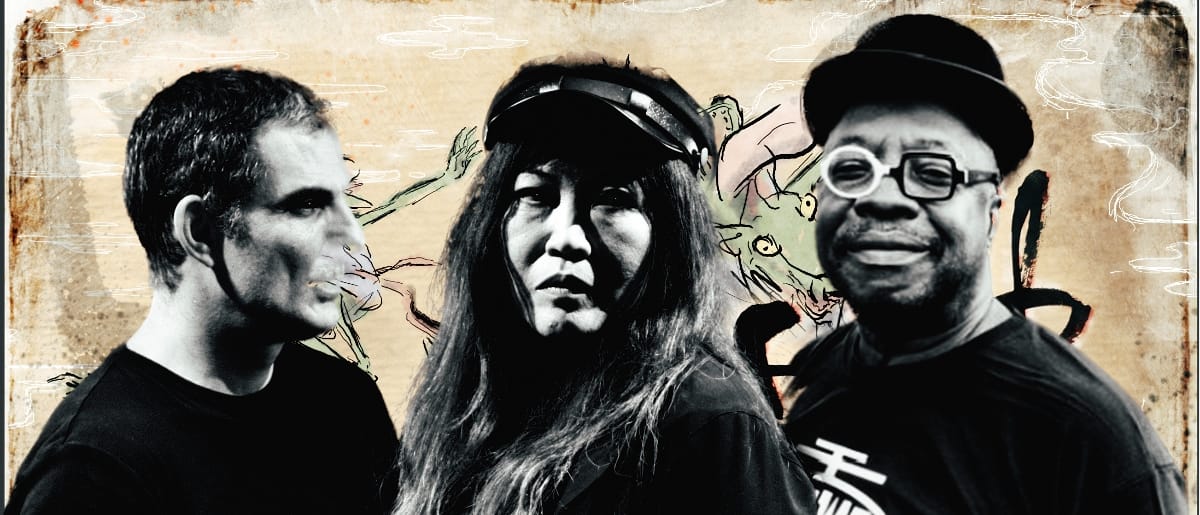
Martin Nathan's selection of five Japanese supernatural yōkai to anchor Oide Oide, his latest album as Brain Damage, follows, perhaps unknowingly, an ancient practice of using folklore to help understand the human mind. Nathan's collaborator Emiko Ota drew from centuries of collective observation and symbolism about different mental states. Isogashi, the perpetually frantic "Mr. Busy," captures the supernatural quality of feeling driven by invisible forces beyond one's control. Azuki Arai, who lures victims with bean-washing sounds, represents the hypnotic quality of repetitive thoughts that can lead someone toward dangerous psychological territory.
Taking this idea further into the esoteric, Nathan's months-long recording process mirrors the careful preparation of the ritual tradition, while Mad Professor's spontaneous dub versions echo (pun intended!) the immediate, intuitive responses of shamanic practices. The contrast between Nathan's methodical construction and Mad Professor's feeling-based transformations may signify the balance between deliberate healing work and surrendering to unexplained powers. We can even imagine Nathan's embrace of his machines succumbing to broken chaos, "at any moment,” as welcoming the entry of supernatural influences to the creative process.
Through Oide Oide, the yōkai become active collaborators rather than passive subjects, shaping the music according to their own ancient logic. Nathan's studio becomes a contemporary version of a sacred space, with delay units, synthesized beats, and effects processors serving functions similar to drums and ritual objects, allowing generations of collective wisdom to materialize through technological means.
Playback: The Imagination Asks Questions — Inside Giacomo Pedicini's Hard Boiled → Giacomo Pedicini describes Naples as having "layers of history that pile up here, one on top of the other,” where "the Sacred merges with the Profane." Pedicini treats musical creation as archaeological work, accessing the depths of his city’s cultural memory through sound experiments.
 Lawrence Peryer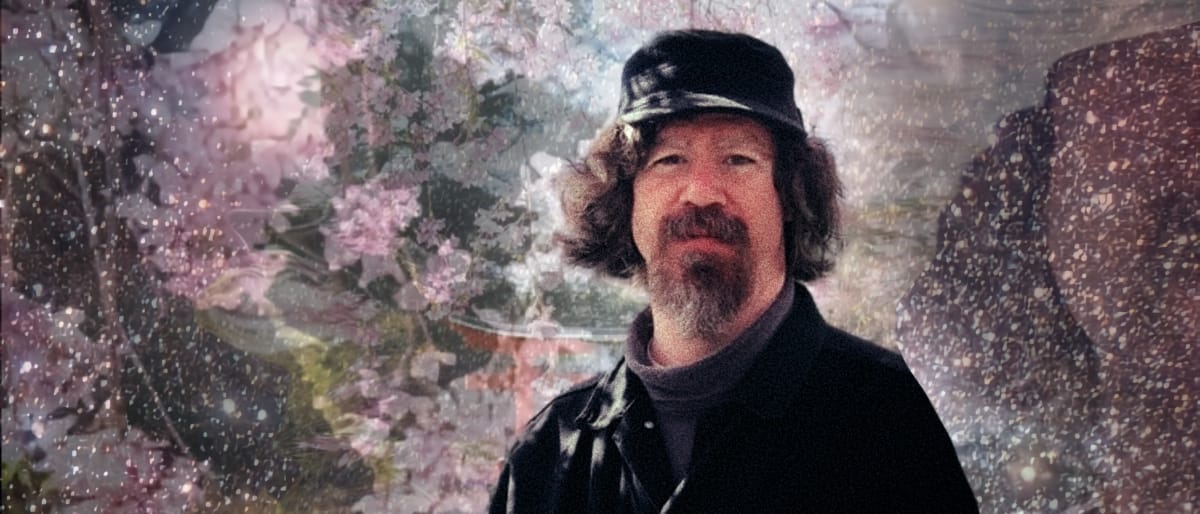
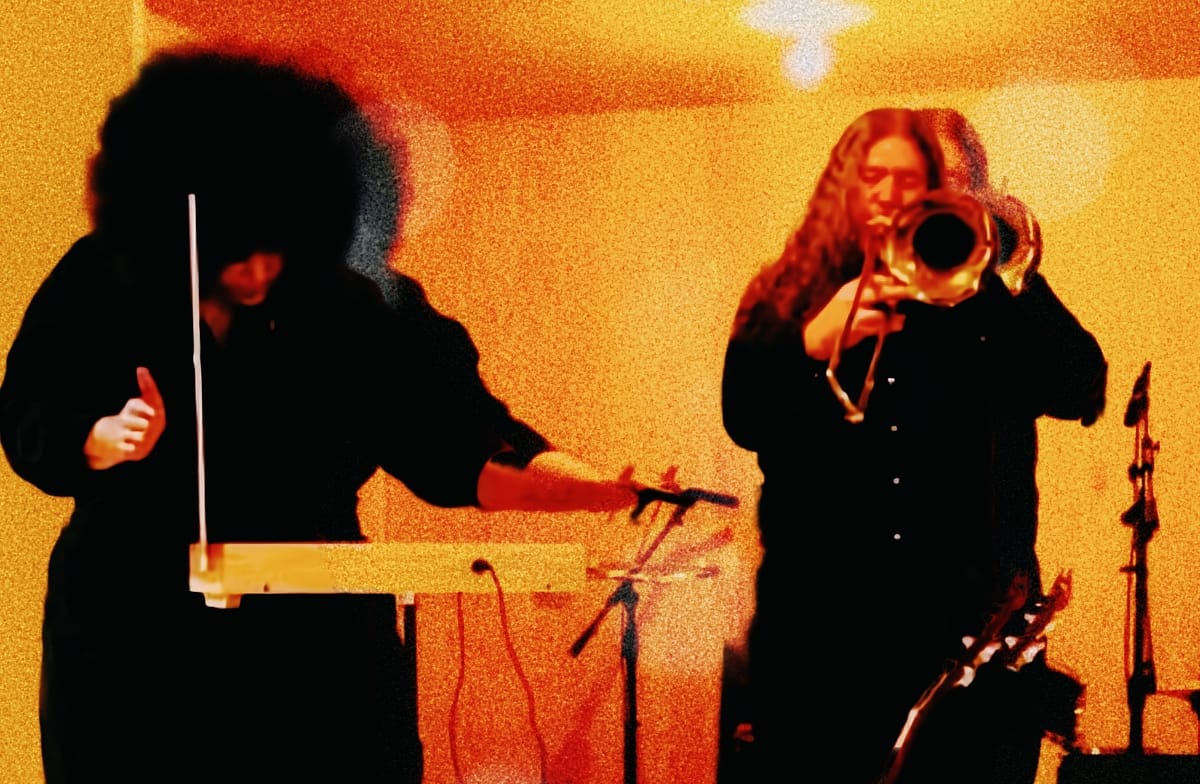
Steve Holtje's description of his trombone as a "noise machine" celebrates the instrument's inherent capacity for chaos. Unlike its brass siblings locked into discrete pitches by valves and keys, the trombone's slide mechanism operates as pure anarchy, capable of hitting every frequency between notes, making it the most microtonal and fundamentally "out of tune" instrument in the traditional orchestra. Valves create a series of fixed pitches—a kind of musical monarchy with clearly defined notes ruling over their assigned frequencies—while the slide functions as direct democracy. Every millimeter of movement produces a different pitch, and there are no wrong positions. In Holtje's experimental duo Phantom Honeymoon, those infinite microtonal possibilities become raw material for sonic tomfoolery.
Holtje's decision to run this instrument through distortion pedals creates what amounts to a double transgression against musical order. The electronic distortion corrupts the smooth glissandos that slide instruments traditionally produce, turning those flowing pitch bends into buzzing, sputtering disruptions. There's also a physical vulnerability required to operate this anarchist tool. A pianist can hide behind mechanical key action, and a saxophonist can rely on reed vibration, but the trombonist's lips buzz directly against the metal. Every note requires an intimate combination of breath support, embouchure control, and precise slide positioning. Holtje deliberately subverts this process, turning years of classical conditioning into anti-classical results.
Playback: Imagination is the Instrument — A Conversation with Josh Johnson → Josh Johnson's saxophone work also demonstrates a type of rebellion through electronic manipulation. His philosophy that "imagination is the instrument" suggests a similar democratization of musical creation to that achieved by Holtje, as both artists utilize technology to expand the capabilities of their instruments beyond acoustic limitations.
The Hit Parade
- Kranky vet Pan American (Mark K. Nelson) and storied studio boffin Kramer bring on the exquisitely titled Interior of an Edifice Under the Sea, their second collaborative effort on the venerable Shimmy-Disc imprint. This eight-track collection abandons terrestrial concerns for a descent into aquatic soundscapes, as thematically enforced by the song titles and the project's Kramer-produced videos. The pedigree here runs deep: Kramer's legendary production work with the likes of Galaxie 500 and Low, combined with Nelson's decades-long ambient explorations through Pan American and Labradford, displays a warm and inviting synergy. The undersea motif in ambient music is overdone, but the two offer a sonic direction that evokes the ocean's amoebic inhabitants rather than the pulsing water flow. Minimal guitar lines and swelling chords have a reassuring interplay that gives off the imagined luminescence of the Mariana Trench. The album's conceptual framework—exploring the uncharted depths where life began—yields lovely tracks like "Lamenting The Colours of Melting Ice" and "The Double Life of a Seahorse,” which do feel like submerged chambers of sound. As Kramer and Shimmy-Disc suddenly become prolific, introducing more sound/mood-based experiments to the discography, this duo collab is the one that continues to stand out.
- Short Bits: Knox Chandler, whose CV is ridiculously broad (guitar with the likes of The Psychedelic Furs, Siouxsie Sioux, Golden Palominos, Bobby Previte, etc!), speaks about his terrific new instrumental solo album on this week's Spotlight On podcast. • This outstanding and somewhat terrifying short film explores “what happens when humanity’s infatuation with itself and an untethered free market meet 45 billion cameras.” • Friend of The Tonearm James A. Reeves turned me on to this hypnotic dub techno piece, which was the soundtrack to writing this newsletter. • On the bookshelf right next to me, I have a battered copy of one of the 'zines profiled in this fantastic article on 'the pre-internet underground.
A Shout From the 'Sky

Deep Cuts
Author Kevin J Hayes, author of Understanding Hunter S. Thompson and the subject of a recent interview in The Tonearm, told me that he enthusiastically loves the classic lightweight bicycle:
Bicycles today are too expensive, too complicated, and too fussy. Worst of all, they are built with planned obsolescence. As soon as you buy a bicycle with cable-actuated disc brakes, the bike companies introduce hydraulic disc brakes. Watch some old footage of the Tour de France from decades past. Bicycles then had an elegant simplicity unmatched by any of today's bicycles. For me, the bicycle reached its aesthetic and technological peak in the 1970s. Perhaps this should come as no surprise to the readers of The Tonearm. The same could be said about rock-and-roll!

Run-Out Groove
I've had a swell time writing out this newsletter for you as the mid-summer thunderstorms rumble and tumble overhead. I'm glad you made it all the way to the glorious end. What did you think? Yay? Nay? Ayyy? Please let me know! Reply to this email or jauntily contact us here. And if you're feeling generous and a little sassy, forward this newsletter to an unsuspecting friend who you think might like it. I'll be sure to deposit a dozen cool points into your account for each person you turn on to The Tonearm.
Thanks for reading. Stay clear of lightning—that stuff's crazy—and please treat yourself to a cold beverage more often than not. Bottoms up. I'll see you next week! 🚀
Connect with The Tonearm:


Comments