


In the literal sense, a debut album is a start. Even when released by artists who have long been in the business of music-making, the debut is another sort of beast—an introduction, and a way of greeting the world. For Momoko Gill, though, it's less about beginning and more about beginning again. After years making a name for herself around London's electronic and jazz scene as a musician's musician—drummer, producer, singer, writer, and consummate collaborator—and a breakthrough year collaborating with Matthew Herbert on their album Clay in 2025, she's released her first solo album, Momoko.
"The way I work is very non-referential," she says. "And I don't say that to mean that my music doesn't sound like anything else. But it's more that I'm always feeling first. Whatever I'm feeling, I'm trying to make into music."
The sounds on the album carry that sensation, of sticking one's hands out and feeling the way forward. It's not so much the feeling of being lost as the inclination—and bravery—to linger on a path, to take detours that are lush and layered but never feel irrelevant or out of place. "Tell me something / I've got time," Gill sings on "No Others." "Won't you sing me your sacred song?" There is time to consider relationships on "2close2farr," which sees Gill meander across a looped piano groove, with the quiet intimacy of a monologue. There is time to grieve with "Heavy," a circumspect musing on loss dedicated to the late Matt Gordon, and lightened with delicate, complex woodwind that envelops a simple but deliciously tight rhythm section. And there is time to show solidarity on the album's standout track, “When Palestine Is Free,” which opens with a hint of sorrow in Gill’s voice before building to a triumphant crescendo, replete with a 50-person choir and brass section.
Most importantly, there is time to pursue feeling and not just form, a refreshing instinct that marks Gill out from her peers, whilst also making her a valuable contributor to the music that she makes alongside them. This willingness to linger in the tangential is noticeable in person, too. I sat down with her back in December 2025 for a drink and a chat in Tottenham, north London, and didn't leave for another three hours. Our conversation took rambling, fascinating detours—not all of them included here. More than once, Gill voiced a desire to "start again"; to learn things over, to start from scratch, not just musically, but in life. Perhaps that ambition goes some way toward explaining how our discussion touched on so many things that seemed totally unrelated to what we'd first sat down to talk about (Japan's imperial history; the artistry of Aretha Franklin; the excellence of keytars, etc.). When you're starting again, everything is important—everything is interesting and worthy of your attention. After I turn off my recorder, I ask Gill if she has any questions for me. She looks contemplative.
"Yeah," she says. "How did you get into this whole thing?"
It's a question I've never been asked before. It strikes me that Momoko Gill is very good at asking questions that other people haven't thought of. Her album—its varied, sprawling ambition; the precision of its arrangements and its willingness to linger in moments of dissonance and tension—is a testament to that.
Our conversation has been edited for clarity and length.
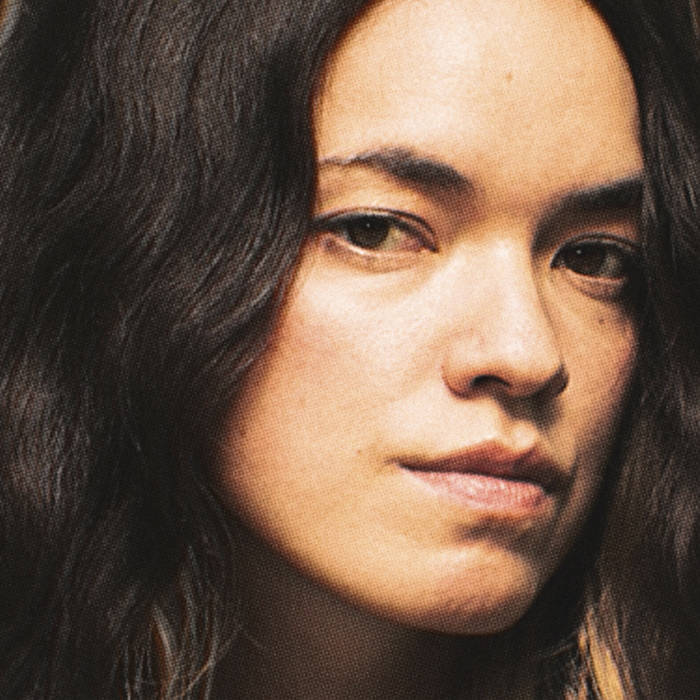
Momoko Gill: You want some chocolate?
Mariam Abdel-Razek: Oh! Wow. Yeah.
Momoko: I just felt like chocolate. Take however much you want.
Mariam: Thank you. That's so kind. So, how and when did you first start making music?
Momoko: In my teenage years, I started playing music. But music became more of a serious thing for me in the last ten years or so. In terms of making music in the more literal sense, I'd say I started probably in 2017 or 2018. I was doing my first production project, An Alien Called Harmony, a duo project with a poet named Nadeem Din-Gabisi. And that felt like I was making a piece of music that I was considering putting out in the world. So in that sense, it was a shift. But I was always doing music on the side.
Mariam: And going back further, what artist or sound can you remember first influencing you, and why?
Momoko: What comes to mind is my brother. My brother was a musician; my family and people around him really supported his musicianship because he was prodigious on the guitar. He influenced me a lot, making me mixtapes and stuff. He played blues, gypsy jazz—though not as much the modern jazz that I ended up listening to. And my uncle was a ragtime piano player. There was Western music that came into Japan, too. Some artists are particularly celebrated in Japan. Stevie Wonder, the Carpenters. Those were the artists we'd sing at karaoke.
Mariam: It is funny what artists catch on from the West. My mum loves Air Supply.
Momoko: (amused by this) Really? Wow.
Mariam: I know. It's fun seeing which artists broke through. It's not always the ones you expect.
Momoko: Yeah. Because there are the ones you end up seeing on TV, and then the things that your parents are interested in. My dad's music taste wasn't so much the stuff I was into—more like British pop, David Bowie, UK rock—stuff that I never really had a real era with. But then my brother's interest in soul was a massive influence. Marvin Gaye, Aretha Franklin, Ray Charles. So there's that, and then also funk, like Sly and the Family Stone. It was quite eclectic, and in a mixtape format, not really albums.
Mariam: Do you think that mixtape feeling applies to how you work now? Some artists will want their project to feel like a really cohesive album, something you can listen to start to finish. But others will want you to put it on shuffle, or some tracks might sound very different from other tracks. So there's a mixtape feeling there.
Momoko: I think I like concepts, but I also like things that don't feel choked by concept, or overburdened by it. My solo album is something I made over two or three years. It hasn't been me starting with the concept and making it around that. It's been whatever I've liked. And whatever I've liked has stuck, and I've built on it. I'm quite a harsh critic; not a lot of things make it through. So I have to like something quite a lot to develop it and finish it.
But there's nothing that's too different production-wise. A lot of the songs have organic instrumentation. When I have used samples, I didn't want them to go too far into a totally different world, so that you're listening to it and you feel like you're in a different time, or anything like that. So yeah, I've wanted it to feel coherent, but especially for my first album, I didn't want to feel too burdened by concept. I just want it to feel considered, whatever it is. Whatever it is hanging from, I want it to feel considered and have a reason for being there.
Mariam: What would you say those reasons are? The things you've hung the music on, so to speak?
Momoko: I think for the debut album, there's a theme of challenging and unpacking. There's an ongoing look at tension throughout the album. But again, it wasn't something I started with—it's just what makes me write. It might be an experience I've had with something outside, it might be something I'm feeling inside. It feels like an ongoing thing, and something that's expressed in quite a personal, intimate way. But I've ended up with things I’m happy enough with.

Mariam: Looking beyond your solo album for a moment, you work a lot collaboratively. Of course, Matthew Herbert was a big breakthrough this year [with Clay, the album that Gill released with Herbert in 2025]. But you've worked with Nadeem and Coby Sey. You've worked as a touring musician. What attracts you to collaborative music-making?
Momoko: Well, a collaboration with Nadeem and An Alien Called Harmony, or with Matthew, is quite different, because we're producing something together. It's different from when I'm playing an instrument for someone, usually with Coby, or Alabaster [DePlume], or Tirzah.
When I'm making something with someone, I enjoy finding that point of resonance, the place where we're harmonious. It's quite a dedicated process. We have to be committed to building something together. And it could be that we come from different musical backgrounds, and we're finding the sounds that we both like, that we both think are unique, and don't sound like things we've done before. And building a world together. So I love doing that.
What feels a bit different with sessioning is that I really like service; service to music, service to some vision. Helping to execute it in a thoughtful way. So, that's a position where it's not so much about my vision, but my understanding of someone's vision.
Mariam: Your interpretation of it.
Momoko: And how to contribute to it. I really enjoy doing that as well. Although it's quite a different process from making an album together. But even with what is called my solo album, it's obviously not just me. Lots of people have contributed so much to it. And I always want a feeling of other people collaborating in the room. But, you know, nobody is an island, right? None of us embodies just one person. We embody loads of people who have been part of our lives, so I want the music to feel like that as well.
Mariam: And we embody places, too, right? We discussed briefly off the record about how you grew up in different places. How do you see that as having influenced your music?
Momoko: I think the biggest thing is actually not feeling grounded in one place. When you don't feel like anywhere is really your home, you sometimes seek a set path to hold on to. Like my brother. He was the musical one as a kid, and now he's a Buddhist monk.
Mariam: Wow.
Momoko: Yeah. And I feel like that became the path that he feels he can hang his hat on. We all want to hang our hat on something, and that's a set spiritual path to nirvana, and he's chosen that. I think I've had real trouble, more than my brother, to walk a path that's set. I've always felt that I can't connect to that process so much, of just learning a style, honing it, doing it. I feel like I've had to find my own voice. And that's the only way that doing music made sense for me.
Mariam: I think that idea comes up more now because so many people are multi-hyphenates; they do so many different things. You produce your own work, play many different instruments, and sing as well. We’ve normalized that, but it's actually still so cool, and involves different parts of your brain. Do you feel that you have to engage different parts of yourself for different things?
Momoko: Oh, definitely. Producing, writing, playing, it's all totally different headspace. Even touring Clay whilst thinking about promotion on my solo album, it's a totally different headspace. So, yeah, it's really hard.
I find producing music really satisfying. And playing multiple instruments helps me bring forward a unique voice. But I want to invite people into my work, too. It's quite a delicate balance, because when you outsource too much, your voice becomes less pronounced. And when I do invite people, I want to invite them as fully as possible. To bring their own voice, even within my composition.
Mariam: Do you feel that people have done that for you, invited you in fully?
Momoko: Overwhelmingly, I've been in spaces where I felt like I was invited as my whole person. I think earlier on, I was in more spaces that are a bit more rigid. Like: “Here's the demo. Please play the demo."
Mariam: On the click!
Momoko: On the click, exactly. And those taught me a lot, but they feel completely different. When I'm playing to click, for example, sometimes I start feeling like I'm not playing music anymore. I'm just kinetically executing something.
Mariam: You're just being told to march.
Momoko: Yes. And that didn't make sense to me. But most of the projects I've been on the last couple of years, I feel like I've been invited to be myself and bring my own voice. That's felt more right, and it's felt like I've managed to carve a path that works for me, within a really difficult landscape to carve your path in, and make a living.
Mariam: That goes back to my initial question about location. Is there somewhere you feel more at home than in other places?
Momoko: I feel at home with people and nature more than in places or particular houses. And I think making music is like me building a little home; the actual process of making it feels like home. And once I've made it, it feels like something I can hold onto. I don't often feel like I can hold onto things, and I think that's a lot to do with moving a lot growing up. My family's totally dispersed on different continents. Everything feels impermanent, which it is. But it helps to be able to look at music I've made and see it grow legs, start walking about, and exist in the world. It's really grounding.
Mariam: And also it has that capacity to become someone else's thing, something that they listen to and feel grounded by.
Momoko: Exactly. It's beautiful. And amazing.
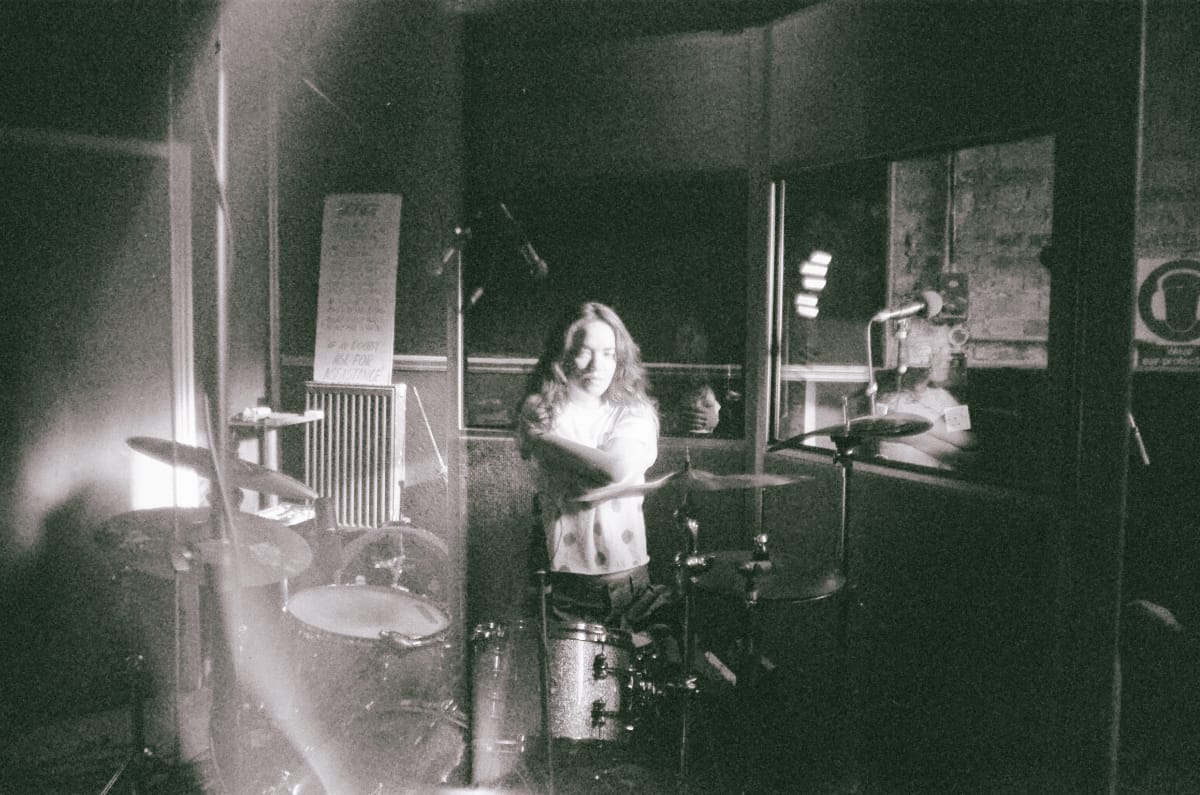
Mariam: You've said before that London is where you came into your own as a musician. Even without being attached to certain places, some places do bring out things in us. Do you feel like that about London?
Momoko: Musically, it has become my home, for sure. It took me years to feel at home in London. I just couldn't find my people, or my footing. But then I found a musical community, so I also found my human community. It's become my ground zero, my starting point.
I don't know if you feel this sometimes, but I feel like all the things I was taught growing up, there's so much that was wrong and limiting. I want to engage with everything in a new way, and I want to start that here. I thought maybe Japan would be where I’d want to start, but I’ve become someone who expresses and communicates a lot through music in this place. There are a lot of people around me who I've met through that process of asking myself, “What do you really want to say? How are you going to say it?” There's this kind of deep exchange that happens. So this feels like a really important place.
Mariam: I think it's a tendency when you come from an immigrant family to look outwards to the place where you came from, not where you are, which is also where you come from. And sometimes you do want to do everything again, start everything again. Can you tell me about the album, how you're feeling about it? Do you have plans to tour it?
Momoko: I really hope to tour it. Figuring out how to do it live in an interesting way is important for me. I expect a lot from live shows. I want to push for more; I want other people to push for more. I'm usually not satisfied with what I've done. Some things you can only get live, and I'm looking for ways to bring that in. I don't want to be too dependent on machines, but I also want something a bit more interesting than just a jazz band. So I'll be spending a lot of my time figuring out how to do it in an interesting way that I can be proud of and that people can connect with.
Mariam: Is that something you're looking forward to figuring out? Your face seems unsure.
Momoko: (laughing) It's hard! I'm always worried about live performance, in a way. I like the containment and the finality of recordings. You have to commit at some point. It's a real commitment to say: “Right, this is finished." And once you've made that, you can be at peace with it. Once it's finished, it's not yours anymore. It's for other people, right?
Mariam: The jeopardy is the best part of playing live in a lot of ways as well.
Momoko: When we have to use our trust and experience to navigate it together, that's a risk I love. The risk I don't love is—a machine is stuck, the keytar's stuck on a note . . . that jeopardy is not fun.
Mariam: It's funny when technology can start being a hindrance rather than a help. But it's interesting, too, how it can help us make music that talks back to itself.
Momoko: I was thinking about that, talking back to yourself, when we were mentioning samples. Sampling has a way of letting you replay something in an unexpected way. So it's helpful, but I also want it to be a tool. I want to keep the part of me that works in the moment, that finds ways of playing that create a different feeling. And sometimes sampling—it's something we can do in abundance, and you can get really caught up in it.
Mariam: And then you overuse it. I suppose that's, on a macrocosmic level, what sometimes happens with an artistic career. You could just end up in dialogue with yourself. I think about that a lot with album cycles—with artists going: album one year, album another year, tour next year, album three the year after. You haven't really had time to live. You haven't evolved at all. So you just sound like you're in dialogue with yourself.
Momoko: Yeah. What are you going to talk about? It's speaking non-stop. You haven't stopped to listen.
 Arina Korenyu
 Mariam Abdel-Razek


Comments