


Now Playing on The Tonearm:

'One Year' and a Lifetime — Colin Blunstone's Winding Road
Colin Blunstone discusses the new 'One Year: Live from Union Chapel' box set, the Zombies' tangled path from British Invasion hitmakers to cult favorites, and a solo career that keeps surprising six decades after it nearly ended in an office job. Interview by Chaim O’Brien-Blumenthal.


Galecstasy & Mike Watt Trio — We Jam Wattzotica
Bassist Mike Watt joins Galecstasy's Raquel Bell and Jared Marshall in a desert mountain studio above Joshua Tree on 'Wattzotica,' a fully improvised debut where free jazz drums and exotica-inspired synth pulled something new out of Watt's bass. Interview by Michael Donaldson.

Sibyl and the Unbroken Channel
The Holgate sisters discuss their self-titled debut, the eccentric visionary women — from Hildegard von Bingen to Emily Dickinson — who populate their vocal lineage, and the uncanny resonance two siblings can achieve when they know each other almost too well. Interview by Meredith Hobbs Coons.
This Week's Episode of The Tonearm Podcast:

Julianna Barwick & Mary Lattimore: Like Tears in Rain
Julianna Barwick and Mary Lattimore join The Tonearm to discuss 'Tragic Magic,' their debut collaboration recorded in nine days at the Philharmonie de Paris using instruments pulled directly from the museum's historic collection.
The Hit Parade:
Easter Everywhere ❋ “Sometimes I can’t stop remembering and talking about him, but I would’ve never had the nerve to get onstage without him. There’s something about that I won’t ever get over. I still carry it with me. I owe D. Boon for everything.” ❋ "Driving the highest ratings on a network that had only just started adding music videos by Black artists into regular rotation, our guide was a dark-skinned brother — donning a fedora and even darker shades — whose rebirth-of-cool swag owed as much to bebop as it did hip-hop." ❋ "I would love to be wherever the Golden Record is at last finally heard on its journey in order to see the look on the face of whoever it might be when that little slice of humanity’s sound gets perceived by an unimaginably remote being." ❋ "Though every member of the group played an instrument, one of the founding principles was that they should each play something else: Trained on classical guitar, Ms. Köster picked up the saxophone." ❋ "For the uninitiated, it’s a great place to start. A word of warning, though – should you get hooked, you’ll be tapping into a band with a discography of more than 20 records, many of them well over an hour long." ❋ "For this writer, TFUL282 remain the greatest weird American band of their time, directly comparable to no others, with only the likes of Butthole Surfers, early Mercury Rev, Amanita era Bardo Pond, and Sun City Girls being near kindred spirits." ❋ "I recently recorded the sounds of an elk herd during the rut season. The bucks were making an otherworldly bugling sound in the distance. That otherworldiness is the type of impression I often try to translate into a composition." ❋ "When Leila Milki first heard Fairuz’s 'Bahebak Ya Lebnan', she experienced it as the song of Lebanese unity and resilience . . . 'I knew that, in terms of my parents’ generation and even my grandparents’ generation, the song was sort of this really cathartic, hopeful message of unity.'" ❋ "Anywhere you go in Latin America, you’ll find a local variant of cumbia. Peru, the third largest nation on the continent, is no exception; there, the music known as chicha, after a fermented maize drink popular among Peruvians. If that summary feels a bit lacking, know that this is by design—at least, depending on who you ask." ❋ "You flick on the beast and it rumbles to life. It breathes. Its massive silhouette encompasses 300 pounds of musical beef. Add another 100 pounds or so for the Leslie speakers and it’s really a 500 lb beast. So moving it around is like schlepping a Sub-Zero refrigerator." ❋ "In [Morton Feldman’s] time, many composers were preoccupied with structural rigor. His quietly sensual works were humanist, exploring the common yet profound experiences of distorted memory, wonder, and loss." ❋ Cinematal T-Shirts
New Music Recommendations: Callum Kenworthy - No One's Listening (RIYL: Alt-folk with flamenco-inspired percussive guitar, drawing from African, Latin, and Celtic rhythmic traditions) ❋ Larrison - Connecters Vol. 1: Original Recordings, 1992–1999 (RIYL: Space age pop, library music crossed with synth pop and drone, Stereolab) ❋ Metropolis Ensemble, Erik Hall, Sandbox Percussion - Canto Ostinato (RIYL: Dutch minimalism, Steve Reich, large-ensemble contemporary classical) ❋ Nightmares On Wax vs Adrian Sherwood - In A Space Outta Dub (RIYL: On-U Sound, Smoker’s Delight, reverb splashes and tape delays) ❋ Nolatet - Somethin' To Relax With (RIYL: New Orleans jazz improvisation, Jacob Fred Jazz Odyssey meets punk-rock moxie) ❋ Radwan Ghazi Moumneh & Frédéric D. Oberland - Eternal Life No End (RIYL: Arabic vocal tradition colliding with avant-rock electronics and free improvisation . . . highly recommended by your humble editor)
The Deepest Cut:
The Kronos Quartet have spent decades building new work around archival audio, placing voices and events from American history inside scored contexts. Glorious Mahalia, released on Smithsonian Folkways, follows Long Time Passing (a tribute to Pete Seeger) and Mỹ Lai (a reckoning with US military actions during the Vietnam War) as the group's third release on the label. This one honors Mahalia Jackson, the gospel singer and activist whose artistry and advocacy were inseparable, drawing on a 1957 Chicago concert and a 1963 conversation between Jackson and broadcaster Studs Terkel.
Glorious Mahalia unfolds across three movements, each by a different hand. In the first suite, Stacy Garrop sets the Terkel recordings to music, organizing them around Jackson's accounts of her life as a Black woman in the South and her friendship with Dr. Martin Luther King Jr. Jacob Garchik provides an arrangement of "God Shall Wipe All Tears Away," a song Jackson sang frequently early in her career, with Kronos using heavy metal practice mutes and an octave divider on cello to approximate the sound of the original harmonium. The album's final section, Peace Be Till, comes from Oakland-based Zachary James Watkins. It incorporates a recorded discussion with Clarence B. Jones, King's speechwriter and lawyer. Jones also reads from his own copy of the "Letter from Birmingham Jail," a document he himself carried out of King's jail cell to help secure its publication.
Kronos leader David Harrington traces the project's beginnings to 2013, when he watched Jones on C-SPAN recount how he produced the initial draft of "I Have a Dream." "He could hear Dr. King's voice and wrote what he heard," Harrington said of Jones. "That's what composers do." The animating core of Glorious Mahalia, though, is a moment from the March on Washington. Jackson was standing just behind King when she called out, "Tell them about the dream, Martin!" Glorious Mahalia celebrates that intervention and the artist behind it.
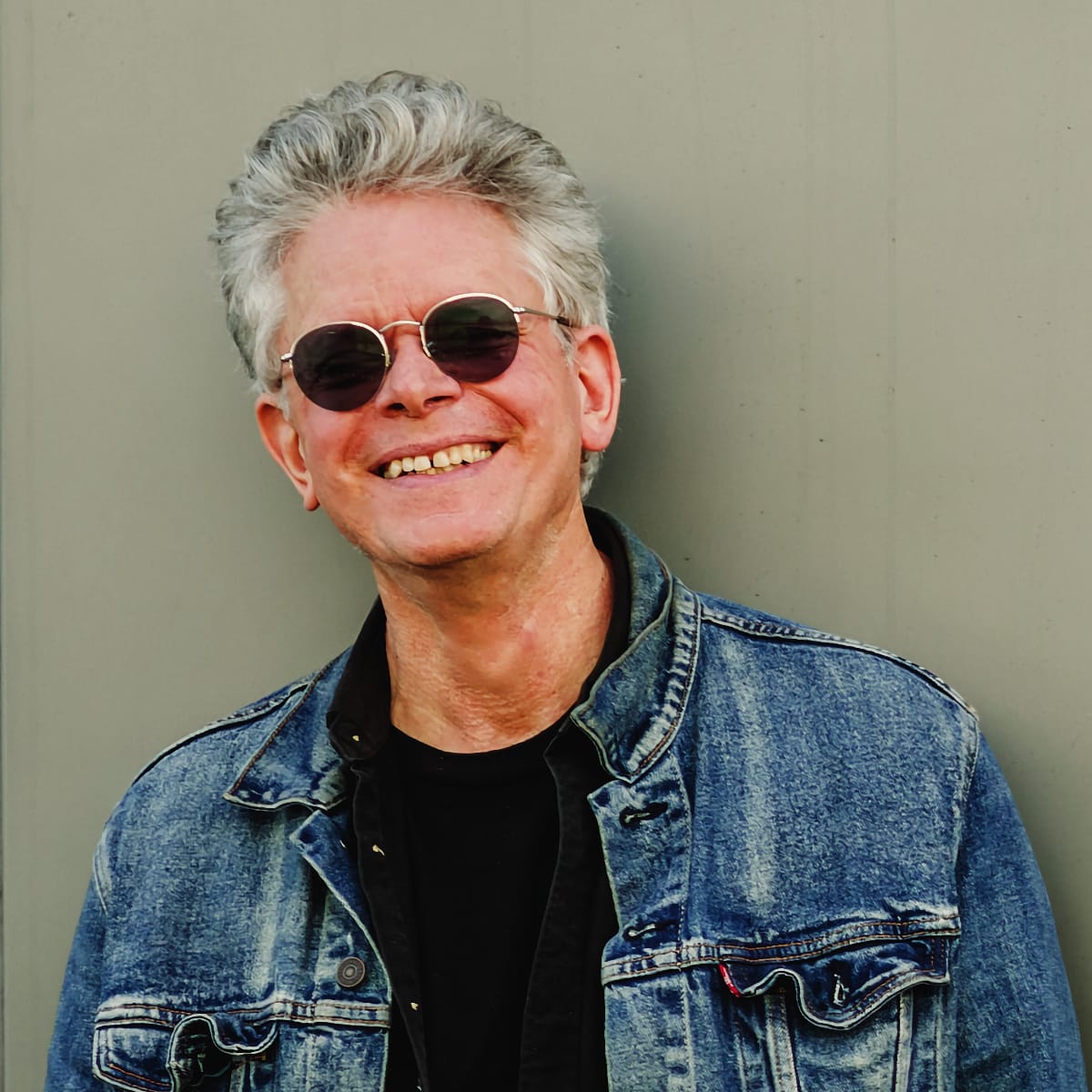
Lawerence Peryer emailed David Harrington for his thoughts on the Glorious Mahalia project and to tell us about something else he’s passionate about right now. Here’s Harrington’s generous response:
There are some rare people whose influence permeates their chosen field so completely that, as time moves on and newer names appear, a figure of central importance can be taken for granted and can slip away from memory. Not knowing the name Mahalia Jackson does not mean you are unfamiliar with the effect of her life's work in music and on our society. Mahalia Jackson's soaringly strong voice, her use of this singular, rich voice to promote her beliefs, her unwavering sense of justice, and her being the role model she was and is for women in music and beyond, these are a few of her amazing qualities I wanted to amplify in Glorious Mahalia. I think it is fair to say that Mahalia Jackson is to gospel singing what Albert Einstein is to physics, what Georgia O'Keeffe is to flowers, what Muhammad Ali is to boxing, or Maya Lin is to public monuments. As a breaker of TV/radio broadcast barriers with Studs Terkel, as a close friend of Martin Luther King Jr., as the singer frequently called on to mark and deepen major public moments, Mahalia Jackson took her voice to places beyond where she began in New Orleans church services. In any exploration of the life and work of Mahalia Jackson, she seems to continually grow in importance. I find her down-home clarity always refreshing and inspiring.
I heard Clarence Jones, MLK's lawyer and speechwriter, on TV during the 50th anniversary of the "I Have a Dream" speech. He told the story of Mahalia Jackson's role in that speech. I learned something from Clarence Jones's story that is very important to me. I learned what the central role of a musician is in our society. We need to use our training to listen carefully to our friends and to our society.
When Mahalia called out during MLK's speech, "Tell them about your dream, Martin," she clearly wasn't hearing from him what she knew he was capable of. Her encouragement moved MLK's speech to a more profound, soaring place. Mahalia Jackson showed me and all of us what a musician's job really is. We are highly trained listeners, and through our work, we report the news in every way we can. Only courageous leaders want to have musicians around them.
Glorious Mahalia is in part about friendship and how friendships can be essential to change. Studs Terkel and Mahalia Jackson were friends and could speak frankly to each other—this was a rarity in the '40s for a white radio/TV host and a Black singer to be friends. The fact that Mahalia would privately sing to MLK in moments of need, and that Clarence Jones could hear MLK's voice inside of himself—the same physical phenomenon many composers have described to me when discovering their music—these beautiful facts are perfectly stated by the voices on the Glorious Mahalia album. I love for our audience to get to hear the dedication, force, and beauty of these voices. A bonus is to have Clarence Jones, MLK’s lawyer and the person responsible for getting MLK's "Letter from Birmingham Jail" out of jail, read from this essential civil rights document.
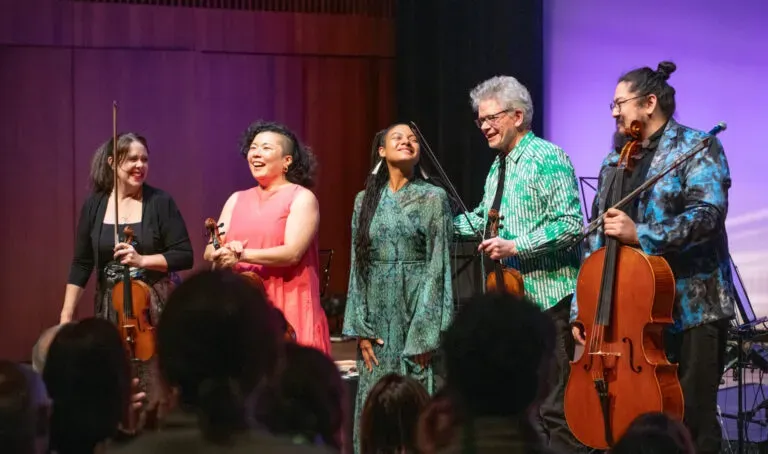
Something else David is passionate about:
I'm excited for people to know of the new role Kronos now has as Doomsday Clock Artists-in-Residence for the Bulletin of the Atomic Scientists. My time and energy are now largely filled with attempts to define this opportunity as we grow the community surrounding the work of Kronos. We are increasingly in conversation with leading scientists, activists, educators, artists, filmmakers, and compositional thought leaders as we make musical experiences that will inhabit our future concerts. The years of work Kronos has spent opening up the string quartet form to new and uncharted possibilities have positioned us perfectly for making the most of this new responsibility.
Run-Out Groove:
Next week: Gregory Uhlmann, Peter Baumann of Tangerine Dream, David August, and Worriedaboutsatan. It's going to be a pretty spacey week.
- The Tonearm is a reader-supported publication, free of advertising and paywalls. Our supporters help fund our writers and make the site possible. Please consider joining and helping us to continue our mission.
- Join the rapscallions of The Tonearm on our new Slack community.
- Sign up to receive our latest articles directly to your inbox in a snazzy, easy-to-read email version. Just go to your account, manage your email preferences, and flick the lever to receive The Total Tonerm.
Thank you for reading! We'll see you again next week. 🚀
Connect with The Tonearm:


Comments