


Italian avant-garde marvels Zu still strike like a meteor, three decades into their mortal coil, with the release of Ferrum Sidereum via House Of Mythology Records. Translating from Latin as "cosmic iron," the new album's title aptly captures the group's dense yet boundless style.
On this double-LP, the experimental and instrumental metal/rock/jazz trio goes on an epic journey through space and time, tapping into their innermost ties to spiritual realms. Massimo Pupillo once again captains the trip, providing the melodic foundation through his leathery bass tones. Saxophonist and keyboardist Luca T Mai contributes the ethereal essence over Pupillo's warping rhythms. And drummer Paolo Mongardi encapsulates the unforgiving chaos of the infinite universe.
In an email chat with these unorthodox voyagers, I make an attempt to unravel the mystery behind the creation of Ferrum Sidereum. In their own words, I seek to find out their sources of inspiration and how far they traveled inward to translate the messages of the cosmos. Zu are a special breed of artist, one that thrives on a dimensional plane very few can recognize, let alone understand.
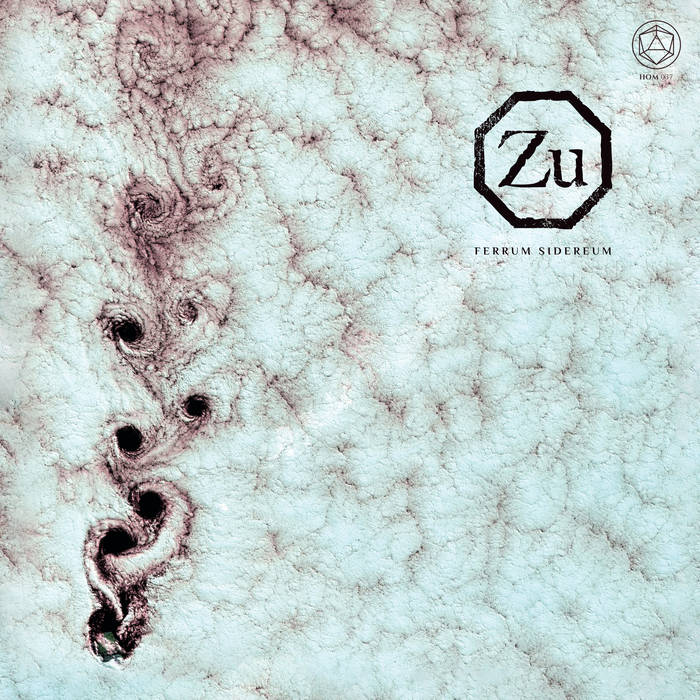
Michael Centrone: What inspired the intriguing album title Ferrum Sidereum?
Luca T Mai: Meteoric iron has been intertwined with human history for millennia, from jewelry dating back 5,000 years in ancient Egypt, to the dagger found in Tutankhamun's tomb, to the sword of Tsar Alexander I of Russia, which represents the sword of St. Michael, forged precisely from meteoric iron, symbolizing a pure and superior spiritual force. It's a force that battles the dragon, and from which we must draw to build our inner strength. These are the impressions we had as we composed this, closely linked to the remarkable meteorite passages in our solar system this year.
Michael: Then what sets Ferrum Sidereum apart from the rest of Zu's extensive catalogue of releases?
Luca: Besides being the latest, I think it's the culmination of almost 30 years of work. The youngest but also the most mature, it's fiercely compassionate, raw, and poetic. We were silent for years without releasing anything or playing concerts, and it took us a year to write Ferrum because everything has its own reaction, maturation, and distillation times. And all of this put us in the right perspective to create this new album.
Michael: How do you guys put yourselves in an optimal state of mind to capture and communicate the energy of the cosmos?
Massimo Pupillo: The Tibetans say that you are already the nature of diamond and lightning bolt; the only reason you don't see it is that there is accumulated dirt. Music operates the same way. The key is to remove the clutter—the part of yourself that uses music for ulterior motives or personal gain. I'm not talking about saintliness, but if you can shed some of that greed, music tends to present itself naturally. Of course, this is not an on-off switch; you learn to live a life conducive to this.
Michael: I'd like to know more about how imperative your spirituality is to writing.
Massimo: Music, unless trivial or calculated, is inherently an activity of the human spirit. Spirituality is not 'woo-woo.' It can be simply translated as a level of mind that is neither entirely nor completely yours. It's not technical; it's not linked to survival mechanisms. The leap of faith means trusting and feeling that there is another layer and that this layer is communicating with you. But this is not belief, it's a living thing. My favorite music as a listener is often one where the rational mind can't grasp the references or the modus operandi, music born of mystery, and that conveys and transmits that mystery.
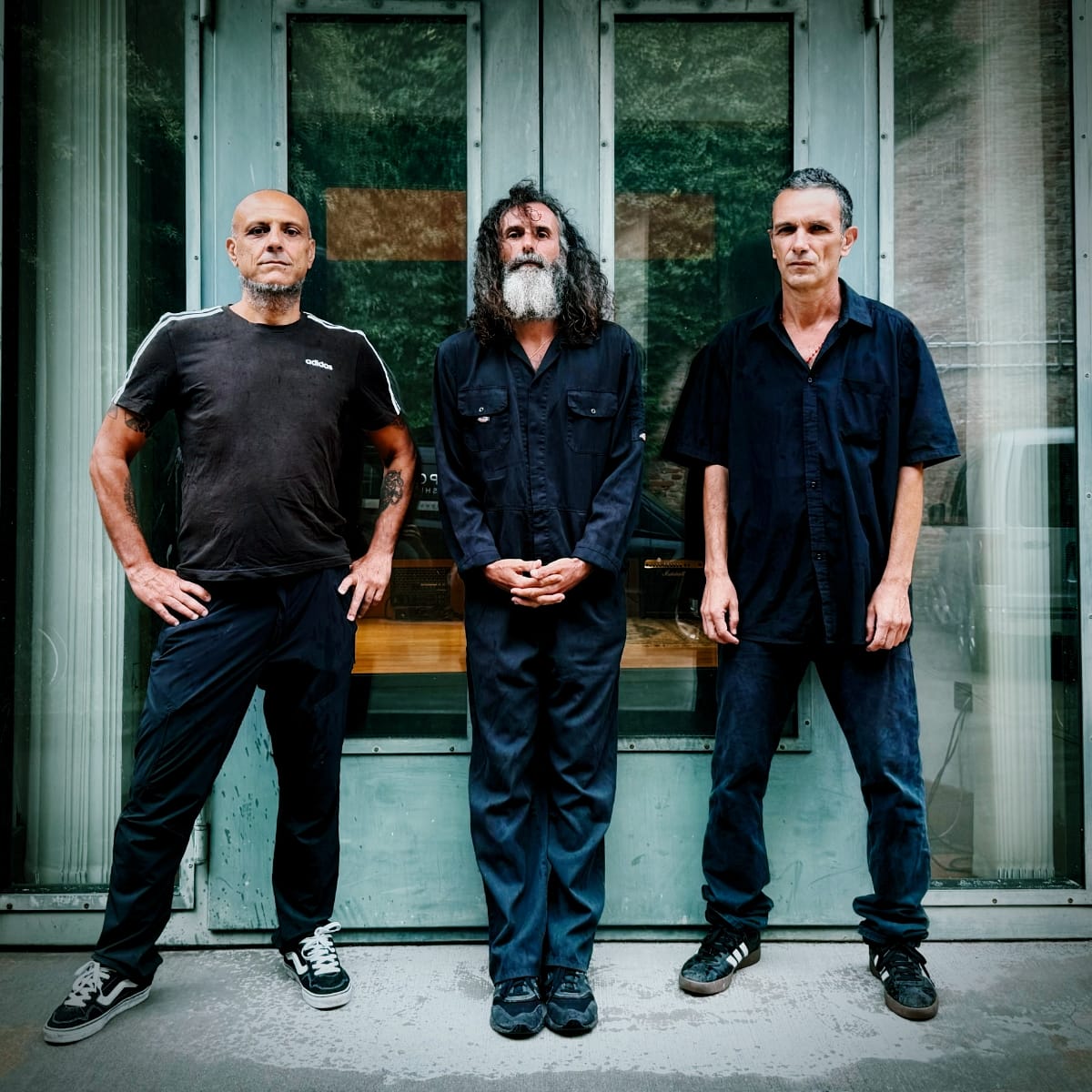
Michael: What were some challenges in concocting this epic double-album? How did it push your limits as musicians and songwriters?
Massimo: I suppose this is the side of us that could be described as progressive, meaning we constantly strive to explore new territories. There were various limits to overcome—technical skills and available technology—but everything served a purpose. These challenges are merely means to an end; they must support the overall vision and the dramaturgy of the music, not exist for their own sake.
Michael: Did you experiment with anything new on this record?
Paolo Mongardi: The experiment mostly consisted of spending four seasons (at least eight if we include the previous sessions between Massimo and me) in the daily practice of spontaneous, unfettered writing. It was a true ritual that, at a certain point, exponentially expanded a channel whose flow became so significant that the work shifted to increasingly rigorous selection and, subsequently, to the editing of the sifted material.
The experimental vein, more closely tied to sound production, was entrusted, with a leap of faith, to the sound engineer and producer Marc Urselli, who was clear from the start: "This is not a documentary, it's a movie." In short, the paths through which music can be created are truly multiple and mysterious, but if the field is coherent and the connection strong, miracles can happen.
Michael: Exactly how did Marc help reign in the vibe and story you guys were looking to portray?
Paolo: Marc, who had long expressed the desire to record and produce a Zu album, once we'd chosen the studio, immediately focused on capturing a spirit rather than academic perfection. He forced us not to overthink (an aspect we'd spent a lot of time on in the preceding months), but rather to focus on the performance and, if anything, make intuitive decisions in the moment.
During the mixing phase, which took place remotely from his studio in New York, Audio Confidential, he asked us if we were willing to be 'maximumly open-minded.' This intrigued us, and I finally had the opportunity to work with a skilled engineer who produced a sound beyond my imaginative limits. He was able to highlight hidden aspects we hadn't emphasized, adding curiosity, poetry, and a narrative production all along the 80 minutes.
He truly succeeded in embellishing our rough diamond with courage and devotion. A special mention also goes to Claudio Adamo, the engineer at Fonoprint, who supported us from the very beginning to the end and personally handled the mastering.
Michael: How did the recent collaboration with Ruins inspire the writing and recording of the new album?
Massimo: Not in terms of the material itself (we were already deeply influenced by the Ruins from the start), but it certainly rekindled our sense of joy and commitment to the music. It also gave us confidence that the post-2020 world still needs this experience, perhaps even more than before. Concerts feel like a communion; there's often a palpable sense of joy.
Luca: The collaboration with Yoshida/Ruins imprinted an inner rhythm in us that led to the decision to take the reins of Zu back into our own hands.
Michael: What's a way we humans can get more in touch with our spirituality daily in this noisy, modern world?
Paolo: In such a corruption of material laws, first of all, by training to refine the ability of discernment, but as the fox said to The Little Prince, "It is only with the heart that one sees clearly." Therefore, this can only happen in inner silence, recalling one's original signature.
Massimo: By carving out moments of inner calm. The more chaos there is outside, the more space we must create inside. Inner calm is possible even at the supermarket, amid the totally absorbing rhythm of everyday life. Train in calmness by setting aside such moments. In that space, learn to distinguish between the essential and the non-essential, and always return to your core duties. Do not retreat to a mountain. Go inward, cleanse, observe.
This training builds a connection, so that even in the noise, we will feel that calm guiding us. Without noise, there is no silence. Absolute silence does not exist; what exists is the ability to live by trusting, knowing we may fall, without a safety net to land on. Persevere calmly, carving out moments of inner vision, separating the true from the false. Seek the truth. And when necessary, start over from the beginning.
Check out more like this:
 Michael Centrone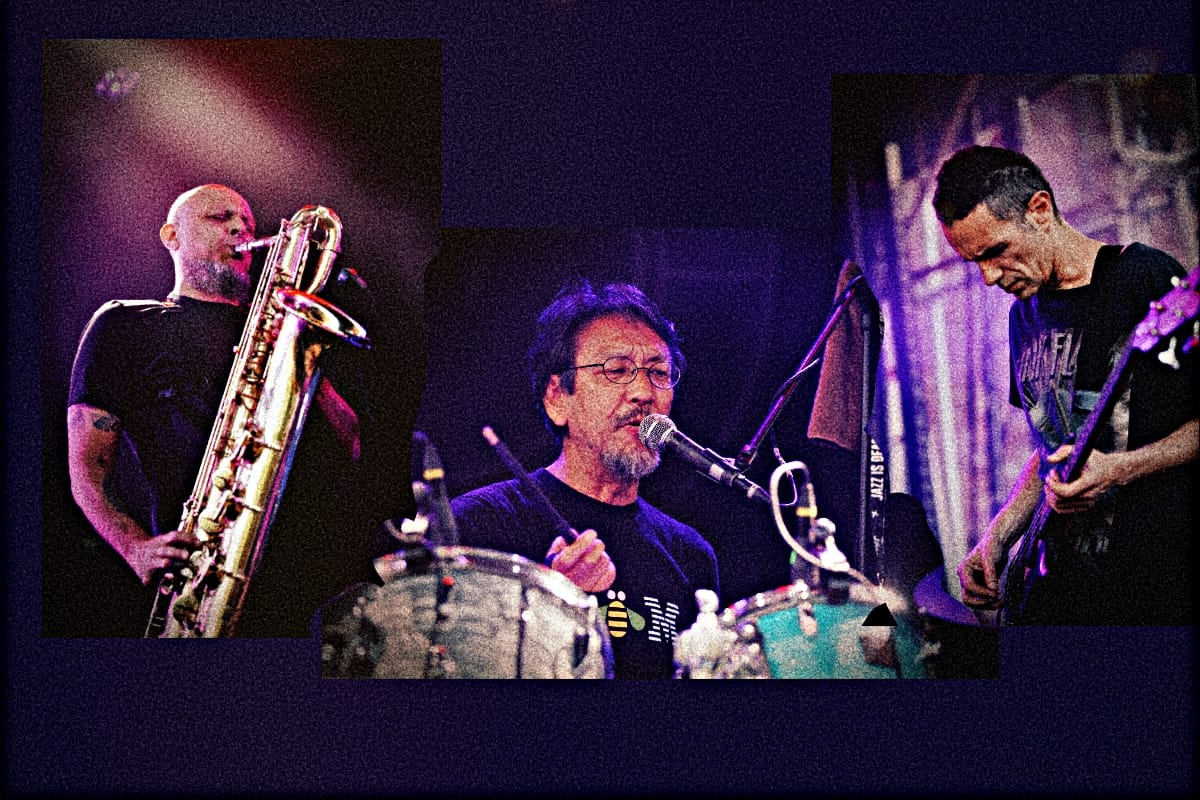
 Lawrence Peryer


Comments