


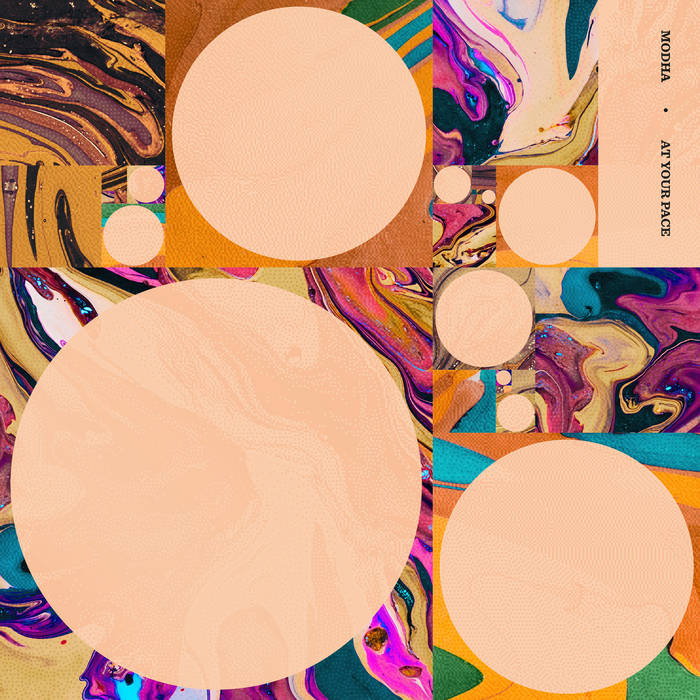
The German production duo Modha seeks to bring a sense of patience and humanity back to the modern world of music with their newest release, At Your Pace. Max Scholl and Dhanya Langer met at university after taking gigs to pay the bills, bonding over a shared desire to connect more deeply with what they were playing. Their love of soul, R&B, hip-hop, jazz, and electronic music all melded into a sound that the duo has built upon with a cast of trusted friends and collaborators. With this record, made in a live-band style for the first time, the duo placed greater emphasis on collaboration and learned to delegate effectively while maintaining their core vision.
"Recorded between Berlin and Limburg, the album embraces themes of childhood memory, emotional fragility, and the radical act of slowing down," per a press release for the album. Its eight tracks find common ground across their influences and even include ambient production. "River" flows into an island-y, Super Mario Sunshine space adorned with dazzling wind motifs courtesy of guests Àbáse & Fanni Zahár. "Day by Day" sort of reminds me of a Tony Levin-style Chapman bass stick meditation. The interlude possesses a hypnotizing repetition that is so representative of Scholl and Langer's musical variety. I would recommend this record to a fan of SZA as easily as I would to a fan of Boards of Canada or J Dilla.
It is very evident that Modha took their time to create a collage of excellence on At Your Pace. The collection's ability to showcase the beauty of natural, human imperfection while retaining such slick production makes it a joy to experience front to back. I spoke with Max and Dhanya about their early musical touchstones, both the joys and challenges of working in a collaborative format, and how the current musical rat race dominating the industry extinguishes the raw flame of artists. This conversation has been edited for clarity and length.
Sam Bradley: Max, are you based in Berlin?
Max Scholl: No, I don't live in Berlin anymore. I moved back to my hometown. It's a small city called Limburg. It's one hour away from Frankfurt. What about yourself?
Sam: I live in Philadelphia, but I only got here a few months ago.
Max: Ah, so where The Roots come from?
Sam: Yes, exactly!
So I got sent your record, At Your Pace, a few weeks ago, and have been enjoying it as a juxtaposition to the season here. It's been gray, cold, and windy, so it felt like a good way to cut through all of that.
Dhanya Langer: That's beautiful. I am still in Berlin and am very familiar with cold and miserable winters. It takes a lot out of you. It makes for a great summer, though, because everyone collectively goes through a harsh winter, and then it lights up in the summer. I'm happy the album can be a soundtrack to bring a little bit of ease to that!
Sam: How did you guys meet and decide to create music together?
Max: I was growing up in an all-musician family. Music was always my first choice when I got asked what I wanted to do. I started playing the drums, I think, when I was five or six. My auntie is a jazz pianist, and I got piano lessons from her. I was always surrounded by music.
Dhanya: Not everyone in my family is a musician, but my dad is, and he had a great influence. He's kind of like that Woodstock generation. I attended a jazz university for a while, but I didn't finish. After two years, I felt like I had the knowledge of what I needed to work on, but the development, as far as becoming more of an artist and finding my own voice, wasn't really going to happen there. Of course, my parents disliked this very much, but it felt like the right move to me. That's when I moved to Berlin, and that's basically when I met Max, too.
The first gig I took on, just to essentially make money, was for an up-and-coming pop artist in Germany. I wasn't really so much interested in the music, but it was a solid gig. That's where I met Max. During that tour, we realized we didn't actually want to play the music we were playing together. We started talking about similar things we liked as far as artists, that being Robert Glasper, Terrace Martin, Kamasi Washington, and a lot of the 'next generation' jazz artists that got established around that time. Ultimately, it felt like a good idea to make music together and see where that might go.
Sam: Was there always a focus on making original music, or was it mostly jamming on covers at first?
Max: I remember that we were sending back and forth ideas of beats that we made. By hanging around the studio, we started making our own stuff. Not covers, but our shared interests were in similar artists. Dhanya recorded drums, and I was playing guitar and piano most of the time.
Dhanya: We have always been kind of into beat-making, producing, that kind of stuff. I guess that's the sort of thing leading into this record. It has been more of a producer project, where we cook up beats and ideas, collect them, bring them together, and then have friends of ours play on them. But the creation process was pretty much always just me cooking something up, or Max cooking something up, then bringing it together. We didn't really ever, until this record, go into the studio with other musicians and kind of create a band. We didn't have the chance to do that financially before, and, convenience-wise, either. It was much more convenient at first to have only small ideas, and then later to get people to play on them.
Sam: Were there any unexpected challenges when working in that format?
Dhanya: The mindset going into it involved really thinking about our past projects, the workflow, and just finding something that is more exciting and new to us, also as far as experimentation. Modha was initially thought of as a project not just about us, but also as a collaborative space for others. We would curate a lot of what was able to happen beforehand. At first, there wasn't much room for others to bring their own visions.
This time, the idea was to start with a blank canvas. We all come together with like 6 to 8 people in the studio, sometimes even 10 people. I guess the challenge then was when we realized on the first day, "Okay, this is a whole different situation to navigate because everybody has a lot of ideas, which is great, but also everybody has a lot of ideas." (laughter)
If you try each and every idea in the moment, it may become a little bit too much. We can't just let everything happen because then there's no structure, and it's not beneficial to the project. We have to produce the situation in real time, much like directing it. "Okay, we like this idea, we like that idea. Let's try this. Let's bring this together." That was a realization process. We need to provide some structure; otherwise, it won't work.
Sam: Is there a fine line between stepping on people's toes and keeping your creative vision afloat?
Dhanya: Finding song structures can be a process. I mean, there were so many talented people. I don't know if you're familiar with the Moses Yoofee Trio. Moses is incredibly talented, like he's so good. I don't know; I can't tell him what to play. He does his thing, but you still need to provide some idea and structure, and then communicate it effectively. And we do feel responsible for everyone's time. We want them not to feel they are wasting their time.
Sam: Were there notable differences in the creative or producing process with vocal songs versus the instrumental ones?
Max: When we started making the album, we had no plan for which songs were going to have vocals or which were just instrumental. We decided after all the music was done where the vocals would go.
Dhanya: That's also an example where, within the process, those types of things kind of reveal themselves to you in a way. You can plan a lot and write a lot, but once it develops and other people come in, it becomes its own thing. For the ones that become vocal tracks, there's usually some sort of repetitiveness to the instrumental, not in a bad way, but something that leaves space for someone to write. Sometimes, you know there's already so much information that you know it could easily overcrowd a vocal idea or make it hard to find the space for it.
Max: Yeah, and you always have a feeling that something is missing, and then you decide, "Oh, that's got to be a vocal track for sure!"
Sam: I assume you left the lyric writing to the vocalists, or was it more collaborative?
Dhanya: We didn't comment on anything as far as the vocals go; that's totally up to the people who were involved. I think it's always a good idea to let people do what they do best and provide the space and energy for it to happen.
Max: And there's one thing I think we both noticed; when you decide on the name of the working title, you can set a kind of direction. Sometimes that's what we do here.
Dhanya: Yeah, that's a real thing. I produce a lot of hip-hop, and if you send out beats to people and you name them in a certain way, it usually always becomes a part of the lyrics.
Sam: That's super interesting. It kind of goes back to the idea of subconsciously directing something. Would you say there's anything to that regarding the record's name? What does the phrase "At Your Pace" mean to you?
Dhanya: I guess we were realizing through working on this music and writing and collecting songs, it becomes more and more clear to us what the project resembles as time went on. The album we did before was a little more conceptual. I guess this time around, we found out as we were working on it.
The conversation then shifted to what is going on in our lives and how we feel. How do you feel about this music? What does it mean to us? With this project, it really felt like we were living in crazy times with things happening at a very fast pace. The way we consume is super, super fast, with brains wired for those dopamine hits. We also realized that, with social media and other media, we're seeing it but not fully understanding what's going on; we're listening but not fully grasping what's happening. I realized I'm not listening to much new music anymore because I'm not taking the time to dive in. I'm just kind of going back to what I know and what feels close to me. We wanted to challenge that, especially for our own working process, because the pressure to stay in the rat race of bigger, higher, faster is not how art works.
For us, At Your Pace was a real answer to that. Ultimately, everyone has to decide how to go about it themselves, but we're taking our time with this record. Maybe it's one or two years, maybe three. We really knew we had to find our pace with this. Some people may like to create fast, but we like to take our time. We just don't want outside things to dictate how we create the music, how we think about it, or how we want to write it. Obviously, we're all products of our social environment, so it's never 100% possible, but At Your Pace is our attempt to kind of try to take ourselves out of the musical rat-race mentality of bigger, higher, and a never-ending stream of information.
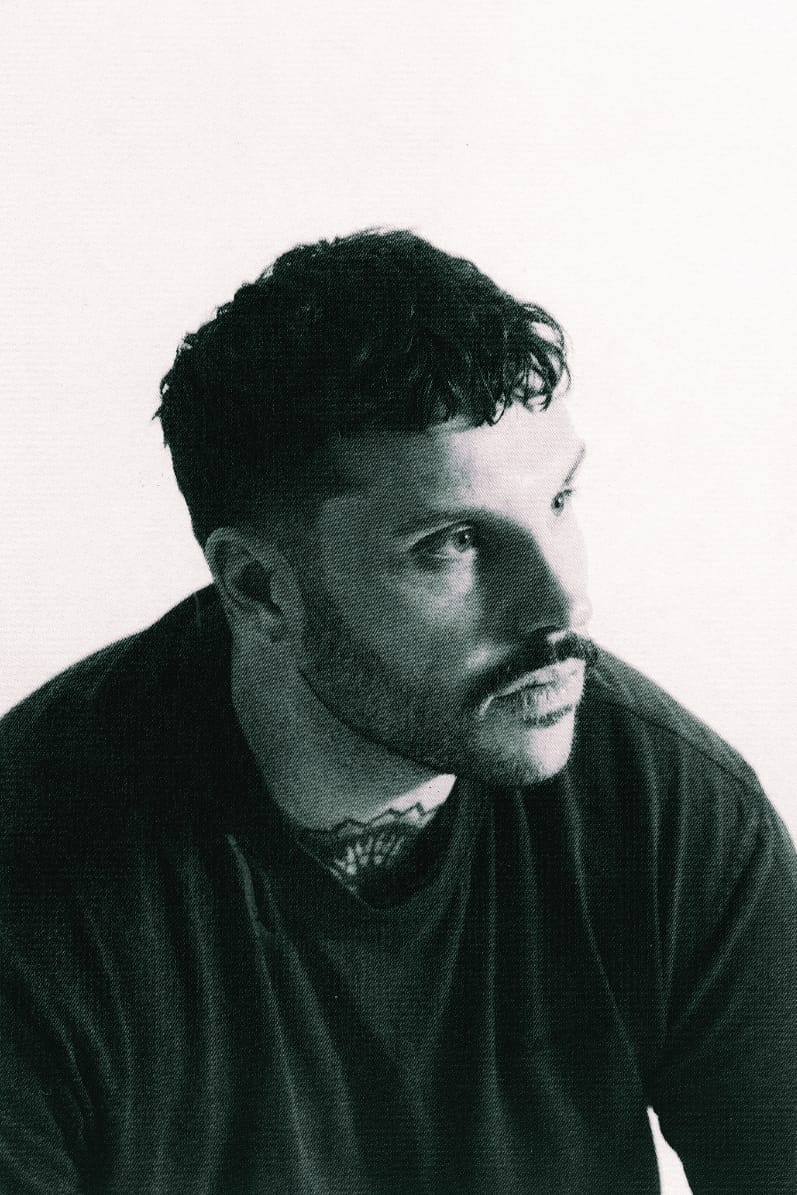
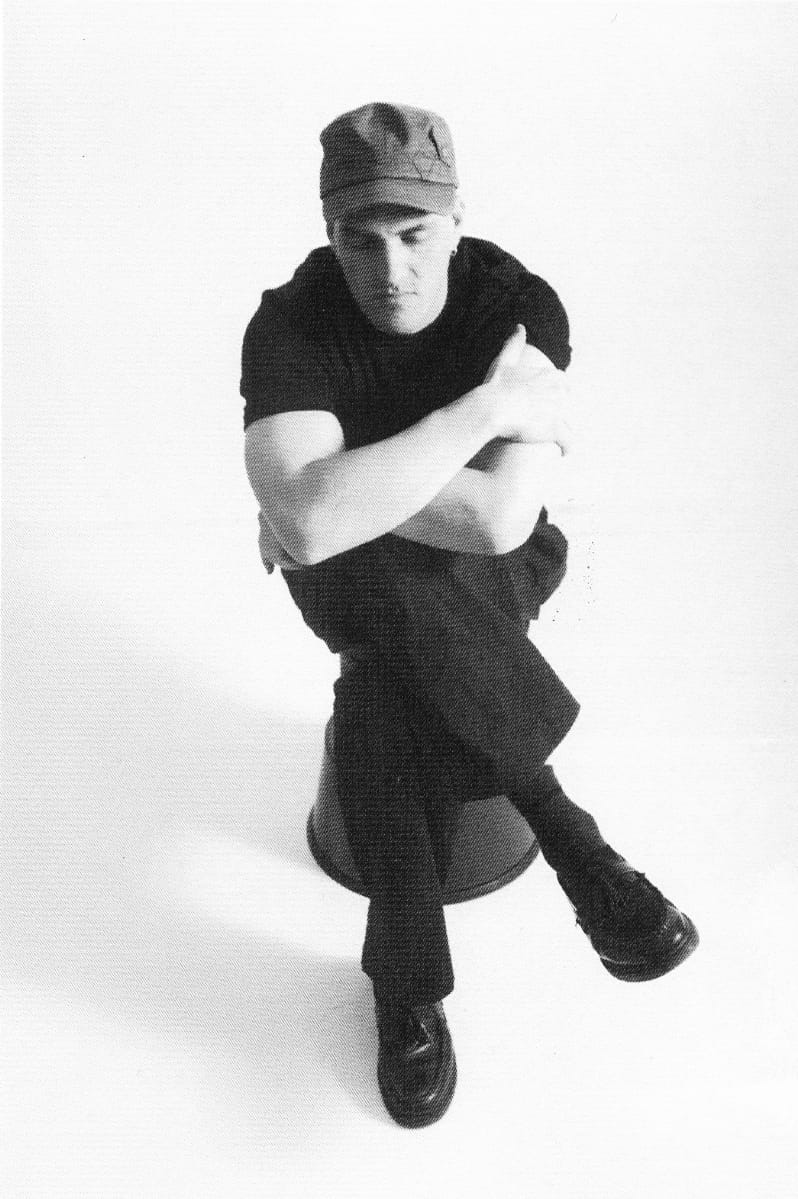
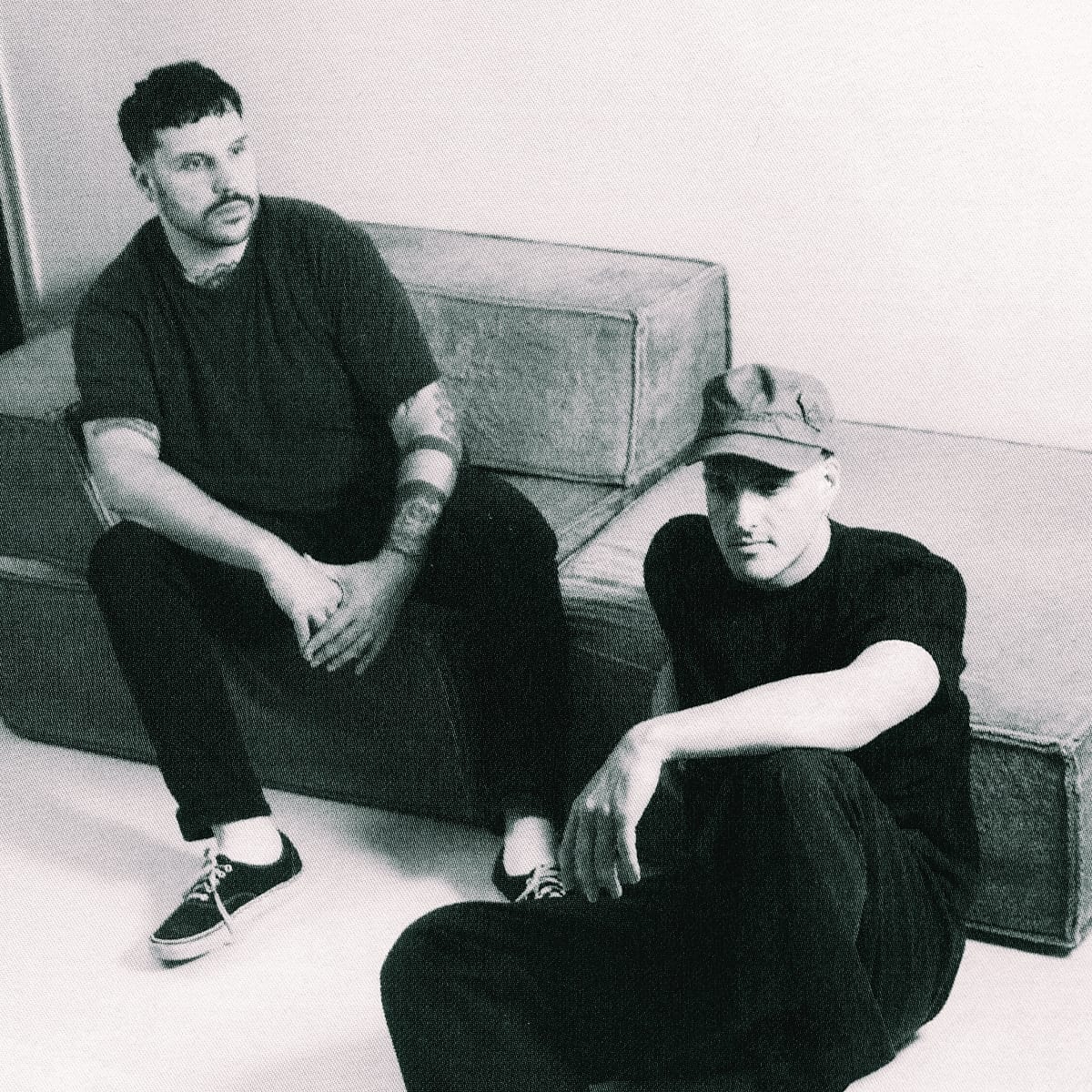
Max Scholl and Dhanya Langer of Modha
Sam: In my notes, I highlighted three words from listening to the album: patience, humanity, and care. Those were the themes I kept stumbling back to. How have those guidelines or principles changed the more you make music together? Was there a learning curve there?
Max: I never thought about it that way, but when I'm doing music, I'm so focused and in a totally different world. I mean, I even shut my phone off and just focus on music, and for me it's always a huge gift because when I'm with my family and my little child, it can be such a rush. I definitely find my peace in making music.
Dhanya: I think what you're hinting at is kind of like this thing of reconnecting with something that may have been lost. In this environment we're living in, doing things at your own pace is a form of resistance in its own way. It's not like a crazy political resistance or, to the outside world, one that appears very active or will change someone else's life. It's more about staying sane and protecting the things that are important to you. I'm constantly trying to protect my music and not let outside factors, comparisons, and such affect what I feel inside, because that is really pure and a really heartfelt love for this thing that's brought me so much joy ever since I was a little child.
I guess the world of numbers sometimes dictates how much something should be worth to you, but it's impossible. You cannot quantify emotional value to what art and joy mean to you. All that we've learned and the music we've worked on is definitely an attempt to stay connected with that initial spark we both felt.
Sam: Rushing through it kind of seems like a waste of one's time, or a waste of one's talent in a sense.
Dhanya: 100%, yeah. I think it's very interesting and beautiful; the words you wrote while you were listening to it, and the way you're talking about it now. This is a small-scale project, but it's still nice to hear another perspective. It's not something you can ever really know, how people connect with the music, but in my experience, it always translates in a way.
As an artist, if you really put an intention behind something, it will always translate to somebody. I still don't know how that works with music, but it does.
Sam: Is there anything you hope a listener takes away from the record after their first listen?
Max: To be honest, I don't really think about that. I think, even if it's cheesy, maybe to find just a little moment, you know? A little break to press the start button, hopefully take a breath. Yeah, just having a little moment sounds nice.
Dhanya: I think for me, first of all, if somebody listens through the whole album from start to finish, I'm already thankful. I don't assume that that will necessarily even happen. I guess since I already talked about all of these textures, I would love somebody to be listening, thinking, "Oh yeah, this is a very interesting sound. How did they come up with that?" I spent so much time experimenting with it, and if someone is inspired by these soundscapes and they start to evoke an emotion, that would be rewarding. I guess it's a little bit more of a technical thing, but if I think about it now, that would be really cool.
Check out more like this:
 Peter Thomas Webb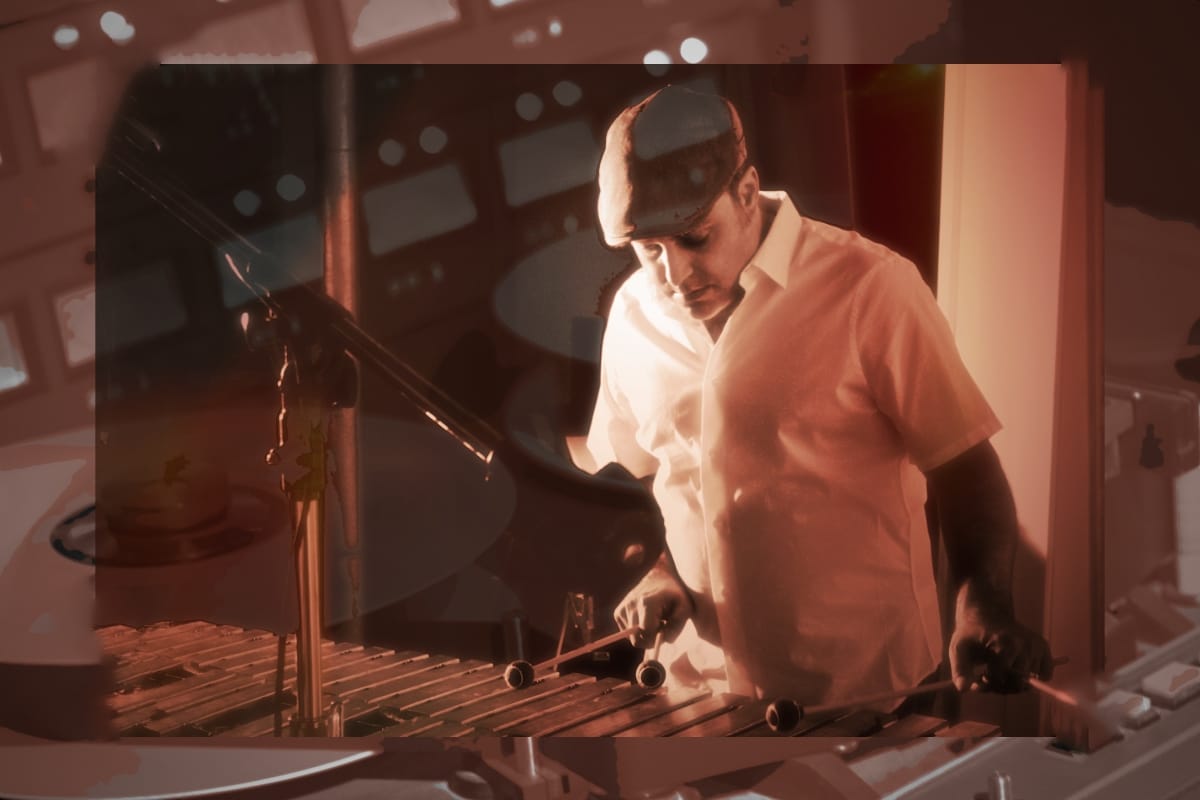
 Sam Bradley


Comments