


Emotionally Suited To Be A Solo Pianist is a new album by London-based pianist, composer, and singer-songwriter Louis Gardner—an artist whose practice has been shaped from an early age by solitude, instinct, and improvisation.
Sitting somewhere between modern classical, experimental folk, and lo-fi songwriting, Gardner's music resists categorization while openly tracing its lineage. The vulnerability of Elliott Smith's songwriting, the expansive minimalism of Morton Feldman, and Arthur Russell's ability to place intimate songs inside vast, fragile sonic worlds all echo throughout his work. These influences are not adopted stylistically so much as philosophically—guiding Gardner toward restraint, patience, and a trust in simplicity. His resistance to overworking has become fundamental to his artistic identity, allowing imperfections, hesitations, and silence to remain intact as emotional truths rather than flaws to be corrected.
Emotionally Suited To Be A Solo Pianist was recorded during a long, grey London winter and began as a single three-hour piano improvisation in the studio, undertaken the morning after Gardner's girlfriend returned home to America following two years of living together. The opening track "Morning at Beckford" preserves the first fifteen minutes of that improvisation in full, its unedited flow capturing the stillness, isolation, and clarity of that moment. Across the record, the piano becomes both narrator and witness—slow, spacious, and exposed. Between these extended piano passages, Gardner weaves fragile songs featuring guitar, dulcimer, and accordion.
More than anything, Emotionally Suited To Be A Solo Pianist feels inseparable from winter itself. Gardner has described it as a Christmas album of sorts—but one that rejects seasonal cheer in favor of emotional honesty. The record inhabits the colder, quieter side of the season: early darkness, empty rooms, distance from loved ones, and the strange calm that arrives when the world slows down.
Yet the album is not without warmth or hope. Melancholy and comfort coexist throughout, culminating in the closing track, "I Can't Wait To See You This Christmas," where longing is underpinned by the promise of reunion. In this way, Emotionally Suited To Be A Solo Pianist becomes both a document of isolation and a gentle act of holding on—a winter record perfectly suited to being listened to alone, while quietly reminding the listener that solitude is never the whole story.
In this interview, Louis Gardner details the process and vulnerability behind Emotionally Suited To Be A Solo Pianist and how artists tiptoe the fine line between being openly expressive versus coming off as vain.
Arina Korenyu: You began improvising at 12, writing songs at 15, and recording by 18—how did those early years shape your relationship with music?
Louis Gardner: My practice has always been rooted in improvisation. When I was twelve, I took piano lessons, but I really disliked sheet music and playing other people's compositions. That experience became a kind of rejection of the classical way of doing things—I just wanted the freedom to do what I wanted. Music also became a form of catharsis. When I was younger, it gave me space after school to meditate, to express myself, and to feel comfortable being alone.
Music has always been a very private thing for me. It began as personal expression and exploration at twelve, then evolved into songwriting and eventually recording. In many ways, it's still exactly the same: a way for me to explore solitude.
Arina: You often keep the first take and avoid heavy scrutiny. What do you feel gets lost when music is overworked?
Louis: The magic of a first idea—and its imperfections—can easily be overlooked. With repeated recordings, you begin to view the music more objectively: this note leads to that note, and the process can start to feel almost mathematical. But in the initial experience, everything is more abstract and intuitive.
Through repetition, you often lose the excitement that drew you to the idea in the first place. Improvisation, especially, is about that first moment—the immediacy and magic of doing something for the first time. You can't truly repeat an improvisation, so it has to be captured straight away.
Arina: How do you decide when an improvisation becomes a finished piece?
Louis: Maybe you know something is finished when the silence at the end has lasted long enough. But you could also say that improvisation is never really finished. What I play now might be connected to what I've always played—just different ways of tapping into the same source of improvisation over time.
At a certain point, though, I physically feel that I've had enough, or that I'm bored with an idea. That's when I stop, put a full stop next to it, and move on to something else. In that sense, the ending can be quite arbitrary.
Arina: What do you remember most vividly about the three-hour piano improvisation that became the foundation of the album?
Louis: I had been living with my girlfriend continuously for two years, and then she went back home to America. The next morning, after booking a three-hour studio session, I woke up and went straight there. I gave myself the space to let my emotions come out through improvisation.
I remember feeling an immense sense of clarity and an intense focus on the tone of the piano. At the time, I didn't intend for it to become anything. It was simply catharsis—something I decided to record because I could. Only afterward, when I looked back on it, did I realize that I could turn it into something more.
Arina: How do distance and solitude materialize in the music?
Louis: Lyrically, I'm drawn to writing about solitude. I make everything myself, so solitude is unavoidable—it's completely independent music. I don't work with other musicians, and I think that absence of collaboration creates a lonely sound.
The piano itself is perhaps the most archetypal solo instrument, and the spaciousness and slowness of the music naturally lend themselves to feelings of solitude and loneliness. More than anything, though, it's the fact that I'm alone while making it that shapes how it sounds. Solitude isn't just a theme in the music; it's inseparable from it.
Arina: Do you hear this album more as a diary, a snapshot, or a letting-go?
Louis: I see it as a snapshot—a way of capturing that specific moment in time. It's interesting because it isn't really a process of letting go. By recording it, I'm actually holding onto it, able to look back on it later, and even do so fondly. In that sense, it's like a photograph of that period, but expressed through music.
Arina: Many track titles feel intimate and conversational ("This Ain't Who You Are," "I've Been Bashing My Head Against the Wall"). How consciously do you use titles to frame the listener's emotional entry point into each piece?
Louis: I like my titles to be raw and honest, without trying to hide anything. Many of them reference sentimental things connected to my family. For example, the first track, "Morning at Beckford," refers to my grandparents' piano, which I used to play alone.
Other titles feel more like conversations with myself. I prefer to be very on the nose and direct about how I'm feeling when naming a piece.
Arina: How do you know when emotional honesty has crossed into self-exposure—or do you not draw that line?
Louis: I don't think I would draw a clear line there. I might feel that way more with performance. I really don't enjoy performing because I'm very aware of an audience watching me. That makes it difficult—I'm trying to be emotionally open and expressive, and doing that in front of people I don't know feels very intimidating.
Recording, though, feels different. Because it's detached in the moment, I don't mind it in the same way. I'm drawn to artists who are as expressive as possible and who reveal a great deal of themselves in their work. There's a point where that kind of openness can become vain or narcissistic—I think of someone like Vincent Gallo. His 2001 album When was a big inspiration for me while making this record; it's almost shallow in its self-indulgence, and I find that really compelling.
Ultimately, I don't think I'd draw a line. Whether it feels like too much is up to the listener. For me, the priority is simply to get it out—to make the music for my own catharsis.
Arina: You incorporated guitar, dulcimer, and accordion alongside piano. How did switching instruments affect your mindset compared to sitting at the piano?
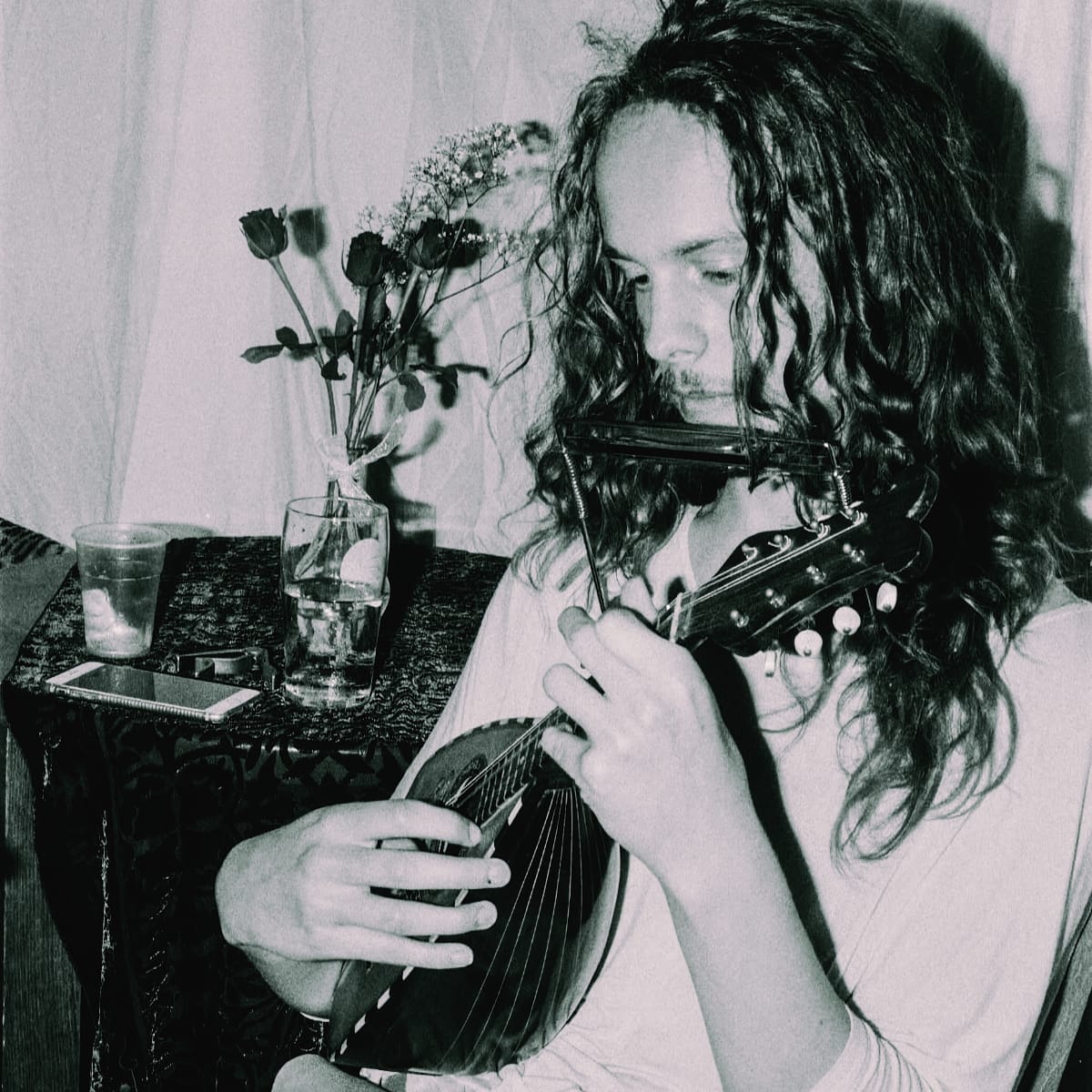
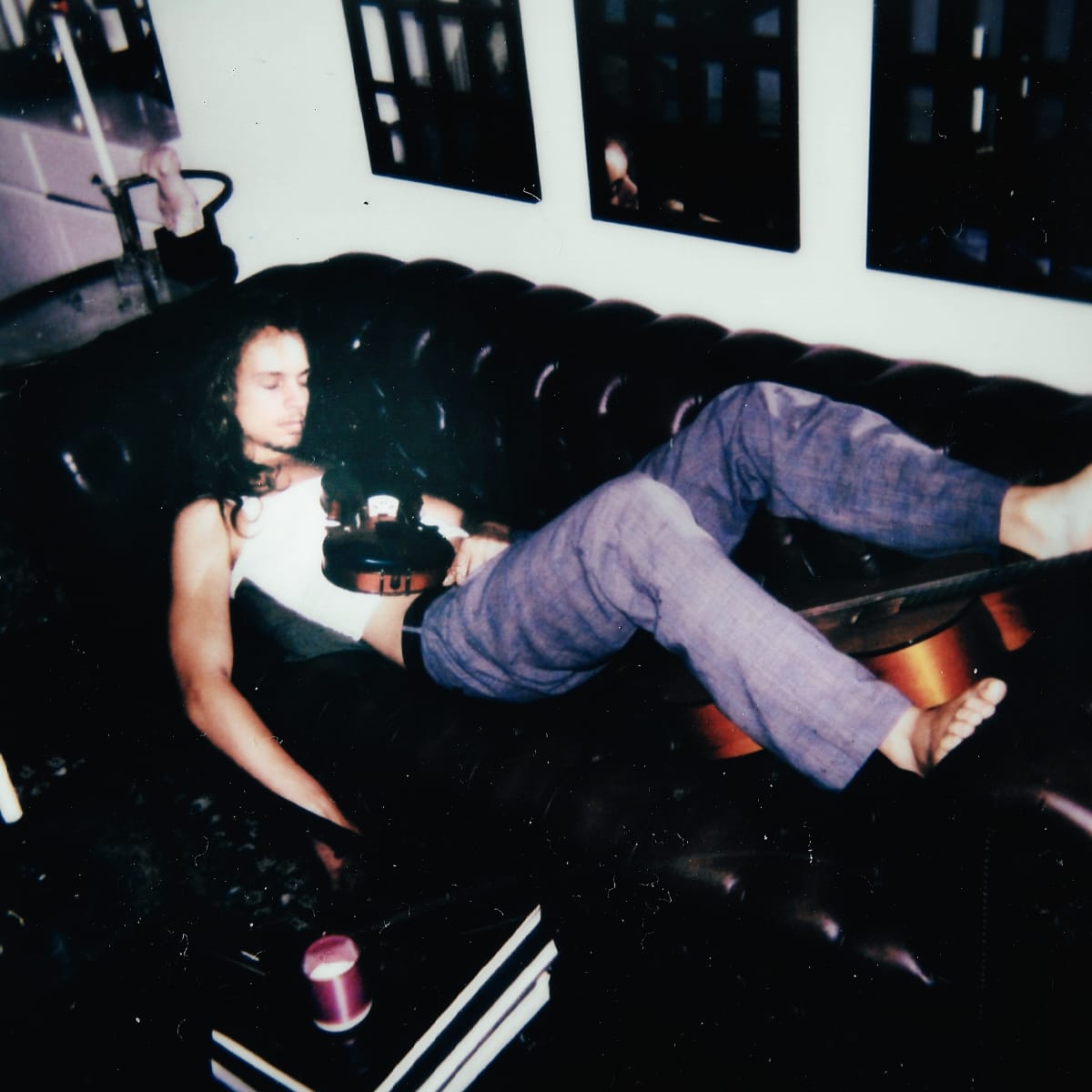
Louis: At the beginning, I intended for the album to be solo piano throughout. I set myself a rule that it would be a piano album. Naturally, as I kept recording, I broke that rule. I brought in a guitar—my father's old guitar, whose strings hadn't been changed in decades. I restrung it using only low-end strings and added that sound. After that, I decided to bring in the dulcimer, which was a gift from my girlfriend's mother, and the accordion.
I wanted these instruments to simply decorate the sound of the piano. In the end, the only rule I really kept was that no other musicians would play on the record. I tried to be as restrained as possible with the instrumentation, keeping everything contained within the sound of the piano.
Arina: Does the lineage of the guitar, passed down from your father, influence the way you play it?
Louis: I think the sentimentality of a musical instrument is very important. You tend to treat the music with more respect when you have an emotional connection to the object creating it. Because of that, I didn't change all the strings at once—when a string broke, I replaced it with one from a friend. In a way, each string carried its own sentimentality.
That mattered a lot to me, because you can almost hear it in the sound. A new instrument with fresh strings can end up sounding cold, too clean, too pristine—and that's not something I'm drawn to.
Arina: Do you feel a connection between your father learning Nick Drake songs and your own songwriting voice?
Louis: Yes, for sure. Nick Drake is a big influence, as well as the kind of music my parents played when I was growing up. That had a strong impact on both my songwriting and my improvisation. They played a lot of Elliott Smith and Devendra Banhart, and I think that influence comes through quite clearly in my writing. Elliott Smith is a primary songwriting influence.
Arina: You also cite Morton Feldman and Arthur Russell. What did each of them teach you about vulnerability in music?
Louis: With Morton Feldman, it's about the vulnerability of letting a single note speak for itself over a long duration. I'm especially inspired by his string writing and his long piano pieces. Arthur Russell sits somewhere between Feldman and Elliot Smith—intimate songs placed within a wide, minimalist world—which I find incredibly clever.
Arina: After making such a solitary and emotionally specific record, what does the next creative step feel like?
Louis: I've got another album coming out after this, which I see as the opposite of this one. This record feels very cold, lonely, and winter-based. The next one is much more collaborative—I think of it as the summer album. It doesn't have a title yet, but it features bigger instrumentation, more folk-oriented songwriting, and shorter, more concise songs.
After that, I'm interested in moving toward fully collaborative work based entirely on improvisation—using improvisation itself as the songwriting process. That's something I'm only just beginning to explore now.
Arina: What do you hope listeners feel when hearing this album alone, perhaps during winter themselves?
Louis: I hope people enjoy it. I try not to think too much about how it will be received, but everyone who's heard it so far has been very supportive. I think it's meant to be listened to at this time of year—when it's cold, grey, and rainy—and probably alone as well. So I just hope people enjoy it.
Check out more like this:
 Lawrence Peryer
 Arina Korenyu


Comments