


that as soon as you put a record onMichael Graves, owner and operator of Osiris Studio in Los Angeles, has won five Grammy Awards, all in the Best Historical Album category. For more than two decades, his focus has been on archival audio on deteriorating or obsolete media: warped tapes, oxidized lacquers, and formats rejected by most engineers. Jett Williams, daughter of Hank Williams, described his restoration work on her father's recordings as "the best restoration I've ever heard before, the 1% of 1% of restoration engineering."
Graves graduated from Georgia State University and first became interested in audio restoration after receiving a CD recorder in 1998. He founded Osiris Studio in Atlanta in 2002, not coincidentally sharing the name of the Egyptian god of resurrection. Graves’s practice grew from private-collector work into institutional preservation projects for Georgia State University’s Johnny Mercer collection, the National Park Service, the Coca-Cola Company, and the Centers for Disease Control and Prevention. Graves moved the studio to Los Angeles in 2018.
His reissue discography includes Hank Williams, Ray Charles, Joni Mitchell, Big Star, Nina Simone, and Janis Joplin, among many others. He has long-standing relationships with Dust-to-Digital, Analog Africa, the Numero Group, and Omnivore Recordings, all specialists in archival and historical recordings. His Grammy wins have come through those partnerships, capped most recently by the 2024 award for Written in Their Soul: The Stax Songwriter Demos on Craft Recordings. The catalog's breadth has brought its pressures. "People have gotten really attached to those recordings, flaws and all," Graves has said. "The minute you start changing that stuff, you're going to hear about it."
Lawrence Peryer recently hosted Michael Graves on The Tonearm Podcast. Among other fascinating topics, Graves discussed the philosophy underlying audio restoration, the persistent tension between preservation and intervention, and how public perception shapes and sometimes distorts creative decisions.
Listen to the entire conversation in the audio player below. The transcript has been edited for flow, length, and clarity.
Lawrence Peryer: Tell me your origin story. How did you realize that your interest in music could become a career path?
Michael Graves: By accident. I was loading airplanes for Delta Airlines—and cleaning lavatories.
Lawrence: That's like the perfect training for restoration! (laughter)
Michael: Absolutely. I did grow up in a sort of musical house. My mom was a music major, so she was always teaching piano lessons or voice lessons. The soundtrack of my childhood was somebody doing scales—that's all I heard. I've got two older brothers and sisters, and they all had different musical tastes, so I was taking all of this in as a kid. Everybody likes music, but I feel like I liked it in a slightly different way than most people. There was a point in high school when I had my Walkman on, and I started dissecting the different instruments in whatever I was listening to. I would rewind the tape: okay, there are the drums, let's listen to that; rewind, let's listen to the guitar. Just trying to pick out the different instruments.
I always had a creative side, more inclined toward art and drawing. I realized that I'm not good at coming up with something out of nothing, but I'm really good at finishing something—taking an image and fine-tuning it with these tiny technical pens. When I started working that way, I lost track of time. Four hours later, I would still be over the sketchpad, just lost in those details. That's still what I do now.
When I graduated from college in 1998, I got this four-hundred-dollar CD recorder—the thing you buy for twelve dollars now—and plugged it into my computer. I had a big vinyl collection and was really into English imports, and a lot of those twelve-inch records had B-sides that weren't on CD. The idea of digitizing that stuff intrigued me.
Keep in mind that as soon as you put a record on a CD, those pops and crackles are fixed forever. They become part of that mix, for lack of a better phrase.
Lawrence: They become part of the arrangement. You hear them.
Michael: Forever! So when I started doing this to CD, I knew this was a thing. The next step was discovering tools to remove pops and clicks, and I started going down that rabbit hole. Then you realize you can do both good and bad things. You're taking out stuff that shouldn't be taken out, like drum hits. I was just trying to figure out how to get the most transparent sound and sort of got lost in the details.
I started working for individuals with record collections, then found institutions—like corporate archives in Atlanta—digitizing their collections and learning as much as I could about different media types. The biggest commercial job I got was the archives at Georgia State University's special collections and the Johnny Mercer archive. I started working on that, and I'm getting paid to do the thing I came up with in my basement. It was all very intoxicating.
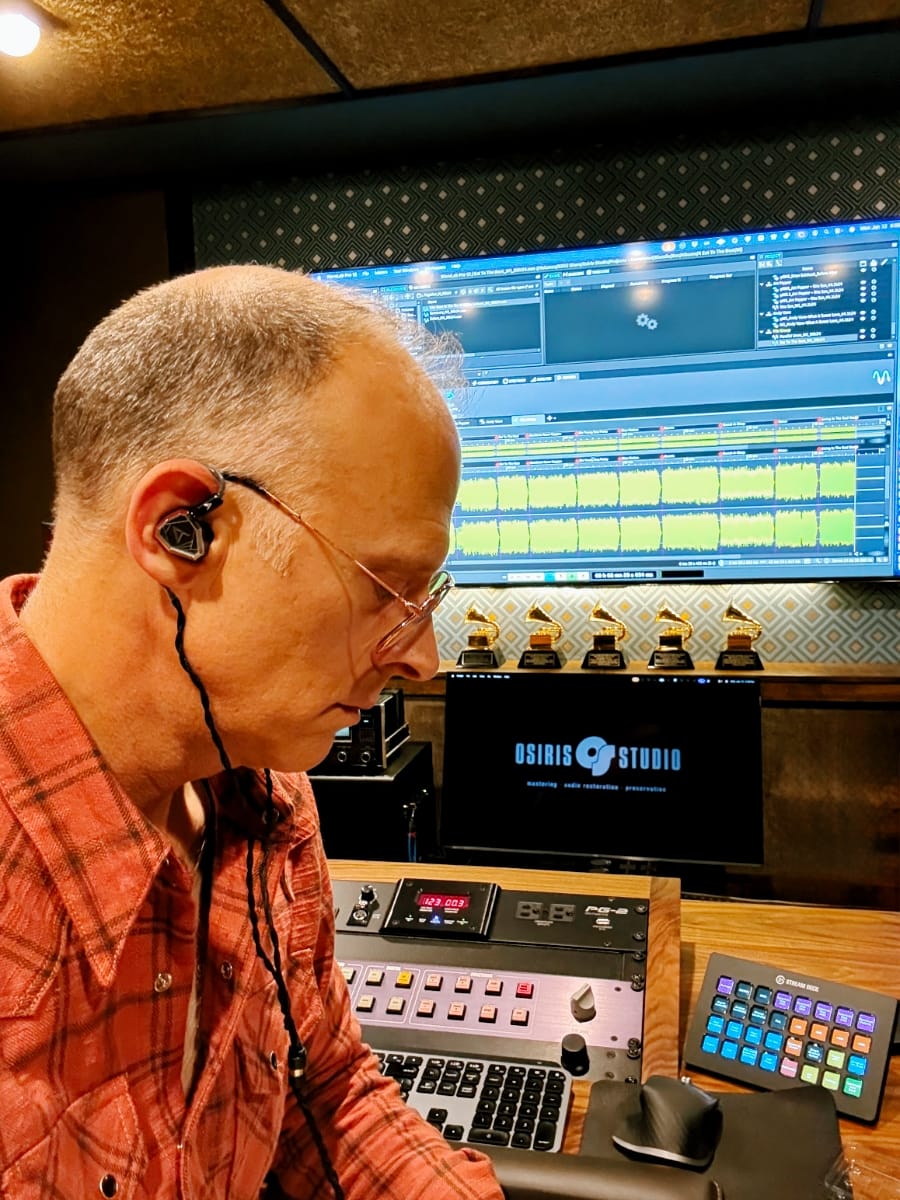
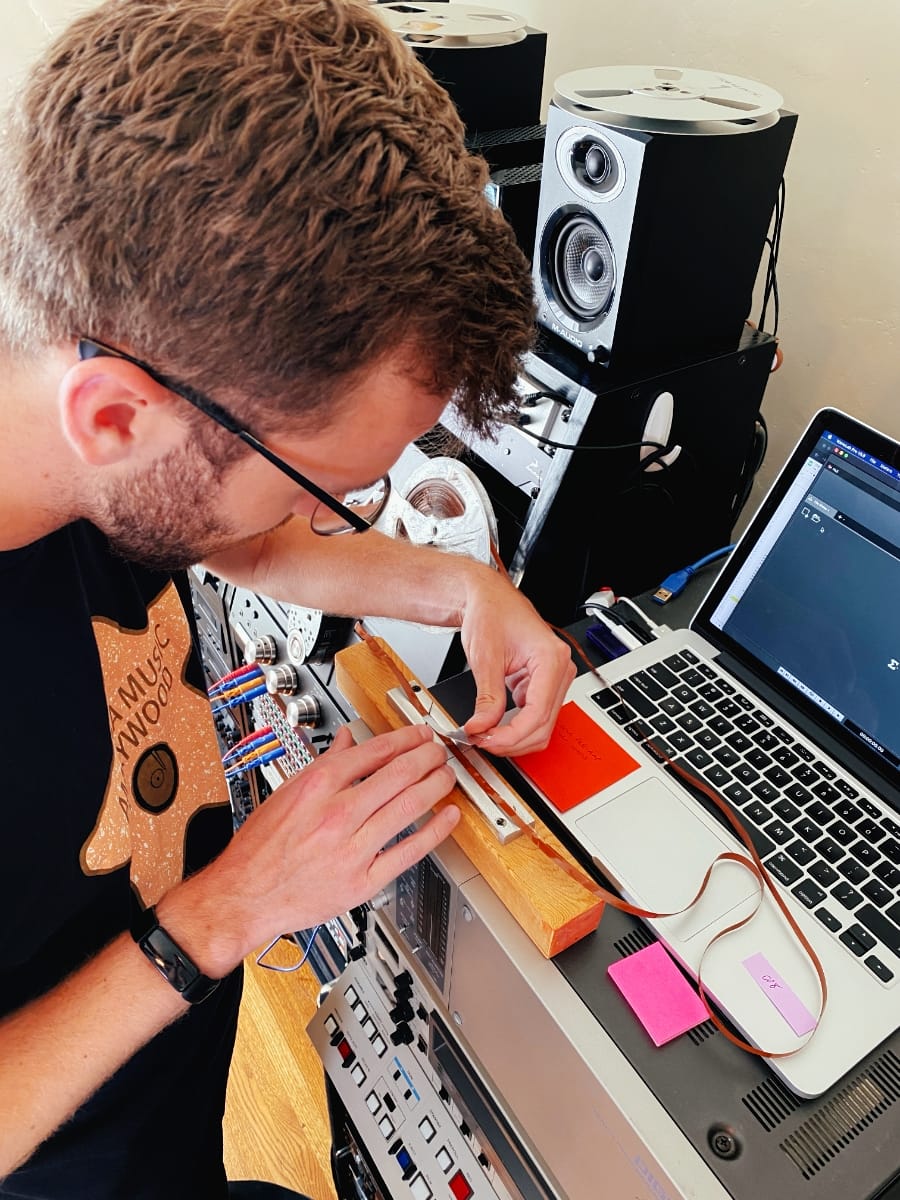
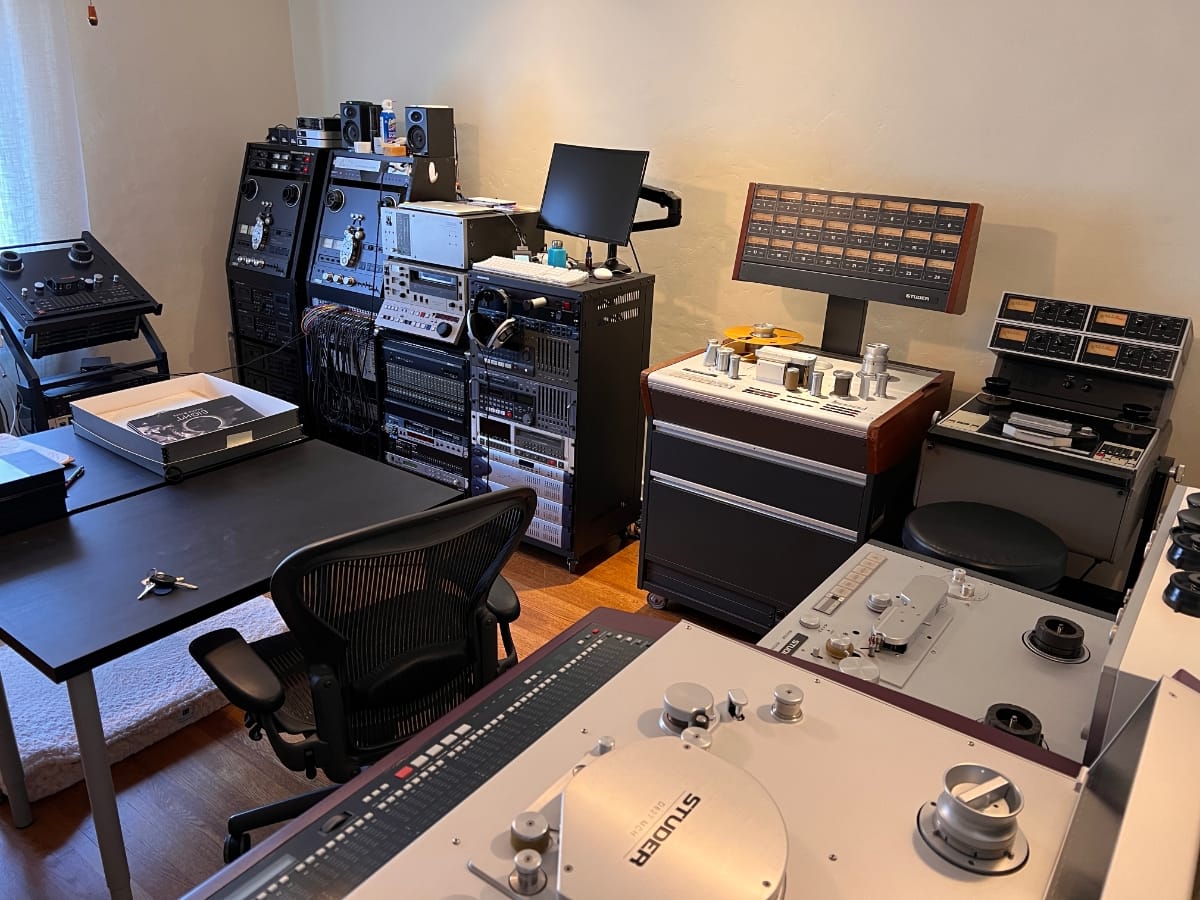
At work at Osiris Studio. Michael Graves (L) and right-hand man Jordan McLeod (R). Photos courtesy of Osiris Studio.
Lawrence: How did Osiris come to be?
Michael: The first restoration software I bought was this remedial stuff from a company in Germany. They made a fairly primitive DAW—digital audio workstation—and you could buy a plugin that had a de-clicker and de-noise tool. They called it Osiris. That company went out of business pretty quickly, but I was still using the software, and nobody around me had ever heard of it. I thought, “Well, I'm going to snatch that name.” It just made sense to me. I like the idea of resurrecting recordings that, for lack of a better phrase, if they sound like crap, nobody's going to listen to them. So I can give them a new life.
It's also gratifying to work with living artists. A lot of the time, I’m not, because I’m working with recordings that are so old the artists are long gone. But when I am working with artists in their seventies or eighties, there are usually tears—because they thought maybe this song was completely unsalvageable, that whatever art they created was going to be lost. And I've helped resurrect it, for lack of a better phrase.
Lawrence: There's this interesting line between restoration and revision. Even phrases like "cleaning it up" or "removing" something—there's some meddling with the source there. I'm curious how precious you are about it when you get to one of those crossroads, and it's like, “Am I preserving this or am I modifying it?”
Michael: Every day. That's every day. It's not a bullseye—it's a range.
My overarching philosophy is this: whether we're talking about something on an old 78, a tape, a vinyl record—whatever—there's a performance on there, a piece of art, that I'm trying to preserve. Unfortunately, that piece of art lives on a medium that is inherently flawed or damaged. So I'm trying to separate those two things. It's a bit like archaeology. I'm trying to lift that performance off the old record as delicately and transparently as I can, and I'm still going to try to scrub it as completely clean as I can, keeping transparency in mind the whole time. I never want one of my projects to sound like it's been touched by a computer.
A lot of times, those two goals can seem at odds. Sometimes you'll hear people say that if you scrub it too clean, you can take all the life out of it. Sure. But my definition of "scrubbing it clean" may be different from someone else's. I want to put you in the room with that performance. That's my overall goal.
There's another part of this that gets even trickier. I'll talk about a project. The artist was Chris Bell from Big Star. After he left Big Star, he recorded a song called "I Am the Cosmos." When we were reissuing his recordings for Omnivore, I started working on the song. It's a beautiful, great song, but there's a tape flub in it—it sounds like a tape crinkle. So I fixed it. That's what I always do: the performance is one thing, an inherent defect in the tape is another, and I'm going to fix that. And it sounded great.
When I handed it back to the engineer, he said, "Wow, it's really cool that you did that—but is it cool that you did that?" Because unbeknownst to me, when Chris recorded that song, Geoff Emerick [English sound engineer who worked with the Beatles] produced and recorded it. Those guys were all huge Beatles fans, and Geoff made that splice. He found a piece of tape on the floor, cobbled it together, and made a somewhat clumsy little splice. Sonically, it wasn't great, but Chris was attached to it because Geoff Emerick had made it. It was somehow sanctified.
So we went round and round about what to do. Chris is no longer with us, so we asked his brother to weigh in. He said, "You know what, long term, Chris was a perfectionist. Let's go ahead and fix it—make it sound like the splice was never there."
I don't know if that was the right call. There may have been five people who knew the story about why that splice was there. Everybody else probably just heard it as an annoying little sonic defect in the recording.
Lawrence: The context is everything in that case. There's really no right answer. Trying to interpolate what an artist would have wanted is such a fool's errand.
I had a project where we were reissuing an album and couldn't get good enough masters. We wound up finding a Mobile Fidelity CD edition—about as clean a transfer as you can imagine. The original producer said, "I don't hear any difference between this and the master tape. This is even better because it was transferred when the album came out in 1988." But it's always bothered me. That was a great solution at the time, but I just don't know how I feel about it.
Michael: You should feel great about it. I do that all the time. In fact, I've had situations where we've gone through that exercise and then actually found the master. I can't help myself—I compare what I did to the master, and it's usually very, very close.
Here's something I always say about restoration: when people hear the phrase "audio restoration," they usually think of digital audio restoration tools. Those are great, and I couldn't do my job without them. But there's so much restoration that happens on the analog side before anything gets digitized—cleaning away mold, fixing bent records, even down to your signal chain choices and the stylus you're using for a record. What I try to do is remove as much noise as I can in the analog world before digitizing, so the computer has less work to do. I want to end up with something that sounds analog, pure, and transparent. The less computer processing, the better.
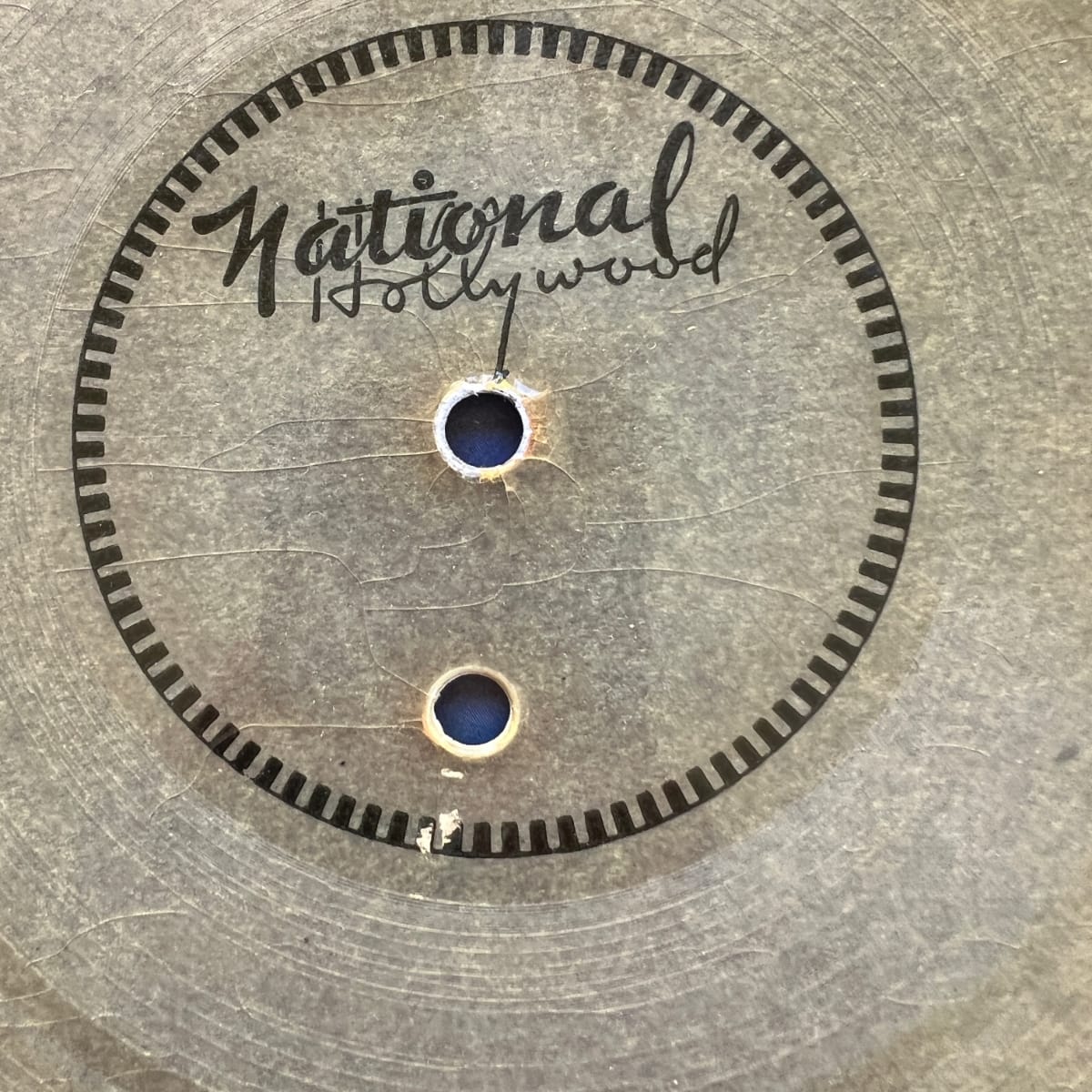
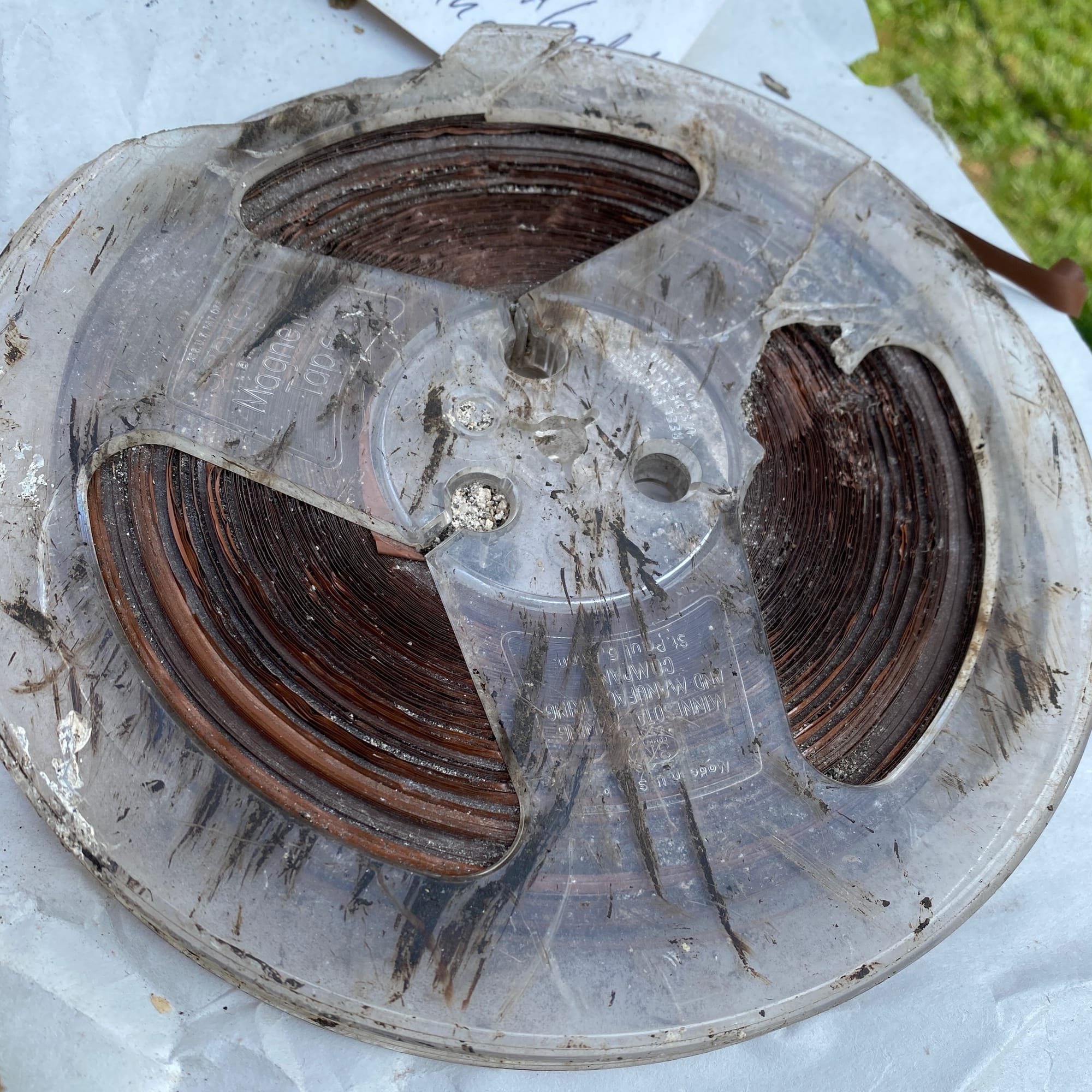
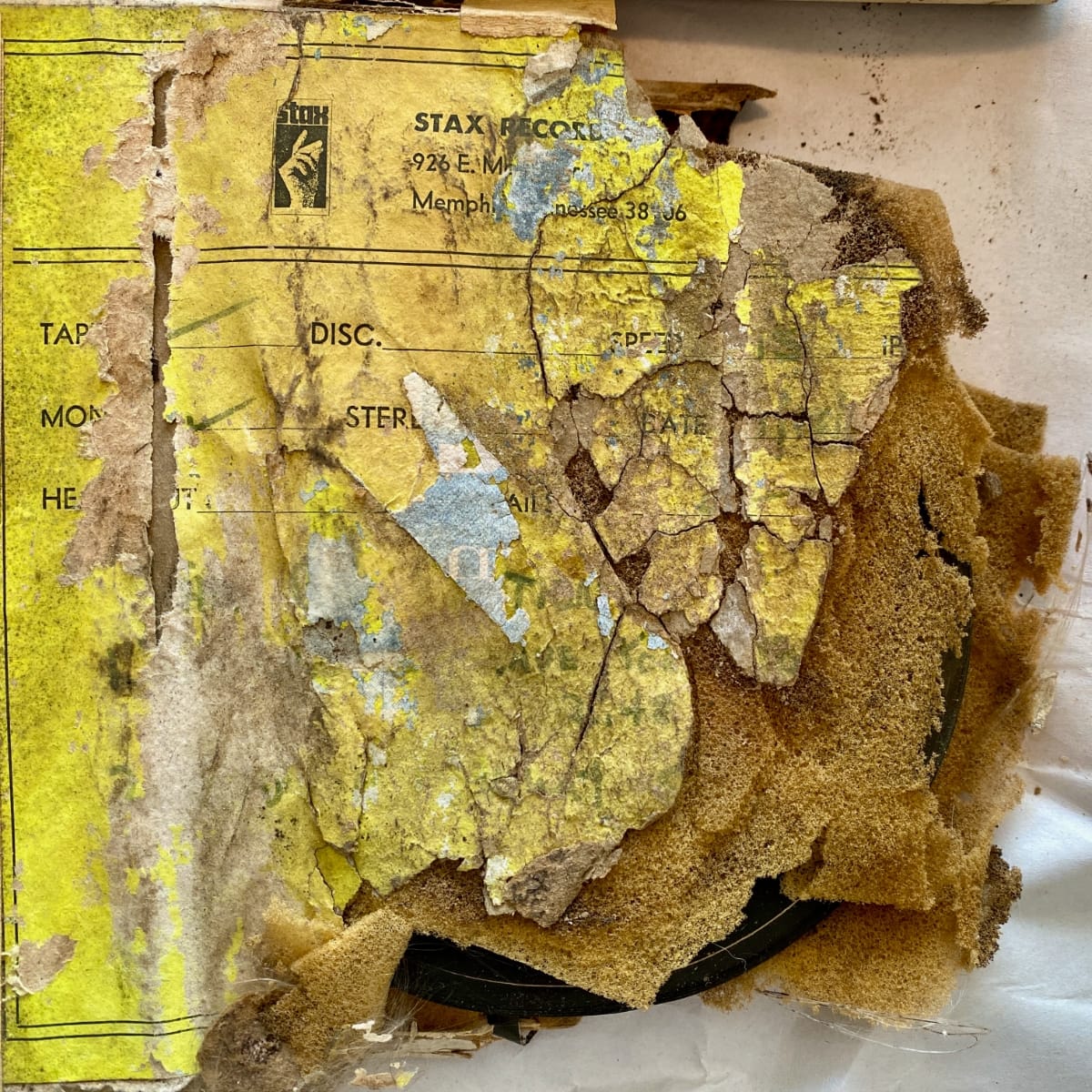
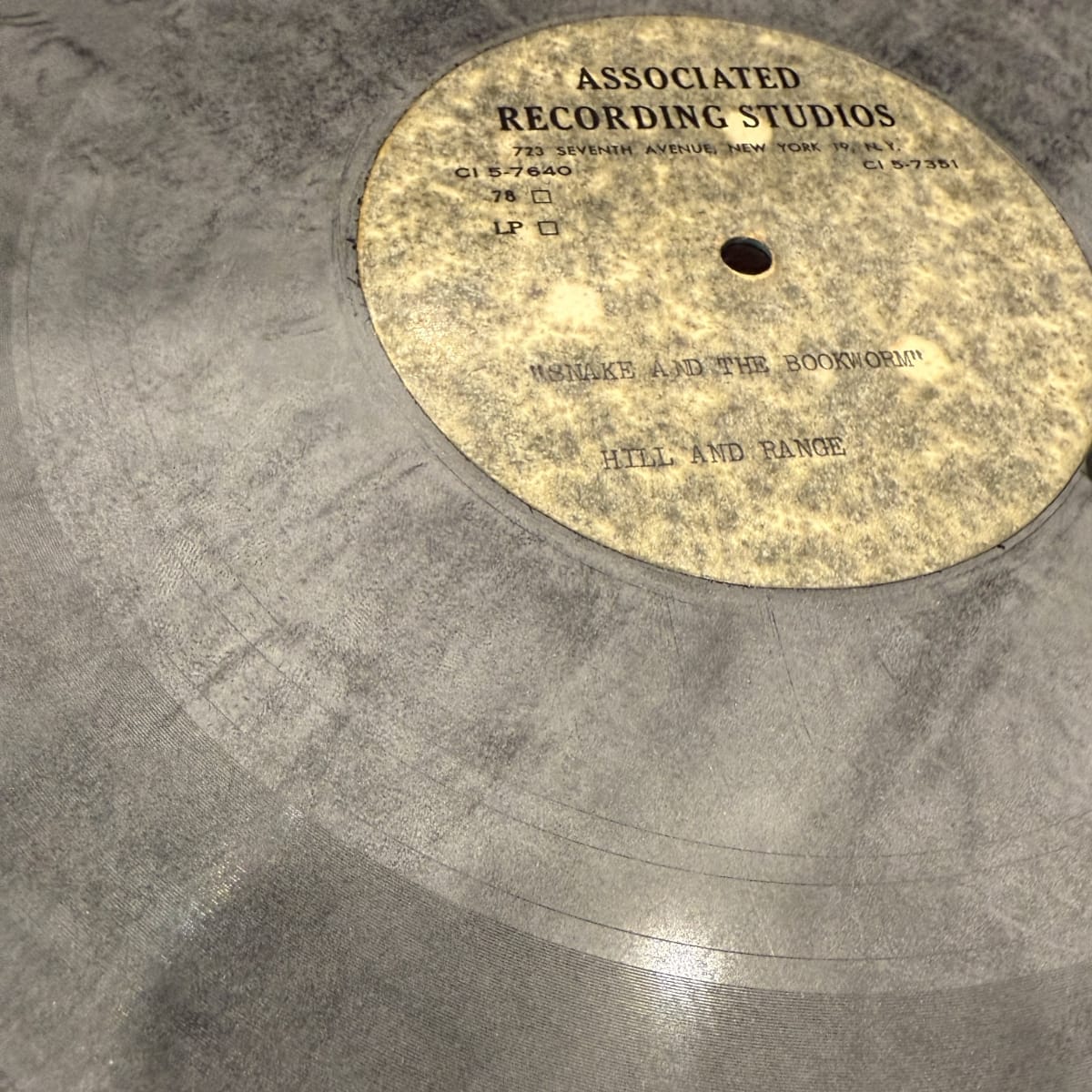
Just some examples of what Michael Graves is dealing with. Photos courtesy of Osiris Studio.
Lawrence: That's very similar to the approach in photography or filmmaking—you don't want to fall back on "we'll clean it up later." You want to get the original source material in as good a shape as possible.
Michael: Absolutely. When I'm talking with other engineers—mostly tracking and mixing engineers who have no idea about this world I live in with needles and playback heads—I equate it to microphone placement. If you're getting a vocal take and your microphone is wrong or in the wrong place, sure, you could try to fix it later, but you're better off getting the right microphone in the right place before it's even captured. It's all about getting the best signal to begin with.
Lawrence: Have you had cases where you're working on something and you're thinking, the juice isn't worth the squeeze here? How do you evaluate what's worth the effort?
Michael: I'm sort of a pushover. I don't care if it's somebody's personal recordings. I get a lot of personal acetates—around World War II, servicemen would go into these little recording booths before they shipped out and record little one-minute messages. They're cardboard acetates—cardboard with a lacquer surface, rather than an aluminum core.
I can't charge someone off the street what I would charge a label. The sentimental value is beyond putting a number on. A lot of times, I've done these projects for a son or daughter of someone they never met because, a few weeks after this recording was made, that person was killed in the war. I've learned to keep boxes of tissue in my studio, because when you play these back and see people's reactions hearing this voice for the first time, it's deeply emotional.
On the music side, I've learned early on that I can't judge anybody's art. Every song is someone's favorite song. I keep telling myself: this is somebody's heart. I'm going to try to make this the best it can possibly be. It's always a personal challenge, even if I don't like the music.
Lawrence: Right after the holiday, a local friend of mine reached out—he had an acetate. His uncle was a trumpet player in the sixties and seventies, in the Navy big band. The uncle passed away young in a car accident, but the family had this acetate they'd never heard. It was unmarked, just had his last name written on the wrapper. So he brought it over, and we transferred it. It was a big band—single-sided acetate, I think four tracks. One of the tracks had a little bit of studio chatter, but it was so muffled and low-level that I couldn't decipher what anybody was saying. We took photos of all the labels and did a little bit of research—it looked like it was a company that did those kinds of booths where you could go, record an acetate, and leave with it.
Michael: Pepsi had these little booths set up, but you could also go buy these things at Sears under the Silvertone brand. People had home recording setups. Honestly, some of the most memorable projects I've ever done are home recordings of people sitting around in the living room, hooking up a machine to record themselves playing music. We don't think about it much, but people had to make their own entertainment in the thirties and forties. I'm always amazed at how good the talent level was on some of these recordings—the vocal work, the instrumental work. It's always really fascinating.
Lawrence: Art education was so important, not only in the schools, but it was such an aspirational part of moving to the middle class. Every family had a piano in the sitting room. They sat around and sang. They went to church and sang. Music was integrated—it wasn't a passive activity all the time.
Michael: Right. And you couldn't just go out. I'm working on some Alan Lomax recordings from 1942—Sacred Harp recordings, recorded in Alabama. People from surrounding counties would come in and do these singings—four, five, six hundred people just singing as loud as they can. You're going there to participate, but also to be an observer, to be part of this thing. If you've ever been to a Sacred Harp singing, the paint on the walls comes off. It's a spectacle. Whether you're religious or not, the idea is they're not going to see a movie, they're not going to watch TV, they're not going to see a concert down the road. This was their entertainment, a big day out. And the banter between the songs is just as fascinating as the performances.
Lawrence: Behind you, I see some Grammy hardware. I wanted to ask you about the Stax project, Written in Their Soul. Can you talk about some of the challenges or rewards in working on that project and that music in particular? It's an important body of music in American pop culture and in American Black culture—tied to the civil rights movement and to empowerment.
Michael: Everything you said—totally true. And I would say it's not just important to American culture; what was coming out of Memphis was having ripple effects across the world. So when I get a project like that, the weight of it is not lost on me.
These recordings were songwriting demos—they were never meant to be released. Because these are Stax songwriters and Stax performers, when someone had an idea for a song, they would just go down the hall to a studio, pick from the best session musicians in the world, and lay these songs down quickly. It was a demonstration, off-the-cuff, unpolished. To our ears today, it just sounds amazing.
Lawrence: It's like if you're in LA in the eighties and you have Toto as your demo band. (laughter)
Michael: Exactly. Now, somewhere in the eighties or nineties, all these tapes got transferred to DATs. A lot of these recordings sounded really muffled. If you work with tape, you know what playing a tape on its reverse side sounds like, and a lot of these sounded exactly like that. My sense is that someone had a stack of tapes collecting dust and thought: “Let’s move these to DATs for protection and a smaller footprint in the archives.” They probably had an intern transfer these reel-to-reels onto the DATs, maybe without enough knowledge of how tape works. With quarter-inch tape—especially acetate-based tape—it can look brown on both sides, and the play side is only slightly duller. If you get a tape flipped around, you'll get sound, but it'll be muffled. My feeling is someone hit play, heard the sound, and kept going because there were a hundred more tapes behind.
Then the DATs started failing and introducing additional noise, and when people realized they were deteriorating, they had them transferred to hard drives. These digital files were then sent all over the place.
A lot of these Stax artists have passed away. Some of them are still around. Getting their positive feedback on what I had done—that's just the best drug you could get. When you get someone like Eddie Floyd thanking me for helping him save these recordings, it's amazing.
Lawrence: One of the most frustrating things is going through a box of tapes, with the mission to see if there's anything commercial, anything usable. And I find gems. Then you go do a playback session, and the artist is like, "Eh, there's a reason it got stuck in a box."
Michael: That sort of goes back to what I was saying earlier about every song being someone's favorite song. You just never know. I was in a meeting one time with a current record label that specializes in reevaluating the past—the kind of label that's a darling of Pitchfork and that crowd—and they were considering an artist who'd sort of been forgotten. Also in that room was an industry veteran who had worked for Columbia Records, one of the guys who had decided back in the day that this artist just wasn't worth much, and he stood by that to this day. So you've got the original people from the seventies saying, “This is just mediocre." And you have a new crowd coming up with new ears saying, "This is amazing." I don't know how you make those distinctions.
Lawrence: There are several moments throughout this conversation—the issue of legacy, public perception, the aesthetic decisions—where it seems like, at some point, you just have to compartmentalize and go do the work.
Michael: Absolutely right. And that's one of the things I tell young engineers: the minute I hear a recording, I know what I want to do. I have a mental roadmap of what I think it should sound like—not for me, but to serve the art. The minute I start thinking about what the producer really wants, what the artist really wants, how this is going to be perceived—the minute I start making decisions based on what I think somebody else wants—that's a danger zone. You're going to get into a hole fast.
What I've learned is that if I do what I think is right and present it to someone—whether that's a producer, an artist, whoever—and I get feedback, I at least have a good starting point. If instead I start with "I think I know what this producer wants, so I'll do this even though I don't think it's right," and then I get feedback, I'm just lost.
Check out more like this:
 Chaim O’Brien-Blumenthal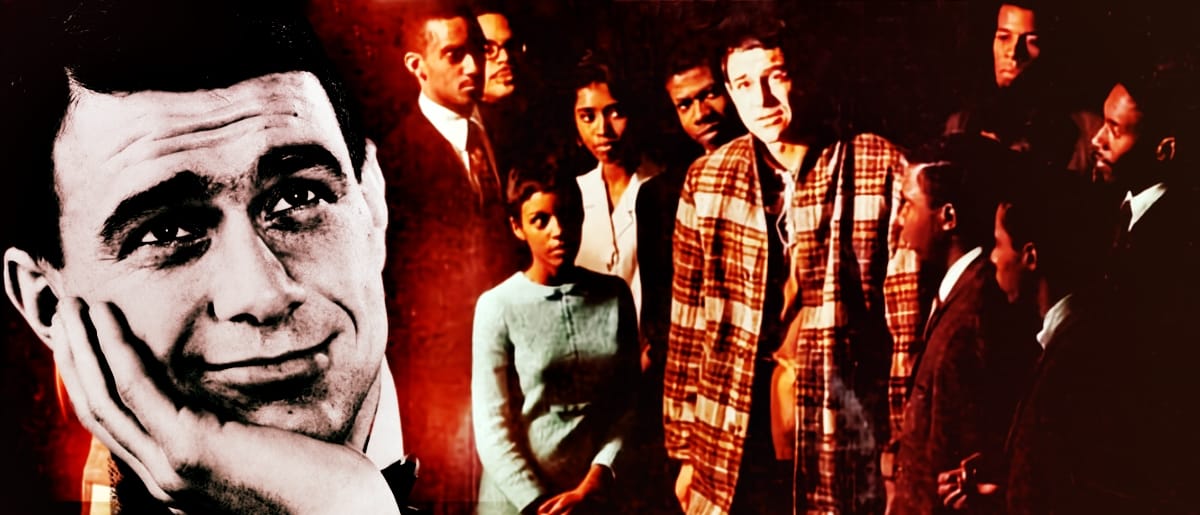
 Andrew Hamlin


Comments