


Few artists have had as storied a creative life and yet remain so humble about their talent as Colin Blunstone does. Starting his musical career as a teenager when he formed the Zombies with his pals, he and the group would, within a few years, find themselves riding the crest of the British Invasion, racking up two smash hits worldwide in 1964 and ’65.
That almost instantaneous success wouldn't last, however—though the band remained creatively fresh, their commercial fortunes took a slide. After the lack of fanfare for what they felt was their masterpiece, 1967's Odessey and Oracle, the group disbanded, with Colin drastically leaving the music business for steady work.
It wouldn't take long, though, for Blunstone to re-enter the studio. This, in turn, led to his debut album, 1971's One Year. Over the last sixty years, he'd managed to have a successful solo career, all the while discovering that the records he made in the sixties and seventies, both in the Zombies and on his own, have gained followings amongst those who truly appreciate creative and original music.
Fifty-five years after its release, Blunstone performed One Year in its entirety for the first time on stage in London. That concert is now the focus of a new CD/DVD box set.
I recently had the pleasure of chatting at length with Colin Blunstone about his musical journey over six decades. Below are excerpts from our conversation.
Chaim O'Brien-Blumenthal: Starting out by going back, I'm curious what your earliest musical influences were as a child.
Colin Blunstone: When I first started to notice rock 'n' roll, Elvis, Chuck Berry, and Little Richard. Then later on, Buddy Holly, and in particular, for me, Ricky Nelson.
Once the Beatles started, they became a huge influence on all of us in the Zombies. We used to play a lot of their songs in our early sets, before we discovered we had two really good songwriters in our own band.
Chaim: When all this new rock 'n' roll was coming out, did it lead to your wanting to make music?
Colin: Absolutely. I loved all the new music, and I asked my parents for a guitar. It wasn't easy for them to finance that, but they bought me a Framus Atlantis, an acoustic steel-string guitar. That's when I first learned to play.
Chaim: Were you also interested in singing at this age?
Colin: I always sang, ever since I was a child, though I wasn't in a choir. Rod Argent was though. Later on, that really helped us with the Zombies because Rod, in particular, understood harmony. The Zombies were always a keyboard-based band that featured three-part harmony.
Chaim: How did the Zombies come together?
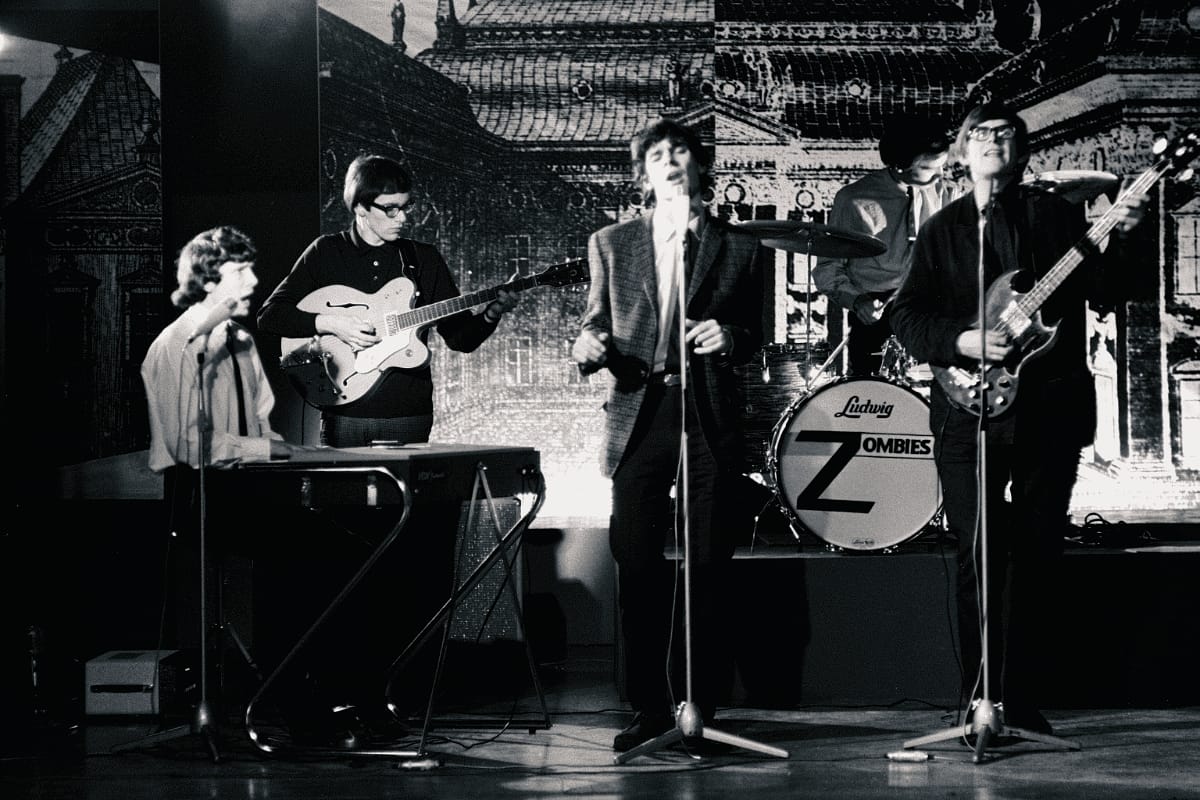
Colin: I knew this guy, Paul Arnold, who sat in front of me at grammar school; one day, he said, “You've got a guitar, haven't you?” Well, I had, so I said, “Yes.” He then asked me if I wanted to be in a band. Truthfully, I didn't know. Who would the other members be? What does it entail? In a way, that was my audition, before any of us had even met.
I used to play a lot of sports. And three days before, on a Saturday morning, I was playing rugby and broke my nose. When I turned up the next Wednesday for the audition, I had two black eyes and a lot of white strapping right across my face holding my nose in place. And they were all hoping I wasn't there to be in the band, because I looked like a toughy. I think they were a bit concerned.
Chaim: This was the first time you had met the other guys?
Colin: Yes. Rod Argent, Paul Atkinson, and Hugh Grundy all went to the same school, St. Albans, on the other side of town, and Paul Arnold and I went to St. Augustine's. But as I found out, Arnold lived a block away from Rod, so he already knew him.
At our very first rehearsal, Rod was going to be the lead singer, and I was going to be rhythm guitarist. Halfway through, we were playing "Malagueña," which is an instrumental. So, Rod hadn't actually sung anything by this point, and we break for coffee. Then he discovers an old piano stuck in the corner of the room. He went over and played "Nut Rocker" by B. Bumble and the Stingers. Even as a fifteen-year-old, he was a brilliant keyboard player. Just totally in a different league, musically, to us. I told him he should play keys in the band, but he was insistent that we were going to be a rock band and needed three guitars.
At the end of the rehearsal, I'd put my guitar away and was singing a Ricky Nelson tune. I wasn't singing for anyone, just to myself. Rod heard me and said, “Look, if you'll be the lead singer, I'll play keyboards.” Which was a bit of a shock, to be honest. My intention was never to become a lead singer. I was too shy. But it happened.
Chaim: How did Chris White end up joining the band?
Colin: By this point, we were calling ourselves the Zombies; prior to that, we'd gone by the Mustangs for a few weeks, and then the Sundowners. Paul Arnold came up with the name. Ironically, he was the one who'd wind up out of the band soon enough. He'd always wanted to be a doctor. He was constantly studying and couldn't keep up with the band. Chris went to my school, but was a year older, so we didn't know each other much. Chris was more invested in the band.
Chaim: Did you find that the five of you in the Zombies shared similar musical tastes?
Colin: I think we all liked a wide spectrum of music, which was one of the strengths of the Zombies. I always say, you can like us or not, but you cannot argue that we didn't have a unique sound. And I think that's partially because we're all drawing on these different influences, from classical to modern jazz to rhythm and blues and rock and pop.
Chaim: There's a unique mixture there in the early Zombies; a sophisticated sound, but also quite rock 'n' roll with your rhythm and blues-inflected vocals.
Colin: Yeah, I think it is a mixture, which was to our advantage. Though it was also a disadvantage, as the music industry likes to fit artists into a certain category. People often find it hard to categorize the Zombies.
Chaim: Another strength was the two dynamic songwriters within the group: Rod Argent and Chris White.
Colin: That goes back to the Beatles. Once they showed up on the scene, we realized that anyone could write songs. Prior to that, you had guys who wrote songs for artists; that was their job. Now, the members of the band could be songwriters.
"She's Not There" and "You Make Me Feel Good," the A and B-sides of our first single, were two of the earliest songs Chris and Rod wrote. And when that single turned out to be a smash, our record label came to us asking for more. Which was a bit of a problem as there weren't any more! They were writing day after day, trying to get a backlog of songs we could record.
Chaim: It's still amazing the success of your debut single, "She's Not There," and all these years later, it still sounds like nothing else, then or now.
Colin: We'd lucked out in finding a good manager, Ken Jones. The Zombies had won a Hertfordshire band contest, and we got the notice of Decca Records; but our actual deal was with Jones's production company, which turned out to be a wise decision. All our masters and rights reverted to us because we had never signed directly with a record company.
Chaim: As a band, you really lucked out in that regard. Many of your peers probably wish they could say the same, all these years later, when it comes to their rights.
Colin: We didn't go in knowing the ins and outs of the record business. We had to learn like anybody else does. What helped was having good people looking out for us. Our management was very solid and honest.
Chaim: What do you remember about the Zombies' first recording session?
Colin: I remember it quite clearly. We were at Decca studios, and at that time, it was quite fashionable to record in the evenings, going through to the night. These days, not so much. Anyway, we turned up at the studio at seven o’clock, and we felt lucky, as we were going to be working with a very accomplished recording engineer for our session. He'd had many hits.
Unfortunately for us, he'd been at a wedding all day, and by the evening, he was incredibly drunk and aggressive. Things got really challenging. As soon as I put the headphones on, this guy was screaming down them with huge obscenities, very loudly. It makes me laugh now because I've been in the business for sixty-something years. But at the time, it was incredibly stressful for us, as it was our first session. I remember even thinking at the time, I don't think this is for me.
As luck would have it, he soon passed out cold on the floor. The Zombies carried him up two flights of stairs and into a London black taxi. And I never saw him again! But in a wonderful twist of fate, his assistant took over. And that was Gus Dudgeon, who later went on to record all of Elton John's albums, David Bowie, etc. But that was Gus's first session.
Chaim: That's absolutely wild. Was that the same session when you recorded "She's Not There"?
Colin: Yes. We did four songs that evening, which came out as an EP.
Chaim: Did you know at the time how unique "She's Not There" was as a song?
Colin: I knew it was good, but I didn't know it was going to take on the success that came its way. We also recorded a jazzy version of Gershwin's "Summertime," which was popular in our shows locally. I thought that might stand a chance as a single. But I always say that singles come out of the studio; they don't go into the studio. You don't know what the single will be before it’s recorded. We really lucked out as well; in England, there was a big television program called Juke Box Jury, where stars would rate the latest records. George Harrison was on that week, and said he really liked "She's Not There.” Just the fact that he said that on national television was so exciting, and he almost certainly guaranteed it would be a hit.
Chaim: Did the success of the single in America surprise the band?
Colin: It did. It got to number one in Cashbox [Magazine], and number two or three in Billboard. We went over to the U.S. on Christmas Week of 1964 to do Murray the K's shows at the Brooklyn Fox. We were number one on the charts that week. We opened on Christmas Day, and there were fifteen or sixteen other acts on the bill. We'd play six, seven, or eight shows a day, and, as was the tradition, artists would do only one or two songs. I recall we had to follow Patti LaBelle and the Blue Belles, who were wonderful. They brought the house down.
The whole experience was surreal. Rod and I were only nineteen, and as a band we'd only played as amateurs back home. This is our first time playing America, and luckily for us, the audience liked the Zombies.
Chaim: People have to realize that it's still less than a year since the Beatles arrived in America. The Zombies were one of the first English bands to come over after them.
Colin: There definitely was an element of chaos to that first trip. When we arrived at the Brooklyn Fox for the shows, it was pretty quiet, and we stayed the whole day. Paul Atkinson, our lead guitarist, decided one time to try to go out the stage door for a break. The volume of people just pushed him up against a plate-glass window. He actually lost his shirt. The police came and rescued him, and told him they'd only do this once. “Tell everyone to stay inside!”
Chaim: You followed that with "Tell Her No," which also did very well in America. But the other Zombies singles that came after didn't do as well on the charts.
Colin: Once we'd had a hit with our first record, Decca kept pressuring us for the next one, and also for an album. We recorded the first Zombies album in two evenings. But we didn't have the material because Rod and Chris had just started to establish themselves as writers. It was really difficult to do the first album so quickly. We knew we didn't have another hit. We only had the one song. If we'd had three or four months to work on our album, it would have been better. If we'd had more experience, I think we could have stood up for ourselves.
Chaim: It seems like in 1964 and '65, there was a concerted push for success in America, and not so much back home.
Colin: I think that is absolutely true. We were more popular anywhere in the world than in the UK. After the Zombies finished, we felt unsuccessful because we hadn't had any chart success in the UK or America for some time. The irony is that when we had a bit of time to explore what was happening with our music, we discovered we’d always had a hit record somewhere.
Chaim: Perhaps none more so than in the Philippines.
Colin: They particularly liked our earlier material, before Odessey and Oracle was recorded. We had no idea we were as successful in the Philippines as we were when we arrived. Personally, I was imagining we were going there to play on an exotic island in some bar in a hotel. And then when we got there, we found ourselves playing to 28,000 fans at the Araneta Coliseum.
Chaim: That had to be a shock.
Colin: When we got off the plane, there were thousands of people at the airport, and we all thought someone famous was on the plane. We're all looking back to see who it is. Then they said that they were there for us. We weren't told to expect this at all. We then discovered that we had five or six records in the Top 10 there.
We played for ten nights, roughly to the same size crowd each night. Saturday had 32,000, I recall, and then a matinee, which brought out 18,000.
But there was a heartbreaking element to it, because our manager had negotiated a very poor fee. What we were getting would be laughable now. The Zombies were receiving eighty pounds between us five. That, combined with some other things we got home to, dampened our spirits. But let me be clear, the people in the Philippines were wonderful. It had nothing to do with them; rather, it was our handlers that we had the issue with.
Chaim: One of my favorite things the Zombies did was an appearance near the end, on French television, where you are performing a cover of the Isley Brothers' "This Old Heart of Mine,” and it's a brilliant rendition. Even at that stage, the magic seemed to still be there.
Colin: We also did that for a BBC radio program, I believe. When we first toured the UK, we were on a bill with Dionne Warwick, the Searchers, and the Isleys. We were very impressed and thought the Isleys were great. I don't think the British audiences were ready for them at that time, though. Later on, they were hugely successful. We were always following their material, so we decided to do our own version of that song.
Chaim: In 1967, The Zombies leave Decca and sign with CBS, and begin work on what would become Odessey and Oracle.
Colin: I think Ken Jones led the contractual conversation, but the primary idea was that we were going to be producing ourselves, Chris and Rod in particular, overseeing the sessions. A lot of this goes back to Ken never letting us attend the mixing sessions for our records. And we found that the finished records weren't representative of how the band was developing. The theory was that Ken was always trying to recreate "She's Not There," successfully or not.
It's still a bit of a mystery how we ended up at Abbey Road to record the album, as I’d always been under the impression that unless you were an EMI artist, you couldn't record there at the time.
Chaim: How was the process of recording Odessey and Oracle?
Colin: We did it quite quickly because CBS had only given us a thousand pounds for the recording budget. And even then, Abbey Road was one of the most expensive studios on the planet. We knew going in what songs we were recording, for we had rehearsed extensively. We knew the arrangements. I remember we recorded much of it in the summer of 1967.
The Beatles usually recorded in Studio 2, sometimes Studio 3. They had just finished recording Sgt. Pepper's about two days before we went into the studio, and there were still tambourines and maracas from their sessions lying around on the floor. Being huge Beatles fans, it was a thrill for us to pick up these instruments, knowing they had left them. There was a Mellotron in the studio that was either John Lennon's or he used it on sessions. We used it all over Odessey and Oracle. Just a bit of luck it was there, really. Having Geoff Emerick and Peter Vince as engineers was also wonderful; they had just finished working on Pepper as well.
Chaim: Did you have a sense when you were recording it that this was going to be a special album?
Colin: It's difficult when you are actually doing it to make the assumptions that an album is going to be a hit or going to have a following. I felt that Odessey and Oracle was the best record we could have possibly done at that time. After that, it's up to fate. Who knows what's going to happen with public reaction, or marketing, or promotion? It depends on a million things.
Chaim: It's important to note that Chris and Rod personally paid for the Stereo mixes to be made out of their pocket. Is this because CBS wasn't interested?
Colin: It is, because they wouldn't pay. When Rod and Chris took the finished album over to them, the label said, “Well, yeah, great. But stereo is the thing now.” CBS needed a stereo mix. We had never had that in mind when recording, as they had not told us until that point. Just recently, a mono mix has been released after all these years, which is how we heard it when we finished the album.
In the Zombies, Rod and Chris were the songwriters, so they were the only ones making money.
Chaim: Was that a reason why the band disbanded?
Colin: Yes, it was. Chris and Rod were the writers, and the publishing company was a different income stream. So, they were in a different position than us. Musically, the Zombies were great. But we couldn't survive if we were struggling financially.
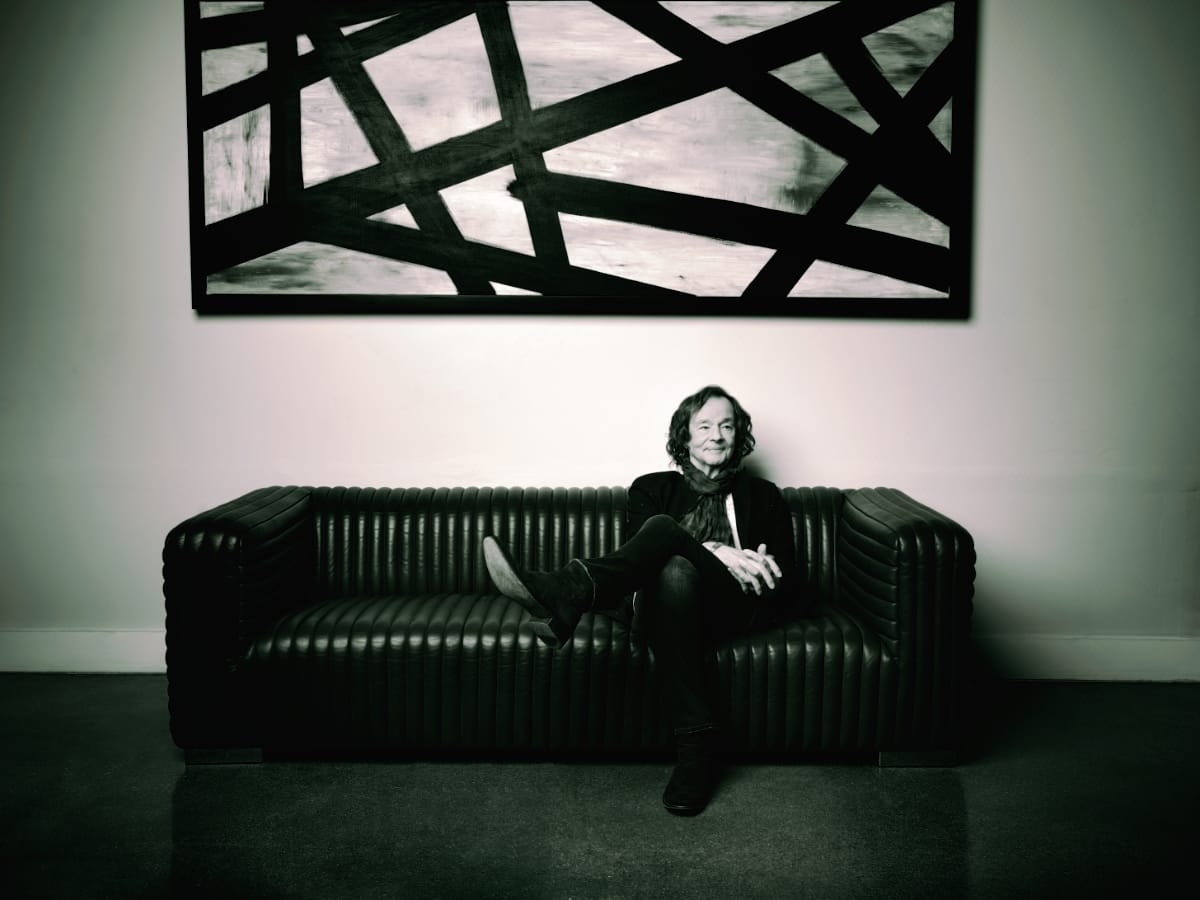
Chaim: After the Zombies split up, you left the music world and took a regular job.
Colin: I had to. All three of us did, actually. Paul went into computers very early on. Hugh, I think, started selling cars. And I kept phoning around for a job; finally, I got one in an office. It was ridiculous because after a few months of doing this, I added up what I was getting paid for work, minus the deductions of taking the train into London and other expenses, and I was actually working at a loss.
When the Zombies finished, I was devastated. When you add it up, we had been together for seven years, going back to our amateur days. I'd been in this band since I was fifteen. But I didn't have time to dwell on the sadness because I was working all day long. And I think in a way, that was really good for me.
Chaim: Did you think at the time that you were done professionally with music?
Colin: I thought that the music business was done with me. When the band finished, the phones stayed silent. I didn't have a lot of names in my address book I could ring up either. I didn't have a Plan B when the Zombies finished. I remember driving home after a meeting with the guys after we had disbanded, and thinking, “What do I do with the rest of my life?” I might have been twenty-two.
Chaim: Meanwhile, across the Atlantic, the Zombies are being championed by one person in particular.
Colin: We didn't know this at the time, but Al Kooper had just been to London and brought back eighty albums with him. Out of all of them, he said one album stood out—Odessey and Oracle. On his first day back in New York, he went to see Clive Davis [head of Columbia Records], and this was very brave of him; he said, “Whatever it costs, we have got to get this album.”
And Clive says, “We already own that album!” But they were going to pass on it, not even released in the States. So, without Al Kooper's persistence, Odessey and Oracle would have never come out in America. Then they chose two singles from the album, the first being "Butcher's Tale." I think they thought it had a relationship with the Vietnam War, but it was really written about World War I. Then a second single. But neither did anything.
But it was Al who told them at the label that the single had to be "Time of the Season." Again, that was his idea. This whole thing took months. When it came out, it didn't get immediate airplay. As it turned out, a DJ in Boise, Idaho, just kept playing the song over and over. This led to other stations playing it, and eventually interest grew, until it reached number one in Cashbox and number three in Billboard.
Chaim: Did you and the other former members know this was happening?
Colin: I think we did because Paul Atkinson, by now, was working for CBS, or perhaps it was Rod and Chris who told me. I thought it was nice when it entered the charts, but I never thought it would go high up. Every week, I would get phone calls; it was going up and up.
Chaim: This led to the 'Fake Zombies' being put together by unscrupulous promoters to perform in the States.
Colin: Well, there was no band to promote it, so that led to the fake Zombies thing. There's a very good argument to be made that we should have gotten back together for a farewell tour. It could have made a big difference. It's interesting to note that although "Time of the Season" was a huge hit, Odessey and Oracle wasn't a hit album at the time. That album should have done a lot stronger; it was a really good record. But there was no band to promote it. I think if the band had been working, it would have been a bigger album.
Chaim: Over the ensuing decades, the album has really had a life of its own, to the point where audiences of all ages know and love it.
Colin: I know, it's strange, isn't it? There's a slight mystique about the Zombies. How could they finish with a number one record and not get back together? Over the years, Odessey and Oracle has kept getting discovered through word of mouth. No one was promoting it or marketing it. It just had a life of its own. It's gone on to sell incredible quantities over a sixty-year period.
Chaim: Meanwhile in 1969, you get back into music, recording several singles as Neil MacArthur, including a version of "She's Not There."
Colin: Well, I was working in this office, it was very busy, and I couldn't take personal calls. But producers started calling me, and one of them was Mike Hurst, who’d had success with Cat Stevens’s early records: “I Love My Dog” and "Father and Son." They were really good songs. Mike phoned me up, and we agreed he would start some tracks at Olympic Studios and I would come and sing on them. That wasn't an unusual situation in those days; singers just coming in when needed. My re-recording of "She's Not There" became a small hit in the UK, reaching the top thirty. As for the name, I seem to think that was my idea to change it, particularly if we were doing that song again. I was originally supposed to be James MacArthur, but there was an actor in Hawaii Five-O with the name, so I became Neil.
Chaim: You were making music again.
Colin: It brought me back into the business. The second and third singles were hits; the whole thing lasted about a year, until after coming home from a party with Chris White, and he said I should give up this Neil MacArthur business. Chris had a production company by then and offered to produce my solo album for CBS.
Chaim: That must have been exciting.
Colin: It was. We were back in Abbey Road, Studio 3 with Peter Vince engineering, and Chris and Rod producing. It was a very similar setup to Odessey and Oracle, and I think that really helped me, being around familiar faces for my first solo-album adventure. Because being a solo artist is much different than being in a band—you have more responsibilities. Everything is on your shoulders.
Chaim: This is also the first time the public is getting to know you as a songwriter.
Colin: Yeah, it's true. I had written a few songs for the Zombies, but I was just beginning to write. I learned a lot from watching Chris and Rod bloom as songwriters in the band. They really inspired me to at least try to write songs. Another major inspiration around this time was Duncan Browne, with whom I shared a flat alongside his manager. The three of us would stay up all night playing guitar. I learned a lot about songwriting from Duncan.
Chaim: And you also had the inspiration of your then-girlfriend, Caroline Munro.
Colin: She was the inspiration for one of the songs ("Caroline, Goodbye"). I had originally intended to use another name because it was a little bit too close to home to use hers. I had every intention of changing it. But I could not find another name that fit. Caroline was a successful model and actress, and a journalist at a major UK newspaper at the time wrote a full-page story about the song without my consent. By then, Caroline had married someone, and I think there was an air in this article that was a bit embarrassing. The song wasn't meant to be embarrassing. It was just a song. Everybody knew who it was about before the article.
Chaim: One of the most striking things about One Year is the gorgeous string arrangements.
Colin: They're absolutely magical. That's all to Christopher Gunning; he was a staggering arranger. I love his work. We were lucky to be introduced to him. I think that came through Ken Jones.
Chaim: What was the reception to One Year upon its release?
Colin: It did very well in the UK and Europe, but it didn't do so well in the States at the time. I think, like with the Zombies, musically it was so different that radio stations would shy away from it. As gorgeous as the strings are, it didn't fit with what was being played on the radio at the time. It was challenging to get any reaction. In England, the Denny Laine song ("Say You Don't Mind") was released as a single and became a huge hit, though. It was similar to "Time of the Season" in that it was the third single to come from the album, and became a smash.
Chaim: All these years later, and One Year has gathered quite a dedicated following amongst listeners. New generations have fallen in love with the album.
Colin: It's interesting, isn't it? I think there are similarities between the public reception to it and Odessey and Oracle. It took a long time for the music industry to be interested in both albums. Now, I'm not getting carried away, One Year is certainly at a lower level with its following than O&O. But those who are fans are passionate about it.
Chaim: In 1997, the Zombies reunited on stage for the first time in thirty years. What was that experience like?
Colin: That was at the Jazz Café in Soho, London. By that point, I was touring with a solo band. All of the Zombies turned up for the show, but we had no conversation about performing together. No rehearsals or anything. During the show, I noticed them all moving towards the stage, which surprised me. I had no clue what was happening. Then they started to play together. Thirty years since we'd split, and the Zombies still sounded really good. It honestly sounded really special. I mean, Paul Atkinson hadn't picked up a guitar in all those years. But the magic was there between us.
Chaim: Since then, you and Rod have continued to tour as the Zombies, and on rare occasion, reunited with Chris and Hugh to perform Odessey and Oracle on stage in full.
Colin: There's been renewals of interest in the band over the years, particularly regarding that album. Initially, when the two of us got together, we performed under our names. We hadn't understood the worldwide interest in the Zombies repertoire until we were being asked to play more and more of our old songs, and it became a Zombies set. We checked with Hugh and Chris, and they gave us the blessing to use the name. Chris was the one who actually came up with the idea to play Odessey and Oracle in full. It was originally going to be just one night at Shepherd's Bush Empire in London, and that was expanded to three nights due to demand. Which eventually led to touring with it.
Chaim: Speaking of touring, the Zombies have been doing it for years. How have things changed, and how do you adapt to growing older as a rock musician?
Colin: Well, things do change. After Rod had his stroke [in 2024], he stopped touring or performing. He may continue to record and write, but he won't be touring.
As artists age, you do have to change your ways. When you're nineteen you can stay up all night; physically, you are a lot stronger. But as you get older, you have to look after yourself a bit more. Particularly if you are a vocalist, you have to look after your voice. When I first started, we would play lots of smoky nightclubs; not good for one's vocals.
I recommend looking after oneself physically, exercising a bit, taking care of one’s diet, get plenty of sleep. More than anything, make sure you are hydrated and drink enough water. Otherwise, you may have problems with your voice.
Chaim: How did the One Year: Live at the Chapel concert come about?
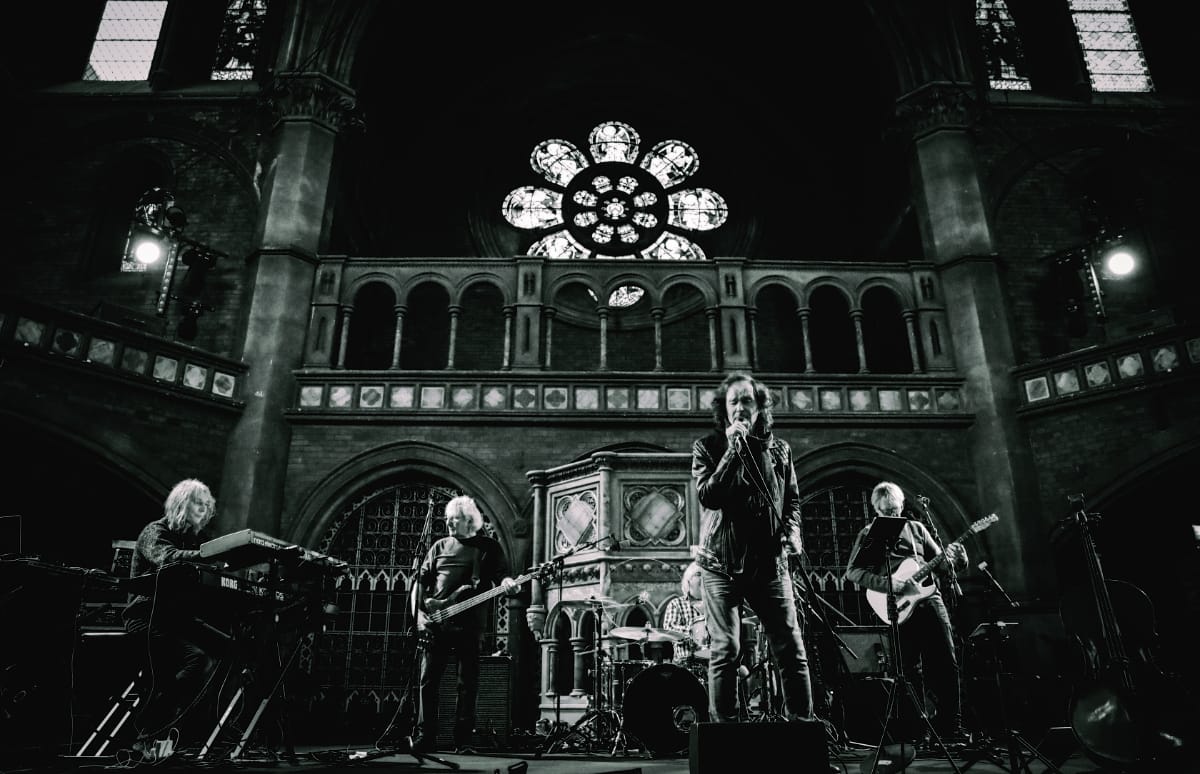
Colin: That started when COVID happened. The Zombies were supposed to perform One Year in Los Angeles. We were all set to perform the album on the West Coast, with a wonderful string quartet, and then COVID came.
For a few years, there weren't any gigs at all. Then we talked about performing the album in the UK at Union Chapel, a wonderful venue. That show was filmed and is now part of a deluxe box set.
Chaim: What are your current or future musical plans?
Colin: Well, I'm recording a solo album at the moment. We're about halfway through, with an eye towards releasing it in the autumn, if we're lucky; otherwise, it will be released early next year. I'm doing a UK tour in May, and there is a chance I'll be coming to the States later this year for shows. There's quite a lot happening, which is wonderful. And that's enough for me.
Check out more like this:
 Lawrence Peryer
 Lawrence Peryer


Comments