


Ahoy, fellow cosmic explorers. I'm Michael, The Tonearm's mo' better editor, and I'm bringing you another installment of Talk Of The Tonearm. Things are happening, and it feels good, with new writers coming on board and a motherload of juicy features on the horizon. But don't let that distract you from the task at hand and the fantastic quality of contributions highlighted in this email newsletter. There's something for everyone, unless you're some kind of goblin. So please read on and enjoy these dives and recommendations we've lovingly put together for you today:
Surface Noise
 Lawrence Peryer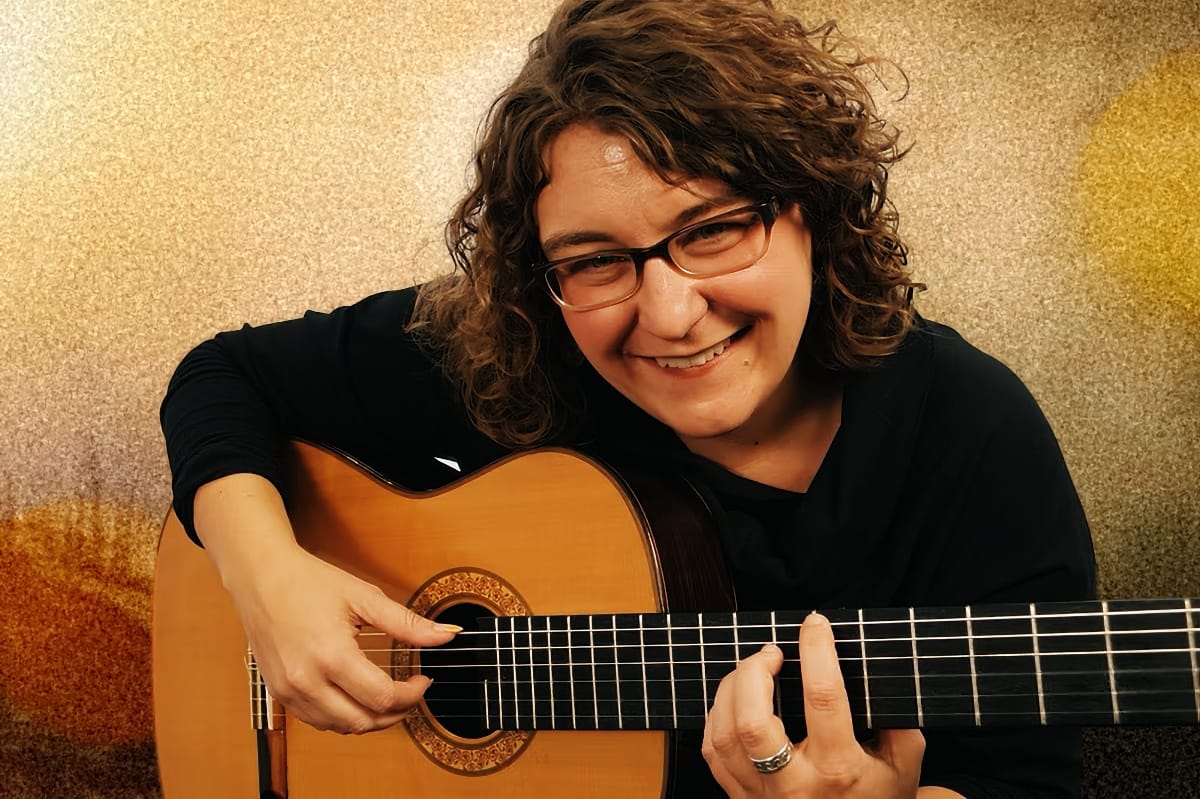
Guitarist and composer Kim Perlak remarks that when she's watching August mist rise from lake water, she asks, "What does that sound like?" This intuitive question also leads, on her new album Spaces, to swooping cranes becoming melodic themes and dancing light translated as rhythmic patterns. "What does it sound like?" echoes theories developed by Rudolf Steiner, an early-20th-century Austrian philosopher who believed that linking color with sound revealed fundamental spiritual laws. His 1919 lectures described specific pitch-color relationships as "objective spiritual facts," such as C major resonating with red because, as Steiner believed, both vibrations access the same cosmic frequencies.
The concept might seem mystical and woo-woo, but it has quietly influenced experimental music for decades. Brian Eno developed remarkably similar theories about emotional color-tone relationships during his 1970s ambient work, though his work was stripped of Steiner's spiritual ideas. Eno's studio notes reveal detailed color-coding systems for different chord progressions, creating what he calls "sonic landscapes" to correspond with sight-sense. And contemporary classical composers like Arvo Pärt and Sofia Gubaidulina have acknowledged studying Steiner's color-tone theories, while others incorporate these ideas more subtly.
Perlak's collaboration with Francisco Mela on Spaces shows this sonic translation happening in real time. She provides the visual-musical landscapes—her lake compositions inspired by watching light and mist—while Mela responds purely in the moment, creating what both describe as a meditative practice. The process mirrors Steiner's actual belief that true artistic creation happens through cosmic alignment, though Perlak would probably describe it simply as two musicians learning to create space for each other. Her question, "What does this sound like?" opens creative doorways, connecting mystic philosophers to ambient pioneers to contemporary improvisers united by the belief that seeing and hearing are more connected than we might think.
Playback: Where the Wild Things Are — Jenny Scheinman's 'All Species Parade'→ Violinist and composer Jenny Scheinman also describes drawing upon the natural environment for her compositions. She mentions Bill Frisell's dream about hearing "this huge sound mixed with colors,” which he has been trying to write for twenty years—a direct reference to a synesthetic experience in musical creation.
 Sara Jayne Crow
John Blonde of A.M. Boys loves his Roland Space Echo, describing it as "an instrument" rather than an effect because "it's a noise generator, just like everything is." Inadvertently or not, he's touching on a philosophical concept inherent in boxes like the Space Echo: vintage, worn-out tape delays can symbolize relationships with time and our recall of the past. Unlike the perfection of digital delays, the Space Echo's tape loop mechanism creates something like involuntary memory. Each pass over the playback head picks up new information while degrading what came before. The iron oxide particles that hold these magnetic signals fade, ghost, and bleed through in ways that philosophically resemble our recollections.
It's mechanical hauntology. The Space Echo forces past recordings to metaphorically 'haunt' present ones through magnetic residue. A.M. Boys experienced this firsthand during the creation of Present Phase, where fellow member Chris Moore notes the unit is responsible for the "crackly lo-fi ambiance" that defines tracks like "My Life." This texture is the sound of temporal collapse, where previous sessions whisper through current recordings like Proust's involuntary memories triggered by a madeleine. The feedback control becomes crucial here: zero feedback gives you the immediate moment, but cranked up, you're swimming in ghosts.
Moore's decision to let the Space Echo "trail off into a really distorted echo" at the end of "Remember Who You Are" exploits the machine's notorious unreliability, making it an identifiable part of the song. Digital storage maintains perfect fidelity until catastrophic failure; magnetic tape exists in a constant state of dying. Each playback is a commitment to both preservation and destruction. For A.M. Boys, this is an aesthetic, and their Present Phase exists in that liminal space between immediacy and recollection. The Space Echo makes its user a commentator on time's passage.
Playback: 'Music Is My Church' — Six Missing's Ambient Refuge → Six Missing's TJ Dumser imbues vintage synthesizers with emotional states that change with weather conditions—cold days make them "tight and uptight," while warm, humid days make them "looser, more rubbery." He also explains how power fluctuations with analog tape machines cause the tape to "jump a little faster," remarking that "this thing is alive."
 Lawrence Peryer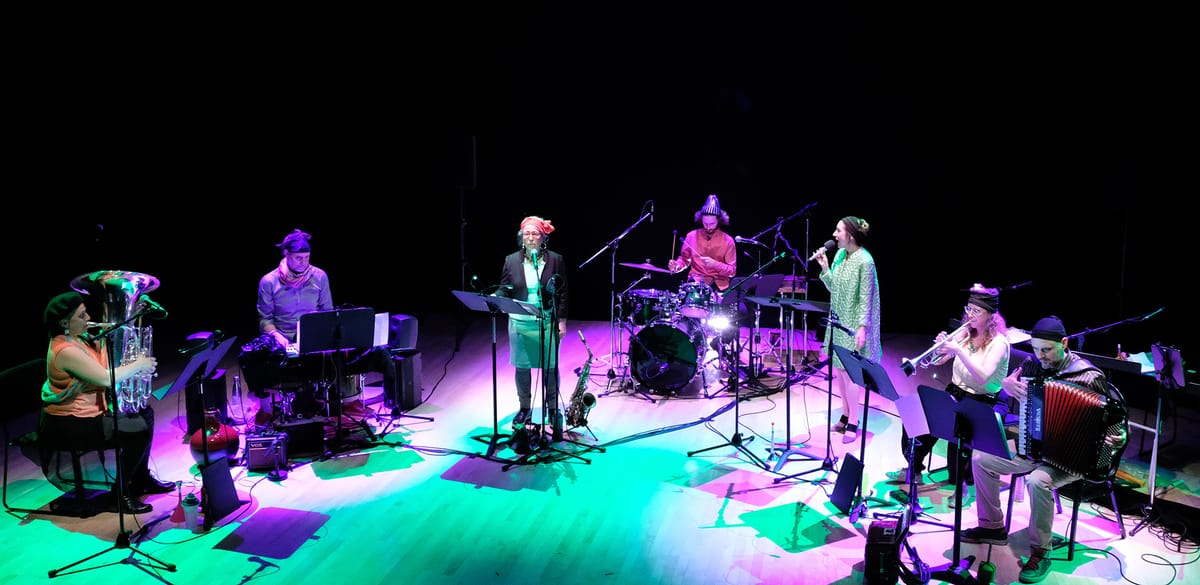
In our interview, Joane Hétu mentions the 1988 Festival of Innovative Women Musicians almost in passing. This watershed event was organized with Danielle Palardy Roger and Diane Labrosse and was "entirely devoted to women's groups working in avant-garde music." Consider the logistics alone—three women in Montreal coordinating an international festival focused exclusively on women's experimental music. For this to happen, a tightly connected network within experimental music, pre-Internet, of course, needed to exist. Hétu's connections to Zeena Parkins and Ikue Mori in New York, plus links to Chris Cutler's Recommended Records network, likely provided the backbone that made such coordination possible. And for Hétu, still in her twenties and eight years into co-founding SuperMusique, the festival represented an important declaration about where the avant-garde was headed.
What actually happened at this festival remains largely undocumented. Who performed? What arguments were being made? Major festivals and established venues maintain archives, but events like Hétu's 1988 festival were groundbreaking but organized outside institutional structures, so there are only scattered materials. This documentation gap becomes particularly meaningful given Hétu’s later role as founder of DAME Records, where her decades-long commitment to chronicling Canadian experimental music suggests an awareness of how easily important cultural work can disappear.
That the festival even happened shows the networks and commitments that allowed music communities to cooperate before internet connectivity made such coordination routine. Hétu's current work with Ensemble SuperMusique, which welcomes artists across generations, carries forward the collaborative spirit that made the 1988 festival possible. Her emphasis on "intergenerational cohabitation" as "great richness" builds upon lessons learned from that early experiment in community building. As true now as it was in 1988, experimental music thrives through connection, support, and the active cultivation of space for innovation.
Playback: Words That Float — Ingrid Laubrock Discovers Music Inside Koans → Ingrid Laubrock's extensive work with Anthony Braxton since 2011 is another example of the kind of sustained collaboration that empowers the tradition of experimental music. Her description of the AACM composers' "consistency with which they have really always done their own thing" parallels Hétu's decades-long commitment to her craft.
The Hit Parade
- We here at The Tonearm are suckers for music where orchestral instruments are accompanied or manipulated by electronic ones, and on Retold, Berlin-based electronic composer Hainbach offers a perfect example. The German synthesist relinquished ownership of his electronic motifs to let the venerable Ensemble Recherche reshape fragments as a communal exercise. Hainbach cut his compositions into tape loops, then stepped back to let the nine-member contemporary classical ensemble respond and reimagine his solo work. The ‘before’ music inspired the ensemble’s present, with "Parallels" finding the string instruments mimicking electronics through unconventional bowing and pitching techniques, creating odd sounds that mix elegantly with Hainbach's soundscapes. The remarkable synergy of the collaboration is also evident on “So We Found Serenity,” which showcases Hainbach’s smooth bed of drone and white noise whooshes (perhaps evoking an oceanic peace) and the ensemble’s slowly building response. Retold’s overall recording also possesses an intimate sense of room, especially in "How We Stay Together," that makes you, the listener, feel like the sole audience for a personally commissioned work. The album takes a dark mid-point turn with "Our Shared Fears" and "The Cold Settles In"—the latter seeming to feature uncredited choral voices and familiar but unplaceable whistling that unsettles within the context of more hopeful beginnings. But all is fine as we reach the end with "A New Life Takes Hold," marked by vintage-honed synth leads that stretch outward for a melody. Through their patient transformation of Hainbach's fragments, this collective statement becomes a subtle yet thrilling listen, making the case for more equally aligned collaborations between electronic knob-twirlers and the modern classical world. Additional note: Hainbach is a past guest of the Spotlight On podcast, and his appearance was especially fascinating and nerdy for the synth-heads.
- Four years after Nina Keith and Rachika Nayar's first meeting in Brooklyn's Maria Hernandez Park, their collaborative project Disiniblud has spawned a stunning self-titled debut. Keith's acoustic foundations from Maranasati 19111 and Nayar's granular textures from the acclaimed Heaven Come Crashing transform each other into a sparkling, dynamic force that rushes forward with blissful enthusiasm. Their expertise with studio tools is particularly exciting here, though the manipulation never overshadows the pair's musical and instrumental inventiveness. Often, I sense an effort to keep the music from sounding too holy or choral, but there are hints of the sacred that peek out, though in a non-religious 'in awe of the music' kind of way. With that in mind, "Serpentine," featuring Cassandra Croft, proves especially gorgeous as it swells emotionally, wrapping itself in layers of angelic vocals and increasingly dramatic instrumentation. Reluctantly, it reminds me of Thom Yorke but only if he really committed to the bit. "It's Change," featuring an ensemble of Willy Siegel, Katie Dey, and Julianna Barwick, imagines a glory-filled campsite sing-along with the brightly manipulated guitar leading a hopeful flurry of voices and sonic eccentricities. The song seems to shimmer like sunlight on lakeside water. And the buoyant title track functions almost like a theme song, launching upward into a sky-view perspective of things left below, its rhythmic foundation built from processed kitchen utensils transformed into transcendent music. The album's impressive roster of collaborators integrates seamlessly into what Keith and Nayar describe as their "wordless conversation" and the philosophical framework around Buddhist concepts of non-attachment that influenced the process. Disiniblud offers music that feels genuinely transformative, rewarding both casual listening and deep engagement while maintaining its essential mystery through what the duo calls an "inner childlike joy." Special stuff.
- Short Bits: Chicago-based jazz drummer Gustavo Cortiñas is the guest on this week's Spotlight On podcast, namedropping a lot of the Mexican music he grew up with and discussing his impressive climate-action inspired album, The Crisis Knows No Borders • There are quite a few mind-boggling images on this page commemorating the 2025 Milky Way photographer of the year • The Laser Age is a new podcast from the team at The Reveal that looks at prescient themes from 'science fiction films from the second half of the 20th century' … the first episode is on Silent Running • We posted a link to this article about the triumphs of a one-handed piano player and were quickly reminded about a sappy classic television scene (we totally watched that with our dads) • More music recommendations: a reissue of Sun Ra's Sleeping Beauty + 'half-German, half-Spanish songwriter, arranger, guitarist and sound artist' Wolfgang Pérez's excellent new album, Só Ouço + friends of The Tonearm Passepartout Duo have a lovely new track recorded in Tbilisi + then there was that time Suzi Quattro covered "Warm Leatherette" and it turned out great
Deep Cuts
After last week's feature article, I reached out to Terence Hannum of the post-metal band Locrian to ask if there is something he loves that more people should know about. Here's his generous response:
I love suggesting things to people, so I have three: a record, a book, and a place.
For me, an album I really enjoy is thisIan Elms album Good Night that Dark Entries reissued. It's a dark, moody synth music that goes from maybe dark pop to ambient and is just on its own trip. Originally recorded in 1982 and reissued in 2023. Worth the time for sure.
I read a lot, but instead of a book, I want to champion an author that you don’t normally find on shelves but should be up there with Ballard, Aldiss, and the like. I suggest the work of Thomas Disch, who has been a kind of revelation for me. Disch is a singular sci-fi author in the mold of the New Wave (Delaney, Ballard, LeGuin, etc.), so his work is very irreverent, weird, and dystopian. I would start with 334, which is a sprawling tale of a future city involving class, drugs, eugenics, and technology.
Finally, I want to recommend a place, and that is Baltimore. It’s my home, so I am biased, but seriously, come hang out. It's a great city for music (check out what's at Ottobar or Metro Gallery or go to the Red Room or Wax Atlas) to art (look up SPCE Gallery, CPM and Current Space and check out the BMA) to literary stuff (so. many. bookstores - Normal's, Atomic Books, The Ivy, Red Emma’s, and so many more). It's a killer city with good food, good beers, and good people.
Run-Out Groove
I miss going to Baltimore. A couple of decades ago, I had a memorable dinner with Mr. Scruff at an Afghan restaurant in Baltimore, some of the best food ever. Pumpkin curry! Anyway, thanks for reading this week's newsletter. I hope you had fun going through it all and clicking on its many links (I know—so many links). I'd love to hear what you think and if any of this happened to tickle your brain stem. Reply to this email or contact us here. And, as usual, I would be a happy camper if you forwarded this email to just one friend, maybe the one always asking what you're listening to. You could also post the 'View in browser' link at the top on your social media minefield of choice.
Stay spicy, keep things fun for yourself and those around you, and drink plenty of water. Maybe watch some Derek Sarno videos if you need a boost. And, on that final recommendation, I'll see you again next week. 🚀
Connect with The Tonearm:


Comments