


Ned Rothenberg has been performing internationally for four decades, but his relationship to recording remains selective. Between three solo albums released from 1981 to 1985 and the thirteen-year gap since 2012's World of Odd Harmonics on Tzadik, he's built a catalog marked more by intention than output. His career spans far more than solo work: the quartet Crossings 4 with Sylvie Courvoisier, Mary Halvorson, and Tomas Fujiwara; the longstanding trio Sync with Jerome Harris and Samir Chatterjee; and earlier ensembles Double Band and Power Lines. Collaborations have taken him from Evan Parker and Marc Ribot to Sainkho Namchylak, with whom he spent five years touring Europe, Russia, Japan, and the United States in the nineties. He's composed for the Mivos Quartet, studied shakuhachi during a six-month residency in Japan with masters Goro Yamaguchi and Katsuya Yokoyama, and spent time in residence at Les Subsistances in Lyon creating music for a performance piece about Rimbaud.
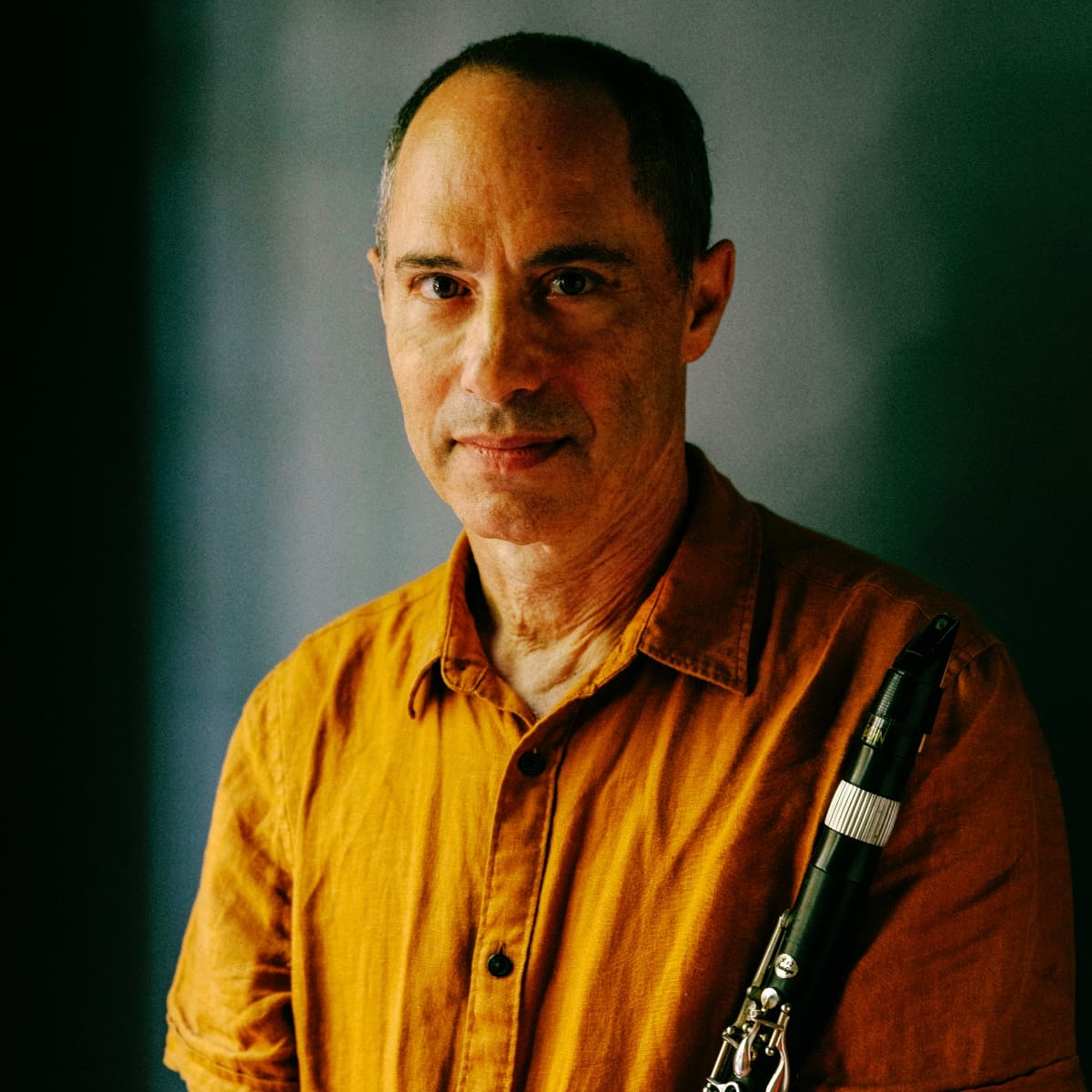
The solo work, though, serves a distinct function. Rothenberg came to New York in 1978 with a group called Fall Mountain that found some success before disbanding. What followed was an intensive period alone with his instruments—alto saxophone, clarinets, bass clarinet, shakuhachi—that yielded his first solo record in 1981. This period was one of investigation, as Rothernberg aimed to establish his own timbres and techniques, building a vocabulary specific enough that, as he puts it, "anybody who knows my work knows it in three notes."
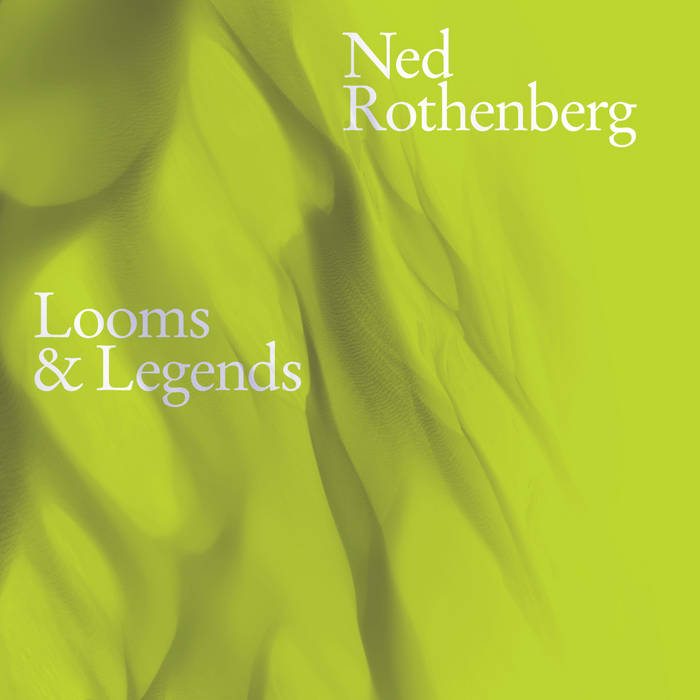
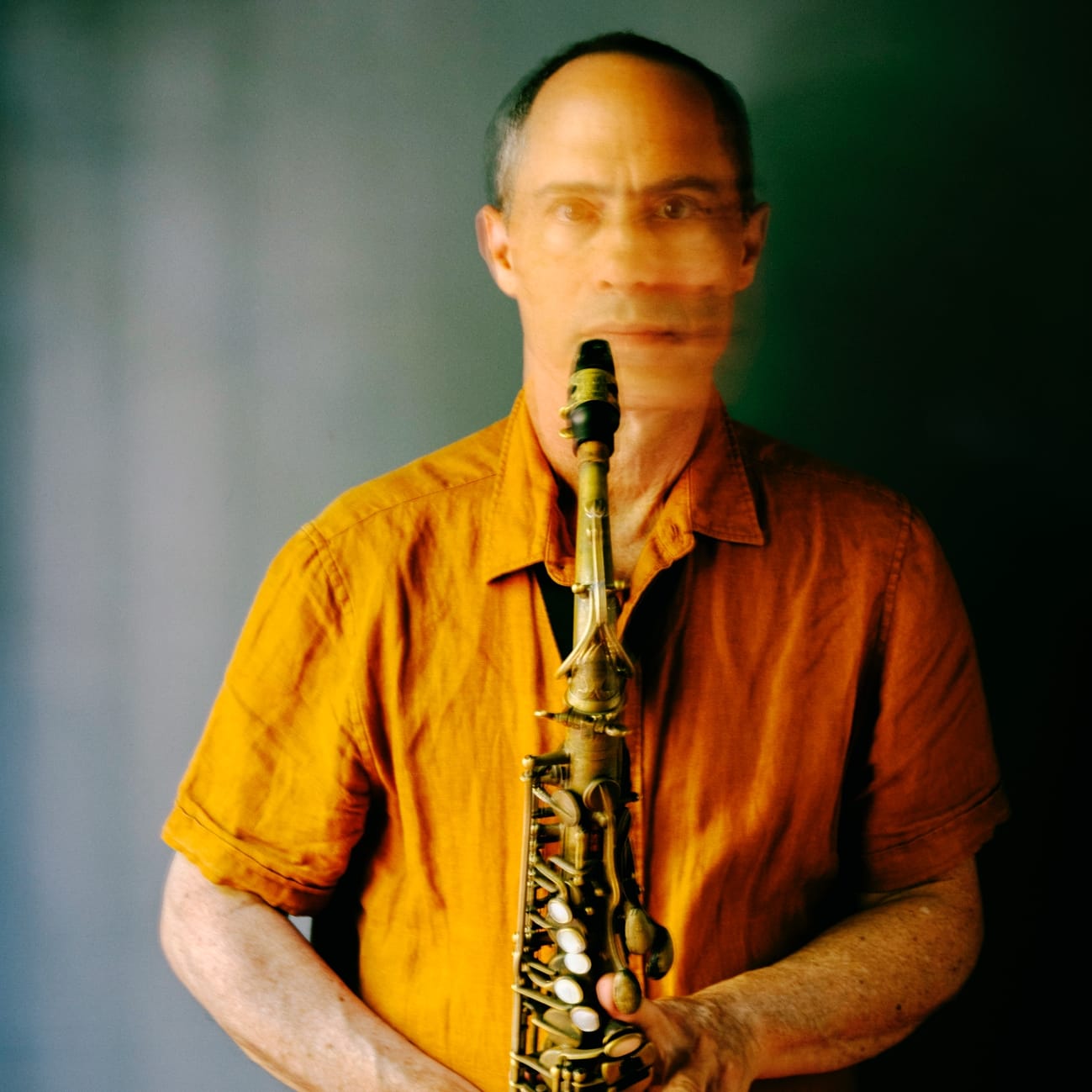
Looms & Legends, released via Pyroclastic Records, arrives as his first solo recording in over a decade. The album features Rothenberg on alto saxophone, clarinets, and shakuhachi across nine pieces, closing with a reading of Thelonius Monk's "'Round Midnight" that sounds as timeless on bamboo flute as it ever did on piano. The work is informed by travels across five continents and deep studies of African and Asian musical traditions. The research resists pastiche—instead, it emerges as something he calls "future primitivism," imagining his music as belonging to a culture yet to be discovered, whose traditions center on circular breathing through reed instruments.
Lawrence Peryer recently hosted Ned Rothenberg on The Tonearm Podcast. Rothenberg engagingly discussed why this solo recording felt overdue, the distinction between pieces that create sonic environments and those that tell linear stories, his development of extended techniques within specific contexts, and why curiosity remains essential in a moment that increasingly rejects it.
You can listen to the entire conversation in the audio player below. The transcript has been edited for length, flow, and clarity.
Lawrence Peryer: I want to start with the origin of Looms & Legends. Why now for a Ned Rothenberg unaccompanied solo record? It's been a while since you put something out as a solo project, and I'm curious what made the moment right.
Ned Rothenberg: I think, in fact, it was overdue. Solo has been a significant area of my work since the early eighties. It was actually a key element in creating my musical voice. I came to New York at the end of the seventies. I had a group with Bob Ostertag and Jim Katzin called Fall Mountain. We had some success, but for various reasons the group disbanded, and I was left with a choice between commercial work, which I pursued, and, like, well, what was I going to do?
I went through a very intensive period of solo practice and released my first solo record in 1981. So there were three of them between 81 and 85, and over the next however many years, there have been a number of solo records and solo tours.
Like one of my mentors, Evan Parker, I think it's pretty parallel—although he's a pure improviser in that catholic British school of, "I only play open improvisation." Whereas my work is mixed. But the role of solo playing overall, I think, is pretty parallel in that there's a development of a personal musical language which starts from the solo context, because in the solo context you can use all sorts of timbres and sounds that wouldn't necessarily cut through if you had, say, a drummer playing with you or any kind of large ensemble. And there's been various things going on since 2013, when I did the last record for John Zorn's label Tzadik. So yeah, I thought it was overdue.
Lawrence: Yeah, I think it speaks to sort of the prolific nature of a lot of your other work, right? It's not like you're not working, and it's not like you're not creating, just not in this context.
Ned: Yeah, but it's funny when you use the word prolific, I actually have been accused by various supporters of not doing enough recording, and there I'm very much a contrast to somebody like Evan or Steve Lacy or others who document everything. There's a certain finished quality that I want in a release.
Given that the way music is consumed now, the sacred nature of the album in terms of its order, in terms of its production, for better or worse, people don't consume albums the way they used to. I grew up in the age when I went down to the record store, bought a new release by Charles Mingus, took it home, listened to it almost exclusively for a week, over and over, and really absorbed it before I bought another one.
Now we live in this age where everything is on the plate, and all the music of the whole world is just sitting there all the time. It makes the album, as an artistic statement, much more diluted. But as an artist, I think you actually kind of have to still make it the same way because you can only start with yourself. You can't worry about all the other things that people are listening to.
One of the reasons, I guess, I submerge between the waves and then pop up again is because I've never been good at just churning it out. I have to have a kind of feeling of necessity to do something.
Lawrence: That leads me to the framework or the construct for this record, Looms and Legends. Could you explain what that means beyond just a title?
Ned: I should admit that the title came to me later. I did the recording, and then I was like, “So what's this called?” But I realized there's an interesting binary going on in my solo work where there are some pieces which are about a sonic fabric where I am trying to overcome the traditional role of the wind instrument, playing single notes, playing lines, through the personal sonic language I've developed to where there really is a kind of polyphonic approach and with techniques like circular breathing, it's not limited to the usual spacing. I can create a sonic fabric.
That's ‘looms.’ That's the idea of a fabric where I'm trying to put the listener into a certain world, much in the way that a solo piano, like Bach's solo prelude, where it's just constant notes. Of course, equal tempered harmony in Bach's case, my special, strange microtonal relationships in mine, but where the listener is in this environment, where I'm not telling a direct narrative, I'm not telling a story. Then contrasted to that, some other pieces on the record are trying to tell a story.
The first fellow I went to Europe with was Anthony Braxton, who, like in For Alto, placed four record sides of all just narrative single note lines. And of course, that is what these instruments were originally designed to do. So in some of the other pieces I am making melodic statements and, whether it's theme and variations or whatever, I'm taking you on a line. I'm kind of leading you down a path that's more direct as opposed to the other looms, where I'm trying to put you on a landscape and kind of let you look around on your own.
You could focus on what's happening up high. You could focus on what's happening down low. You could focus on the general tone color. There are different kinds of foci in that. Whereas if you're playing a melodic line, there's a single element to focus on at a time.
Lawrence: You've alluded to this notion of your language and—I was framing it as vocabulary, but regardless of the word we settle on—talk to me a little bit about your use of extended techniques. You mentioned circular breathing. You talked a little bit about your sort of microtonal organization, multiphonics. I think what I'm most curious about is the exploration behind that, the development of that vocabulary. What was that about in you? What wasn't enough with the instrument?
Ned: I don't want to ever claim that anything wasn't enough—Charlie Parker and John Coltrane certainly did enough with the instrument. But as a creative artist with an instrument, you are investigating all the things that are possible. Part of this has to do with a period of about four or five years where I was very much practicing alone, and I was also inspired by two things.
One was working with electronics, which I did with Bob Ostertag and others, and I wanted to transform the role that I could play. And this even goes back to jazz playing that I was doing. There's always this feeling as the horn player of like, “Okay, play the melody now. Now you have a solo. Now sit down, wait for the end.” The roles are very strict, and yet I always had the feeling that the rhythm section players were having more fun because they were interacting throughout the whole period.
I obviously didn't invent circular breathing. I didn't invent multiphonics. In fact, I'm very averse to saying I invented anything. What I'm most interested in is creating context because it's all about context. Multiphonics are a good example. What are they by themselves? Well, they're mostly ugly and out of tune. That's what they mostly are. What makes them useful musically? To find context. How can you move into one? How can you move out? Can they be woven in and out so that you're actually using them as rhythmic devices rather than just out-of-tune harmonies?
A good example is there's one instrument in every jazz band, rock band that's out of tune all the time. Do you know what it is? It's the drums. (laughter) The drums can't be retuned for every tune. They are using sounds as a device. They're not functioning in harmony all the time. And the reason they can function is that they keep time.
So if you take these basically out-of-tune ugly multiphonics, and you can make different parts of them pulsate in time in a fabric, then they don't function like a keyboard. They function more like the drums. They function more like a web that you can relate to things musically.
Working with this language that I've developed, I stepped back from that equal-tempered keyboard. That's why, in some ways, the music, I think, is not more advanced; it's more primitive. I use the analogy of trying to compose music that would sound like the music of an imaginary culture or imaginary land that never intersected with Western equal-tempered classical music or the lineage that we're so familiar with.
Lawrence: Yeah. I love the quote from you. It's something I'd written down, “the indigenous sound of a country that hasn't been discovered yet.”
Ned: I mean, I've pursued that idea, not just in solo music. Paul Dresher and I made a record for New World years ago with his loop system and a lot of these sounds, and it's called Opposites Attract. It was done before Paula Abdul had a hit with the same name (laughter), and that's very much kind of what we were after is kind of an ethnic music of an imaginary ethnicity.
Lawrence: But at the same time, in the liner notes, you ask, “How and why do we continue to make art in this bizarre time?” The bizarre time can be interpreted in lots of different ways, the political time, the technological time—I mean, there's no lack of bizarre.
Ned: Well, I will tell you something, and I hope Kris Davis, who runs Pyroclastic won't be upset, but the original liner notes that I wrote were much more militant because I do feel that we're in a time of fascism and so the idea of, “What are you doing messing around with clarinet key clicks when you should be out on the street screaming at the top of your lungs?” I mean, horrible stuff is happening.
And what I came up with is that we do need to keep sane through all this. I don't have this idea of the artist as some kind of leader in the struggle. I do believe that we need art to stay sane. I believe we need art to keep our spiritual core together.
People need to keep their souls together. And if I have any belief in the power of music and art, I think it does do that. It helps you find what you love and the things that you love, whether they be people or forms of expression, help you know who you are, and keep you centered in a time when waves of caustic abuse are coming at you. And that is the most that I can claim for it.
I'm trying to justify myself because, as much as I might not believe that this kind of music has a direct political role to play, I do believe that the tree in the forest falling when nobody's around doesn't make a difference. I am trying to have an effect, and this is what I can claim for what I'm doing.
Lawrence: Obviously, like a lot of people, I think a lot about, like, what can I do? What should I do? Like I sit here, and I talk to artists—is that useful? I've been thinking a lot about it as a form of sense-making. I would argue that musicians and artists who are working in these areas—let's pick some awkward words —boundary-pushing, exploratory, experimental, whatever we want to call those realms—there's a radical, subversive nature to the music. It's not regimented because it searches in a way that's soothing. It's a refuge, but I also find it incredibly motivating.
Ned: Well, I appreciate what you're saying. And as a fellow listener, I agree with you. I have to say, as an artist, there's one thing you said—the idea of it being boundaryless, I don't think human beings can be boundaryless.
There are these Titan musicians like Mozart or Stevie Wonder who seemingly can absolutely do anything. But in fact, even with somebody like Stevie Wonder, the reason we know it's him immediately is that there are all those things that he's not. He is completely himself. And so, while the endeavor of exploration is a very worthy one, one of the things that I think makes an artist more realized than another is that they know their limitations and how to work within them. There is actually huge strength in not just knowing what you can do, but knowing what you don't do. I think one of the key things about realized artists is that they can look in and see what they are. And that's a very personal thing.
One of the things I love is the huge range of reactions that listeners have. That's where I feel like this kind of music has maybe a more boundaryless quality. It's for the listener. If Bob Dylan comes out and sings "The Times They Are a-Changin'," the listener knows pretty much what they're supposed to learn from that, because he's telling them. If I come out, you might have any kind of experience, from hating it to loving it, but I can't even tell you what the context of your reaction will be. I can't dictate that.
Lawrence: Do you ever think about how an individual piece or a full work is going to land? Do you think about the audience ever?
Ned: The answer is yes. I can only take care of what I can. And in terms of that aspect, the way I deal with that is by recording and listening to myself. I try to step back and say, “Okay, what does this sound like?” I don't find that if I sit there and analyze what I'm doing while I'm playing, it's not the best concert.
I still listen to my old records, and one of the things I actually like about shuffle mode is hearing a piece of mine pop up after a bunch of other music I like, and sometimes that really gives me a different kind of context.
I also don't have any illusions about my music. It's funny, going back to like my first records, there were some critics who at the time I was annoyed by, but a couple of people said things like, “This stuff is pretty amazing. But it'll never reach a wide audience.” One guy said, “I don't know if this will ever reach a wide audience, but it'll keep weirdos like me up late at night sometimes.” (laughter)
I don't have any illusion that what I'm doing is going to operate on the same level as a Bob Dylan or a Stevie Wonder. I do think it engages as art music, and I do use some basic musical grounding in the context. I find that a lot of people say to me things like, “Boy, I've never heard anything like what you're doing, and it really speaks to me.” If one person says that to you, that has to be enough to float your boat, because if you're sitting there just chasing the larger audience all the time, I don't know.
Obviously, I'm sitting here talking to you, and I hope people will check out your work and find out about mine through this. So I'm hardly trying to stay obscure, but I also don't chase notoriety.
Lawrence: There’s this notion of curiosity. You seem like a curious human. What are you curious about now? What are the next questions you're looking to answer musically?
Ned: Oh, wow. I just want first to say that's a great question because, going back to the political discussion, I think one of the things that gets talked about is that people don't have empathy. People don't have sympathy. People don't have curiosity. The whole thing of like, “I know everything about the world, and I'm right about it.” What that shows is a lack of curiosity, and lack of curiosity, I think, is a deadly, almost terminal illness.
Lawrence: It's the precursor element to empathy and sympathy. It really is.
Ned: Exactly. It comes first. Now, you're asking me personally. Certainly, I'm still curious about music, and as much as I may be somewhat accomplished and professional, I do, I think, do something too rare. Which is that I'm interested not in just showing students what I do, but in helping them figure out what they love, what they are curious about. What questions can they ask? And so I try to teach curiosity.
And then in my personal life, that's where being a musician is so great because music never ceases. The vastness of the ocean of music, there is always another island or cove, or there's always another thing to discover. There's always something that's going to blow your mind that you've never heard of. And I feel like people these days—the only thing that seems to blow their minds is notoriety, like just somebody doing something outrageous and getting a lot of publicity for it as opposed to somebody doing something really deep and interesting that you're just like, “Wow, what is this? How did she come up with this?” And something where you realize, “Wow, I have to do some work.”
You know, I've been looking at music from around the world, and there's a lot of different kinds of world music that influences what I do. I knew about Georgian choral music, but I didn't really know about the choral music that is related to it in Armenia and throughout the Balkans. So I've heard some things in the past few weeks that made me realize that whole area of choral music is something that I have to check out, you know, and be ready to have my mind blown, and hear names that I've never heard, and find out about things that happened in history that I'm completely unaware of. And that's the thing that's exciting. And that's why the attack on curiosity, the attack on empathy, and the attack on education that we're dealing with right now is so frightening.
Check out more like this:
 Lawrence Peryer
 Lawrence Peryer


Comments