


Ahoy, once again! I'm putting a cap on a busy week made extra (sur)real by the encroaching confinement of Florida mugginess. And it's only just begun. I'm buckling down with the ceiling fan on turbo-mode and pasting together a bunch of aspirationally delightful brain-meanderings re: recent stories that appeared on The Tonearm. Our writers have been hitting it out of the park, so to speak. You'll also find a few recommendations to entertain your lazy bones at the end of a hopefully relaxing weekend. So — OK! — let's do this:
Surface Noise
 Sam Bradley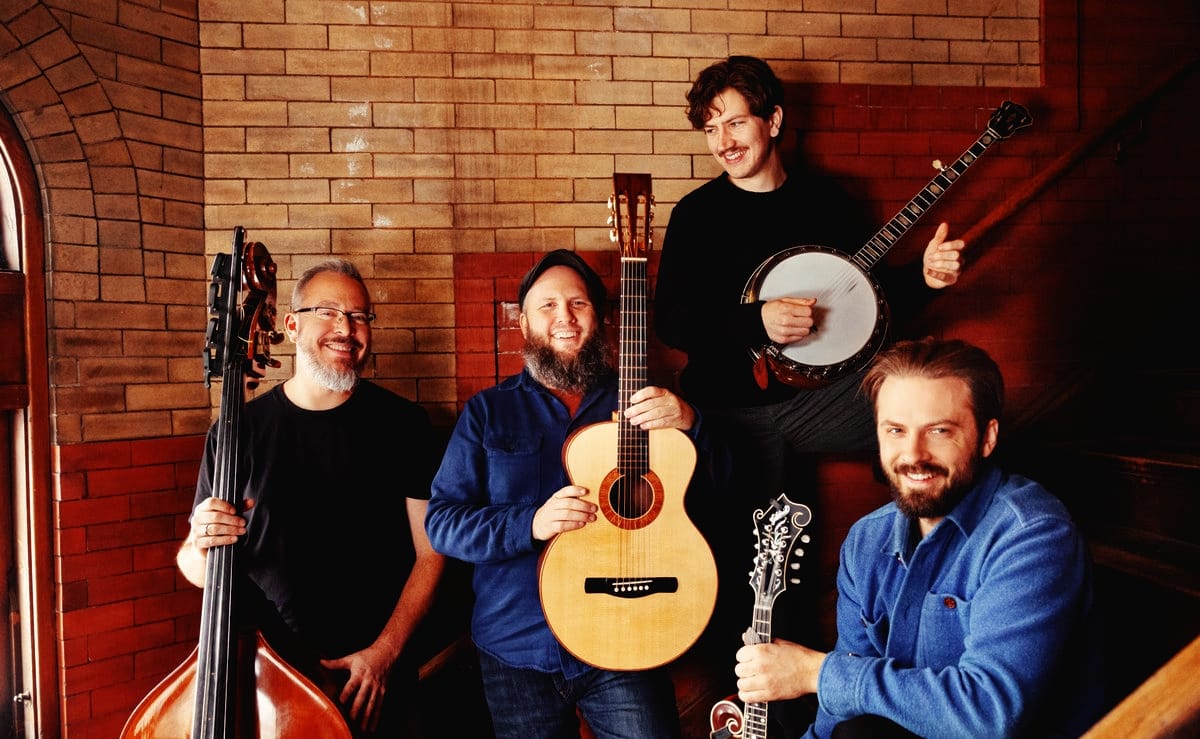
During his wandering hobo years, Harry Partch discovered that people without conservatory training often naturally sing in microtones. Without formal education constraining their voices to twelve equal divisions of the octave, they bend pitches in whatever way feels right. Their musical "accent" contained intervals that had been systematically scrubbed out of Western art music. When Partch later built his impossible instruments—his Chromelodeon with forty-three tones per octave, his sculptural Cloud Chamber Bowls—he created tools to translate what he'd heard in those boxcar encounters.
Jesse Jones from EZRA does something similar, though his wandering happens through institutions rather than freight trains. As his bandmate Jacob Jolliff puts it, Jones speaks both classical composition and bluegrass natively; he's "not just dabbling" but genuinely fluent in both. This enables Jones to hear possibilities that specialists in either field would probably miss. His microtonal mandolins and guitars become these weird bridges between academic avant-garde techniques and Appalachian folk wisdom.
When EZRA jokes about their "microtones drawing in audiences" in Sam Bradley's interview, it's about more than musical difficulty. Microtonal music creates what psychoacousticians call an 'uncanny valley' effect, where familiar melodies turn strange, triggering a false musical memory. Traditional bluegrass standards, when played with slight microtonal alterations, sound almost right but not quite, like you're hearing them through some impossible nostalgic filter.
This creates a sound of musical displacement and the audio signature of traditions getting carried across cultural and temporal territory. Partch's wandering hobos sang this way naturally; Jones's academic wandering lets him recreate these effects on purpose. Both approaches recognize that musical innovations usually don't happen in the center of established traditions, but in those uncertain spaces between them.
Playback: Like Jesse Jones's academic wandering, which enables institutional code-switching, Phillip Golub's conservatory background allows him to navigate between structured composition and experimental microtonality while maintaining what he calls music's essential "magic."
 Lawrence Peryer
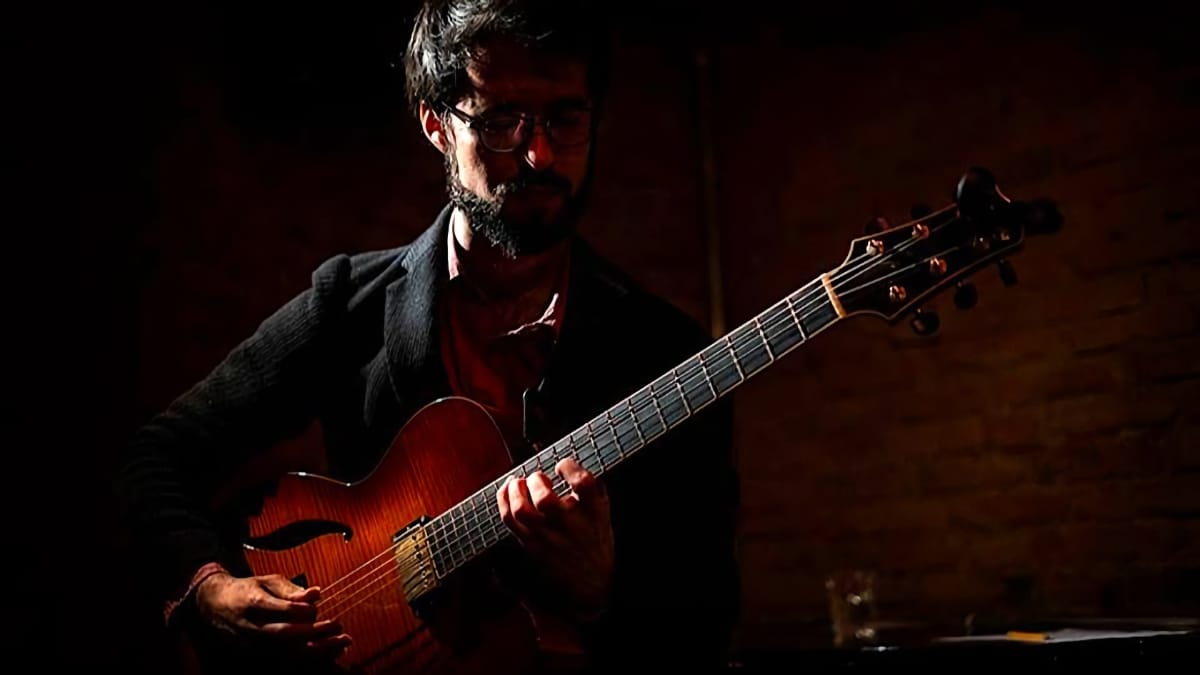
In our feature interview, guitarist Tal Yahalom mentions "Ha'Keves Ha'shisha Asar" (The 16th Sheep), a famous Israeli children's album featuring "amazing musicians" and "unorthodox melodies." That casual reference points to a hidden network of influence that's been shaping musicians for generations through sophisticated music disguised as simple kids' entertainment. It turns out one can find a lot of musicianship and 'out there' experimentation in children's music.
Think about the BBC Radiophonic Workshop's educational programming in the 1960s and '70s, where electronic music pioneers like Delia Derbyshire were creating soundscapes for children's television that eclipsed the innovations in contemporary 'adult' music. Or Moondog's children's recordings, which housed some of his wildest polyrhythmic ideas. There wasn't any artistic 'dumbing down' going on. Musicians often use the freedom of the children's format to push their ideas further than they could get away with anywhere else.
Many artists end up recognizing the complex musical language they absorbed as children, unconsciously carrying it until it feels completely natural in their professional lives. They enjoyed odd-sounding music before they learned it was supposed to be odd. The sophisticated harmonies from that Israeli children's album were just a fun element of music to a young Tal Yahalom.
What makes Yahalom's reference so telling is how casually he acknowledges its importance while admitting he can't quite explain how his cultural background affects his music. The influence runs too deep, started too early, and got too ingrained to analyze directly. It simply is—and that might be the most enduring kind of influence there is.
Playback: Jazz composer Mehmet Sanlikol describes growing up with minimal exposure to Turkish traditional music, encountering it only casually on buses and the radio. Like Tal Yahalom's relationship with "Ha'Keves Ha'shisha Asar," Sanlikol absorbed these complex modal sounds unconsciously during childhood in Istanbul, only to embrace the music’s influence later in life.
 Lawrence Peryer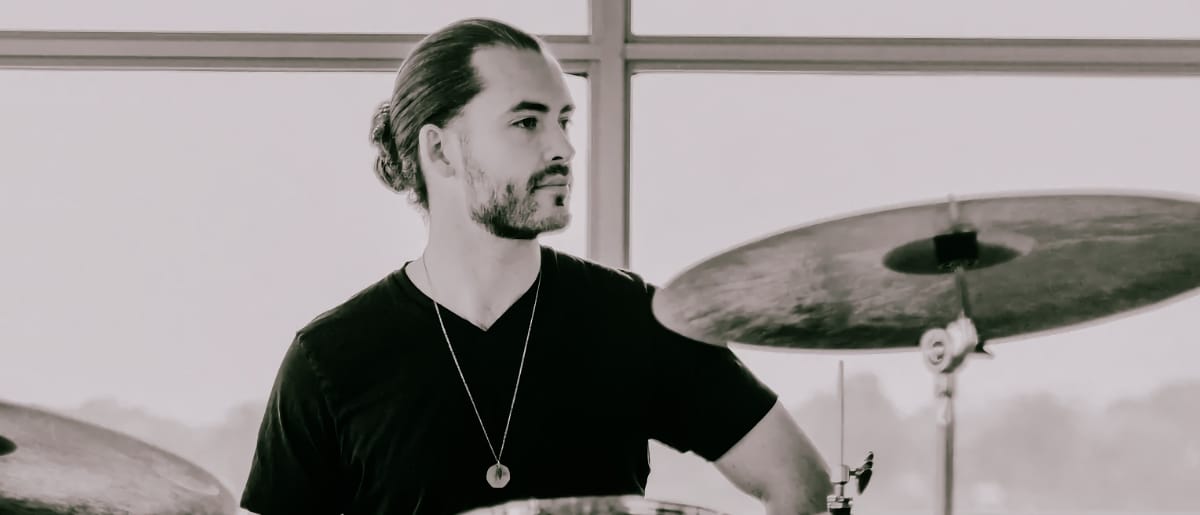
Stefan Hegerat's incorporation of a Nord Drum 3 highlights a philosophical problem that's probably bothering a lot of drummers these days. Hegerat's musical path runs from a teenage John Bonham obsession through jazz school to Brooklyn's experimental underground, and now he's trying to make acoustic drums fit into music that's becoming more electronic by the minute.
When Hegerat talks about wanting to "blur that line to make the drums just another machine," he puts words to something most drummers rarely say out loud. He's sitting behind a kit that hasn't fundamentally changed in decades; meanwhile, everyone else in the band is running their instruments through processors, pedals, and digital manipulators. No wonder he feels like "the only truly acoustic instrument" in the room.
But the Nord Drum 3 doesn't even try to sample real drums. Instead, it builds drum sounds from scratch using synthesized math—all those attack curves and harmonic overtones that make our brains go "yep, that's a snare." The machine creates the perfect idea of what a drum should sound like, freed from the messy realities of wood grain and room acoustics. This can be liberating for someone like Hegerat, who's spent years learning how to fearlessly improvise and break compositional rules. The machine isn't pretending to be a drum; it is one, in the most essential way possible.
What's really wild is how this flips musical authenticity on its head. Hegerat's music ranges from fully notated compositions to single-melody improv springboards, and now he has this tool that can shape-shift to serve whatever the song needs. Sometimes the most honest sound turns out to be the one that never existed in the physical world, like the synthesized hit that cuts through exactly where an acoustic drum would get lost, or the impossible texture that matches the emotional weight of the moment. He's finding ways to honor his classic rock roots while pushing into the experimental territory he picked up in Brooklyn. Synthetic becoming more real than real? That might be the whole point.
Playback: Josh Johnson faces the question of what constitutes authentic sound when you can transform a single saxophone note into "a gentle, shimmering drone" through electronic processing. His concept that "imagination is the instrument" directly echoes Hegerat's idea that synthesized drums can be more "real" than acoustic ones when they serve the emotional weight of the moment.
 Chaz Underriner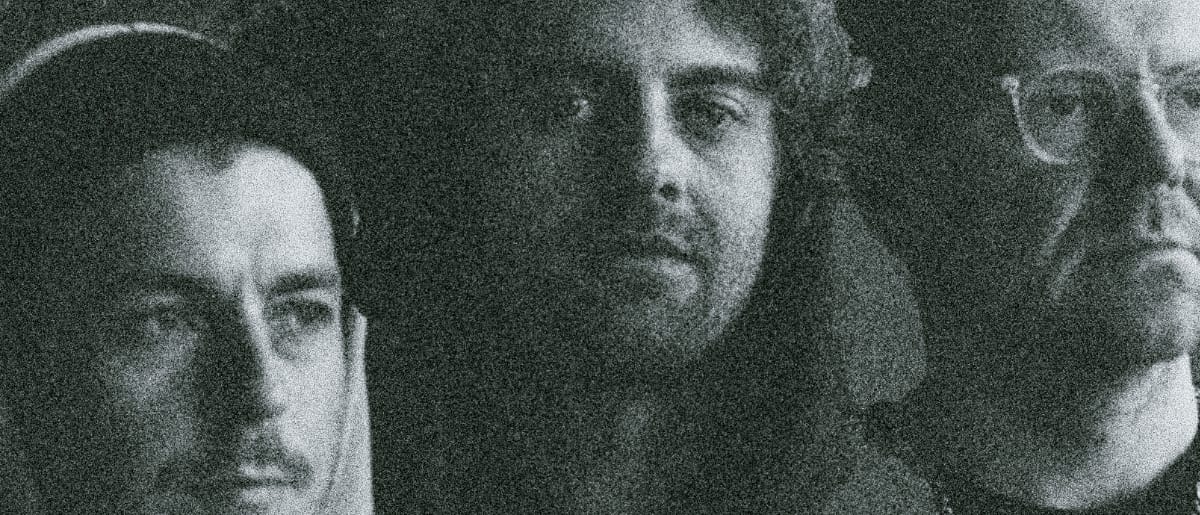
Piotr Kaliński of Hinode Tapes pines for that same "dirt in the machine" he grew up with, courtesy of expensive four-track tape equipment and vintage Soviet synthesizers. As Kaliński is quick to point out in his conversation with Chaz Underriner, what he's chasing as an artistic choice was just life for musicians in post-communist Eastern Europe. Back then, you worked with whatever gear Western companies had tossed aside, or whatever the Soviets had managed to clone using whatever parts they could scrounge up.
Those Formanta synthesizers buzzing away in Polish bedrooms? Nobody was celebrating their 'distinctive filter resonance.' And those Polivoks units that Western producers now drool over for their 'brutal analog sound?' They were the only game in town for musicians behind the Iron Curtain, built in some factory in Barnaul using whatever transistors and capacitors the planned economy happened to discard.
Kaliński's own story from 1990s Poland shows you exactly how this worked. "CDs were extremely expensive," he says, which is how he ended up acclimated to the imperfect sound of cassette tape. The tape machines from that era each had weird quirks: Bulgarian-made decks that caused everything to wobble, East German units that ran too fast, Soviet reel-to-reels that seemed allergic to high frequencies. When Kaliński talks about preferring "dirt in the machine" over pristine digital sound, he's describing a taste that got burned into him through availability and necessity. His band records on pricey analog tape now to force quick decisions, which is funny when you think about it—they're choosing the same limitations that once drove an entire generation of studio producers crazy.
Flash forward, and Western producers are dropping serious cash on vintage Soviet synths or buying plugins that perfectly recreate the sound of dying tape machines. The 'poverty aesthetic' has become decidedly un-poor, shifting from a survival mode to a luxury item. Like Stefan Hegerat's electronic drum, this challenges some ideas of how authenticity functions in art. Often, the sounds we most prize are the ones that emerge not from intention, but from the beautiful accidents of constraint.
Playback: Başak Günak’s location-based constraints—recording in different cities and studios based on availability rather than choice—mirror the geographical and equipment limitations faced by Eastern European musicians. Most importantly, her work with the Haldurophone, a rare experimental instrument she sought out specifically, shows how contemporary artists now actively pursue the kinds of technical quirks that were once simply unavoidable.
The Hit Parade
- Like me, you may be a Brian Eno fan who has tuned out the ambient icon’s prolific output of the last several years. Generative music is a nice idea, but it does all start to sound a little bit the same after a few releases. (See my interview with Blake Leyh for a funny anecdote about the ‘is this Eno?' museum music genre.) To you, I say this: don’t ignore Luminal, Eno’s new album, which is a collaboration with conceptual artist and composer Beatie Wolfe. The album capitalizes on Eno’s fondness for hymn-like songs and often recalls the pleasantly placid moments on his ‘vocal’ albums. But it’s Wolfe’s appealing singing voice (and maybe guitar? I’m lacking proper credits) that stand in and stand out here, closing the circle on the stated goal of “electric-country-dream-music.” I just described this to someone as an album comprised of all the mellow, Georgia-sung drumless ballads that are lightly sprinkled throughout Yo La Tengo’s recent albums. It’s also a perfect set of songs for chaotic times. Eno has said he wants to make music for ‘the world I want to live in’—after a few listens, I’m more than ready to join him. This is my favorite Eno-related project in many years. (Also—is this the first Eno release on Verve Records, former home to his early heroes The Velvet Underground?)
- Heard By Others II finds Saturday Night Live's longtime music director Lenny Pickett and percussionist John Hadfield expanding their two-decade collaboration into thrilling new areas. The duo's second outing balances Pickett's trademark multi-saxophone arrangements—think Tower of Power's horn-heavy punch marinated in avant-garde flavorings—with Hadfield's restless, textural drumming that never sits still for long. The "Dance Music for 4 Saxophones" pieces hit hardest, with Pickett layering baritone, alto, and soprano lines into a formidable wall of sound while Hadfield dances around the pulse, creating rhythms that are cerebral and bracingly physical. When Hadfield takes compositional lead on the atmospheric "Joshua Tree" and "Jungle Room," the album shifts into a more experimental zone, incorporating synthesizers and samplers that complement rather than overshadow their acoustic interplay. Remarkably, this music sounds meticulously planned yet spontaneously alive.
- Yesterday, I screened the documentary The Sky Was On Fire at our beloved local independent cinema, Enzian Theater. The film follows various Ukrainians involved in Kyiv’s ballet scene, including a ballerina working to keep the art alive in her city, a 55-year-old stage director who volunteers for battle, and a widow whose ballet-star husband died on the front lines. It’s a heartbreaking watch that examines not only the importance of art in times of war, but also how art is often, for the invader, an intentional casualty of war, serving as a means to erase a nation's identity and culture. Apparently, early in the invasion, Russian documents were discovered laying out orders to initially target three groups of Ukrainians: soldiers, scientists, and artists. The filmmakers, some of whom are based in Orlando, gave an informative and impassioned Q&A after the screening and noted that they are still seeking distribution. I hope they get it, as this is a film that should be seen by many. In the meantime, add it to your Letterboxd watchlist. There were also multiple shout-outs to Razom For Ukraine, a charity deemed worthy of your donation.
- Short Bits: Syrian-born jazz clarinetist Kinan Azmeh is the guest on this week's episode of the Spotlight On podcast • Super-interesting avant-garde label Table of the Elements teases some sort of relaunch • David Attenborough's field recordist rejoins Cabaret Voltaire for a minute • Roots music fights back against the algorithms • Marc Ribot reminisces • iPads on the symphonic stage
Deep Cuts
At the end of his conversation with guitarist Tal Yahalom, LP wanted to know: "What's the next music you're going to listen to?"
Tal Yahalom: Recently, I've been really into this Argentinian songwriter, Juan Quintero, and I've been obsessed with some of his songs from a record called Folclore. So I might go listen to that again. I've played the album many, many times, just to get the characteristics of it, analytically, but also just to connect with it emotionally. I've been very much into him, very much into the Brazilian guitarist and songwriter Djavan, too.

Run-Out Groove
That's a wrap. Thank you so much for reading all the way down to these final words. I'd love your thoughts on what grabbed you, what didn't, and what you'd love to see pop up in these newsletters (or The Tonearm in general). Say "hey!" And, once again, know that the best way to support our humble endeavor is to share it with a friend. Just one friend will do, though I'm not implying you don't have a lot more than that.
Stay safe and sound out there, but also don't hesitate to say what you mean. Speaking up is a desirable trait these days. I'll see you next week! 🚀
Connect with The Tonearm:


Comments