


Ahoy, email explorer. Michael from The Tonearm here, dropping the latest edition of our weekly newsletter, Talk Of The Tonearm, metaphorically into your lap. There's a lot of tasty stuff here, and if you make it to the end, the tastiness is realized in a non-metaphorical tomato stew. Don't believe me? Read on:
Queued Up
 Lawrence Peryer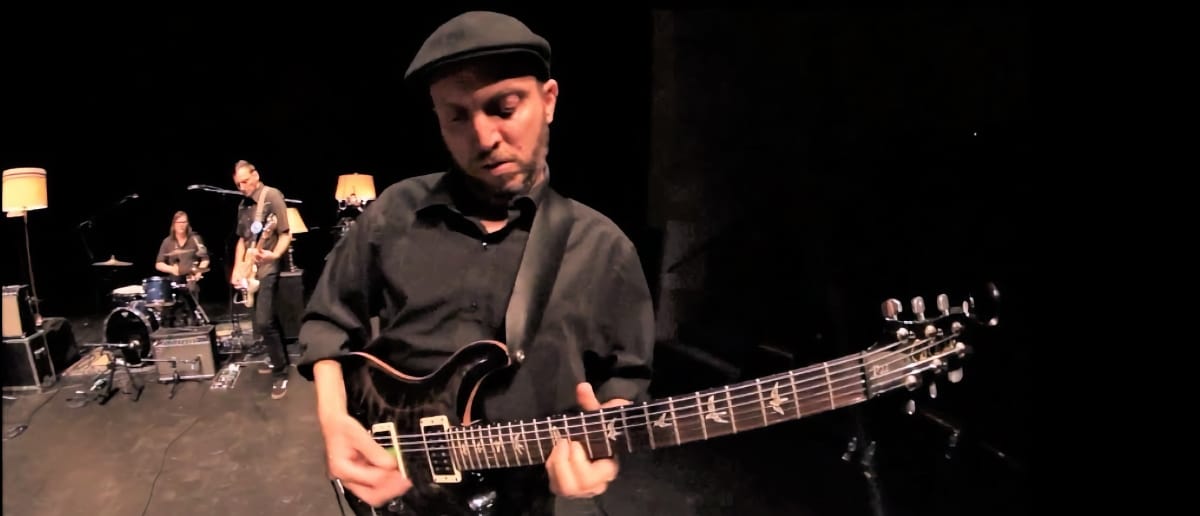
Back in my day, we used to borrow records from the library (old man voice). That's how guitarist Jon Fadem discovered Joni Mitchell's jazzier excursions at the age of nine. Admittedly, not all libraries had 'hip' record selections on offer, but I'd like to think there was some sort of network of librarian-curators who influenced American musical taste from the 1960s through the 1980s. It also helps when there's a groovy librarian purchasing albums for municipal circulation, leading to young Fadem discovering Blue, Court and Spark, and For the Roses in a public collection. It sounds quaint in these 'everything is available' times, but, for many growing up in the proverbial sticks, the music sitting in libraries was a cultural lifeline.
Even quainter, the library system's constraints created their own curation. Most libraries limited patrons to three albums with two-week checkouts, making it difficult to sample everything. Others, like my local library, would only let you listen to the records within the building's ‘music room.' (Side note: A permissive librarian once let me smuggle in a tape deck so I could make a cassette recording of this.) Perhaps there's nothing better to show the differences in our past relationship with recorded music and today's infinite scroll. There was even an antique equivalent to today's listening metrics: the checkout cards tucked in the sleeves gave clues to the records' popularity.
Inevitably, libraries abandoned vinyl for CDs during the 1980s and 1990s, scattering thousands of albums in the process. And now libraries are considering their own community-focused music streaming platforms (something I enthusiastically support). Though the institutional memory of physical recordings has been discarded. Fadem's guitar now contains traces of some groovy librarian-curator. That librarian, and others like her or him, deployed the conditions for discovery that influenced entire generations of listeners.
Playback: Making the Steamship Move — mssv's Perpetual Motion Machine → I suppose Mike Baggetta's idea that "music shouldn't exist in a vacuum" and must get "out there with the people" parallels how library curators understood music as a social and educational experience. Baggetta's father introducing him to Jeff Beck's Wired, which led him to discover Charles Mingus and free jazz, feels like the chain of discovery that library browsing enabled.
 Lawrence Peryer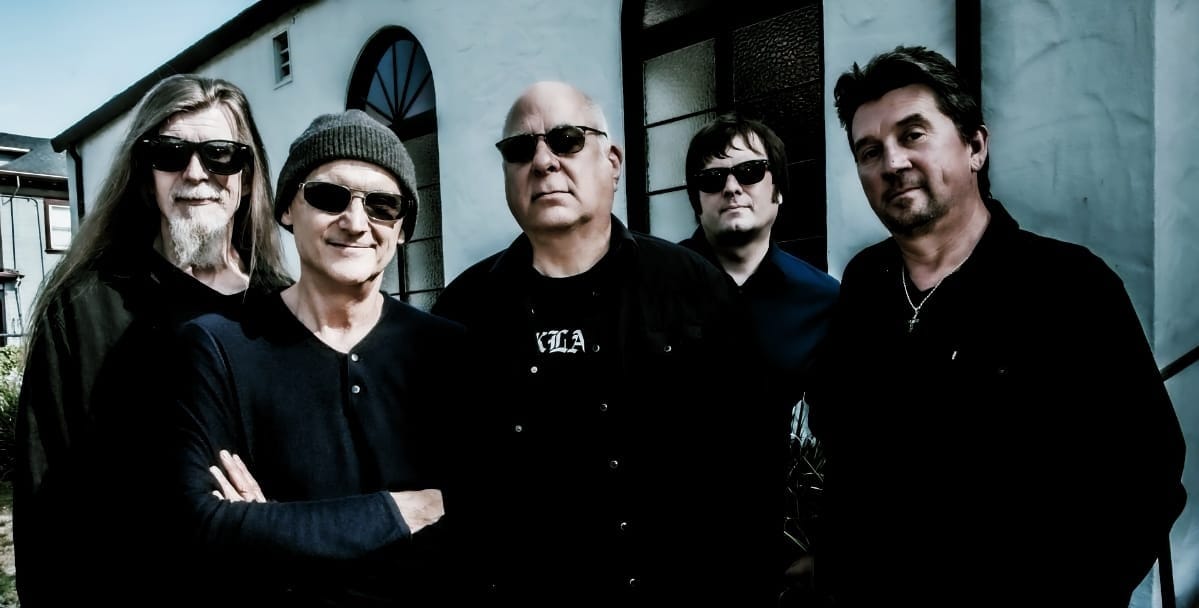
In our interview with Matt Piucci, he's amused by the suggestion that Rain Parade "could afford to starve" in 1980s Los Angeles. It describes an economic reality that enabled artistic risk: affordable rehearsal spaces in East Hollywood, dive venues, and apartments where musicians could survive on part-time wages. The band spent over a year developing their psych-rock identity before they ever played a gig and recorded their earliest music without commercial pressure or public expectation. This insulation required cheap practice spaces, the kind typically found in rough areas. These city backstreets eventually become artist havens, and then gentrification sets in. Today, apps like Zillow use proximity to galleries and music venues as selling points, monetizing the value that 'hip' artists generate. A viral TikTok video of a cool venue can trigger investor interest, and even Instagram geotags have become real estate marketing tools. The gentrification of low-cost-of-living artist neighborhoods used to take decades. Now it can happen in months.
In our weird new world, neighborhoods flip in real-time. Creative communities might need to adopt defensive strategies to combat this. Some venues keep a minimal online presence, working through encrypted messaging networks (like a ‘90s last-minute phone line to a secret rave location). Perhaps others could use shell companies to purchase property, hiding their cultural bona fides from algorithmic detection systems designed to identify "emerging" neighborhoods for speculation. We may reach a point where artists’ hangouts must hide their success to outwit commercial developers and prospectors.
There are other ways to break the displacement cycle and protect stable, creative spaces from the accelerated effects of capitalism. For example, community land trusts remove property from speculation markets, allowing venues and artist housing to stay affordable regardless of neighborhood change. But it's wild that today's version of Piucci's 'afford to starve' generation requires legal protection. The beautiful puzzle of collaborative art he describes requires time, space, and freedom from financial and displacement threats. Until we solve that systemic problem, we'll keep finding artists forced out of neighborhoods made rich from their presence.
Playback: Speaking to EZRA with a Bluegrass Accent → EZRA acknowledges they have "more albums recorded than live gigs," partly because "touring is just pretty unwieldy" due to academic schedules and life commitments. The band's solution is to focus on studio recordings and university grants rather than live performance. This is the reality of a niche-leaning band hurtling its way through the 21st century.
 Chaz Underriner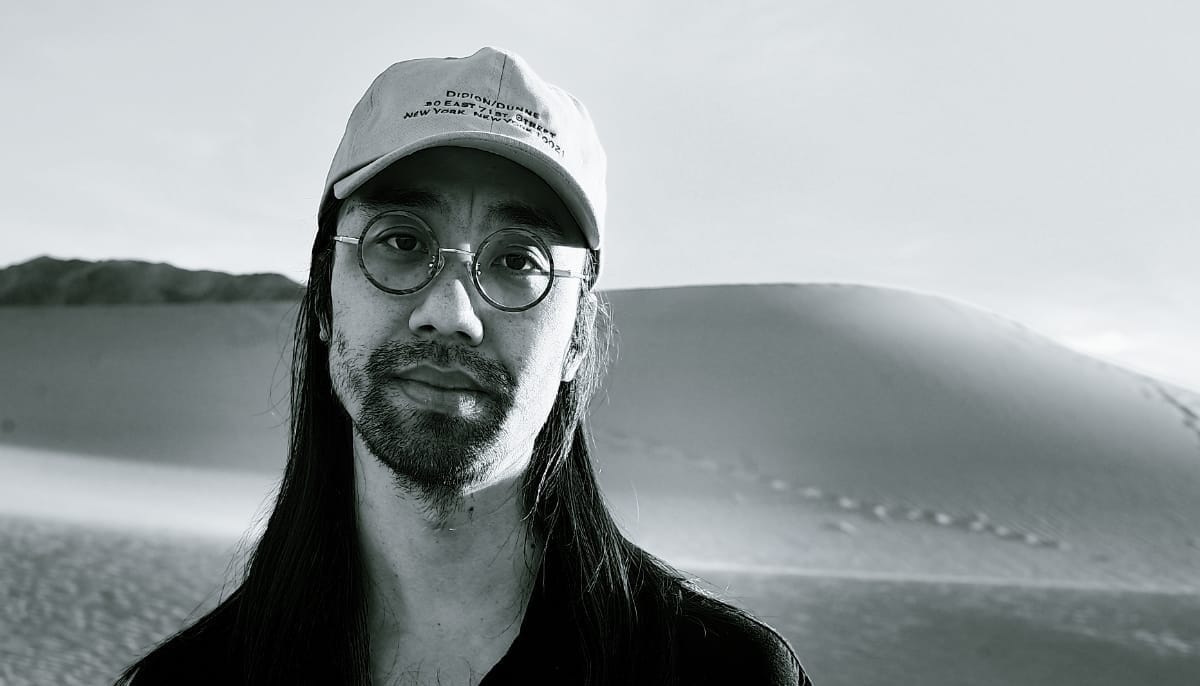
Patrick Shiroishi opens his new album Forgetting is Violent with the voice of a Hiroshima survivor describing August 6, 1945. Japanese words loop over themselves in what Shiroishi calls 'intentional anxiety.' The past loses its linearity in a cycle of unhealed trauma. I'm reminded of Steve Reich's "Come Out" (1966), which turned police brutality victim Daniel Hamm's phrase "come out to show them" into an unsettling abstraction, its violence echoing like collective consciousness. The survivor speaks to preserve memory; Shiroishi's loops ensure memory becomes inescapable.
In these examples, witness becomes texture and pain becomes composition. Yet Shiroishi navigates this carefully. He preserves the artifacts of age in the recording he uses, such as vocal warble and equipment hiss, adding a ghostly context to the source’s medium. The Japanese remains untranslated, but interpretation is necessary as the trauma speaks through tone and breath. The loop forces sustained attention in this era of forgetting, each cycle colliding past into present, compressing the comfortable distance of time.
There's a philosophical element to Shiroishi's imposed disorientation. The bombing happened in 1945, the testimony came decades later, and Shiroishi loops it in 2024. Repetition makes all moments simultaneous; the survivor's voice loops between past warning and future prediction. It's like the wise man once said: "Time is a flat circle." Shiroishi's saxophone eventually enters this haunted space, but—and this is the point—even the beauty of his playing can't escape the gravitational pull of unresolved wounds.
Playback: From Zero They Built a Future — The Birth of Krautrock's 'Neu Klang' → The progressive German bands of the '70s aimed to start over "at zero" and used repetition as a necessity born from national rupture. Krautrock's repetitive structures forced sustained attention in a culture built on willful amnesia. Meanwhile, “memory becomes inescapable" in Shiroishi's looped history.
 Dave Segal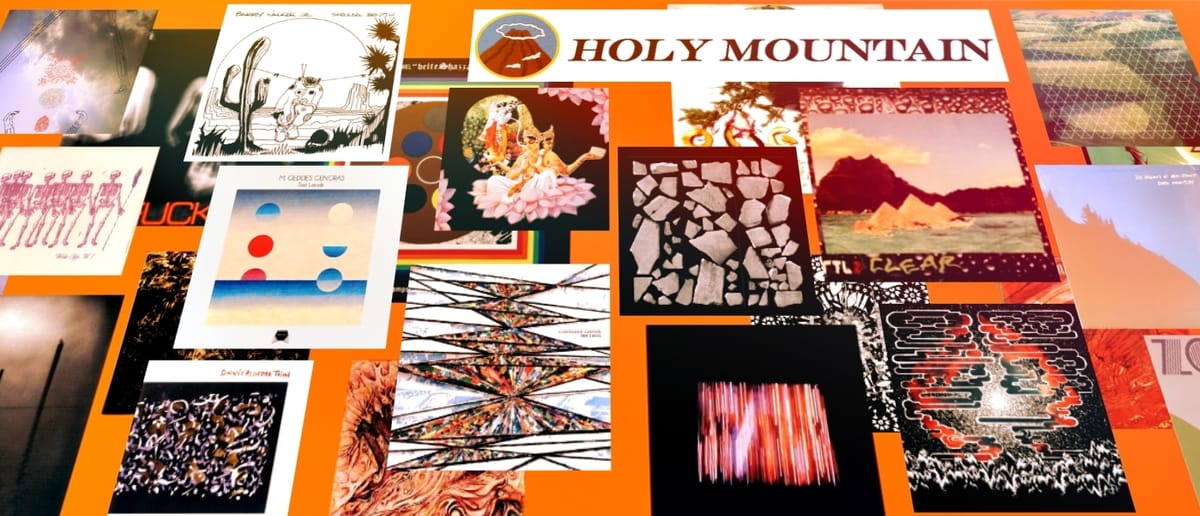
The late John Whitson's refusal to promote Holy Mountain Records somehow brings us to wu wei, the Taoist principle of "effortless action." Pushing releases into reluctant ears can be exhausting (thankfully, we don't have that problem at The Tonearm, dear open-eared reader). Perhaps it's better to follow what ancient Chinese philosophy calls "acting in accordance with the natural flow." Whitson, oblivious to wu wei or not, similarly released music and trusted that those meant to hear it would find their way. And as that wheel turns, we get to the concept of scarcity as unintentional currency. Holy Mountain's releases were treasured because they felt discovered rather than marketed. You stumbled across James Ferraro's kosmische meditations or OM's theosophical doom, like finding a secret door in your own house.
Most labels hire publicists and court playlists, but it's like Holy Mountain and its kin run on reverse demand creation. The harder Whitson made it for people to learn about his releases, the more intensely they sought them out. Savvy marketers take note! But here's the rub: the moment you try to replicate this dynamic, you destroy it. Calculated mystique feels calculated. Forced cultural adoption corrupts the art, and authentic expression is unmasked as empty performance.
There is a measure of security and, yes, privilege to ignore market forces. You'll need knowledge of physical music distribution to function efficiently, and a low overhead (I suppose saving money on things like publicity might help). And you'll need to resist the urge to promote and trust that 'quality plus uniqueness' will find an audience—hardly a sure thing. I mean, the internet promised to democratize distribution, yet it destroyed the scarcity of meaningful discovery. Streaming platforms represent the antithesis of wu wei through algorithmic force-feeding, prioritizing engagement over genuine connection. That's reason enough to admire Holy Mountain's philosophy, which inhabited a strange place in our attention economy. It's delighfully possible to be both intentionally naive and deeply subversive.
Playback: Robin Holcomb, Peggy Lee, and the Art of Musical Patience → Before releasing their debut album Reno, the duo of Holcomb and Lee spent twenty years performing together and even shelved a previous album out of dissatisfaction. Wu wei epitomizes this organic process and the notion of working with natural flow rather than forcing outcomes. Arguably not wu wei: market-driven release schedules.
 Jonah Evans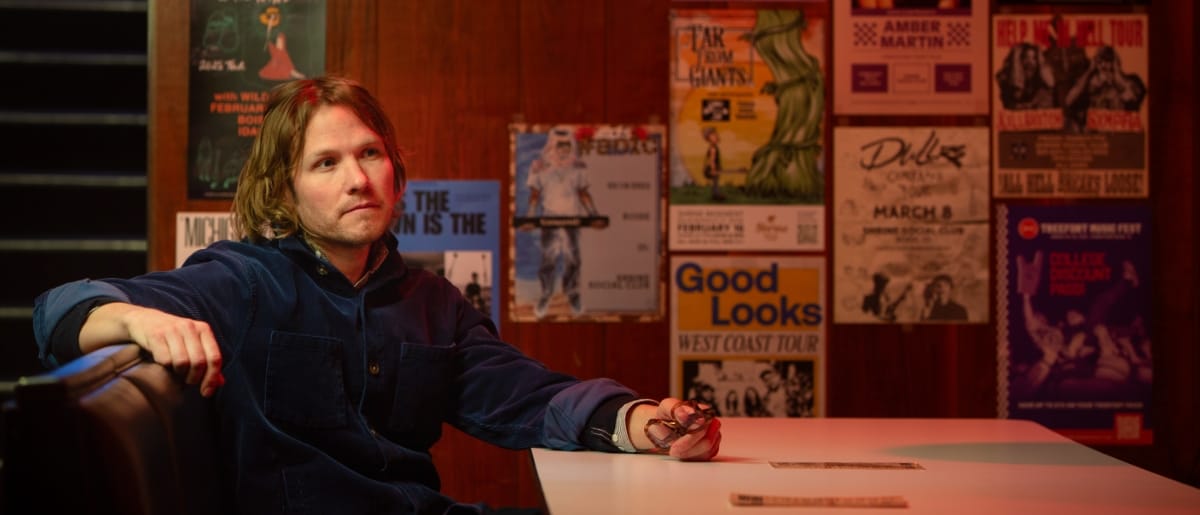
Jens Kuross wakes around 5 AM in his Boise living room when it's quiet and "before people start driving around." He sits at his electric piano and records his music. In between the musical moments of his album Crooked Songs, you can hear his breath, the chair squeaks, and the ambient sound of dawn breaking. Kuross is not alone in this early A.M. routine—there are quite a few composers who've discovered the benefits of pre-sunrise solitude. Maurice Ravel rose before dawn at his Montfort-l'Amaury home, composing "Bolero" in the clear morning hours. Johann Sebastian Bach carved out a sanctuary before his twenty children stirred, finding space for writing the likes of The Well-Tempered Clavier. And Glenn Gould scheduled his recording sessions for late-night and early-morning hours. He believed he could access a particular consciousness only as the world slept. (In a non-classical context, I recall an old interview with the members of New Order saying basically the same thing.)
Kuross's house "is not particularly well insulated,” so his primary motivation is avoiding the outside noises of daytime hustle and bustle. But, as I listen to Crooked Songs, I can't help but feel this solitary practice brought an unguarded vulnerability to the music. Neuroscientists back up the idea, calling this brain state the ‘default mode network.' It's that drowsy state between sleep and waking when the brain taps into wells of memory and emotion. Islamic practitioners understand this through tahajjud, night vigil prayers that extend into sunrise, thereby thinning the line between the self and transcendence. Kuross describes songwriting as "a very sacred process," though I don't think he realizes that he's part of a lineage of artistic morning people.
There are other musicians who have also tapped into the benefits of the early wakey-wakey. Sufjan Stevens follows early-morning home recording rituals. Liz Harris creates Grouper's ethereal textures during pre-dawn Portland sessions. Kuross joins them as he sits at his piano in Idaho, composing in the quiet hours before the world intrudes.
Playback: Emahoy Tsegué-Maryam Guèbrou's Century of Longing → Emahoy Tsegué-Maryam Guèbrou's album Souvenirs was "recorded in the cloak of night," capturing ambient sounds of open windows and birdsong that produced "a private recording with the illusion of expanse." Like Kuross finding solace before the world stirs, Emahoy discovered her artistic sanctuary in nighttime isolation.
The Hit Parade
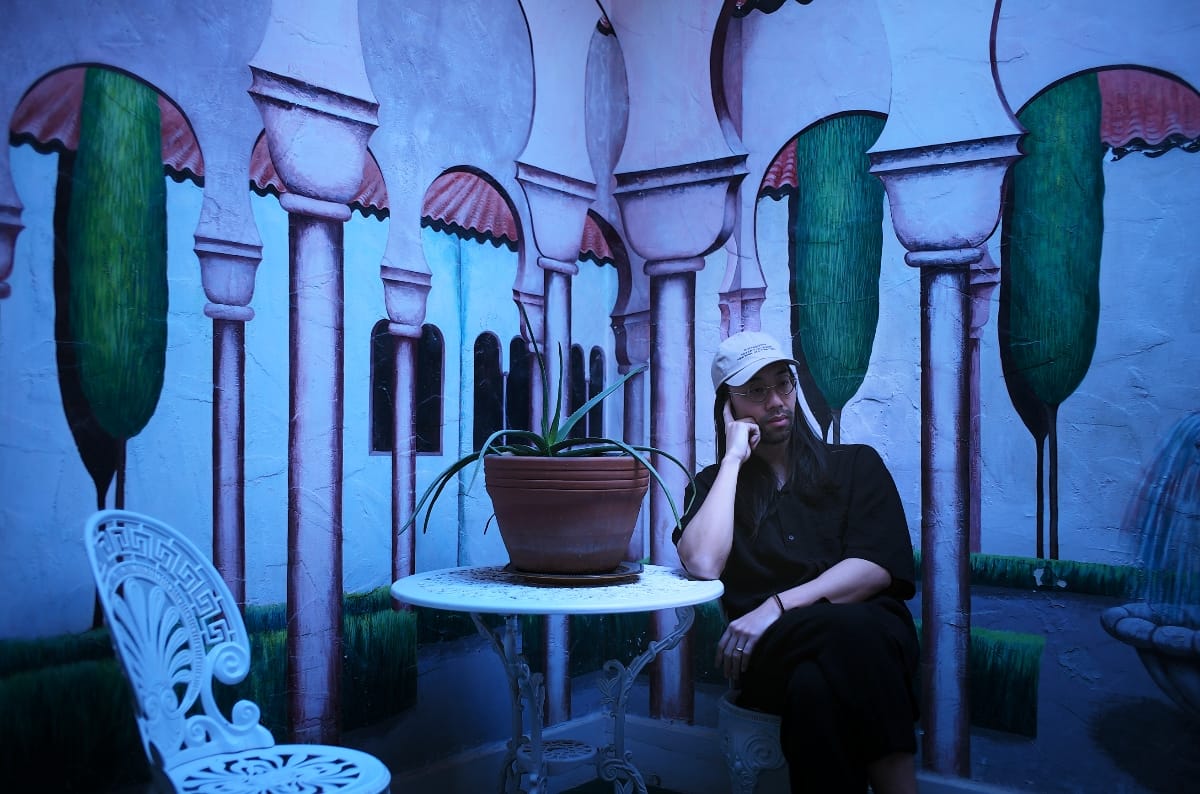
- This week on the Spotlight On podcast, LP hosts saxophonist Donny McCaslin, who you may know from genre-smashing work on his own as well as with David Bowie on the album ★ (Blackstar). You'll certainly want to tune in to this one.
- Short Bits: On repeat: Mary Halvorson’s Amaryllis: About Ghosts // Live at Roulette • R.I.P. to the bassist extraordinaire who was everywhere, Danny Thompson. • "We removed ourselves from the noise of the world into the forest, so… you can start hearing your soul." For his 90th birthday, a terrific NY Times profile on Arvo Pärt (gift link). • George Grella on The Bands of Henry Threadgill. • The fascinating world of ancient Spanish church bells (and a somewhat embarrassing article title). • DJ Food mixes Boards of Canada's songs alongside "original sample sources, tracks they remixed, fan remixes or songs that fitted their sonic blueprint."
A Shout from the 'Sly
Deep Cuts
In a past newsletter, I requested vegan recipes. I was half joking. But when Carolyn Zaldivar Snow sent in her interview with the fantastic sound + music artist M. Sage (which you can read here, more on Matthew in next week's TOTT), it was accompanied by instructions for a delicious-sounding tomato soup. Substitute non-dairy Parmesan to adhere to my original request.
Garden Tomato Soup (via Matthew Sage's Colorado farm)
Pick as many ripe tomatoes from your garden as you can. Different sizes, shapes, and varieties work well. Slightly underripe tomatoes are fine, but avoid fully green ones.
Wash the tomatoes thoroughly and dry them. Dice one whole yellow onion (red onion provides more bite if preferred). Dice three garlic cloves. Cut tomatoes in half, or quarter them if large.
Place tomatoes, onion, and garlic in a large bowl and coat thoroughly with olive oil. Salt generously.
Preheat oven to 400°F. Line a sheet pan with parchment, then oil the parchment. (Deeper sheet pans work best for this recipe.) Arrange vegetables on the prepared pan and bake 30–40 minutes until they begin to caramelize.
Remove from oven and let cool uncovered for at least 10 minutes. Blend all roasted vegetables in a blender until smooth. Heat gently in a pot on the stove over low heat to serve.
Variations: Add any seasoning or vegetables you like—carrots and peppers work particularly well, sometimes a zucchini. For creamier, richer soup, add Parmesan while blending. Seasoning provides the real magic: adjust salt levels, try black or white pepper, curry seasoning, fresh herbs. The tomatoes serve as your canvas—adapt the recipe to your taste and circumstances.
Run-Out Groove
I sure can't wait until tomato season comes around again. Our garden is usually bountiful, but the window is tight here in the deepest of the deep south. Matt's soup will come in handy, though.
Good food goes well with good music, don't you think? If you have a friend on that culinary/audio wavelength, please forward this newsletter. They might like it! You're also encouraged to copy and post the 'View in browser' link at the top in your social media buffet (feed). Spreading the word is fun and fancy. Likewise, drop me a message with your thoughts and ideas in the comments or send a reply to this email. You can also contact us here. We'd love to hear from you.
When the world gets dicey, dice vegetables. And with that dubious gem of homegrown wisdom, I will leave you to the remainder of your weekend. I will see you here again next week. 🚀
Connect with The Tonearm:


Comments