


Ahoy, gentle reader. I'm Michael, that guy you know who sends you an email newsletter called Talk Of The Tonearm every Sunday. There is so much great stuff to cover as our incredible writers have been working overtime (in effect keeping me, your humble editor, happily working over-overtime). This one's pretty special, but I guess they're all pretty special. Thank you, writers. Before I embarrass myself with copious praise-gushing, I'll stop here and let you get into it. Enjoy!
Queued Up
 Lawrence Peryer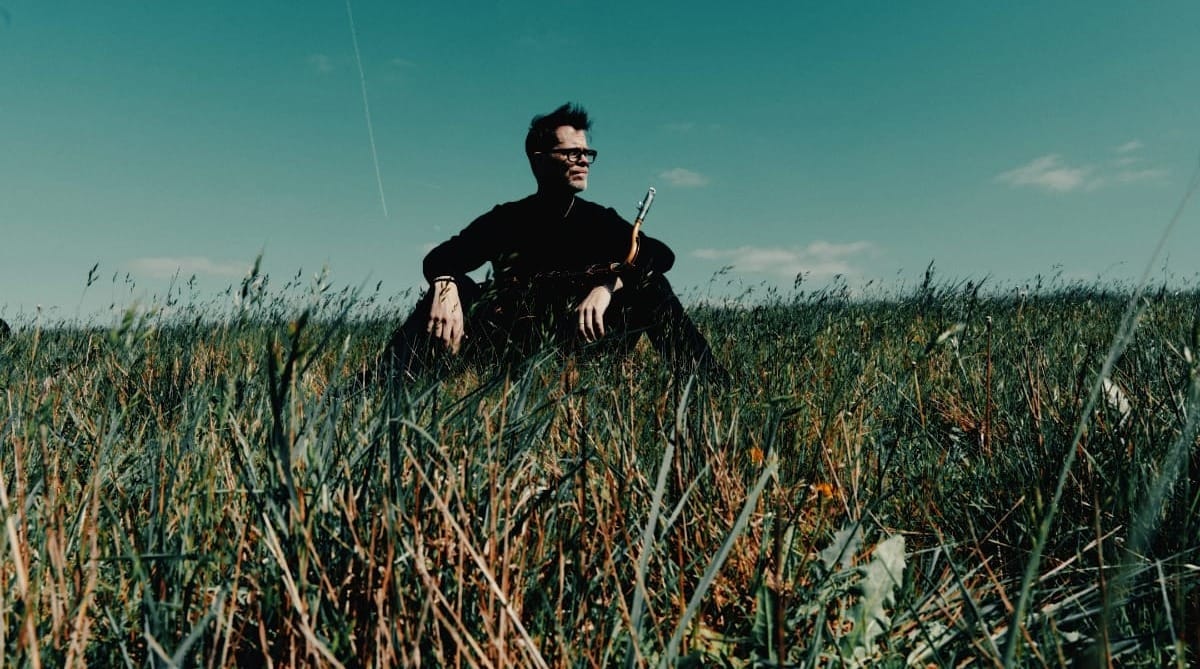
Donny McCaslin recalls when Tim Lefebvre showed him a video of Neil Young performing “Rockin’ in the Free World” on Saturday Night Live in 1989, backed by drummer Charlie Drayton. The power in the video stems from being on the knife-edge of potential disaster. Young assaults his guitar while Drayton hammers his kit like he wants to break through the floor. "It's unhinged and so primal," McCaslin says. "I was just sort of gobsmacked." That performance became a reference point for his band and the energy they chase onstage. It also led to "Wasteland," the opening track on his new album Lullaby for the Lost. But what gobsmacked McCaslin was already a ghost, an archived performance viewed on a screen. Every recording of a live performance captures a moment of risk that no longer exists. What remains on tape is the residue of that risk, the shadow of an experience. McCaslin, a saxophonist with formidable technical command, might be pursuing the unrepeatable by studying its ghost.
This is even tougher in the studio, where the recording environment strips away the necessity that inspires primal energy. Multiple takes exist. You know you can fix mistakes or try again. The difficulty of recording 'primality' might be the point. Music that’s easily replicated is music that's already inert. But McCaslin experienced a counterpoint when recording "Tis a Pity She Was a Whore" for Blackstar. He and drummer Mark Guiliana played the first take so hard that McCaslin's horn squeaked and Guiliana dropped a stick. They recorded more precise takes, but David Bowie heard something in the rawness of that first one, which is the take that ended up on the album. The squeak and dropped stick were genuine energy rather than flaws to fix.
McCaslin talks about wrestling with the voice that once told him his music wasn't "hip enough," that he should try "something a little hipper, more notes or odd meters." He has learned to ignore that ‘oppressor’ and follow his instincts instead. It’s indeed rare to hit the primal moment, if at all, especially if you’re trying for it. But leaving space for your instincts to open up possibilities keeps the music breathing. So, you can't recreate that wild-eyed Neil Young performance—you can only watch it, let it work on your imagination, then step onstage and see what happens.
Playback: Fragments of Revelation — A Lost Conversation with Matthew Shipp & Ivo Perelman → The lost recording of the Shipp-Perelman interview was reconstituted like the ghost of a live performance. LP’s article confronts the same problem McCaslin faces: how do you write about something unrepeatable when all you have left is the memory of encountering its shadow?
 Carolyn Zaldivar Snow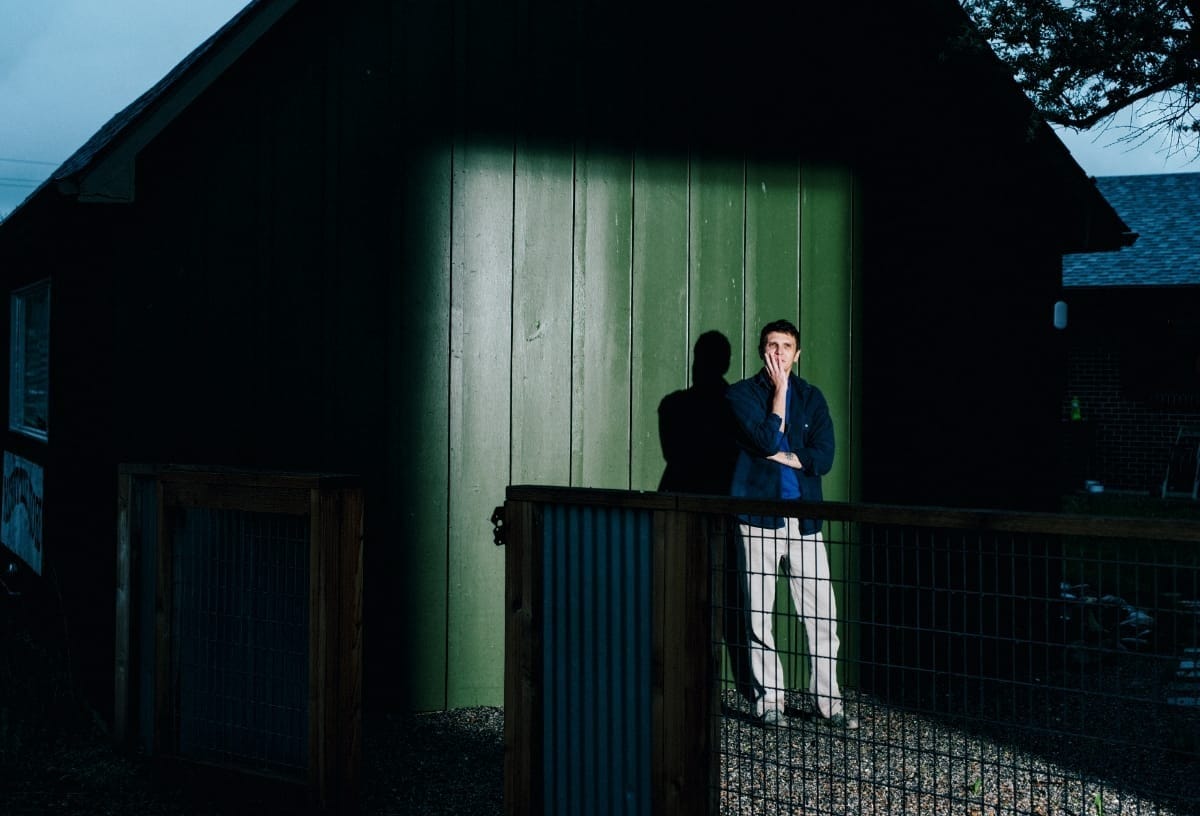
Hildegard Westerkamp's 1989 piece "Kits Beach Soundwalk" includes things that are intentionally hidden in most nature documentaries. You hear footsteps on gravel, the recordist's breathing, and wind hitting the mic. Westerkamp rejects the fantasy of the invisible observer, a sort of colonial fiction that clears the witness of responsibility for the act of witnessing. Matthew Sage works within this tradition, although he may not refer to it in those terms. On Tender / Wading, the opening sound (a din of toads from the ditch at his Colorado property) bleeds into the electrical hum of his barn light. He could have isolated these sounds and cleaned them up, but he didn't. "I'm always massaging things a little bit in production to make them feel a little bit larger than life," he says. The mediation stays present in the mix.
Industrial capitalism polluted our sonic environments just as it poisoned air and water. R. Murray Schafer called it ‘noise pollution,' that constant rumble of traffic and machinery. Sage couldn't sleep for a month after leaving Chicago for the Colorado countryside because the city’s sonic regime had trained his body. Tender / Wading reveals this adjustment period. Where his previous album was cluttered, this one opens into silence and space. And that deep timpani boom on "Telegraph Weed Waltz"? A rock hitting dirt, then sampled and built into percussion. The magpie calls layered over it came from the same fifteen-minute recording, cut up in Ableton. Sage’s act of processing environmental sound presents a transformation rather than documentary evidence.
The land he records is the land he tends. He rids his fields of invasive grasshoppers, nurses the property back toward health, and creates conditions where those toads can breed. The toads exist because of his care. These recordings document work in progress rather than wilderness lost. The labor is messy and difficult, and humans can't extract themselves from it. The barn light hums because he maintains the infrastructure. Honest participation, rather than observation, may be all we can offer, and perhaps all we need.
Playback: Principle of Moments — Kim Perlak's Intuitive Guitar → Kim Perlak translates natural settings the way Sage does—places stay real even as they become something else. She wonders what a misty morning on a lake might sound like, or how to render swooping cranes, then tinkers with her guitar until she gets close to what she remembers seeing.
 Lawrence Peryer
In our interview, Sandy Chamoun of SANAM says reading Omar Khayyam gives her "the feeling that there's no clear path." The line describes both the medieval poet's philosophy and SANAM's present in Lebanon, a country plagued by threats without resolution. But the Khayyam most people know—the one Chamoun hears across nine centuries—is partly invented. Edward FitzGerald's 1859 translation took disconnected Persian quatrains and assembled them according to his preferences. He added stanzas, softened others, and imposed through-lines that Khayyam never wrote. The Pre-Raphaelites loved it. Scholars still debate whether the translation accurately captures medieval Persian philosophy or projects FitzGerald's Victorian crisis of faith onto a convenient historical figure. But SANAM don't seem bothered by this interpretive wobbliness. Chamoun describes borrowed texts changing through performance: "Even the oldest text can be reborn as something contemporary, something that mirrors you." So, authenticity isn't the goal—the band uses voices that have already traveled, mutated, and been misunderstood.
The actual Khayyam lived under Seljuk Turkish rule, reformed the calendar, solved cubic equations, and wrote philosophy that questioned religious certainties. But his quatrains offered plausible deniability. Was the wine literal or a Sufi metaphor? Depends on who's asking. Thus, "no clear path" was an existential observation and a survival strategy. SANAM work within similar pressures, and Chamoun states this plainly: "Since the moment we were born, there has always been a threat to our existence in one way or another." SANAM record experimental music during perpetual emergency and pull texts from across centuries from Khayyam, Egyptian folk songs, and contemporary Lebanese writers. The choices refuse any single imposed story.
FitzGerald's mistranslation created its own kind of displacement, a kind of Victorian spiritual crisis in Persian costume, which SANAM now borrow to illustrate Lebanese uncertainty. Each shift adds distance from its metaphorical origin, but the distance is the resource. Poetry under constraint requires ambiguity; direct statement can't hold the complexity. Khayyam calculated cosmic time while insisting that time was meaningless, and SANAM record experimental rock while Beirut teeters. The contradiction isn't resolvable. It's just the condition.
Playback: Breaking Free from the Death Cult — Kory Reeder on Creative Liberation → Composer Kory Reeder talks about getting out from under classical tradition—what he describes as the death cult of Germanic hagiography, where figures like Beethoven loom over everything. Reeder finds liberation in recognizing that this weight is self-imposed, much as SANAM borrows voices already misunderstood to speak for modern Lebanon.
 Bill Kopp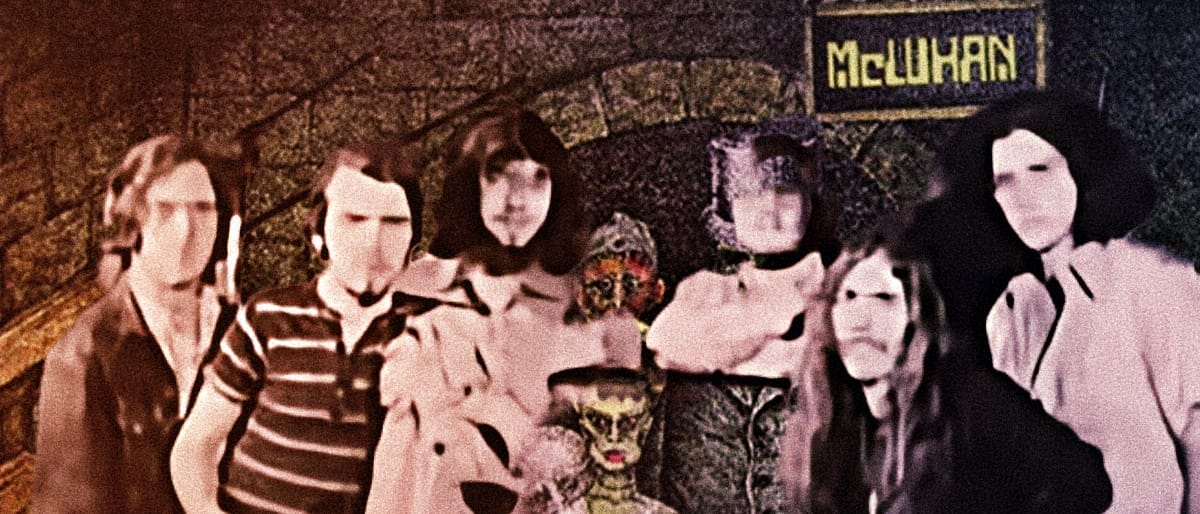
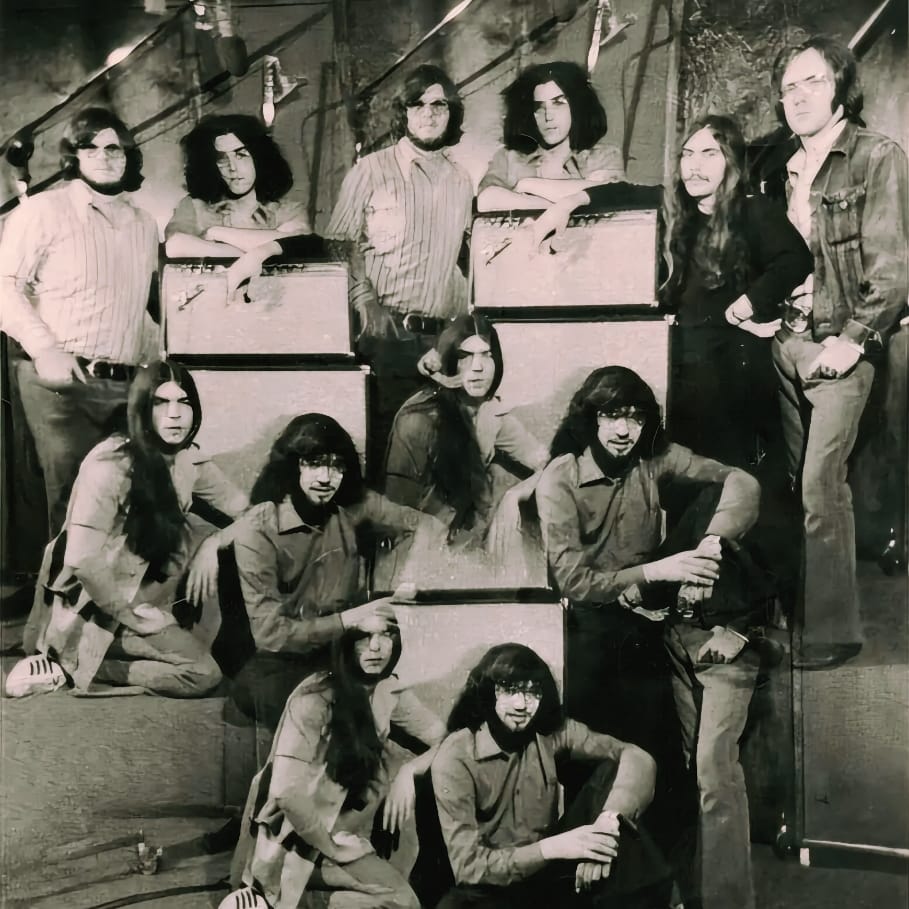
Paul Cohn says that Marshall McLuhan’s idea, “the medium is the message,” allowed his band to do anything, no matter how ill-advised, in the studio. This band, inspiringly named McLuhan, was thus fine with free jazz colliding with horn-driven pop, spoken-word passages interrupting melodic sections, and the Fugs meeting King Crimson on the same side of vinyl. But listen to their 1972 album Anomaly and you hear coherence, however strange. Considering the philosophy of "anything goes," the album somehow doesn't fragment into chaos. In other words, something was imposing order, making decisions, and determining the outcome. Maybe that something was the medium itself.
By 1972, "the medium is the message" had escaped from McLuhan's dense Understanding Media and entered public conversation. Among its many mainstream interpretations, Wright saw the idea as a conceptual license. If the medium matters more than the content, then maybe genre becomes irrelevant. But McLuhan didn’t give a hoot about music; he was writing about how technologies alter human perception. Reaching for an application, the band McLuhan used this theory to explain their eclecticism. Were they misreading it? Probably—but they were also correct. A recording studio in 1972 is, in itself, a technology. It alters sound as much as it captures it. The engineering choices, the available equipment, and the physical constraints of vinyl all determine what can be recorded and how it will sound.
Wright's reading of 'the message' goaded the band into combining styles that wouldn’t usually be paired together, which the studio made possible as its format imposed logic. The concept was the excuse, but the medium did the actual work. Which means McLuhan (the band) got McLuhan (the theorist) right, even if they got there sideways. The message was never the free jazz, horn sections, or spoken-word interludes. The message was the fact of this recording existing at all. Four Chicago musicians, one engineer, three days, one album. The medium speaking for itself.
Playback: Anupam Shobhakar's Musical Voyage from Slayer to Sarod → Anupam Shobhakar plays a custom double-neck guitar—one neck fretted, one fretless. The setup lets him move between Western harmony and Indian microtonal thinking without switching instruments. The instrument's design is the medium that enables eclecticism, while its physical form determines how that eclecticism is achieved.
 Chaz Underriner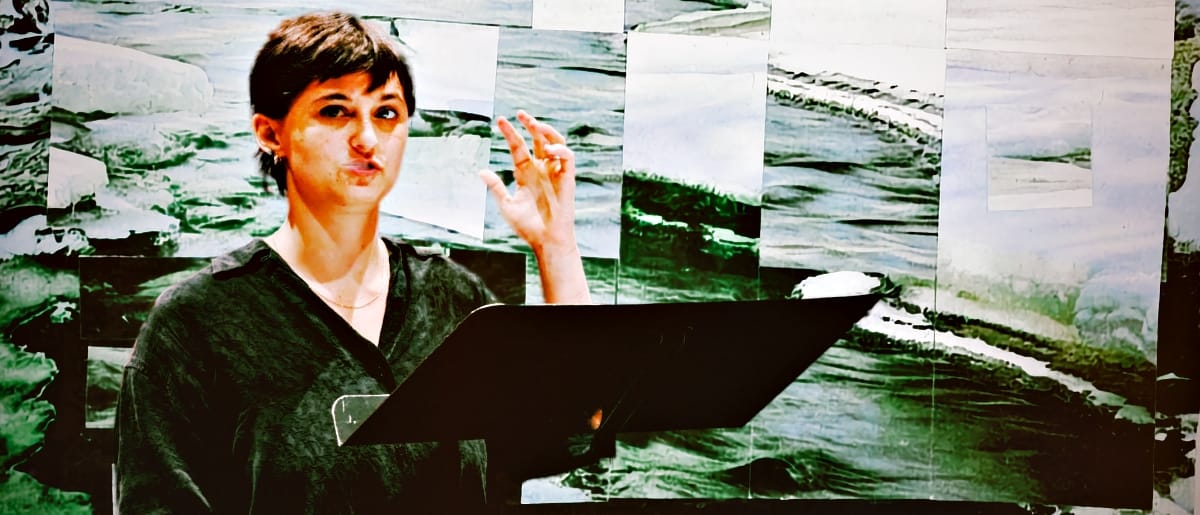
Lila Meretzky tells us how she stood in front of her music school's weekly recital, holding her phone. She pressed play, and her father's voice appeared, reading an email about the death of his grandparents, layered beneath strangely processed sounds. In the moment, Meretzky felt this presentation was a bit impersonal. However, her listeners still found the piece disarming and emotional, its intimacy far from abstract. That gap raises a question that composers constantly encounter: Who controls what music means?
In 1967, Roland Barthes published "The Death of the Author," arguing that meaning resides with readers, not authors. In other words, a writer’s work is only fully complete through its reader’s interpretation. The author's intentions become irrelevant once the text is out in the world. But Barthes was addressing literature, so applying his theories to music gets a bit tangled. The performer stands between the composer's score and the listener's ear, adding a third layer. For example, the Unheard-of//Ensemble recorded Meretzky's "For Linda Catlin Smith" and made countless decisions not specified in her notation. The sustained textures, the way the piano enters, or the precise timbral blend are all choices that affect what listeners end up hearing.
Meretzky describes composition as "discovery rather than self-expression," setting processes in motion to "create stuff you wouldn't be able to create with your conscious mind." She borrows Josef Albers's method: take stable elements, make micro-adjustments, and observe results. This is systematic play, yet she remains present in the work. Meretzky decides the materials to use, when to let processes run, and when to intervene. Perhaps Barthes was right that listeners complete the work, but the self can survive once it stops claiming sole authorship of significance. Meretzky discovers things through her process, performers discover things in her scores, and listeners discover things in performance. She makes compositional choices, but it’s impossible to predict what audiences will feel.
Playback: Sun-Mi Hong's Jazz Rhythm Builds a Nest of Belonging → Drummer and composer Sun-Mi Hong knows her band members develop the compositions and make them work, determining what listeners actually hear. Hong accepts this—the way Meretzky accepts she can't predict what audiences will latch onto—but she stays present through her initial decisions. The collaboration completes the work without erasing her.
Outside Track
Lawrence (AKA the enigmatic LP) jumps in to tell us about something inspirational:
I listened to an inspiring and motivating talk this week on The New Yorker's The Political Scene podcast. It was exactly what I needed, and maybe you will find it helpful, too.
The guest was Hardy Merriman, and the title of the episode is “Jimmy Kimmel and the Power of Public Pressure.” The title alone almost kept me from listening, as I was not sure I wanted more chatter about the Jimmy Kimmel Situation. I am skeptical as to what went down that led to Disney/ABC bringing him back, or how long he will be back (his contract ends next year). Sadly, I see too many ghosts in the shadows these days, and my default is not always optimism.
That said, I am glad I listened. Merriman is “an expert on the history and practice of civil resistance,” and in the episode, he talks about “coördinated actions—protests, boycotts, ‘buycotts,' strikes, and other nonviolent approaches” that are demonstratively useful in times like ours. Full of examples, ideas, and evidence, Merriman says, “Acts of non-coöperation are very powerful. Non-coöperation is very much about numbers. You don’t necessarily need people doing things that are high risk. You just need large numbers of people doing them.”
Most news and podcasts leave me feeling a bit demoralized and powerless. This one made me recognize dozens of things I, we, can do every day to push back. I even recognized some things I have been doing already that, if done in numbers, really matter. One thing that seems to be apparent about the bullies of the world, they really do not handle pushback well. So let’s push.
Please have a listen and feel free to reach out and share ideas and examples from your own life and community.
(Michael’s note: Related, a blog post I wrote several months ago about living as if you’re in a new world.)
The Hit Parade
- It’s the second week of digging into David Bowie-adjacent topics on the Spotlight On podcast, this time with direct precision. LP’s guest is writer Chris O’Leary, who publishes the excellent Bowie song history blog Pushing Ahead of the Dame. He’s on the show to discuss the updated reissue of his book Rebel Rebel: The Songs of David Bowie, 1963-1976, and also gets into topics of music journalism and the future of music writing. It’s a great listen.
- Short Bits: Raves for the deaf - “Many deaf partygoers connect with music by feeling the bass thump through them, so we do play tracks with meaty basslines …” • Tom Waits’ Rain Dogs (one of my life-changing albums) is now 40 years old. • NPR’s The Picture Show has published two terrific photo-essays (so far?) on the musical phenomenon of Cumbia, focusing on the birthplace and the DJs. • Brian Eno had a long chat with Ezra Klein. • A terrific overview of the life and music of Mulatu Astatke, arguably the founder of Ethio jazz. • Here’s a video of the great Dennis Bovell radically dubbing-out The Pop Group’s "She Is Beyond Good And Evil.” Oh, hey, that reminds me of that time Dennis Bovell was in The Tonearm.
Deep Cut
Seattle-based composer Wayne Horvitz constantly circles our periphery, appearing on The Tonearm as well as part of Spotlight On’s much-vaunted live show on improvisation. It was only natural that he eventually faced our favorite question: "What’s something you love that more people should know about?"
I love water, being in it that is. So much so that if I can’t be in it, I get cranky. Sometimes a shower, or two, will have to do. But it’s just the best. I swim a lot, but when I get a chance, I love to body surf, and to me, a day on the beach with a boogie board is just the best. This is definitely in contrast to most of my community in music, many of whom really don’t know what a boogie board is. (There are, of course, a few exceptions.) I am occasionally jealous of musicians and composers who have more opportunities [to be in the water], but nothing compares to the jealousy I feel for surf bums. Which is crazy—I mean, the life I have chosen is very different to say the least, and maybe I’d hate it. Grass is always greener, I know. Well, maybe it’s not too late!
Run-Out Groove
Reading back all the preceding text, I just realized it might be a little too apparent that I've been studying philosophy in my spare time. I know, right? For some reason, I'm trying to figure out what all of this means [waves hands around furiously like a roadside tube man]. I hope it doesn't get too incorrigible—that is, if it hasn't already. Excuse me as I stroke my invisible goatee.
As always, thank you for reading. If you enjoyed all of this, please forward this email to a friend, or feel free to copy and post the 'View in browser' link at the top on your social media (is the message) feeds. And I'd love to hear your thoughts on this edition, including what you'd like to see more or less of. Just reply to this email or contact us here. The phone lines are now open.
This week's newsletter was sponsored by The Pomodoro Technique. (Which is funny because last week we featured tomatoes.) OK, let's all make a pact to take it easy. We deserve it. Yes, easy is easier said than done, but I'm ready to give it a try. How about you? I'll see you again next week. 🚀
Connect with The Tonearm:


Comments