


Ahoy, dear reader! Welcome to this week's issue of Talk Of The Tonearm, where I rundown this week's stories along with a helpful dose of liner notes to get you further inside the articles. LP also recommends a couple of harpists—yes, harpists—to check out, and Pezzner tells us about a different way of listening. Let's dive:
Surface Noise
We encountered vocalist and sound artist Sara Persica through her album Spharia, released recently on Subtext Recordings. This evocative collection of tracks/experiments is based upon field recordings and ‘impulse responses’ (which are basically digital samples of acoustic spaces) captured inside Tripoli’s Experimental Theater, part of the unfinished International Fair site designed by legendary architect Oscar Niemeyer. LP spoke with Sara about this fascinating project, revealing the societal and political contexts inferred by utilizing this historical space.
 Lawrence Peryer
I traveled around Brazil in the mid-2000s and regularly encountered Niemeyer’s futuristic buildings, such as the Museu Oscar Niemeyer in Curitiba and the entire city of Brasilia. The latter got Niemeyer the job in 1962 to conceptualize the International Fair in Lebanon. Brasilia offered a hopeful vision of the future, almost utopian, and a revitalized Lebanon wanted to latch on to this feeling. The added bonus was that Niemeyer was from the Global South, a nose-thumbing gesture to the more established European or American architects expected to work on such a massive project.
As explained in LP’s profile of Sara Persico, the construction of the International Fair and the impressively domed Experimental Theater was abandoned soon before completion due to the outbreak of the Lebanese Civil War in 1975. Horrificly, the theater and other Fair buildings were used as detention and torture areas by the Syrian Army. It’s extra-chilling when one remembers the unusual acoustic properties of the dome, which feature the ability to amplify whispers across the room.
With that thankfully in the past, the fairgrounds, now a UNESCO World Heritage Site, are open for all to visit as well as for more mundane purposes, such as shops and hotels. But the poignancy of Niemeyer’s space remains embedded in its walls and sonic reflections, hopeful and hopeless ghosts resonating in the edges of the album Spharia.
Phillip Golub’s work also vibrates with hidden sounds. His latest album and composition for the Greyfade imprint, “Loop 7,” argues a case for what most consider the notes between the notes. I recently asked a guitarist friend to listen to this, and he responded with words like “disorienting” and “queasy.” That’s fine; Phillip understands the modern ear’s uncomfortable reaction to the 22-EDO tuning utilized in his piece, but surprisingly, this is recent conditioning. As he explains (with generous detail) in this week’s feature interview, the 12-octave structure we’re used to is mostly a phenomenon that arrived alongside industrial society. Phillip explains, "There was no equal temperament until a little more than a hundred years ago." Before then, tunings and octaves varied by location, instrument, composer, and period. To listeners of the time, these variations were normal and even beautiful. Once one settles into “Loop 7,” it can also adopt these reassuring qualities.
 Lawrence Peryer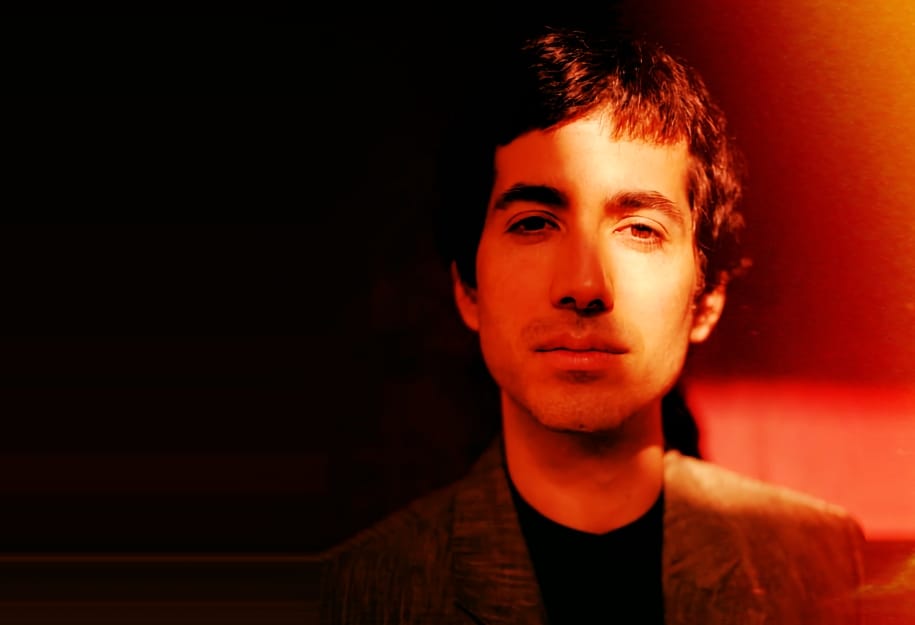
Phillip also mentions that when listening to microtones, you might hear strange pulsations and rhythmic flutters as mathematically adjacent notes interact. This is sometimes referred to as time perception warping, and it’s an audio illusion or perhaps a psychoacoustic magic trick. Examples of these mirages of sound include the third ‘phantom’ tone that’s perceived when two other tones align just right, a ‘ventriloquism’ effect that sometimes happens with microtones as the harmonic relationships confuse our brains about where they’re coming from; and, as my friend can attest, the strangeness that microtonality can evoke, much different from the emotions we experience with more familiar musical notations.
Something else that’s strange to imagine is an inflatable tube man, like you’d find at a used car lot, playing the drums. Intriguingly, that’s how drummer Ken Schalk describes himself as he relentlessly ‘smacks’ the kit. Michael Centrone spoke with Ken about this technique, which is born from his philosophy of ‘ergo-drumming.’ Imagine your work desk and how, hopefully, not like mine, it’s arranged to make your tasks easier to accomplish. The computer monitor is at the perfect height, your most important tools are within reach and not crowding each other, and it’s clear of the unnecessary. Ken, whose job is behind the drums, treats his drum kit like an ergonomically arranged work desk. Thus, ‘ergo-drumming.’
 Michael Centrone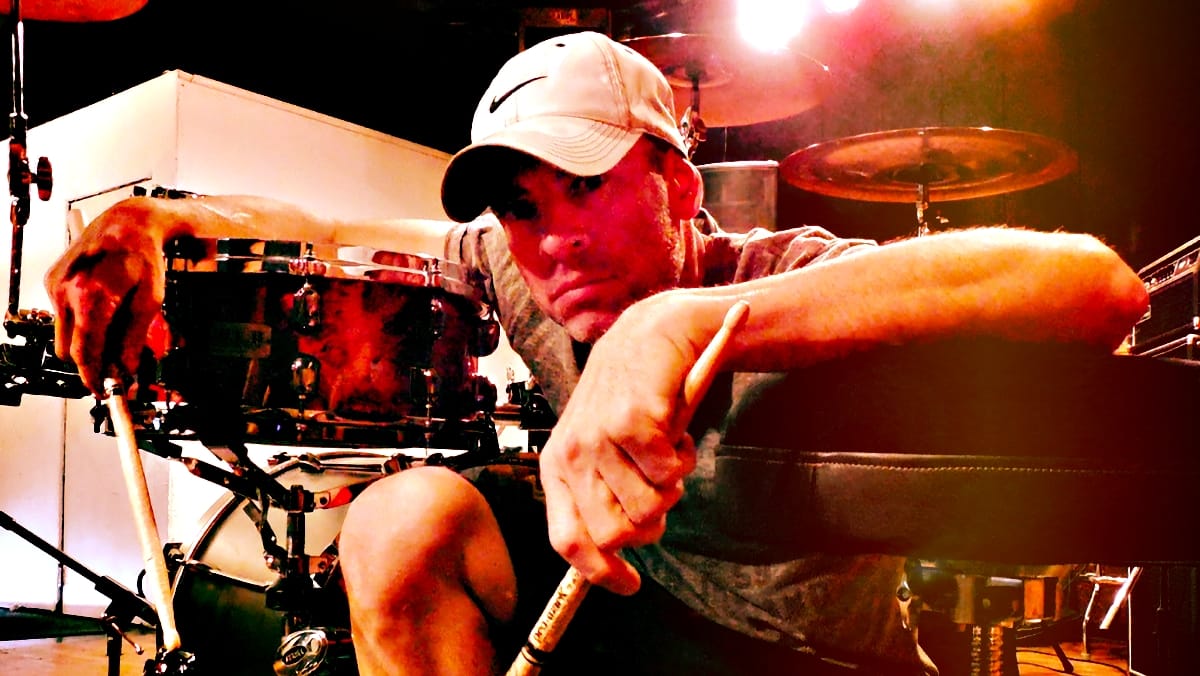
That said, I think the inflatable tube man stuff comes from how Ken manically and maniacally played while providing potent beats for the bands Candiria and Fuel. His other nickname is more applicable to his pensive approach to musicianship: the Bruce Lee of Drumming. This moniker makes sense if you read Ken’s careful thoughts and consider the techniques Bruce Lee is known for. They both emphasize the economy of motion; Bruce Lee focused on eliminating unnecessary movements that he called ”classical mess.” Bruce and Ken also obsess over fluidity. Famously, Bruce Lee taught to be like water, and the two find usefulness in circular, flowing movements rather than straight lines in their practices.
There is certainly an interesting thread to explore when comparing musicianship with martial arts. Dear reader, who are some musicians that draw influence from these trainings, whether they’re practicing martial artists or not?
The Hit Parade
For this week’s algorithmically resistant recommendations, LP brings us a double shot of exquisite harp-led jazz. I’ll let him take it away:
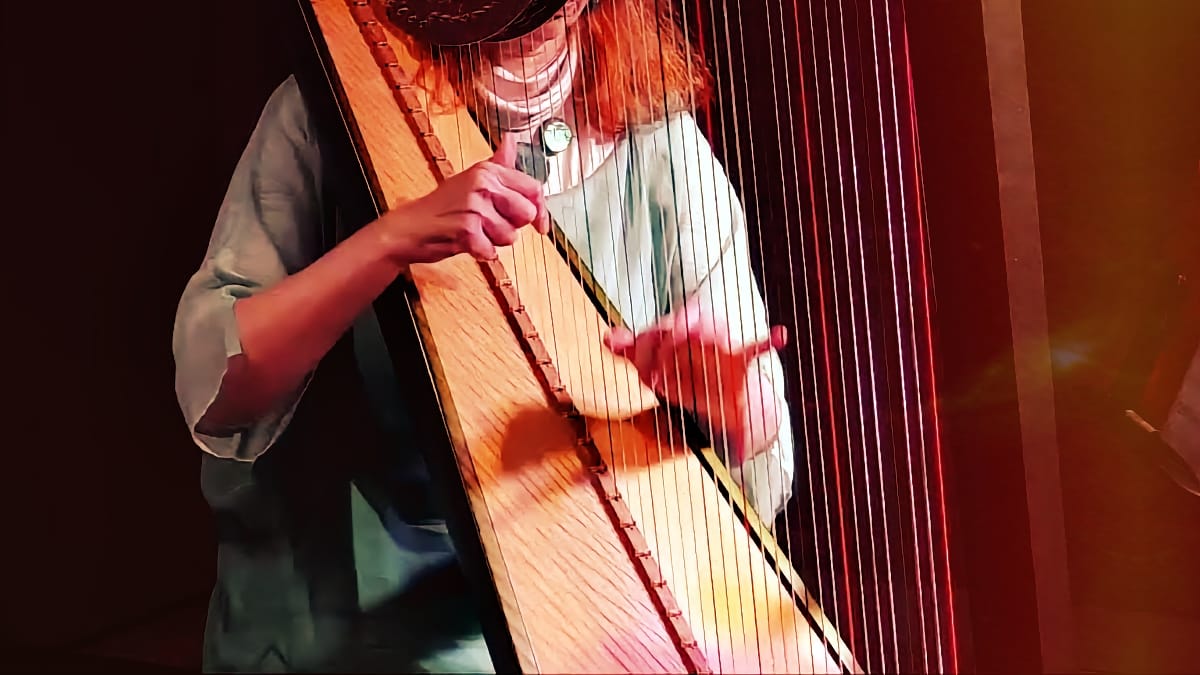
- Ashley Jackson's Take Me To The Water explores water's spiritual significance through thoughtful harp interpretations of works by Margaret Bonds, Alice Coltrane, Claude Debussy, and Samuel Coleridge-Taylor. The album connects Black spiritual traditions with classical technique, particularly evident in Jackson's rendition of "Deep River," where her fluid, celestial tones breathe new life into the iconic spiritual adapted by Coleridge-Taylor in 1905. Jackson transforms Bonds' "Troubled Water" with her innovative harp techniques, including interlacing socks through lower strings to dampen resonance and achieve piano-like clarity. Take Me To The Water features collaborations with the Harlem Chamber Players, whom Jackson has worked with since completing her doctorate at Juilliard in 2014. She aims her reinvention skills at interpretations of Brandee Younger's "Unrest" and a fresh arrangement of Alice Coltrane's "Radhye-Shyam." The album also highlights water's cultural importance while raising awareness of global water inequities, with 2.2 billion people lacking access to clean water.
- French harpist Isabelle Olivier's Impressions unites jazz and classical traditions through an electro-acoustic ensemble featuring her sons, pianist/accordionist Tom Olivier-Beuf and electronic musician Raphael Olivier, alongside a string quartet and drummer Baptiste Thiebault. Impressions draws inspiration from Impressionist art and John Coltrane's composition of the same name, exploring connections between visual and musical expressions. Olivier also creates musical connections between Chicago and Paris, her two artistic homes, through references to works housed at the Art Institute of Chicago (specifically, "La Gare," based on Monet's train station painting) and European Impressionist composers like Ravel. Refined, sophisticated, challenging, but not inaccessible.
Deep Cuts
Our friend Pezzner, whom Sara Jayne Crow wonderfully profiled in The Tonearm, has spilled the beans on something he loves that he thinks you should know about:
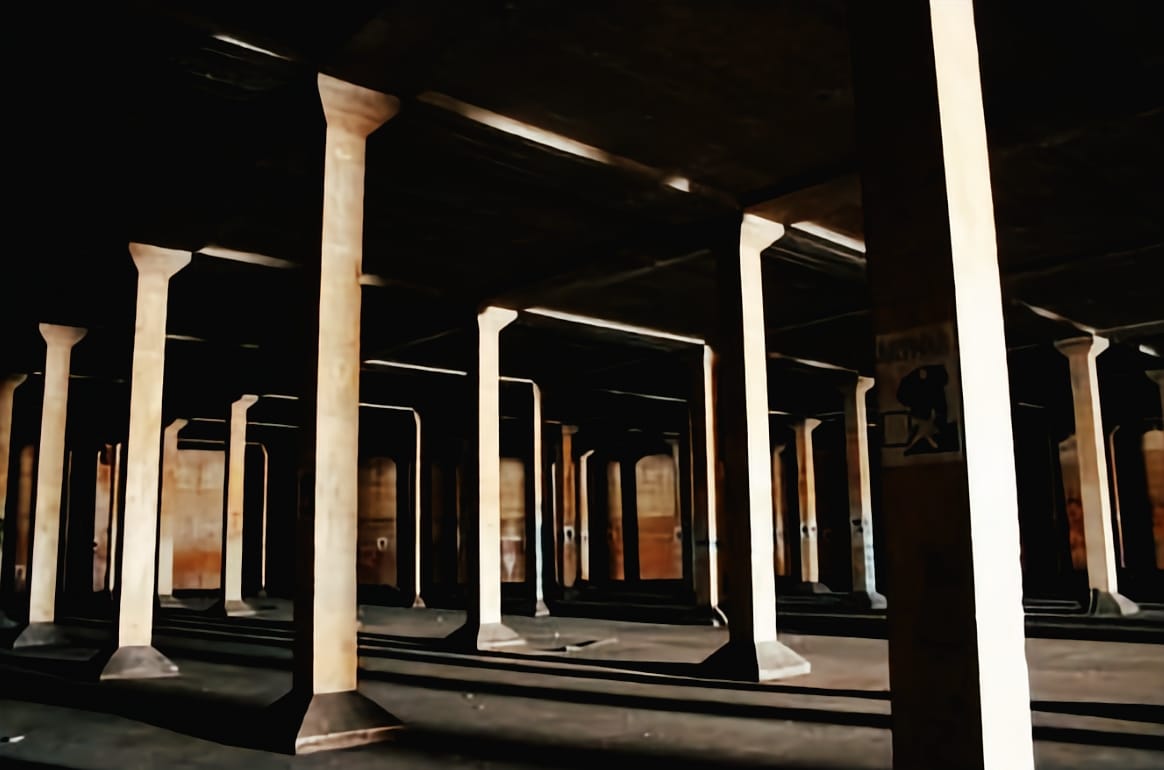
Pezzner: I think people should know more about Deep Listening. It's a concept that was pioneered by Pauline Oliveros, who coined the term around the late '80s when she recorded the album Deep Listening with Stuart Dempster and Panaiotis. The album is an ambient masterpiece in its own right—recorded in a 14 foot cistern in Port Townsend, Washington. They collaborated using accordion, trombone, didgeridoo, their voices and various hand percussion with the aid of the cistern's unusual 45-second reverberation time. The recording itself is an exploration of acoustic space, improvisation and music awareness and it invites the listener to listen deeply to sound and its decay. Later, she started running Deep Listening workshops and teachings that included meditative practices centered around the act of listening itself both internally and externally, through sonic meditation, improvisation and self awareness.
I love this concept because it involves bringing yourself closer to the differentiation between the involuntary nature of just "hearing", and the conscious intention of connecting to the world around you through the nuances within your space and beyond it and within yourself. Centering yourself in this way can bring clarity, creativity, empathy and just a better connection to yourself and the world around you.
Run-Out Groove
Thanks for reading this issue of Talk Of The Tonearm and discovering all this great music with us. Questions, comments, or marching orders? I encourage you to send them our way. And if you have a friend as fascinated with Oscar Neimeyer as I am, please forward this newsletter to them. Or even if your friend isn't a fan of oddball sci-fi architecture, send it on regardless. That's the best means for supporting what we do here.
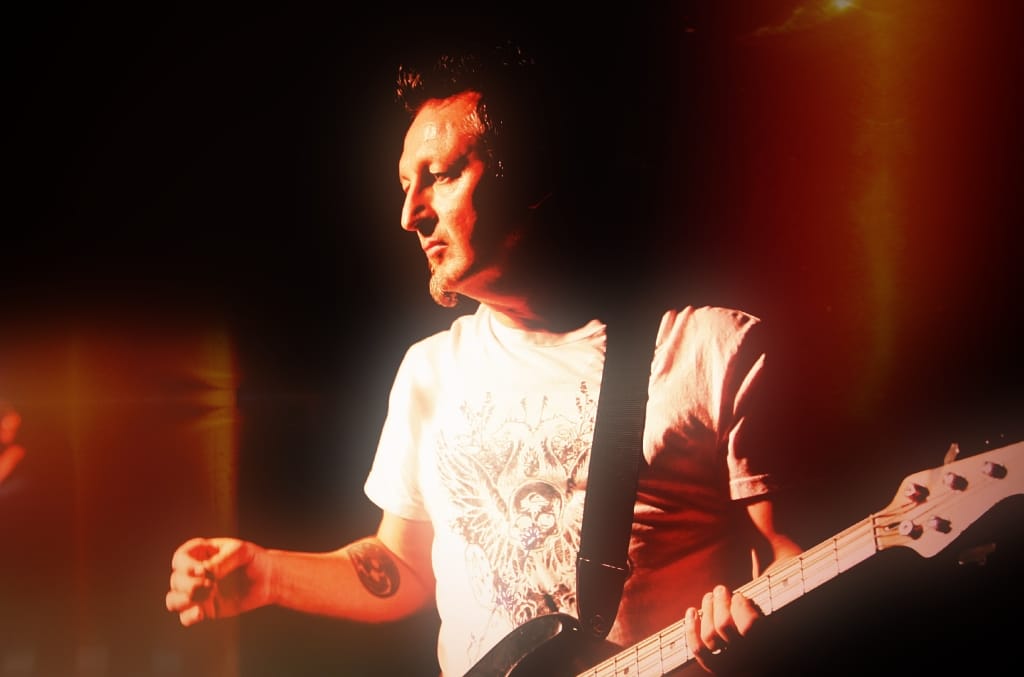
I'd also like to give a shout to Dave Allen, the formidable bass-slinger for the likes of Gang Of Four and Shriekback. He passed away this weekend, and though we weren't that close, I did consider him a friend, a mentor, and one of the smartest (and funniest) people I knew. I'll write something about him once I have time to gather my thoughts and feelings. I've got fun stories. In the meantime, know that his spine was indeed the bassline.
Connect with The Tonearm:


Comments