


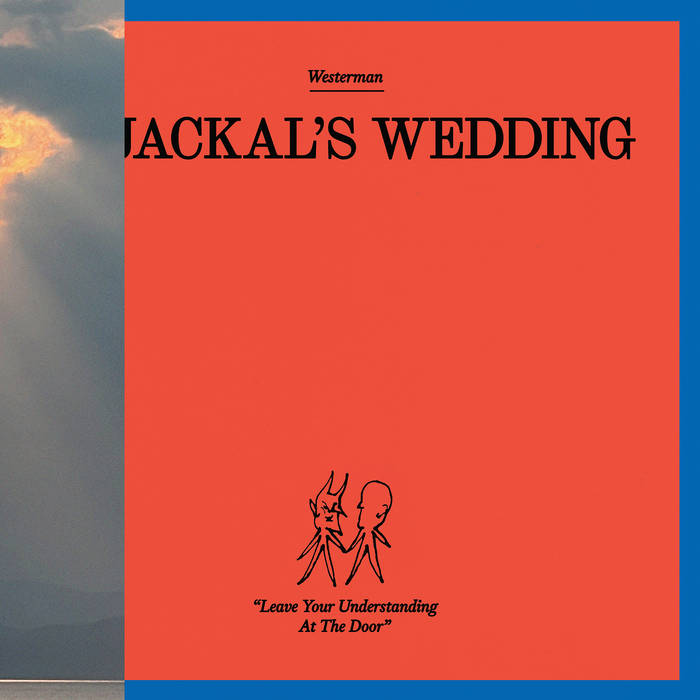
Westerman recorded A Jackal's Wedding over the course of five weeks on the Greek island of Hydra with producer Marta Salogni (Björk, the xx, Sampha) in the Old Carpet Factory. The space is a recording studio and artist residency in an 18th-century mansion. And it seems fitting that it was recorded on an island at the edge of the Greek landmass, because a strong sense of transience runs through the record. Correlating with Westerman leaving London in 2020, it's as if he glances back at time as it was, while accepting a continual movement forward into the unknown. There is also an acceptance of the 'now' in his lyrics, but his sound and lyrics are still culled from the idea of moving forward from the past. The album produces many moments of acute tension while weaving in delicate tones and a fluidity of song composition. It's as if A Jackal's Wedding rejects the staticness of being and the surrogate definitions of how society tells us what to be or how to act. At the same time, the speaker of these songs continuously holds a mirror up to his face, watches time lineate his identity, and tells this story so completely and honestly.
The order of the songs on A Jackal's Wedding feels progressive. The album begins with wedding bells in "S. Machine," then moves to trumpet-like sounds and organs, followed by sparse, stabby vocals, claiming a ritualistic space. It feels like the beginning of a longer piece . . . and it is! In the last song, "You Are Indelibly Where I Sleep," there are waning, slow pulsing sounds, sparse keys, lingering pitches, low-toned hums, and no lyrics. It's wild because it feels like the song is pushing into this static, a minimalised movement. It’s like a continuous buzz where change is limited, though it mirrors the word 'indelibly,' which is impossible to remove or permanent. And in between the beginning and the end, Westerman is playing with the ideas of movement and permanence, and the contradictory feelings and actions that come with that through lyricism and sound on A Jackal's Wedding. This contrast of movement and permanence in the mind, body, and sound can be seen in many songs, though I’ll point out lyrics in "Adriatic." When he sings "My Adriatic" and "My Adriatic / Now?" There is a declarative possession of the Adriatic Sea, a sense of home, and of longing, but in movement, the singer questions this stability and this certainty at the end of the song. And with "All I have is trying to age without indifference," which is an amazing line, there is a reach for some sort of stability or certainty.
It’s this uncertainty that lives beautifully in A Jackal’s wedding. There are times I yearn for a chorus, or some sort of relief from the tension built in a song, and a chorus doesn’t come. Or there is one chorus, and when you might expect another, there is an unpredicted sound or moment. Each instrument, including the vocals, has its own space to be part of the whole, whether it’s a timely guitar upstroke or keys carrying melody. All the sonic structures push and pull, continuously elevating the album's tension. Along with the occasional heart-wrenching harmonies that give some songs an exceptional release, this album weighs heavily on the ideas of confronting what change is and of imbuing the self with honesty. And what does it mean to be open to the things we can’t control, musically, spiritually, or in any way you can think of? And what does it really mean to be honest with how you feel moment to moment? What does it mean to walk into a room and be open to engage with someone you don’t know, or an instrument you haven’t played, and just follow the conversation without expectations? It may be difficult, especially amid the movement and chaos of everything else in a person’s life. I think A Jackal’s Wedding holistically attacks these questions.
In my interview with Westerman, we talked about the importance of space and texture on the shape of sound, the power of ambiguity in song lyrics, and the joy of recording an album in an Ottoman-era carpet factory. This interview has been edited for length and clarity.
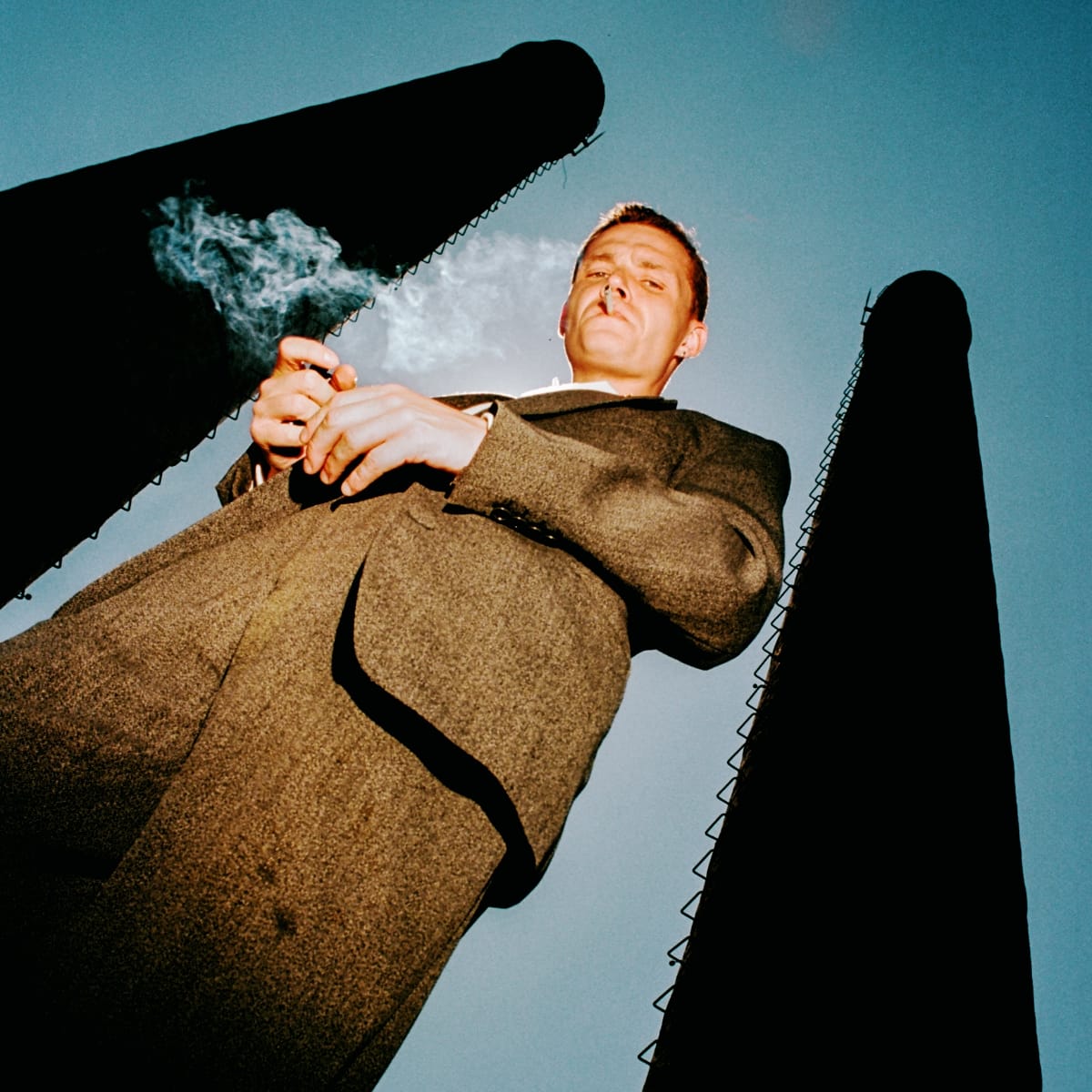
Jonah: You live in Milan now, but before, you moved from London to Athens, Greece. How do you think these relocations affect your music?
Will: I think wherever you decide to put yourself, unfamiliarity is pretty good for creativity in many ways. Your brain works differently, and in the process of making connections and trying to understand, you're more alert to what's going on around you. That definitely made a big difference in how A Jackal's Wedding turned out. Being away from anything I really understood in terms of scene or context probably allowed me to work in a way that's out of context. There's no kind of comparison with what other people are doing, because I don't really know other people, particularly in the same way as I did when I was back home in London. I think subconsciously, all of that stuff plays into the way that ideas are coming to you and the way that they're being filtered. I think it made a big difference.
Jonah: And with the Jackal's Wedding, you were in a five-week resident program in the Greek island, Hydra? Or how did that work?
Will: It's a residential studio. I was searching for somewhere to record in Greece outside of Athens. As I said, when making records, I like being in a place I don't really know. Trying to create an environment in a place is more difficult if you are somewhere familiar. It's also easier to do something else when it gets difficult if you have an infrastructure of things you like to do, people to see, and places to go. If you go somewhere you don't know, the whole reason for being there is to make a record. And so you live in that environment, and it starts to become quite holistic.
Jonah: How'd you find that studio on Hydra?
Will: I'd never been to Hydra before. I was trying to find recording studios in Greece outside of Athens, and there aren't that many. There was one on Santorini, a glitzy studio that didn't really feel like the speed of what we were going do. And then there was one on Crete as well, which I thought looked cool, but I couldn't work out whether it was still in operation. So that left the Old Carpet Factory, and yeah, it's a really captivating space. It's a Venetian building that, during the Ottoman era, was used to make eastern-style rugs. Now it's a residential studio.
Jonah: Did you have most of your team together, like your producer, Marta Salogni?
Will: Yeah, I'd been touring in the US in support of the previous record, An Inbuilt Fault, and the band I was playing with came over, but not until about halfway through the first week. It was Marta and I trying to create a rough template for what the record would be, and just working out the space itself. We didn't bring any instruments. We just decided to use what was there. That was another principle, how I wanted to lean into this idea of limitation. There are instruments at the Old Carpet Factory, and I just thought that if we just use what's there, it will immediately give context to how we work.
Then Stella Mozgawa, who I didn't know, came in for a week. She drums in Warpaint and has done stuff with Kurt Vile. Amazing drummer. At that point, we had the basis for the guitar or piano parts we were doing. And then it was building things out with the band. So Ben Reed came and played bass, and Joe McGrail came and added extra keys. Joe's a much better keys player than me, so a lot of the things I was playing badly, Joe replayed, embellished, and made richer.
Jonah: Were you nervous at all about not going in there with any of your own instruments?
Will: Not really, because Marta and I had spoken quite extensively before we got there about the aesthetic qualities I wanted to touch on. I had an idea of pushing contrast by having things that sound quite heavy with others that sound much brighter at the same time. You then have the confines of the instruments that are there, and you find ways to use them to touch on those things.
I think, particularly with VSTs and the electronic music textural stuff, it can get so deep that you almost lock yourself up because of the sheer amount of facilities. And so it was a reaction to that, really. Rabbit holes where you think what you are doing is really engaging—it can stop you working. And so it was a way to try to combat that and make the best use of the time we had.
Jonah: It's interesting you're thinking about the heavy sounds and the brighter sounds, and I feel like that stands out on this record. Spacing also seems important to how the songs are composed, like allowing the instruments to breathe.
Will: One of the things that Marta understands like no one else that I've worked with is how the space itself becomes an instrument. The placement of the microphones and the way you move around the space became something we played around with quite a lot. In a song like "Nevermind," for example, I'm moving around the room to different microphones to try to create this sense of movement within the space itself. And there was this really high ceiling in the main tracking room we were using. It's like an 18-foot ceiling in this old mansion. There's a uniqueness to the space around the drums because we set up in there.
Again, it's limiting the possibilities to make the touchstones of the record; they're not afterthoughts, they're actually embracing the actual sound of where the music's being made. I think that's maybe something that people don't think about or do that much in music anymore because of the capacity to shape things in so many ways. It felt exciting, in a way, to take away that optionality and embrace what the actual sounds were.
Jonah: It keeps coming up when artists feel like there's intentionality, letting go is really important, or it could be. It could help with growth or exploration.
Will: Yeah, for sure. What I like most about records is the mistakes, the things that have happened in real time, which weren't planned. That's where the magic is: it's never perfect or finished, because there's no template. It's a creative act. Surrendering to those things and allowing them to be part of the story adds context and creates a story around it without you having to manufacture it, if you allow it to happen.
Jonah: How do you think about texture and rhythm?
Will: The way that I play the guitar has a rhythmic imprint already there. I think with texture, it's not so much that I think so much about specific sounds, like in terms of specific instruments and the textures of those instruments and the way that they're treated, but more that I have an overarching idea in my head. I can see how the shape of the sound should be in an idealized way. Then it's about following the intuition to make the music feel that way. It doesn't need to be exactly what I'd imagined. It's more about capturing the emotional feeling I think the piece of music should have. And then the incidentals of that can change, and I like being open to that idea. I think it's more about how the overall kind of combination of textures makes something feel.
Jonah: I wanted to ask you a couple of questions about lyrics. One of them is from "Nature of a Language." A couple of lines stood out to me. One was, "Alone, the more we the more we grow alone / the more it feels alright alone." Another was, "Alone, the more I've grown alone, / the more it suits me fine." Let me ask you first: what's the process for writing your lyrics?
Will: I tend to write more lyrics than I ever present and then whittle them down to what I think the actual point is. I try to get rid of the excess of what I'm conveying. I think, with this record, there's more repetition in the lyrics because sometimes I think, "Am I just writing another verse or another line?" Just because it needs to be different from this line, and like, why does it need to be different? Maybe you can just repeat the same line. But I think the way that I write lyrics is normally sub-verbal. Initially, I tend to get a kind of an image. Just from speaking gibberish, over music, and then, or multiple images. And then I will try to wade through and find the one that I think is actually what I'm trying to emote, or that gives a kind of visual guideline or impression, and build from there.
I guess if you are openly trying to reflect the atmosphere we're all kind of living in, in terms of a shared experience, we're living through a period of fracturing; it does feel that way in how people are interacting. The way our intentions are all fraying, and the way everybody's engaging with information is, more or less, a collective 'maybe.' That song is about a few different things, but I think that lyric in "Nature of a Language" is speaking to the feeling of getting further away in this climate of ultra-connectivity, which is a strange paradox.
Jonah: When I listen to the record, it feels like it's strong with imagery. I imagine driving at dusk or dancing with a partner in the kitchen.
Will: When I write, I like to suggest things without being super specific. There's no right or wrong with any of this stuff, of course, but I like leaving enough gaps for people to complete the image themselves and what it means to them. My job's kind of already done in terms of whittling down how I was feeling and presenting something to be shared.
I tend to like music that's open-ended and doesn't provide all the narrative. I think that's why I write it that way, where it's clear, but it's also not so clear, at the same time. That allows the listener to paint their own pictures and apply them to how they're feeling. That's what the conversation is for me.
Check out more like this:
 Meredith Hobbs Coons
 Jonah Evans


Comments