


Welcome, once again, to Sunday's 'that's my fun day' edition of the Talk Of The Tonearm newsletter. Our writers continue to deliver the goods (no surprise there, as our writers are amazing), and my job is to give you a handy round-up of those goods. I suppose if there's a theme, it's music that mixes and matches, but we like that kind of stuff so much here at The Tonearm HQ that this particular theme goes without saying. I say just roll with it, dig deeply into the linked interviews, and give all the recommendations a spin. There's a lot, and it's all glorious. Enjoy!
Queued Up
Wild at Heart — Brainwasher's Okie Psychedelia
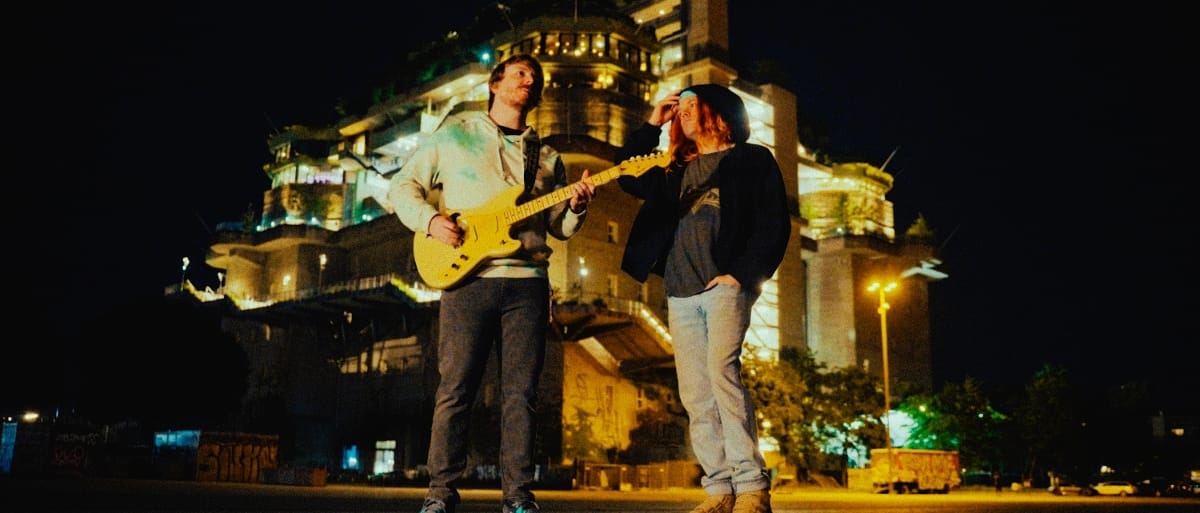
Jonah Evans phoned up the two members of Brainwasher on the Zoom machine, a pair of ceaselessly cool fellows who spend a lot of time playing and touring with a band you might know called The Flaming Lips. Brainwasher appeared together on Jonah's screen, "almost elbow to elbow" with "boisterous but calm vibes." It's fitting that the two shared the view-space equally for the interview, as there's a lot of talk about throwing ego out the door. Tommy and Matt see themselves on equal footing in their friendship and working relationship, an ethos that opened up the confidence to put some crazy ideas on (digital) tape. You'll hear those mixed up in the psychedelic/trip-hop/indie rock tornado of their terrific new album, 39 Lightyears from Heaven. This goal of ego-escape also seems to materialize in the vulnerability of the pair's songwriting process and their lifelong love affair with Oklahoma City. As Tommy proudly says about the OKC, "Any beaten path is a legitimate sort of thing over here."
Organs in the Abyss — Hampus Lindwall Rewires Sacred Tradition
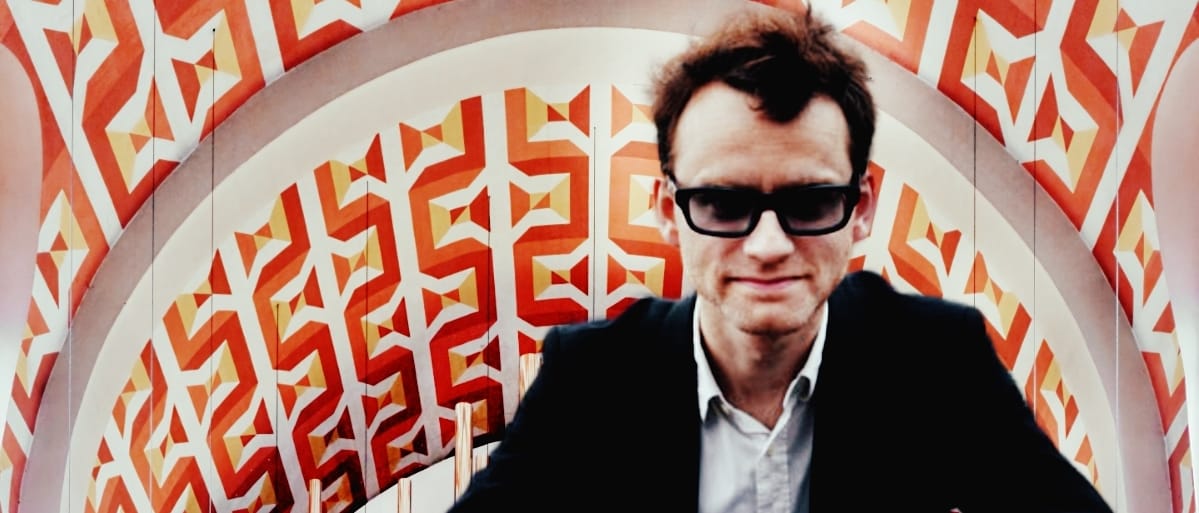
If you're into checking out beautiful old churches as you travel the world's cities, you might have popped into the Church of Saint-Esprit in Paris. Though not an ancient church by European standards, it is a sight to behold, both inside and out. Its pipe organ has a history, too, previously commandeered by the legendary organist Jeanne Demessieux (the first female organist to sign a record contract) for 29 years. Would you be surprised to learn that the current resident organist of the Church of Saint-Esprit waxes poetic—sometimes in a single sentence—about Steve Vai, German techno, and Iannis Xenakis? That's Hampus Lindwall. He plays in one of the most traditional organist settings, but is far from a traditional organist. Take, for example, his new album, Brace For Impact. The opening (title) track features strangely detuned and ominously atmospheric pipe organ textures, but also crunching feedback riffs supplied by Stephen O'Malley of Sun O))). As we would never say in church, this is some serious shit. Lawrence Peryer digs into the details in a comprehensive interview with Lindwall, and you are invited to attend the service.
John McLaughlin's Shakti Legacy — From Zakir Hussain to 'Mind Explosion'
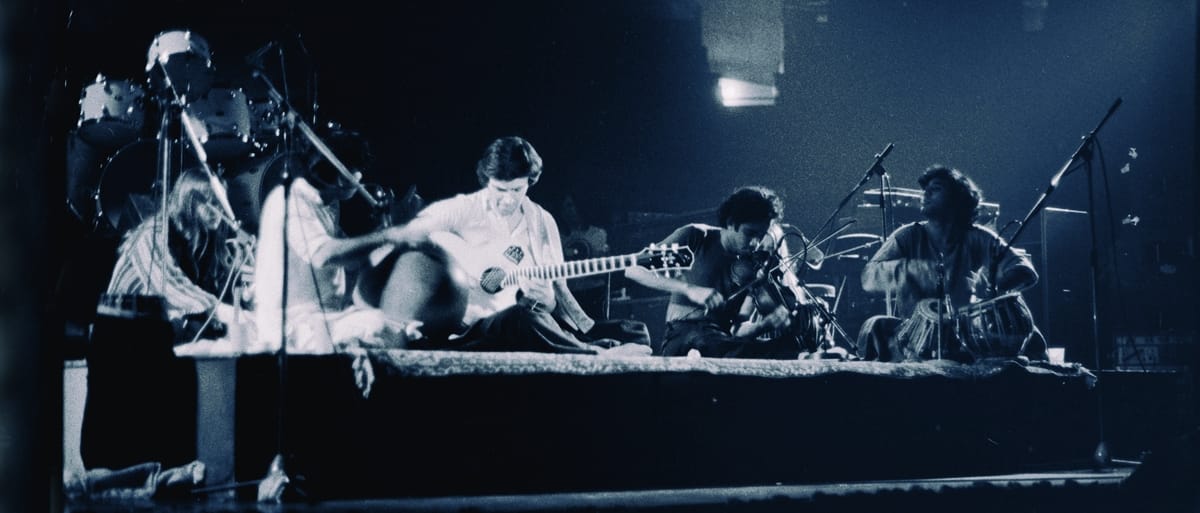
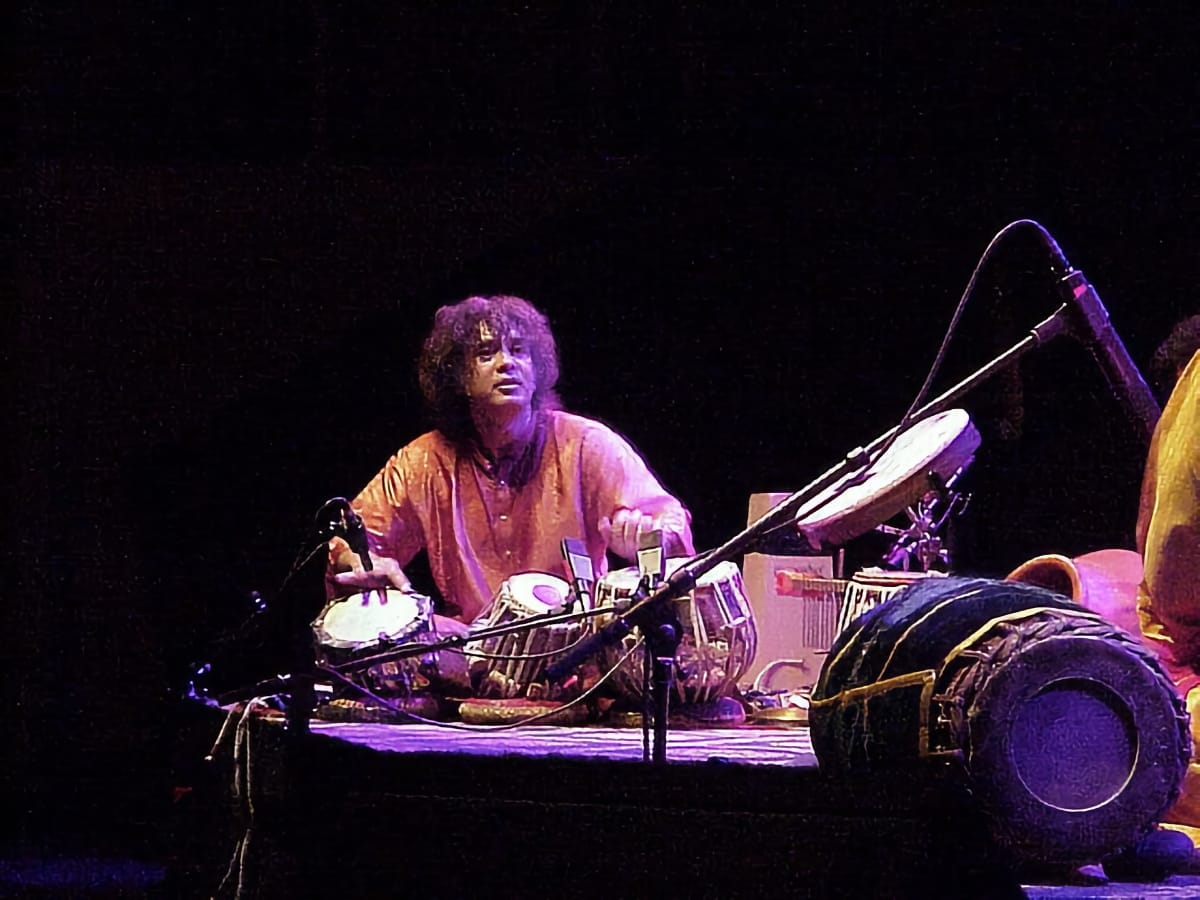
When Bill Kopp pitched me on potential article ideas, he casually threw in that he could talk to John McLaughlin about Shakti if I'd like. Uh . . . YES. For those not familiar, Shakti was the groundbreaking mid-70s combo that brought together renowned Indian musicians to collaborate with John McLaughlin's guitar mastery. McLaughlin is just part of the combo here—he would likely be the first to bristle at the suggestion that they're accompanying him rather than the other way around. Though McLaughlin admits that, like many of his era, George Harrison's first sitar experiments probably led him to Indian music, he was immediately all in. McLaughlin was drawn to the challenge of improvising in unfamiliar time signatures, a technique the Indian masters took to naturally, but which, for the guitarist, "has been my personal fetish since I was very young. And this continues to this day; I can't help it." 'This day' includes the newly released live set, Mind Explosion, which captures Shakti on their 50th anniversary tour in 2023. Revered tabla wizard and foundational Shakti member Zakir Hussain died within a year of the performance, so the set serves as a beautiful, rousing tribute. It's been played through The Tonearm office speakers at least a few times this week.
Generational 'Drift' — Wes Corbett's Acoustic Dream Band
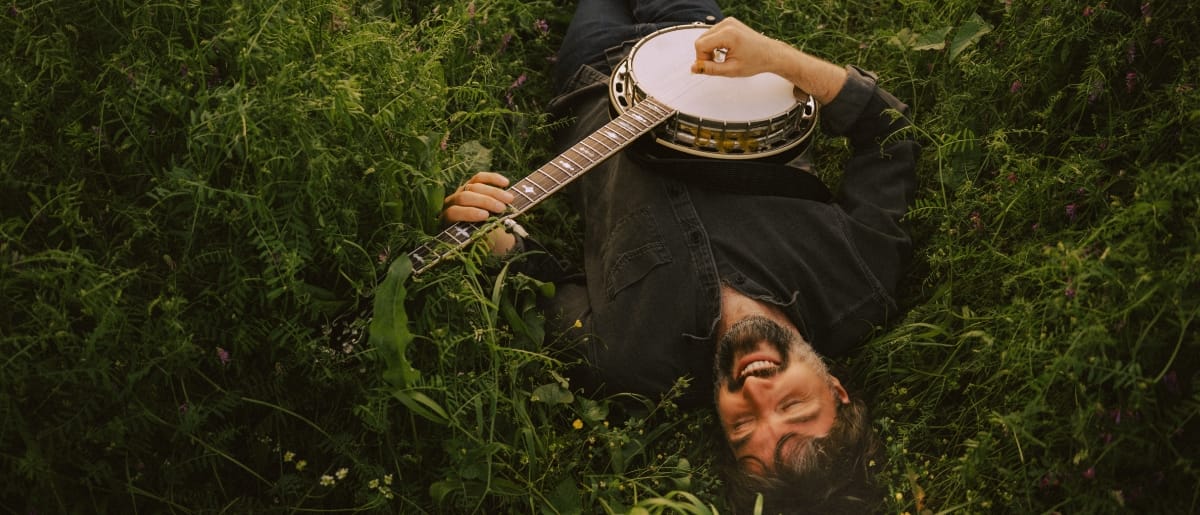
The cliché is "don't meet your heroes." I've met a few of mine, and they've disappointed and impressed in equal measure (it's important to remember we're all just people with our good and bad days). Acclaimed banjoist Wes Corbett took the bold step of gathering a few of his heroes on his new album, Drift. One track alone, "Eagle Harbor," features Corbett playing alongside Darol Anger, Todd Phillips, Sam Bush, and Chris Eldridge—names that should be familiar to any modern bluesgrass aficionado. Sam Bradley asked about the logistics of assembling these heavyweight talents, and Corbett is quick to stress the tight community that exists within American roots music. "I guess I'm so lucky to call everyone who played on this record a friend." To paraphrase an Andor quote that was heard a lot over this weekend, if you're playing bluegrass, you have friends everywhere.
Harrison Argatoff Wrestles with the Spirit of the Saxophone
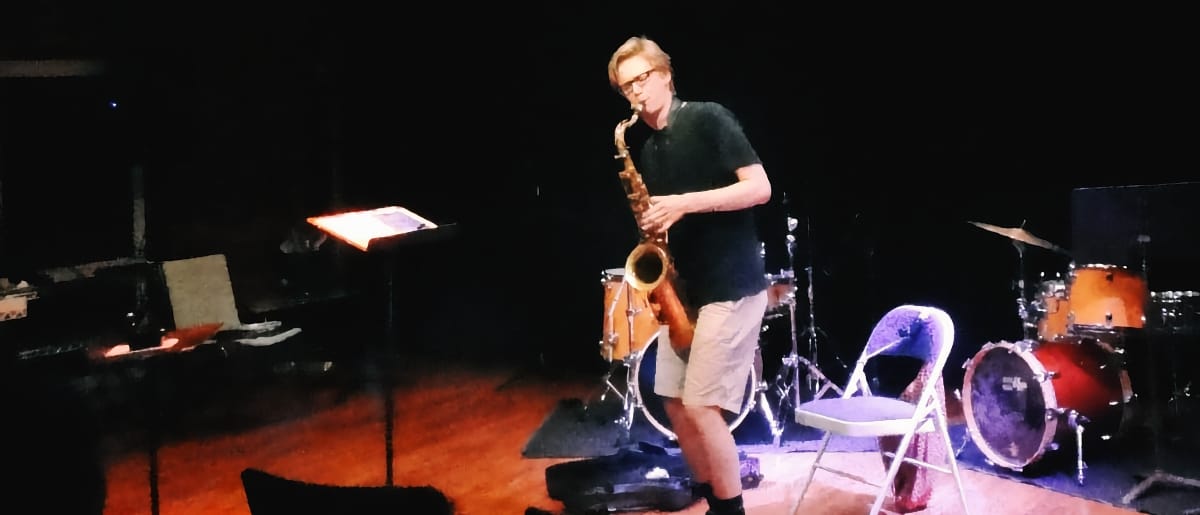
Toronto-based saxophonist Harrison Argatoff explains to Lawrence Peryer that he's rarely inspired to compose a song based on a mental image or a nonmusical idea. It's not like he watches a movie and ends up writing a song about it. Argatoff composes from a musical 'seed' and it's only afterward that he makes "connections between it and nonmusical elements in my life, like feelings, memories, places, and/or people." Perhaps that's what makes "Stars, Engines" remarkable enough that Argatoff named his album, performed as part of the quartet Valley Voice, after it. Argatoff related a memory his grandmother recalled of stargazing as trains rumbled past, and, for once, Argatoff was inspired to set music to his interpretation of the described moment. For the most part, though, this is classic 'concept album without a concept'—where threads, connections, and meanings are placed on songs after they've been recorded. Often, those are my favorite albums. Can I also just mention that Argatoff is my doppelgänger in the above photo? The most significant difference is that you do not want to hear me playing saxophone.
The Hit Parade
- Tortoise is happily a concern again with a new album on the way, as well as multiple live shows announced. It's an excellent time for the band's guitarist, Jeff Parker, to join host Lawrence Peryer on the Spotlight On podcast. That said, Parker is known for so much more than just Tortoise—his solo and side projects are manyfold—and the main topic of conversation is the reissue of his seminal 2016 album The New Breed. Though, of course, there is Tortoise talk, as well as tales of Parker's formative experiences and creative philosophy. Tune in.
- I was recently asked what my five 'desert island discs' would be, and my first selection came quickly. I cheated, though—I chose a compact disc I once owned that compiled Big Star's #1 Record and Radio City on a single platter. It might surprise you that Big Star's power pop is my jam, but I'm also drawn to the fragility of it, a feeling sometimes obscured by the inescapable hooks and occasional bombast. You know who else is good at this mix? Singer/songwriter John Brodeur and his project Bird Streets (which I just noticed has the same initials as the aforementioned group, hmm). Bird Streets has a new album, The Escape Artist, and unsurprisingly, it's very, very good—all hooks and subtle fragility. As if it needs more cred, the album (like Bird Streets' first—this is number three) is partly a collaboration with Jason Falkner, previously known for his bands Jellyfish and the Three O'Clock. Need more? Brodeur once guested on the Spotlight On podcast, and I think it's one of the more moving and, yes, fragile (as in vulnerable) conversations (both from interviewer and interviewee) that we've hosted.
- Article idea: bands that have fled Russia due to the state's current atrocities that have managed to keep operating and producing music. Though not technically from Russia, СОЮЗ (aka SOYUZ) left Belarus for Warsaw due to the country's support and involvement in the invasion of Ukraine. In an additional move of symbolic but incredibly powerful defiance, the lyrics of the band's music were changed from Russian to traditional Belarusian, a language no longer favored in their homeland by the current regime. СОЮЗ's new album, Krok, translates as "step" in Belarusian, and that's quite the understatement when referring to this group's giant step into uncertainty. However, as if suggesting that a more open world is the way forward, the initial sessions for Krok were recorded in São Paulo with guest features from a medley of prominent Brazilian musicians. And so the album is worldly and hopeful in nature, blending delicate South American rhythms and instrumentation with Belarusian verses and textural, symphonic elements. Krok is and sounds ambitious (as well as consistently gorgeous), voicing the admirable ambition of СОЮЗ, also found in the story of other bands likewise creating art under self-imposed exile.
- Short Bits: Resident Advisor's Ammar Kalia on How Loudness Became a Creative Tool. • Friend of The Tonearm Kory Reeder has a new album, Self Portrait As A Meditation On Something Else, which is the third in his series of "fixed-media soundscape compositions built from deeply personal relationships with place." • Our writer Chaim O'Brien-Blumenthal tells us about his experience at Cleveland's DEVOtional get-together in his latest newsletter. • Bandcamp Daily's Erick Bradshaw lays down a history of a label that was influential to teenage me, Homestead Records. • The New York Times's Hank Shteamer on the making of D’Angelo's masterpiece, Voodoo. (gift link) • LP told me this week that his goal as an interviewer is to become something like the lovechild of Dick Cavett and Terry Gross. • David Byrne spotted. • The Unpresidented Brass Band is responsible for this week's top jam.
Deep Cuts
In his interview with The Tonearm, Hampus Lindwall was asked about other organists who are still shaking up an instrument that has roots going back to the third century BC. He was full of recommendations.
[I'll start] in Sweden with Ellen Arkbro. She released a record called For Organ and Brass, which is really incredible. She came to the organ not because she was interested in the organ; she came to the organ because she was interested in the tuning, and these baroque organs had this special temperament. [There's] also Kali Malone. Kara-Lis Coverdale and Sarah Davachi. In Berlin—Sollmann Sprenger, who's built a more drone-like organ [with] bass pipes that are based on loudspeakers from techno clubs. Then there is a collective called Gamut Inc., also in Berlin, who are working with organs automated with MIDI. [And] there is Fujita from Japan, who has a very ritualized way of playing the organs. There are just so many people doing exciting things now.
Run-Out Groove
Thank you, friends (which is the title of a song on Big Star's troubled third album). I hope this newsletter gave you lots of things to click on and pursue in your quest for cultural enjoyment. Glad to help. If you know anyone else on a similar quest, please forward this newsletter to them or perhaps copy and post the 'View in browser' link at the top in your social media feeder. That's the kind of move that helps us make moves.
Likewise, get in touch to tell me what you think and if you have any ideas or suggestions for future issues of this newsletter or The Tonearm in general. That includes the podcast. Reply to this email or slide into the contact zone.
Let's tackle the week ahead like we're champs at it. The bar is low, but our aims are high. And be sure to give those kings the mental boot—Sayonara! (Be sure to click the Dick Cavett link above for additional context.) I'll see you next week. 🚀
Connect with The Tonearm:


Comments