


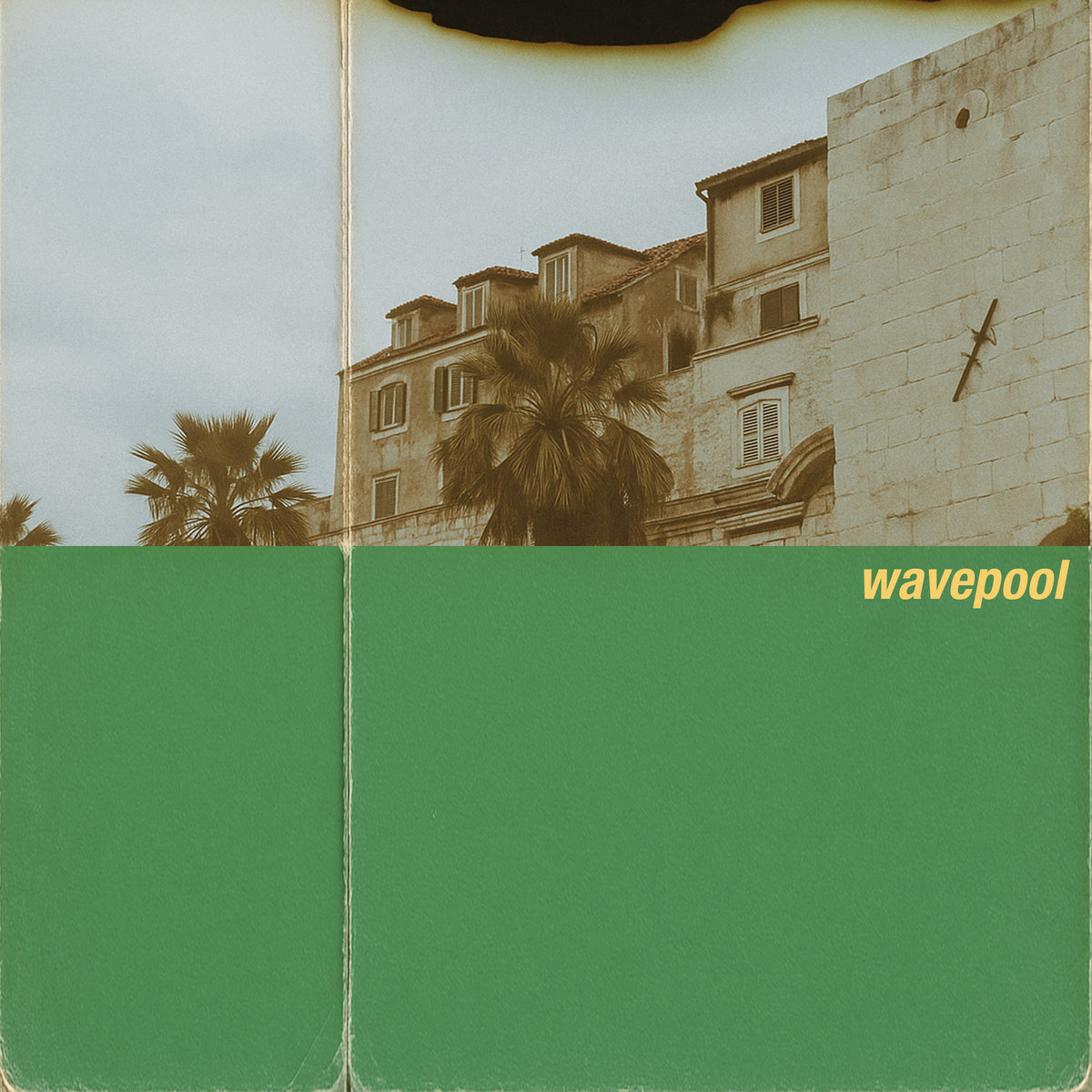
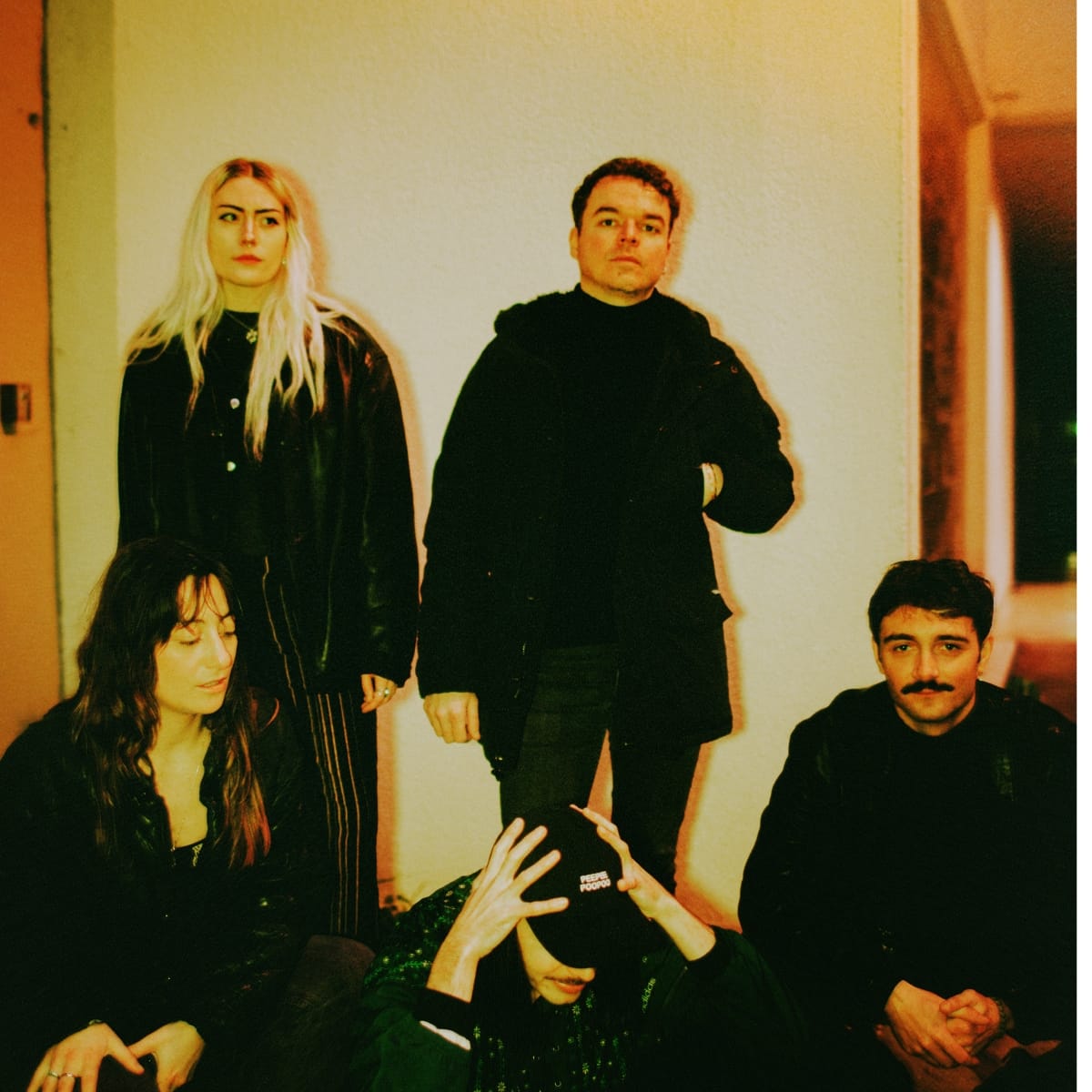
The debut EP Crayola by the Rouen-based band wavepool is full of distinct luster, love, and locution. Released on Howlin' Banana Records and Luik Music, wavepool's Crayola is an EP I'm very happy to have been introduced to. And it makes me wonder, how can we discover more bands and music outside of the exchange of emails among writers, labels, managers, and all the industry folks? I know Spotify is on the outs, and I was sincerely tired of it in 2024 and 2025 for its regurgitation of artists I already loved and knew, while sometimes introducing me to big bands I couldn't get into and that didn't feel connected to my wide tastes. And being introduced to this awesome band, whom I know I would go see live if they were playing in my town, and whose merch I'm eager to buy, makes me want the long tail of music to come back and be a prominent way to discover music.
wavepool made this pretty awesome playlist on Spotify called "wavepool core." It's a lovely segue from their influences to the band, and clearly conceptualizes their relationship to music they may be related to in certain sonic ways. It's 49 songs and three hours long. There are acts on there that I love and listened to a bunch, such as Andy Shauf, Duster, Beach House, Pinegrove, Crumb, Grouper, the band themselves, and more. Their songs are interwoven into the playlist, and I love it because sometimes it's hard to find bands that we will love. Also, the playlist is beautifully curated. And coming from Rouen, France, population of just over 100,000, a city that understandably doesn't get the attention of bigger cities like Paris, how can I find out about a band that I love, especially in the indie scene? How can we find out about the new bands that the algorithm fatefully does not feed us? While we could say wavepool is related to these other bands, they still have their own sound, which weaves slacker rock, hazy shoegaze, and dream pop together.
In the Crayola EP's "Assumptions," there is a pleasant, drifting sensation from the dragging guitars and drums, with tactfully understated vocals from Carine, which induces free space for the mind to wander. It's an interesting feeling when thinking of the lyrics, such as in the first verse: "saw a guy with a dog tattoo on his skull / probably not care much about pain / and he certainly never will / he's at the top of the food chain." This visage of daydreaming while making actual assumptions is prevalent in the sensation of sound and in the lyrics, which, for me, makes it fun to see the relationships of how some of wavepool's craft can work. Some of their songs are more inward-facing, such as "Tiny Cowboy," where Carine sings, "Do what you can now / So please don't tell me you don't believe me / 'Cause I feel alone." A little tidbit is that, every time she sings "alone," it's easily mistaken for the word "love." Maybe that's just my Freudian whatever—even so, it shows how that verse pops off on calls for this lingering sense. I would say that the track's chorus also skims, just barely, this touch of yacht rock, being smooth, and I can feel the wind on my skin.
The EP is always in its feels, and in an awesome way, expanding on the ideas of their songs, like being "in thrall," like living in a "blurry world," like imagining the safety of a "shell." Carine touches on this a little bit in the interview. Their slacker rock/shoegaze/dream pop vibes are real, observant, honest, and purveyed on a beautiful, open sonic landscape from this Rouen-based band, where the weather is bad, and the pubs are full.
Jonah Evans: Tell me what it's like living in Rouen, France.
Maryan: It's warm. It's in Normandy. It's very human-sized, so you don't have to take the bus to travel across the city. You can do everything on foot. That's the thing I like about it. And I think it's the city with the most bars per inhabitant in France. The weather is quite terrible. It's always gray skies and lots of rain. So we go to the bar to meet all the new people and also musicians. That's a good thing.
Jonah: Because when it rains, when the weather's bad, you just go drink.
Carine: Yeah, exactly. To forget about it.
Jonah: What's the process of writing songs like for the band?
Maryan: I make most of the music in my apartment, and then I propose it to the band, and then they basically come up with vocal lines that we can rehearse. It's either they come to my place, and we record some demos with the vocals, or we just try it straight at the rehearsals, and then we go from there and build the song.
Jonah: So, sometimes you'll just be in the rehearsal space and start playing some licks or something like that, or singing.
Maryan: Like that, or for the music, I'll send a bunch of videos of guitar and bass parts, and then some kind of, like, tutorial, so they can move parts, and we can go very quick from not having a lot of songs to having a lot to play.
Jonah: When you started, did you envision yourself being a shoegaze band?
Maryan: The musical direction came from a few demos I made three or four years ago. They were much heavier, still shoegazy, but much less melodic. So, there's another bandmate, and her name is Thalie, and she plays guitar now with me in the band. I made her listen to this, and she really loved it. So I tried to stay on that sound, maybe try something else. Everything was like in an open chord, it wasn't tuned the same way. We made a bunch of songs using these open chords, so everything has the same color, and that's how it came together.
Jonah: I like the intentional and vivid imagery of "Assumptions." The song also feels like I could be strolling through different parts of a city or town, observing the little things happening in the world. It's also like a slight irony, humor, and nihilism or fatalism laced into the song. What's your guys' relationship to some of these ideas when you think about songwriting musically and lyrically?
Carine: I wanted to capture the small moments that feel bigger than they look. And I like mixing clear images with a bit of irony, and I see life as weird energy. It's actually the only song I wrote this way. It's like all the other ones are more literal, and I use more metaphors and stuff like that. But this one is like the little UFO in the album.
Jonah: The alien of lyrics.
Carine: Yeah.
Jonah: You knew it was different, but do you usually write in metaphor? Is that the standard kind of vibe?
Carine: It really depends. Sometimes, I have a lot of notes that I write. I write constantly, like when I'm taking the bus or just sitting in bed. And then, those feelings and those emotions, I try to put them into a song. With "Assumptions," I was trying to capture that kind of weird feeling that you can get whenever you're looking around and trying to imagine what the lives of other people are like.
Jonah: What does self-discovery mean to you? I think there's something about that in the lyrics of "Tiny Cowboy."
Carine: Yeah, "Tiny Cowboy" is about a little cowboy who's trying to make friends. He's struggling because he doesn't know how to maintain proper relationships, because he doesn't really know who he is. And then he figures out that he just enjoys being by himself. But self-discovery to me means noticing who you are step by step and accepting it and laughing about it. And trying to be less chaotic the next time you do things right.
Jonah: Story of my life. What is the relationship between memory and the Crayola EP?
Carine: I think I wrote all the lyrics as if they all came from different chapters of my life that I remember more or less. Not perfectly, because I feel memories change over time. I think I wanted the songs to be a mix of real things, blurry things, and things that probably only exist in my mind now. I think it's a mix of all of that.
Jonah: What kind of experience do you have when you play your music live? What does it feel like for the band?
Maryan: Maybe Carine has a different perception, but I don't sing a lot, so I spend a lot of time in the neck of my guitar or in my hair. And since it's the music I wrote in my apartment, usually at night in a very calm environment, it's really interesting to see how people react to it. It's always a really weird feeling because our music can be quite intense. I don't know how to describe it, but it's really cool. I also love performing our songs because they're quite personal. We are there to feel them come to life and show them to everyone, which is really cool. It's just a complex feeling, but I really like it.
Carine: I feel a lot of stress before going on stage, and I get very nervous, but as soon as I get on stage, I feel happy. I like to share the energy with the public. I love giving people emotions, whether good or bad. It's fun to share.
Check out more like this:
 Meredith Hobbs Coons
 Jonah Evans


Comments