


Ahoy, reader fam. I'm Michael, managing editor of The Tonearm and your weekly guide through the site's nooks and crannies via the Talk Of The Tonearm newsletter. I've got a lot to say and I'm ready to say it so let's wave our magic wands and summon this week's curiosities. Enjoy!
Surface Noise
 Steven Garnett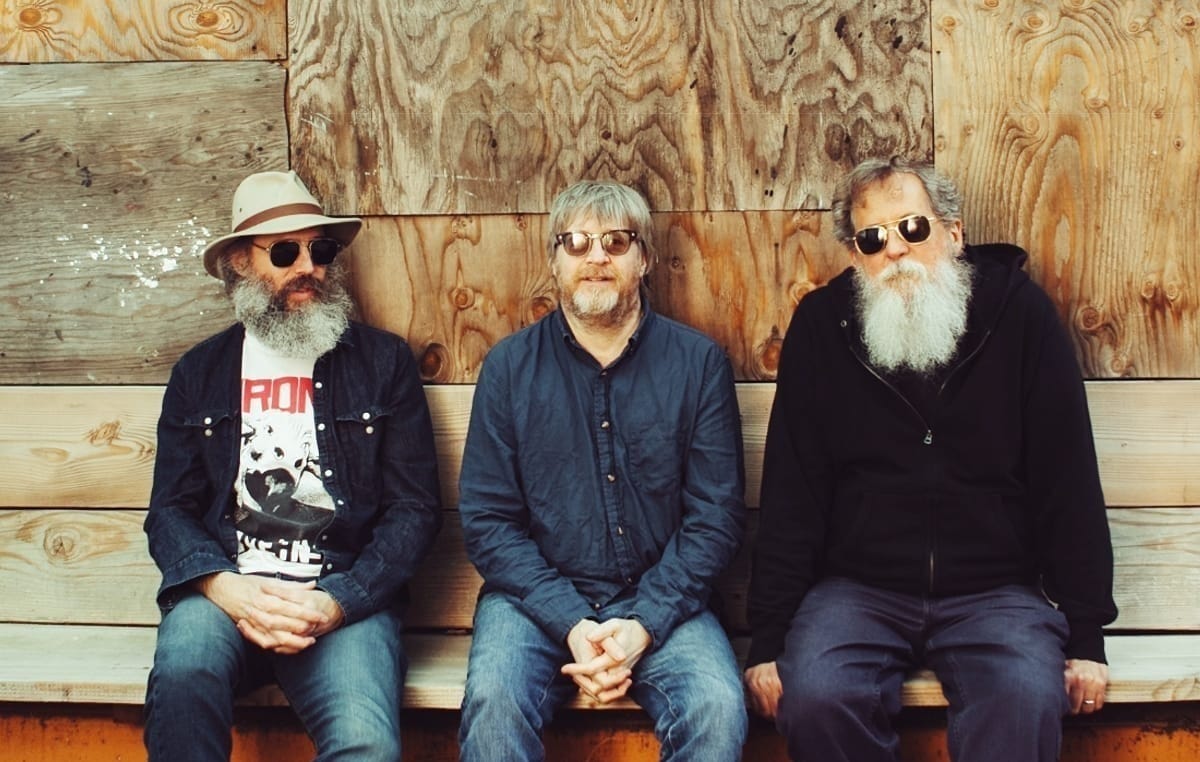
Bill Orcutt's return to collaborative 'rock' music with Orcutt Shelley Miller carries the essence of a great American musical experiment. Two decades earlier, Churchill's Pub in Miami's Little Haiti had a single rule: "no stage-diving. Anything else goes. Anything." Even in the pastel land of Crockett and Tubbs, we find a rejection of the corporate gatekeeping that sanitized 1990s rock. Harry Pussy, Orcutt's noise duo with Adris Hoyos, weaponized this freedom into "room-clearing blasts of white noise" that could only exist in Churchill's anarchic environment. Dave Daniels, the venue's British owner, tolerated performers who set themselves on fire, rode motorcycles across the stage, and pushed sonic extremity beyond any reasonable limit. The space ended up hosting an estimated 20,000 performances, spawning what locals called "the noise archipelago." Bands like Scraping Teeth, Kreamy 'Lectric Santa, and Harry Pussy formed "a miniscene of their own, almost by default because no other scene would have them.
Perhaps Florida's oppressive heat played a role in this mayhem. The city's climate delivers highs in the mid-90s (and over!) with crushing humidity for six months yearly, creating "a palpable electricity circuiting through the humid air" that pushes everyone past their normal tolerance levels. And I guess geographic isolation compounded this pressure cooker effect. Atlanta's distance made the trip prohibitive for most touring bands, creating a cultural terminus outside of the indie touring ecosystem. Churchill's commitment to artistic freedom/chaos felt necessary under these conditions.
The players in Orcutt Shelley Miller (which also include Sonic Youth's Steve Shelley and Howlin Rain's Ethan Miller) trust spontaneity over planning things out, which sounds (both literally and figuratively) like Churchill's ethos. Orcutt understands that creativity requires risk and atmospheric pressure. And Ethan Miller's observation about "creative electricity inside that circle of our band in performance" might describe any night at Churchill's circa 1995. And good news: The venue recently reopened as "a revenant of Miami's underground spirit," but the question remains whether 2025 can handle its particular brand of artistic anarchy. Fingers crossed, feedback wailing.
Playback: Everything Is Under Control — Matt Black of Coldcut Gets RAW → Matt Black mentions his adherence to Robert Anton Wilson's "think for yourself, distrust authority" philosophy, which is another way of saying "no stage-diving. Anything else goes. Anything." Like Churchill's and venues like it, this sentiment inspired Coldcut's sound and Ninja Tune's mission to create culture outside corporate gatekeeping.
 Lawrence Peryer
Rico Jones remembers the Kokopelli figures scattered throughout his childhood home, "humped flute players" on the walls alongside Indigenous pottery and woven Mexican blankets. The commercialized version he later encountered bore little resemblance to their origins as fertility deities and trickster gods. Spanish missionaries had convinced Hopi craftsmen to remove Kokopelli's phallus, conveniently sanitizing the figure for modern capitalism. Golf-themed sculptures, surfboard designs, and tourist trinkets sprang forth, erasing any ghosts of sacred meaning. From our conversation with Jones, it almost seems his artistic journey is this process in reverse, like reclaiming cultural symbols from tourist shops and restoring their transformative power.
The real Kokopelli shares an improvisational spirit with Jones's spiritual jazz, playfully disrupting normality and the expected and then re-establishing them in a new light. Jones speaks of accessing "that subconscious mind" and letting himself go, aiming for transcendence through spontaneous creation as the originators of the Kokopelli did. We can even go back forty thousand years to bone flutes made from vulture bones and mammoth ivory, considered some of humanity's earliest instruments. Contemporary Indigenous jazz musicians like Jim Pepper and Mali Obomsawin revived this tradition, threading ancient peyote songs and Wabanaki melodies into free improvisation.
Today's Hopi artists create kachina dolls labeled "Kokopelli" that bring together traditional and modern interpretations. Jones follows a similar path, looking to reclaim cultural heritage from commercial appropriation. And Jones's co-leadership of the first-ever all-Indigenous big band in 2024 brings this story full circle. One can say that Jones's remembrance of the Kokopelli figures from his childhood invokes a sacred tradition where trickster energy converts secular spaces into sites of spiritual communion. The hunchbacked flute player has found his way home through Jones's saxophone, carrying ancient ceremony into jazz improvisation.
Playback: We Are Floating in Space — Jane Ira Bloom's Jazz Odyssey → Jane Ira Bloom also recognizes transformative experiences through improvisation, connecting to ancient musical impulses. Bloom describes how her music "lives where improvisation meets technology, where ancient musical instincts collide with cutting-edge recording techniques"—a dynamic similar to Jones’s threading of ancient traditions through contemporary expression.
 Lawrence Peryer
For his latest recording, Krater, drummer Charlie Werber chose a rhythmic pattern through intuition. Later, he checked out Aleister Crowley's 777 as the book's title matched his drum pattern exactly. It was the same sequence, here representing the kabbalistic lightning bolt descending through the tree of life. "So it also fits in the mythology of the egg," Werber notes with characteristic understatement about the supernatural epiphany that inspired his album. For Philip K. Dick, such coincidences weren't accidental at all. Dick believed VALIS, his term for the divine intelligence encountered during his 2-3-74 visionary experience, communicated through synchronicities, arranging meaningful coincidences to transmit information across time. This cosmic entity continuously selected collaborators, timed releases, and embedded hidden numerical signatures into reality itself.
For Werber, and in the spirit of PKD, the 777 pattern chose him rather than the reverse. Its mystical significance revealed itself through subsequent synchronicity. Dick believed that divine intelligence operates through artists by guiding unconscious choices which are confirmed through happy accidents. Experimental musicians tend to like this idea, even if they don't subscribe to the world of the woo-woo. Alvin Lucier found that his instinctive frequencies corresponded to unpredictable structural resonances. And Keiji Haino describes collaborations that form through "impossible" encounters at precisely the right moments.
Dick called this process "anamnesis," the soul's remembering of forgotten knowledge. Applied here, Werber's 777 pattern existed before he played it. His role was receiving and relaying it, while the synchronicity with Crowley's text is like VALIS confirming successful transmission. That's how musicians like Werber treat synchronicity as a methodology, letting go of the creative reins and focusing on whatever transmission wants to come through.
Playback: Unexpected Visitations — Bit Cloudy's Homespun Electronica → Bit Cloudy's Martin Thompson describes how his unconscious working method mirrors the disruptive transformations in Dennis Potter's plays, where unexpected visitors are the catalysts. Thompson's process of allowing randomness to guide his compositions—from his absorption with Potter's work to his use of "chains of strange plugins I don't quite understand"—suggests an openness to forces beyond his control.
 Chaz Underriner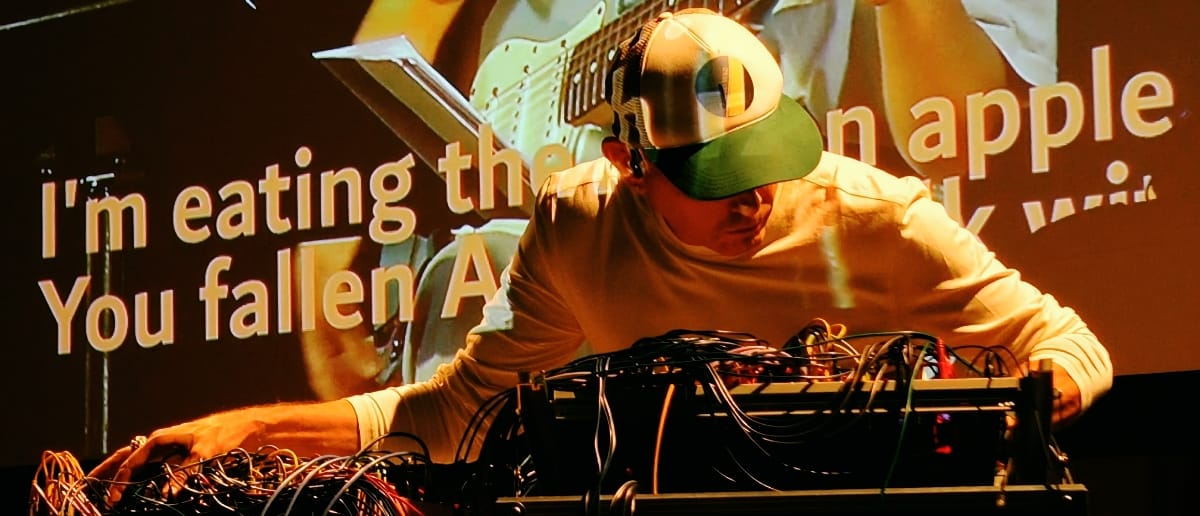
Marko Ciciliani's false attribution of the electric guitar to fictional inventor "Siglinde Stern" in Why Frets? is a form of trickster storytelling that taps into a real pattern of erasure throughout musical history. Ciciliani imagines the instrument eventually dying out from "testosterone oversaturation," a play on how masculine narratives obscure the contributions of women. Sister Rosetta Tharpe's electric guitar chops in the 1930s and '40s directly influenced Chuck Berry and Elvis Presley (who adored the sound), yet she's more often seen as a gospel footnote than rock's founding mother. Her innovations (distortion, sacred-secular fusion, performer-instrument theatrics) became foundational to rock music while Tharpe mostly remained invisible. Unsurprisingly, this extends beyond individual cases to entire communities whose contributions require coded methods to survive hostility.
You can also see this in how the necessity of concealing queer and transgender identities meant countless contributions took disguised forms, later absorbed into the mainstream without credit to their origins. Ciciliani's transmedia projects (spanning performances, lectures, installations, and books) try to show one path to recovering these hidden histories by working across multiple cultural spaces. His fictional "Anthony Finto" (literally "Anthony Fake") is an excellent illustration of this concept, as this subtle pranksterism participates in the cultural systems being critiqued.
Ciciliani's fictional musical histories show how easily these stories can be built and rebuilt. Pauline Oliveros reconstructed lost electronic music traditions through Deep Listening, imagining how women's artistic practices might have developed without institutional roadblocks. The speculative element of storytelling creates space for musical futures built on a more equitable recognition of musical pasts, crediting invention to the communities actually responsible. Ciciliani's deep question might be: Which innovations disappear because they can't survive within dominant cultural structures, rather than because they lack lasting value?
Playback: The Virtual Gardens of Tamiko Thiel → Tamiko Thiel's immersive installation Beyond Manzanar also confronts how communities and their contributions get written out of history. Her piece puts viewers "in shoes you might never want to wear," forcing encounters with perspectives that dominant narratives tend to exclude.

The Hit Parade
- New York Times bestselling author Larry Tye is the guest on this week’s episode of the Spotlight On podcast. He’s discussing his excellent book The Jazzmen: How Duke Ellington, Louis Armstrong, and Count Basie Transformed America and goes deep into how these icons not only survived and succeeded in Jim Crow-era America, but did their parts to change it.
- I have a quartet of music recommendations for you this week, starting with the gorgeous self-titled album by Throwing Shapes → Irish harpist Méabh McKenna, composer Ross Chaney, and ambient musician Gareth Quinn Redmond unite for a mesmerizing debut that centers the striking timbre of the Irish wire-strung harp within electronic synthesis and arrangements. The result is an immersive soundscape that rhymes with tradition while being boldly experimental. TL;DR: Ancient strings meet contemporary electronics in unexpected harmony.
- Khadija Jiijo Jeesto - 808 Xamar: Exiled Digital Somali Sounds from 1990s Saudi Arabia → Singer Khadija Jiijo Jeesto, a veteran of Mogadishu's golden era who fronted acts like Dur Dur, secretly recorded these 808-powered songs in a sound-insulated room in Jeddah after fleeing Somalia's civil war and enduring multiple deportations. Forced to abandon familiar instruments for synths and drum machines, she and fellow exiled musicians created a rare digital relic that fuses Banaadiri culture with Bantu rhythms.
- james K - Friend → The New York-based james K returns with Friend, a decade-spanning collection that brings her intuitive music-making practice into a more focused and controlled sonic arena. The album features collaborations with DJ Francis Latrielle, Ben Bondy, and many others across studios in New York and Montreal. Friend presents versions of songs that come into focus like recovered memories, tracing the evolution of her textural compositions with renewed intimacy and vocal clarity. Frequently dreamy, deleriously melodic.
- Mal Waldron - Candy Girl → Jazz pianist Mal Waldron's lost 1975 session Candy Girl captures a spontaneous studio meeting with core members of Lafayette Afro Rock Band in Paris, where the exiled musician wrapped his minimalist modal mantras around the American funk unit's locked-in pulse. Originally released in microscopic quantities and long shrouded in obscurity, this raw collaboration finds Waldron exploring electric funk with avant-garde flair, creating everything from the hypnotic vamp of "Home Again" to the cosmic soul hints of the title track's minor-key electric piano waltz. (There was also a great guide to Mal Waldron in the New York Times this week. Here’s a gift link.)
- Short Bits: A movement continues to bubble: Seattle musicians organize to boycott Spotify over AI and CEO investments • Roman Mars rants about how efficiency is "garbage" and I’m here for it (starts at 19:00). • Someday I’ll tell you about the time I co-promoted a 9 hour death metal festival in Orlando. Until then, here’s how Florida became the world death metal capital in the 90s.• This episode of The Secret Life of Songs podcast about Donna Summer’s "I Feel Love" sure got my oscillators pulsing. • "What is it that makes synthesizers so attractive to those inclined towards the deeper mysteries?" — Exploring the link between spirituality and synthesizers • Ben Cardew is here to help a new listener make some sense of Sun Ra. Check out part one and then part two.
Deep Cuts
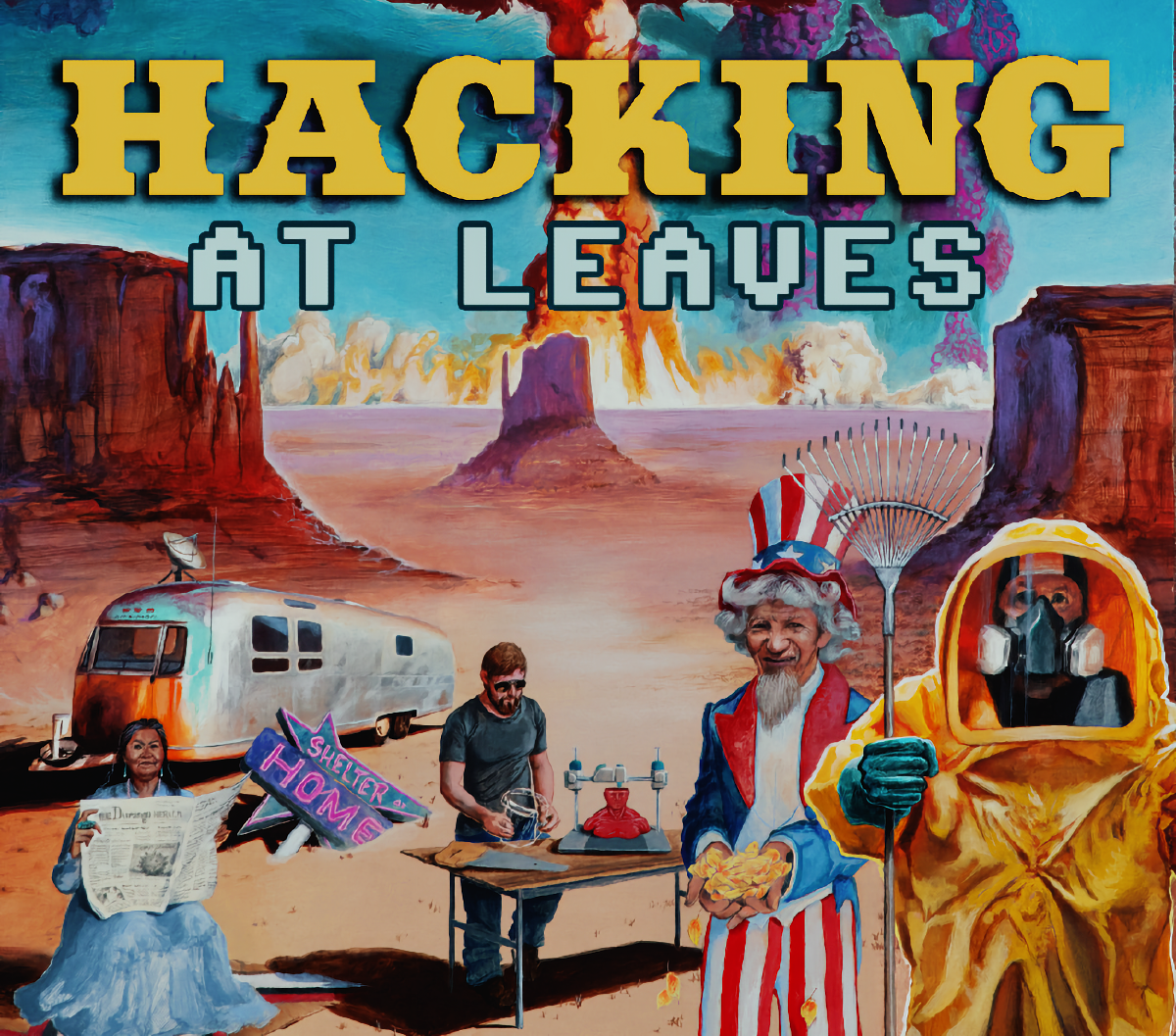
Filmmaker, (in)famed member of art collective Monochrom, and friend of The Tonearm, Johannes Grenzfurthner, alerted me that one of his recent documentary films is screening online for free. Not only is Hacking at Leaves fantastic and thought-provoking, but it fits right in the wheelhouse of the readers of this newsletter. Yes, that means you. I asked Johannes to tell us about his cool flick:
My film Hacking at Leaves is not your typical documentary. It’s part performance, part essay, part cinematic experiment. I dive into pandemic-era DIY innovation, U.S. colonial history, the Navajo tribe, and hacker culture—with humor, rage, and plenty of sharp edges. It features Ryan Finnigan, Sunny Dooley, Stefan Yazzie, Karletta Chief, Raven Chacon, Manny Wheeler, Jello Biafra, Morningstar Angeline, Erik Davis, Cory Doctorow, and many more.
And now: it’s 100% free. I’ve just released the full 108-minute film on the Internet Archive, making it accessible worldwide without paywalls, subscriptions, or corporate platforms. Why? Because stories about resistance, creativity, and survival should circulate freely—not get buried in algorithmic silos. This release also connects to the broader movement for open culture and free access to information. By choosing the Internet Archive, I align Hacking at Leaves with the ethos of open-source software, digital preservation, and community-driven knowledge.
Watch it. Share it. This one is for the cultural commons.
Run-Out Groove
Thank you for reading this strange little thing I put together every weekend. They're getting consistently jam-packed, aren't they?
If you have a friend who is into semi-mystical shit (we almost went there), please take a moment to forward this newsletter to them as if you're casting a magic spell. You can also copy and post the 'Read in browser' link at the top on your social media phantasm-land and spread the sorcery far and wide.
What do you think? How's my driving? I want to know. Reply to this email newsletter or contact us here. I would love to hear from you and, if I do, I'll respond with a short story about the nine-hour death metal fest (see above).
Speaking of sorcery, it’s useful to think of reclaiming one’s attention and digital agency as the magical act of warding off evil spells. I hope that helps. In the meantime, stay safe, in tune, and on board. I'll see you here next week! 🚀
Connect with The Tonearm:


Comments