


Formed in Paris in 2018, Special Friend, the Franco-American duo of Erica Ashleson (drums, vocals) and Guillaume Siracusa (guitar, vocals), built their early catalog on minimalist, lo-fi songwriting that was aesthetically committed to spontaneity and imperfection. After two albums—Ennemi Commun (2021) and Wait Until The Flames Come Rushing In (2023)—and extensive touring across France and Europe, the duo returns with Clipping, a third album that expands their sonic scope without abandoning the stripped-down instincts of their earlier recordings. This sunny and ambitious album took shape through months of rehearsal at their Paris studio, then it came together at Studio Claudio in an isolated countryside setting in summer 2025 with producers Alexis Fugain (Biche) and Margaux Bouchaudon (En Attendant Ana), and later mixed in London by Syd Kemp (Thurston Moore, Ulrika Spacek, Caroline, Crack Cloud, Vanishing Twin). The twelve tracks reach into folk ("Isolation"), krautrock ("OOO"), and slowcore ("Sanctuary," "Mold") while also delivering some of the duo's most propulsive material to date ("Theoretical," "Mustard," "Breakfast"). It's their most fully realized record yet, broader and clearer in sound.
I caught up with the duo over a video call; the following is the interview that unfolded, edited for length and clarity.
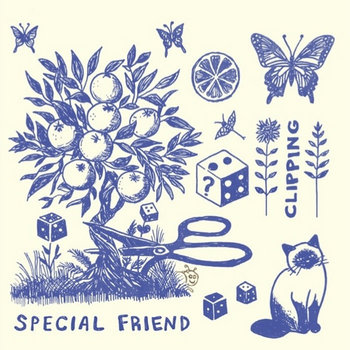
Damien Joyce: I’ve been listening to the new album Clipping; I love the record. You have strayed into a few different musical areas. Can you talk a little about the decision to move towards something more produced, arranged, and crafted by the full studio experience?
Erica Ashleson: I think it's just based on access. The way I explain it is that when we started making music back in 2018, we were writing our first songs and didn't have any money for recording. Guillaume has the technical skills and knows how to record, so we did everything DIY with the first EP. And for the first album, we had help recording on tape, but we did it in my friend's house.
After years of finally being able to save money from playing concerts, from touring, from selling merch, from selling records, we were finally able to go into a proper recording studio with some friends of ours that we know have recorded other Parisian bands like our friends in Eggs or En Attendant Ana, and Alexis Fugain, who plays in the band Biche. We really like their aesthetic and the way they’re produced. So, we finally got to make his dream come true! I'm very happy with the results as well.
Damien: I love the warm guitar channel, the harmonies, and all the drums. You can really hear the studio benefit across all the tracks. Did the studio upgrade bring more challenges in chasing that bigger sound? Did that make things more complicated?
Guillaume Siracusa: It wasn't so challenging. We had to sing better and play better, but it felt like a natural progression for us. I think album after album, we gradually put more care into the way we play, sing, and in our songs. So, in the end, it felt like just a small step, I would say. How did you feel, Erica?
Erica: I think that it's very different when you're just recording yourself or in your bedroom or making demos because I feel like you allow for more imperfections when you're just like, “Oh, it's being recorded lo-fi.” If you're singing a bit off-key, it's not that big of a deal. We'll just add an effect.
But it's also a situation where you know you’re paying day by day, so you want everything to be worth it, and there’s a limited amount of time. It does put more pressure in that sense, but I think it’s a good kind of stress because it allows you to go beyond just being complacent and doing the minimum, and actually really wanting to try to do your best.
I think we had moments in the studio where, sometimes, you want to smash your head on the wall because you have to redo the same take 20 times. All of a sudden, it doesn't make sense anymore. But it's worth it in the end because when we’re going back through and choosing, we’re super happy with the result, and it requires a lot of patience and hard work that isn’t always easy. But it's nice working in a studio like that, with other people, which allows you to put yourself in that situation.
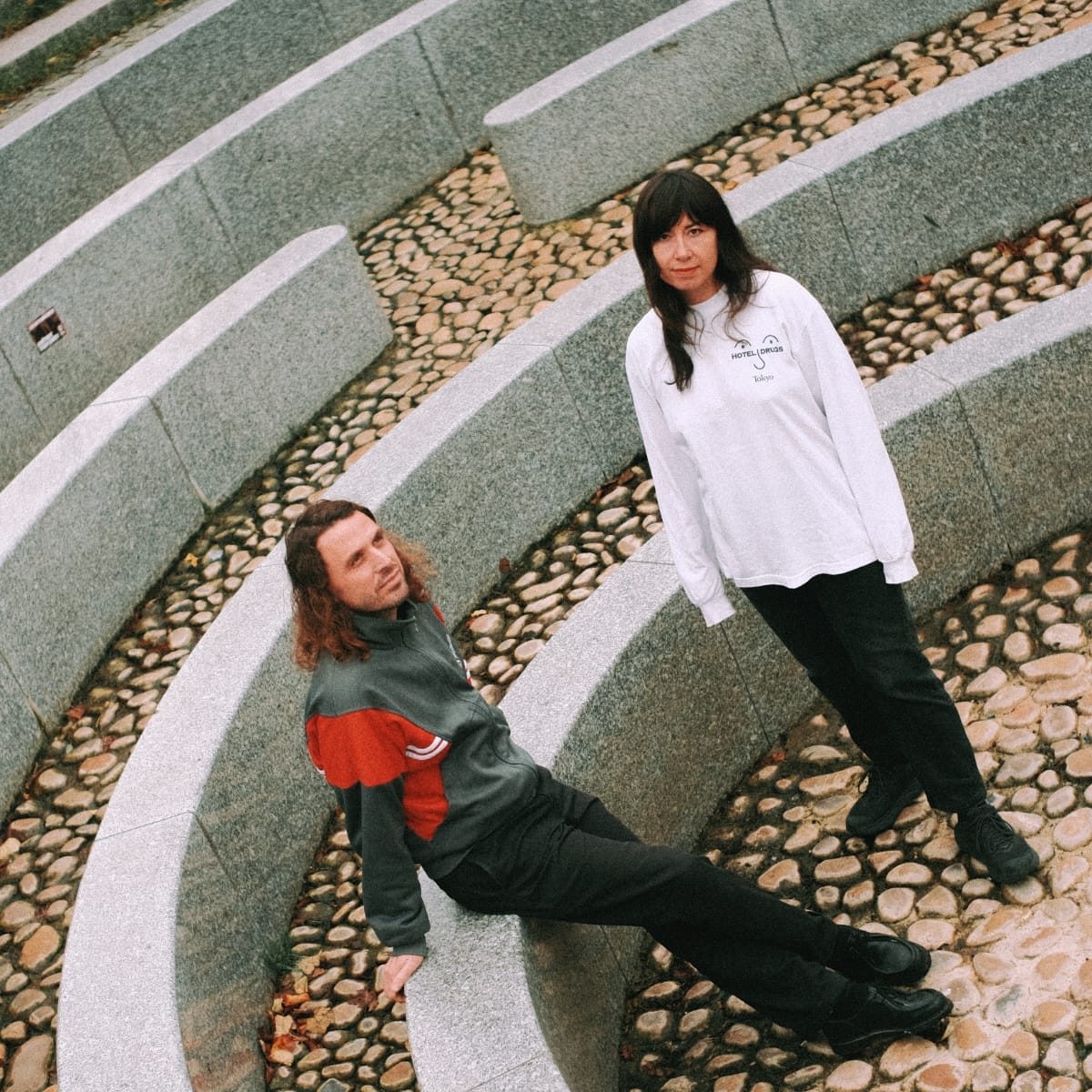
Damien: Being in the studio, with a supportive producer pushing you and trying to get the best out of you, I guess you can focus more on the music, as opposed to when you’re working in your own bedroom, trying to record, edit, and mix yourselves.
Erica: I think it also allows having an outsider perspective because I know, personally, I can sing, and I'll be like, “Oh, okay, it was fine.” But then you'll have somebody on the outside, like, “Maybe you can do it better?” I think sometimes your ego is initially kind of like, “No, it was good enough.” It's good to have somebody push you because almost 100% of the time, they're right.
Damien: Has your progression from the previous album, Wait Until the Flames Come Rushing In, something that you were conscious you were doing, or is that something that just sort of happened?
Guillaume: We've always been playing different genres, different styles. It's always been there, but I think it's more obvious now, thanks to better production. I think maybe we have better arrangements, maybe these songs are composed in a way that makes it more obvious, and maybe some of the choices we made. For example, in this song "OOO,” we decided to really embrace a krautrock vibe. Maybe in the past, we wouldn't have gone that far in that direction, but we've always played different styles.
It's nice because, just being two people, we feel like it's not a big deal to change drastically from one song to another. It stays cohesive because of our sound, the fact that we just do that, and that there's almost never a bass guitar.
Damien: Does it then come to mind how you’ll reproduce the album live? Because there are a lot more effects on this record.
Erica: Well, because of how we naturally compose as a band, there's not a big difference between the recording, what happens in the studio, and what happens live. Guillaume already played in the practice studio with all his pedals and loops. I guess the only extra things that usually come later are keyboards. So those are some things that were tested separately in the studio, but we've been able to function as a band to be able to play live, just guitar and drums, and both of us both singing. It's not a big challenge for us, that part.
Damien: I know the video era is alive and well despite MTV closing in Europe. You released a quirky one-shot camcorder video for "Breakfast" that I thought worked really well. Do you enjoy making videos like that?
Erica: Yes. Except for maybe a few live sessions, all our music videos have been made DIY by ourselves. Usually, I do all the editing, and sometimes we have other friends come help film.
For “Breakfast”, I had something really simple in mind. It was more the concept of a visualizer rather than a traditional music video because, as you said, we're kind of in an age today where it's always expected to still do a music video, but a lot of people are not necessarily putting in so much budget or making a scenario, like a movie. Sometimes you can just be filming yourself on vacation, or, kind of like this . . . me walking in a circle, singing the song.
Damien: Erica, you're a visual artist as well as a drummer and vocalist. You created the artwork and the merch; you're involved in screen printing. Do you get fulfillment from that part of the job as well?
Erica: Yes. Playing music has long been a dream of mine, and Special Friend is my first band and my first experience writing lyrics, singing, and working with someone else to make our own songs. It allowed me to do the other things I enjoy on the side, like drawing. I get to make artwork, make posters, and make merch. When I was screen-printing the merch, it was my first time learning how to do it.
The practice studio where we rehearse is this art squat in the Northeast Part of Paris, and there's someone there who has a workshop that does screen printing. It's been like one art form has allowed me to branch into other art formats, like making videos. It's a lot of fun and very rewarding.
Damien: It's great that you both are embracing all the challenges that music lifestyle throws at you, from recording in your bedroom to handling the DIY aspects, whether it’s the album artwork or the merch. How did the two of you guys meet?
Erica: We met in the music scene in Paris, back when I moved here around 2015, through friends of friends, people playing in bands. He was playing in a different band, and I wanted to start learning how to play drums at that time. And so, he suggested accompanying me on the guitar while I was learning how to play drums, and that's how the first songs were composed. And we decided, “Okay, well, this could be something and not just a Sunday fun hobby thing.”
Damien: One thing that’s interesting to me is that the slowcore genre has increased in popularity so much over the last couple of years. This goes back to bands like Galaxie 500, Duster, Codeine, and Bedhead—suddenly there's a resurgence in that type of music. Is it the kind of calmness and quiet that's appealing to so many young people at the moment?
Erica: Honestly, I have no idea, but I have also recognized that trend where, within the past few years, there's been a huge revival in slowcore and shoegaze. I think, generally, we can say that, for us personally, as those who grew up in the nineties, it's just kind of our influence. I mean, I can say that in the nineties I wasn’t listening to shoegaze. I was listening to Barney and children's music because I was a kid! But I think it's still being attached to that and discovering it later.
It's a new way of discovering something very cool and emotional from the past, and you're right. I think very recently in Paris you had Codeine, who are still playing, and there’s this band called Deathcrash from London, a slowcore band that I saw open for the Jesus and Mary Chain. Every person there that night was like, “Wow, that was the best band I've seen in a long time.” I also saw Duster in London two years ago, and it was just a very young audience, which was kind of surprising.
Damien: My own thought is maybe post-COVID, and after all that introspection, people are looking for an emotional connection to music.
Erica: I feel like it's kind of cool to like shoegaze and slowcore. There's still this emotional aspect to it, because it’s very slow and kind of melancholic. I feel like a lot of people are in that mood today because the world and the news are just depressing. So, sometimes you like listening to this cathartic, sad, explosive music.
Check out more like this:
 Meredith Hobbs Coons
 Damien Joyce


Comments