


Ahoy, dear reader! True story: many years ago, I received an email from the now late Captain, formerly of Captain & Tennille, and his salutation to me was "Ahoy, Michael!" I thought it was a fantastic way to open an email, especially from a man who famously always wore a sailor's hat. Anyway, that's the story behind the hearty welcome to this week's edition of Talk Of The Tonearm, an email newsletter where I mentally sail through recent stories from the website. And then, with help from my first mate, LP, I torpedo the algorithm with a homespun bunch of nifty things to check out. The clickable links come fast and furious, like a swelling storm on the ocean's horizon. Enjoy!
Surface Noise
Mike Scott's four-year obsession with Dennis Hopper resulted in a 25-track concept album from The Waterboys that's biography and cultural autopsy. Life, Death, and Dennis Hopper traces the actor's arc from Kansas farm boy to Hollywood icon to lost decade burnout to elder statesman. One fascinating aspect is how Scott uses Hopper's story to examine the highs and lows and even lower lows of the American counterculture.
In our interview with Mike Scott, he mentions a particularly haunting reflection on the 1960s counterculture attributed to David Crosby: "We were all gonna hold hands and sing to God. And we ended up with guns outside the drug dealer's door." The hippie generation, Scott noted, "learned a lot spiritually, very, very quickly from about 1965 to 1969 through acid and consciousness-enhancing drugs," but because these experiences came through recreational rather than reverent means, "they didn't integrate the wisdom. And so it quickly flipped to a much darker expression." One tragedy of the 1960s wasn't that a generation reached too high, but that they reached without building the foundation to support what they found.
We're witnessing similar dynamics in our current psychedelic renaissance. Silicon Valley microdosing culture, ayahuasca tourism, and self-administered ketamine treatments all risk reproducing the same pattern: powerful consciousness-altering tools stripped of their traditional contexts and integration practices. The commodification of transcendence, treating peak experiences as products to be consumed rather than transformations to be lived, sets the stage for another collective encounter with what Robert Anton Wilson called ‘the chapel perilous.' And that's a topic for another time!
 Lawrence Peryer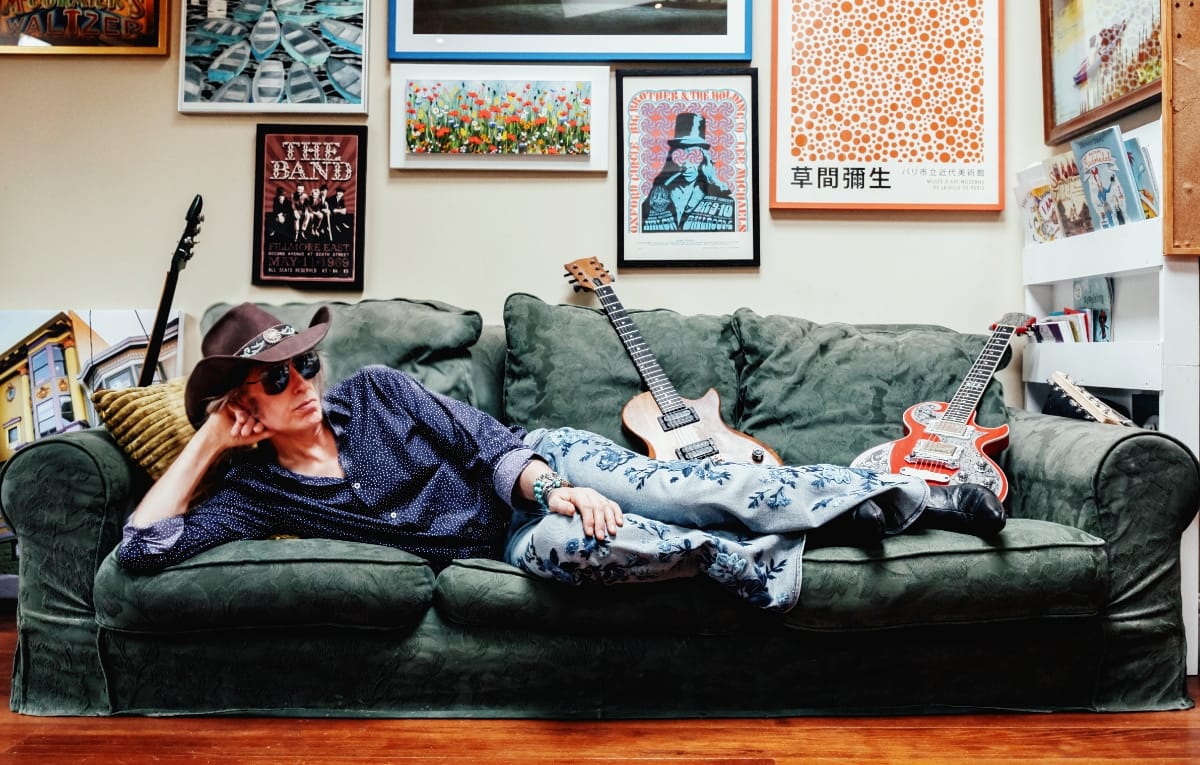
Playback: Peruvian experimental musician Mauricio Moquillaza described entering "nearly religious experiences" when playing and seeking "those nearly religious experiences of simply being there, being sound." However, rather than allowing these transcendent moments to become ego-driven or exclusionary, he channels them into community building through Deshumanización.
Leon Anderson's debut album Live at Snug Harbor arrives after twenty-eight years of teaching at Florida State University, and the delay reveals something about how classical training leaves audible traces in jazz performance. In his interview with The Tonearm, Anderson explained that his orchestral percussion background gives rise to what he calls “musical” drum solos—compositional thinking borrowed from Max Roach, who treated the drums like an orchestra. When Anderson solos, he paints pictures and tells stories rather than simply displaying musical chops. His experience with timpani tuning sharpened his ear for harmony, while playing marimba scales in the cycle of fifths helped him understand harmonic movement in ways that purely jazz-trained drummers might overlook. This dual fluency creates a distinct musical accent, like being bilingual in rhythm.
The album itself functions as a musical autobiography spanning three decades, from "Essence of the Soldier" (written after his father's death in 1994) to "88 to 1621" (connecting a high school drum cadence with his response to the January 6th insurrection). Anderson is the rare musician who successfully merged formal academic training with traditional bandstand education, spending countless nights at Snug Harbor as Ellis Marsalis's regular Friday drummer while simultaneously building FSU's jazz program. He represents a conversation between institutional and organic learning in contemporary jazz.
We could refer to dualities like these as 'code-switching.' The code-switch happens in real-time, often triggered by context. It's fluency rather than duplicity. Musicians adjust their musical vocabulary depending on their surroundings—more theoretical sophistication in academic settings, more intuitive expression in late-night jam sessions. This mindset, thanks to instructors like Leon Anderson, helps a new generation overcome what Anderson noted as Art Blakey's fear of jazz becoming "clinical." Instead of choosing sides, they've created a third path that uses academic rigor to deepen rather than replace intuitive musicality. Classical training doesn't make a musician less soulful—it gives them more colors on their palette, more tools for expression.
 Lawrence Peryer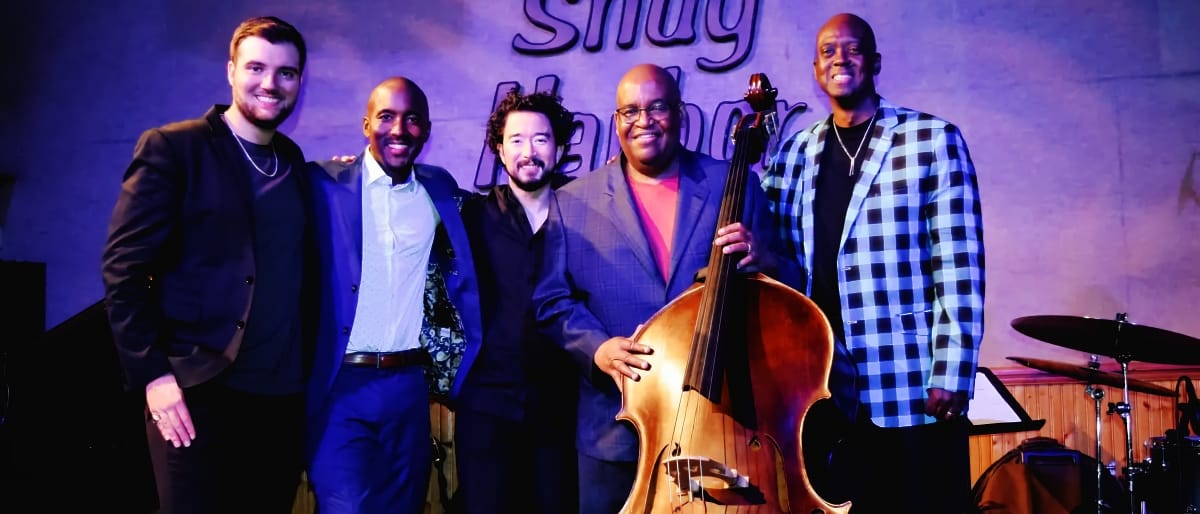
Playback: Cellist, DJ, and electronic musician Chloe Lula spoke to The Tonearm about how she thinks about her dual experiences with classical training and electronic underground culture. She approaches the cello with what she calls her "own language"—combining conservatory technique and techno production know-how.
Experimental composer Chaz Underriner spent years creating Moving, a multimedia work that transforms the waterways of the American South into hypnotic soundscapes. Drawing from Blue Springs in Florida and Louisiana's Atchafalaya Basin, Underriner explained to The Tonearm how he captures these vulnerable ecosystems through field recordings, modular compositions, and video projections that flow together like the currents that inspired them. His work doubles as an environmental document, preserving sonic memories of places threatened by climate change and human intervention.
Underriner's reference to mono no aware—the Japanese aesthetic of finding beauty in transience—reveals something else running through his composition. He sees himself as part of a long tradition of artists who recognize what's vanishing, understanding that both human lives and natural spaces exist in states of constant flux. Underriner's modular compositional technique mirrors a layered history, with different musical elements overlapping and interacting like memories floating through time. Underriner offers a poignant meditation on impermanence, questioning whether bodies of water retain the memories of the lives they’ve touched, and whether art can capture those memories as the physical places themselves transform beyond recognition.
In other words, the act of artistic documentation itself becomes a form of preservation, even when the physical places change irreversibly. This tradition of recording the environment—check out sound artists like Hildegard Westerkamp, the World Soundscape Project, and Jana Winderen—suggests that artists often serve as society's early warning system, recognizing and responding to changes in the landscape before it becomes widely acknowledged. These artists are drawn to capture not just what things look or sound like, but how they feel—the emotional texture of places and times that are slipping away.
 Michael Donaldson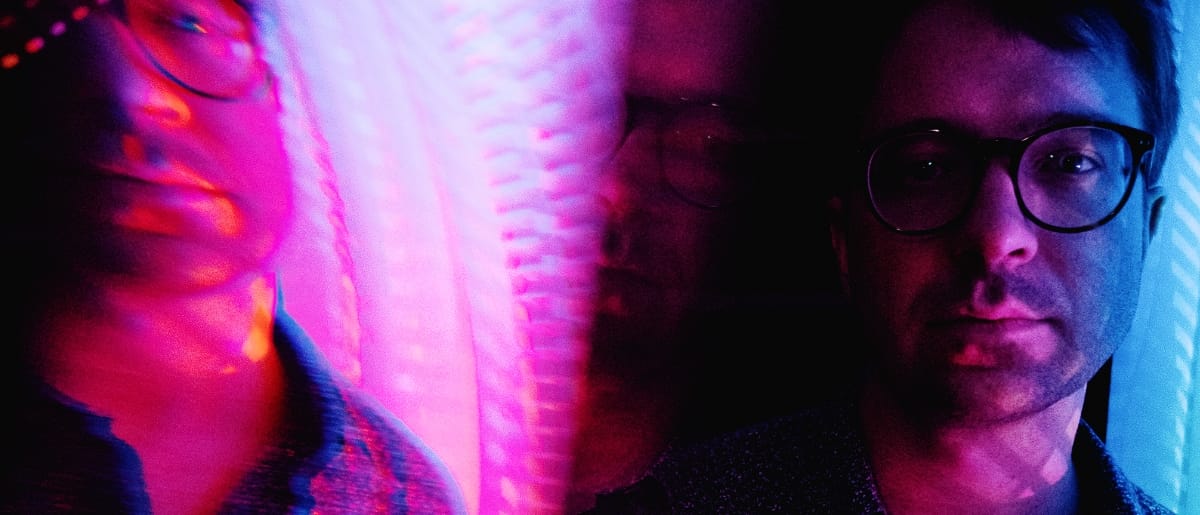
Playback: Sara Persico's recent work echoes the idea of mono no aware through architectural rather than natural impermanence. Her recordings of the acoustic signature of the domed Experimental Theatre in Tripoli transform everyday city sounds into what she described to us as "ghostly overtones," creating a meditation on memory, history, and resilience. Persico believes that places with history contain more than we can perceive.
Pierre Chrétien of Cinephonic found himself caught in a peculiar moral dilemma. Like most producers working in the trip-hop and instrumental jazzy hip-hop space, he was used to building tracks around sampling the warm crackle of vintage jazz recordings and dusty library music gems. But something about the practice bothered him. "While I like that sound, I thought it was a cop-out to just 'steal' someone else's music," he explained to The Tonearm’s Peter Thomas Webb. His solution was audacious in its simplicity: record his own 1950s-style jazz album with his longtime trio, then sample and deconstruct this work for Cinephonic's latest release, Refuge.
Thus, Chrétien doesn't need to wrestle with the ghost of Bill Evans because he can create his own Bill Evans-adjacent material to haunt himself with. It's a kind of temporal short-circuit that collapses the traditional relationship between source and sample, past and present, influence and influenced. The studio becomes a time machine operating in reverse. Instead of traveling back to capture something that already happened, Chrétien manufactures the past in real time.
This creative maneuver sidesteps the usual questions about musical appropriation while raising entirely new ones about artistic self-consumption. Chrétien became his own archaeological site, digging through his own recordings. The process is more honest and perhaps narcissistic than traditional sampling—there's no grave-robbing involved, but there's a strange kind of temporal cannibalism at work. Harold Bloom wrote about how poets struggle with their predecessors, but what happens when you literally become your own predecessor? Chrétien solved the anxiety of influence by creating his own influences, transforming the creative process into a kind of solipsistic loop. The resulting album chronicles not just his search for comfort during his wife's cancer diagnosis, but also a musician's attempt to escape the weight of jazz history by creating his own version of it, only to deconstruct the thing he built.
 Peter Thomas Webb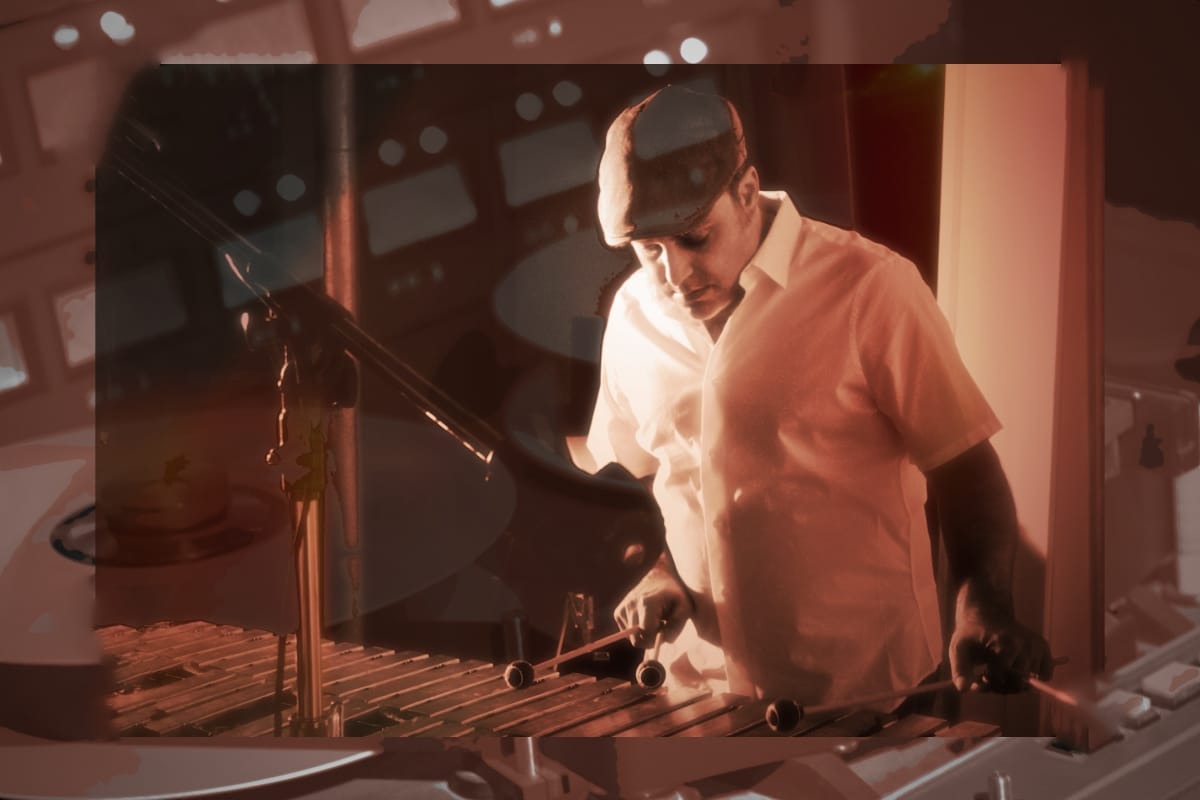
Playback: Composer Daniel Pelton told us about his work on the "Violins of Hope" project and presented a compelling and somber twist on the ethics of musical archaeology. He used historically significant instruments—violins that survived the Holocaust—to emotionally honor the source material rather than exploiting it. The impact of this artistic statement, as related by Pelton to The Tonearm, is beautifully powerful.

The Hit Parade
- LP’s Recommendation: I have been digging into emptyset's Dissever, which strikes me as a careful dig through electronic music's foundational decades. This record is steeped in the experimental spirit that emerged across late 1960s production methods. emptyset are American-British musician James Ginzburg (founder of the influential Subtext and Tectonic labels, which helped establish dubstep) and London-based artist Paul Purgas (who was originally trained as an architect and now works with sound installation and performance). The pair recorded these compositions live using vintage hardware and spatial recording techniques that mirror the period 60 years ago, when studios began functioning as laboratories rather than simple documentation spaces. emptyset applies this methodology to demonstrate connections between cosmic rock, minimalism, and early electronic music, treating these genres as parallel streams that shared technological ambitions and cross-pollinated through similar recording infrastructure.
Dissever is an album of single-take performances captured through techniques that prioritize spatial dynamics over digital precision. This approach recalls how 1960s pioneers, such as Pink Floyd’s early sessions with Norman Smith, Steve Reich’s phase relationship work, and the BBC Radiophonic Workshop’s tape speed manipulations, all emerged from shared technological possibilities, namely analog synthesizers, reverb chambers, and unconventional microphone placement. Ginzburg's work with Osmium, a ritualistic ensemble featuring custom instruments that has performed at Lincoln Center and the Barbican, alongside Purgas' curatorial projects with institutions like the Tate Modern, informs the album's approach to cultural intersection. The compositions remove any sense of nostalgia from the vintage equipment and instead employ them as active tools for making contemporary art. Dissever premiered as a live performance at Tate Modern's Electric Dreams exhibition, where its improvisatory elements could expand beyond the constraints of the studio.
This is hypnotizing music in the grand tradition of Indian Raga, the minimalist movement, and space rock. - Michael’s Recommendation: Francis Bebey's Trésor Magnétique arrives like a time capsule from when African futurism flowered decades before anyone knew what to call it. Released via Africa Seven, this compilation of unreleased tracks and archival gems from the legendary Cameroonian polymath showcases an artist who was busy inventing tomorrow's sound while others were still figuring out yesterday's. Bebey—musicologist, writer, composer, broadcaster, and general intellectual force of nature—playfully mixes the likes of pygmy flutes and drum machines for brilliant tracks that shouldn't work but absolutely do. Trésor Magnétique’s digitized recordings, rescued from fragile tapes found in his son's home and restored at Abbey Road, crackle with the kind of prescient energy that makes today's Amapiano and Afro-House scenes feel like inevitable conclusions to arguments Bebey started in the 1970s.
Hearing the genetic code of contemporary African electronic music is certainly thrilling, as is Bebey's stubborn refusal to play by anyone else's rules. Bebey skewers corruption on "Dash, Baksheesh & Matabish" with the same deft touch he uses to examine masculinity and migration elsewhere in the collection. His lyrics toggle between pointed social commentary and raw emotional confession, while his arrangements gleefully ignore the supposed incompatibility of traditional instruments and synthetic textures. The music ends up sounding out of place and time, rooted in Cameroonian soil yet reaching toward futures that mainstream culture has only recently begun to adopt. For those ready to hear how electronic music might have developed if championed from somewhere other than Detroit or Manchester, Bebey offers a glimpse at what could have been—and what still might be. - Short bits: Watch last Tuesday's fascinating livestream about the state of independent music venues and touring bands. The second season of The Divided Dial podcast is all about shortwave radio. Dogme 95 relaunched as Dogma 25. Peter Gabriel sticks up for the synthesizer. A virtual illegal acid house rave in a museum. USAID t-shirts. Oh, and I’m launching a more personal, less frequent, and slightly stranger email newsletter, which you can sign up for here.
Deep Cuts
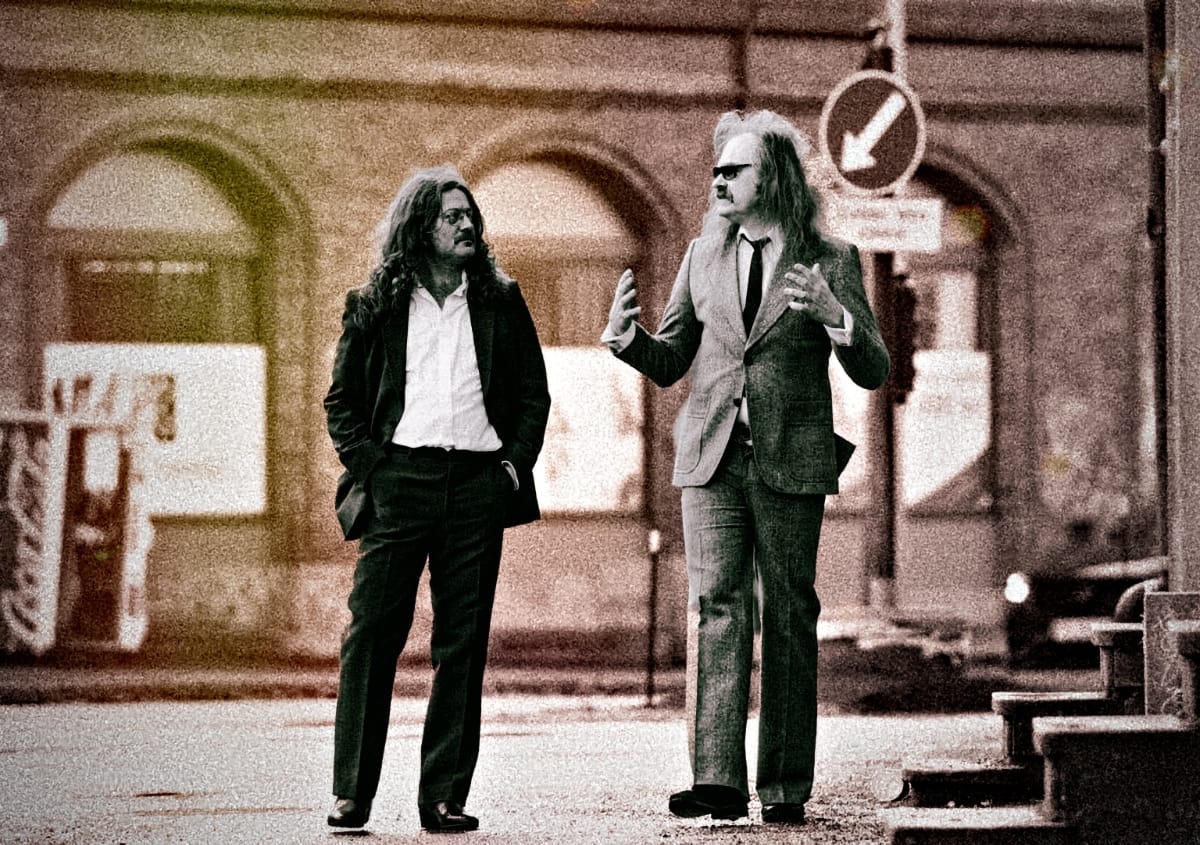
At the end of LP's conversation with Mike Scott of The Waterboys, he asked, "What's in your musical rotation these days?"
Mike Scott (The Waterboys): I've been listening to a lot of country rock bands from Trondheim in Norway of all places. It turns out that Trondheim is an epicenter of country rock music. And I've just received a couple of albums by a band called Motorpsycho from Trondheim and I've been listening to those and they're very beautiful.
Run-Out Groove
That Norwegian guy in the suit sort of looks like David Crosby, right? Once again, we come full circle. And, with that, I thank you for reading this issue of our Talk Of The Tonearm newsletter. Please get in touch if you'd like to tell us something, give feedback, or get involved. I'd love to hear from you. Spreading the word is also greatly, sincerely, and lovingly appreciated, so forward this newsletter to a friend who digs this stuff. I bet there's someone who immediately comes to mind.
The avocado tree out back is starting to fill up, and I'm getting excited. I hope you have a little something to get excited about, too. I know it's dreadful out there, but these little excitements help. Stay nifty, and I'll see you next week. 🚀
Connect with The Tonearm:


Comments