


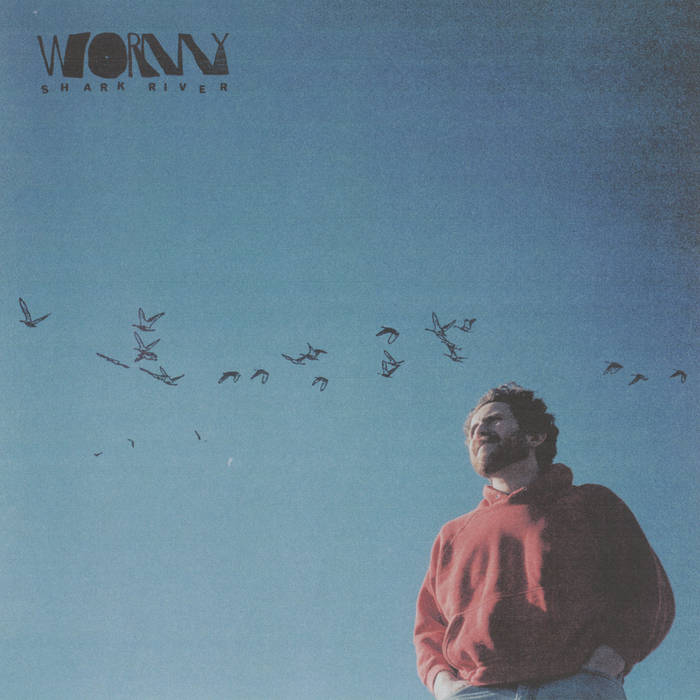
Noah Rauchwerk leaves nothing to the imagination when it comes to his self-critical wordsmithing on Shark River. I mean, starting an album with two songs called "Big Loser" and "I Hate You" is certainly a choice. Released under the moniker Wormy, it is an album that reflects sternly on a transient, half-committal lifestyle that Rauchwerk knows well (as the touring drummer for Samia, Willow Avalon, and Renny Conti). The warm, inviting production on Shark River juxtaposes, at times, what is being spoken or sung. The aforementioned "I Hate You" has a driving, somewhat uplifting groove, while epic, fuzzed-out guitar moments feel like the sun shining through the slits of a blackout curtain on day two or three of a depressive episode. On his second solo release, Rauchwerk hopes to shine a light on the challenges of maintaining a healthy level of social and self-care while coming into adulthood as a touring musician.
There is a lot of honesty in Rauchwerk's songwriting. It is a cutting analysis of moments gone wrong, time unknowingly wasted, and connections that are no longer. Shark River, in a deliberate sort of way, tends to leave little to the imagination. The pining and relatability found within these ten tracks are, in a sense, its superpower. It mimics the raw thoughts and moments of the human experience, a piece of art that represents the antithesis of sugar coating its tougher moments. "The things that I lost in my lifetime will all flood back the moment I die. I am here now, are you with me?" Rauchwerk asks on the isolating, pedal-steel-laden "I Am Here." There are times when you feel instinctively compelled to offer a shoulder to lean on or a listening ear; I suppose that's just the album doing its job.
I spoke with Noah Rauchwerk about Shark River, the trials and tribulations of life as a touring musician, and how he stays present and battles imposter syndrome within his blossoming music career. This conversation has been edited for clarity and length.
Sam Bradley: How old were you when you started writing original music?
Noah Rauchwerk: My older brother, who's five years older than me, started writing songs when he was really young. I kind of just grew up watching him write songs, and I was intrigued by it. I didn't really understand that it was something I was excited about until probably middle or high school. Now, as I've gone touring and done a lot more musical stuff, it's become the thing I want my future to be, if possible.
Sam: Looking at it now, what do you think was the biggest lesson that you learned being a touring musician?
Noah: The main thing is that spending time with people you really love is extremely important if you want that to be your life, because, you know, it's 24 hours a day. It's not like anything else where you can go home and decompress. These people, your people, are there the entire time, and it's a good lesson in life to surround yourself with people that you like, are inspired by, who you get along with, and make you laugh. Also, just being nice to everyone you can because, you know, if you give out bad energy, you get bad energy. I feel like being nice to venue staff and becoming friends with other bands has made so many connections possible.
Sam: How does Shark River expand on or lean into those lessons?
Noah: I wrote so much of it in the midst of traveling. A lot of the songs are about experiences that I had on the road. There were also experiences I had when I had a week off and was really stressed, or when I was trying to rekindle some romantic thing from years ago that I was still thinking about. There are a lot of influences from things like that, which affected my life via touring.
Sam: There is a lot of bluntness and honesty in the songwriting on Shark River. Is that something you consciously keep in mind as part of the writing process?
Noah: It's such a second-nature way of writing songs for me, and a lot of times I'm trying to move away from it. I'm learning that I don't need to say something that happened to me in exactly the way it happened. I could stretch the truth a little or make up something that happened if it serves the song better. All the music I love, bands like The Mountain Goats and Bright Eyes, all write about matter-of-fact things that happened, stream-of-consciousness style. There's something in songwriting and poetry where I've thought, "Oh, it's so interesting that you can use such mundane details and they end up taking on a whole new meaning in a song."
I find that a lot of times, when someone is talking about things like "I went, and I did this. I met up with my ex and this happened," you listen to those lyrics and your mind plays a video from your life that's very similar. You're using pictures from your own memory to recreate moments that happened to someone else, but they're told in a different context. Listening to music like that makes everything feel very personal to you, even though it's extremely personal to someone else who experienced it and wrote about it. Does that make sense?
Sam: Yeah, I've heard that said in a similar way, where people can make their own connections to something easier when it's told more directly. It can be simple and still poetic.
Noah: Also, when you're on tour, the rate at which you're experiencing completely new environments and completely new things that you've never seen before, or people you've never talked to, goes way up. A lot of the way that I try to write is talking about this weird thing that happened in this weird city that I've never been to. For example, my song "Cocaine Bear" was about a day off I had on tour that was one of the best days of my life. Every time I play it, it reminds me of that memory in such a nice way. It's kind of a little diary for yourself about the experiences you had.
Sam: On that train of thought, how do you like to spend an off-day on the road?
Noah: It ebbs and flows depending on what city you're in and the way you're traveling. If we're on a van tour, a lot of that time is just spent driving. But when we're on a bus, you actually get the entire day in one place. If we're overseas, I will do extremely touristy things. I'll go see the Eiffel Tower or whatever. Usually, if I'm in a random city in the US, Ned, the bass player in Samia's band, and I love playing pinball, and that's a great way to pass the time on tour. It's a good way to see new places in town and find a cool bar to play pinball. I also really enjoy finding a new vegan restaurant to try.
Sam: The press release for Shark River describes the album as a tour in and of itself. The quote I had written down here was "full of hyper-detailed vignettes and introspective window-gazing musings." Do you visualize any sort of linear path or story to the record?
Noah: I haven't really thought about it that way, but there were six songs that were recorded in one place, and then the rest of them were scattered around over different periods of time. There were a few songs that I left off. I was trying to craft a 10-song album by selecting things from different places, and it felt like it was getting really disjointed. Then I sent it to the mixing engineer, and he said, "This actually tells a cohesive story," in a way that I'd really hoped for.
The whole Shark River idea is just a common theme in my life: when everything is going by the book, going well and comfortable, but you feel this sense of impending doom. Of course, that is not a great mindset to have, just full of anxiety. I grew up with a lot of OCD, and so I just have always had this thing in the back of my head that something bad is going to happen, there's going to be a shark in this river or whatever, which is kind of a stupid sentiment. I think it carries through the whole album; even when it's hopeful, there's still this feeling of, like, a little bit of dread.
It tells different stories about people I've met on tour, old friends, and relationships, and I am happy that it ended up with a story arc. That wasn't necessarily there when I was writing the songs.
Sam: Do you have any methods that you use to sort of keep yourself invested in the present moment, whether that's like a songwriting thing or just a day-to-day life kind of thing?
Noah: Yeah, this is something I struggle with, and ultimately I think everybody does. I tell myself, "It's real, you're doing things you never expected you'd be lucky enough to do, playing venues you never thought you'd play, and meeting bands that you never thought you'd meet." I try putting my 10-year-old self in this position. I can't believe I'm here right now, and imagining that person helps in these scenarios, because it's so quick that you just get jaded by it, and you are annoyed that you have to carry all your gear in, or that you didn't get any sleep. Reminding yourself how badly you wanted this your whole life is really important.
I like doing a breathing technique before shows. A lot of the band has started doing the Wim Hof breathing, which just brings you into the present moment. I find it a forceful way to get your body to meditate when you don't feel like it. I'm also a big runner, which really helps me calm down and get into the present moment. It's easy to look forward to a tour for months, and then you're there, always thinking about the next thing that's going to happen instead of just living in it.
Sam: Let's talk a bit about how collaboration shaped the record.
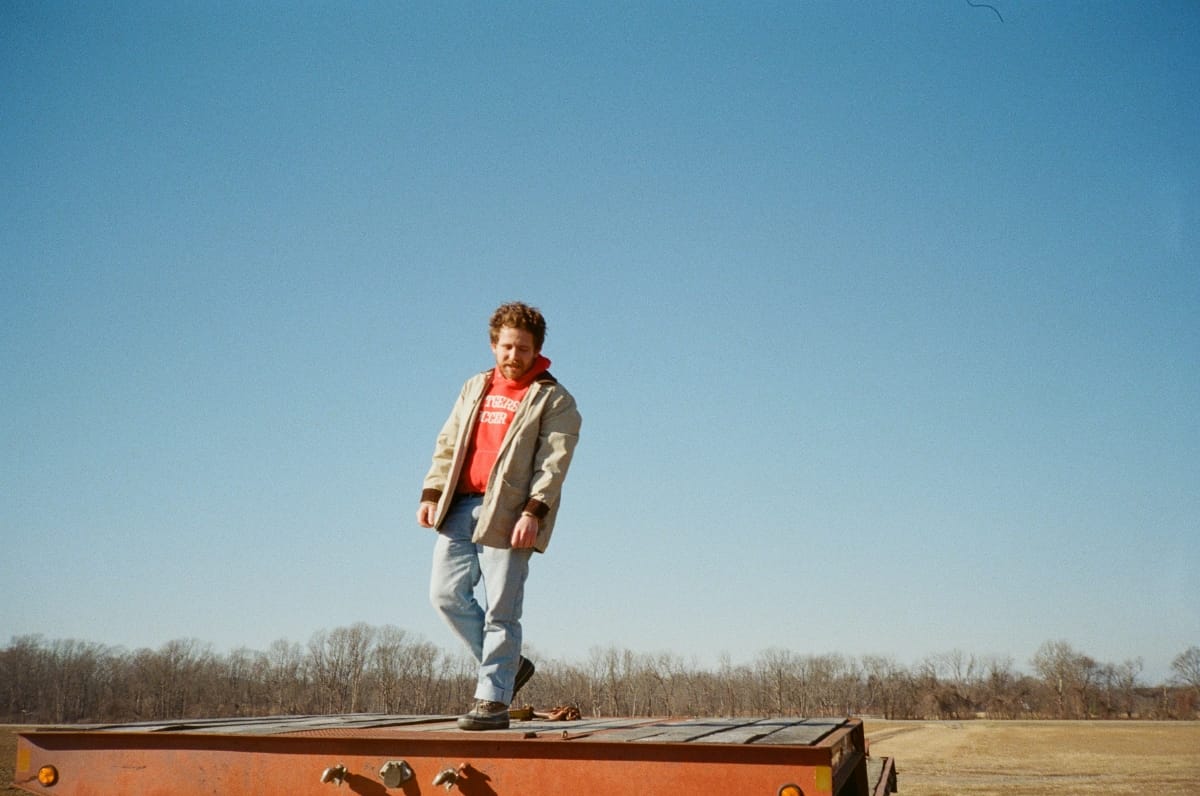
Noah: Yeah, a lot of times I'm just showing up with chords I wrote on the guitar and not much of a vibe for what the song is going to sound like. I play the drums, so I can imagine what the drum part might sound like, but besides that, I really like to trust the people around me. It worked well for this record, and it feels like exactly what the songs needed. I'm very happy about that.
Most of the record was made at my friend's house upstate, which we rented for a week, and we brought a little studio setup and recorded there. I brought up my four friends, whose musical tastes I trust deeply. My friend Ned played the bass, and my friend JR played guitar. Renny Conti produced it, played some guitar, and did some singing. Then my friend Jack McLaughlin engineered it.
Sam: Were there any notable moments from the session where someone brought an idea that changed your outlook?
Noah: I can think of a few examples. But the main thing was the vibe in the place where we were recording. I really didn't want to do it in a studio in New York; I felt pretty strongly about that. When you're done with the session day in New York, and everyone goes home, does their own thing, or goes to a bar and then comes back, you kind of lose the momentum of the record. I really wanted to have this mentality of, "Let's all go to a house somewhere that's secluded and buy a bunch of food for the weekend. At the end of the session, we'll all make dinner together and have a fire outside." It felt better to do something where we're all still in the same space we're recording in.
Sam: I can imagine having that seclusion, while also having nothing but time to work on it, opens you up to more experimenting there?
Noah: That was exactly what the feeling was. I think it worked, and it felt really good to be recording and doing it there. So I'm very happy that's the decision I made, and I encourage other people to try it, too. Besides anything else, just being in a house with all your friends making something is extremely fun.
Sam: Were there ever moments when you worried about being too revealing or personal in your songwriting? What is your relationship with putting yourself in a vulnerable limelight?
Noah: It's tough because I want to give a lot of details about people and about things that happen to me, but I also don't want to give anybody else's life away. It's okay to leak your own personal life, but when it's someone else involved, especially romantically, I generally feel strange about that. I ended up changing some song titles because I thought they were too literal about who they were about. When it comes to exploring those more sensitive things, I want to be clear, but I don't want it to be clear that it's about these certain people. I try to be sensitive to it without ruining the song's feeling for myself or other listeners.
Sam: Have you always had that mindset about it, or did that take a lesson in knowing when to and when not to include those things?
Noah: I would say when I was younger, I was less worried about it, but then I started realizing that these things can offend people. I've kind of gotten in the habit of sending songs to the people that they're about beforehand, just so they're aware of what is being said. I would say I've gotten much better about it than I was previously.
Also, my perception of something that happened, especially in a romantic context, is not necessarily what happened, you know? That's just how I feel about it. It's the way I've perceived it. So, for it to be offensive to someone else is not truly fair. Then there are songs which are about friends who have hurt me, and I have to say to them, "I just need you to know this is not how I feel about you right now. I was mad, and you did this one thing that annoyed me, and so that's why I wrote it."
Sam: So it allows you to use an emotion for a song, working it out almost. Is there something cathartic about that?
Noah: Yeah, yeah. It's just funny because you capture that in a moment where you have to sing it angrily so that it feels right. It is a snapshot of that time, a time that I'm sure some people don't like to hear out in the open, but I guess that's just the nature of songwriting.
Sam: Is there anything you hope people take away from the record?
Noah: I feel maybe the big thing to take away is simply that what you're thinking about a situation isn't the truth. The way you're perceiving it, it's not what actually happened. A lot of the album is about having a negative perception of yourself and how that's just a lens through which you view everything. It can negatively affect your life.
I think this album was like a partial realization that, "Yeah, I'm not as bad as I think I am." Or maybe that things are easier than you perceive them to be, or all these things that you're complaining about are not actually so bad. Positive self-image is really important, and really believing in yourself and having confidence that you're making the right decisions—that's not something I've thought about that much before, so I hope it came across.
Check out more like this:
 Meredith Hobbs Coons
 Sam Bradley


Comments