


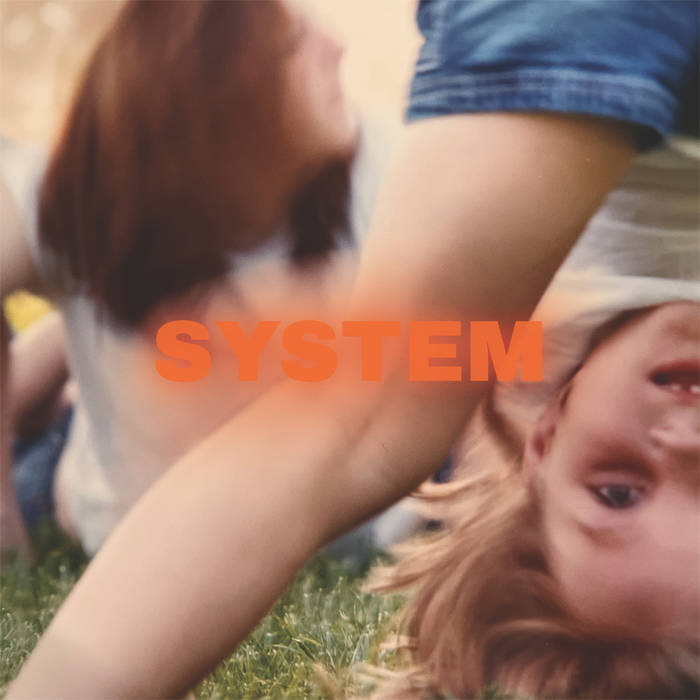
There's something very nineties about the title track/first single from Prewn's latest, and second album, System. It could be the cello giving off a "Bittersweet Symphony" kind of feel or singer-songwriter Izzy Hagerup's growling vibrato, reminiscent of Fiona Apple's. However, it's more than this album's cultural touchpoints that ultimately pull the listener under Hagerup's spell. It's her sonic ambition and emotional honesty, the feeling that she put it all out there, with every multitracked layer of each song on System.
The music is compelling, at times hypnotically so. And the orchestration on it—the interplay between layered cello, guitar, and background vocals—reads immediately as impressive even before the knowledge sets in that Hagerup wrote all of these songs and tracked everything herself in her home studio. When speaking with her about her solo production choices, she'll brush it off as possibly having done too much, but that's the whole charm of it. She just seems to be taking her own lyrics seriously: "don't be scared of the sound of your broken, bleeding, dripping, heaving heart." It dares to be too much, with her heart fully in it, broken and bleeding though it may be.
Izzy and I spoke through virtual means just after she returned home to her new place in Los Angeles from some tour dates in Europe.
Meredith Hobbs Coons: How long have you been in California?
Izzy Hagerup: I just moved here, like, mid-July, but I lived in the Bay Area in high school for two years with my aunt, so I've had the itch to come back for a while. It's magnificent over here. I love it. Still adjusting to LA, but yeah.
Meredith: How has that been for you?
Izzy: I think so much of being in a place and feeling good in it has to do with having community and really feeling that. I'm still developing that here and finding my people, but I know they're here. Also, there's just so much space to move around. I've really just been enjoying nesting and going on walks. It's been really nice meeting people, but also having a lot of solitary time sitting outside, thinking about life. Europe was so cold and wet, and coming back here, I was like, "What?!" It's so nice to come back to.
Meredith: The weather privilege is truly wild.
Izzy: I can't even believe it, but I'm going to Massachusetts for a month on Tuesday, so I'll get my share of the chill and come back.
Meredith: Is that where your roots are? In Massachusetts?
Izzy: I'm originally from Chicago, but I've been in Massachusetts for 9 years. I went to school out there, and I have a band out there, so I'm going for some shows.
Meredith: Is the band that you have in Massachusetts the band that supports your solo writing?
Izzy: Yeah. I've just been showing up with the songs I have, and then we make a version together. The band has kind of fluctuated—like, who's in it—and I've wanted to keep it pretty flexible, because I knew I wanted to move. Also, it's so special to play with all these different musicians.
The band right now that's in Western Mass, they're all just amazing musicians and the kindest people. It's been really exciting to bring these versions of these songs to life. Down the line, I'd like to open up the creative process a little bit more and be a little less like "I need the control." I'm learning how to communicate better.
Meredith: Going back to control, you—I'm told—recorded this last album, System, entirely on your own. Please tell me about that, because it feels so orchestrated that it blows my mind to think of it as a mostly solitary endeavor.
Izzy: Over the past few years, they came together. It's just me in my studio with no windows and my Scarlett audio interface. I find something, follow it through, and if it sucks me in, it just builds on itself. I just love so much the process of watching it build before me. I go right into Logic and try to capture. It's like one in I don't know how many nights that you find that thing.
Meredith: But if you were shaping it over the course of three or four years, it sounds like you were, to some extent, allowing yourself to be patient with the process.
Izzy: I mean, I think each of these songs mostly happened in a day or two. I went through everything, and I was like, "Oh, I don't know if I'm going to do that better, or in a way that I like better, so let's just get that out there."
Meredith: Can we talk about the use of strings?
Izzy: Yeah. I played cello growing up, and I always thought it was stupid. I don't think I understood how much music meant to me that whole time. Something clicked eventually. I had abandoned the cello and then picked it back up, like, five years ago. I'm not playing nearly as much as I'd like, but it's been magical to rediscover the cello and realize what a beautiful instrument it is. Most of the cello I put on the songs feels self-indulgent. It just feels so good to put it on, but sometimes I'm like, "Okay, we don't need to put cello on everything."
Meredith: I would like to hear about your vocal approach as well, because you have a unique sound, and it seems like you also play with the different elements you can manipulate with your voice, like EQ'ing and layering.
Izzy: I love the layers. Maybe for the next album, I can pull back and make it a little cleaner. But I just love layers.
Sometimes it needs to be clean, but I love it to get kind of fucked up. It doesn't feel very conscious, how I end up singing on anything. Anytime I try to replicate the way I sing on a song, it's hard for me to capture that. I feel like the voice that I woke up with that day, that goes into each song, is like . . . you're never going to get that again. I don't know if it's like, "Oh, how many cigarettes did I smoke today?" Or, like, "Did I have orange juice?" I don't know what goes into it. It's all very intuitive, but frustrating when I get attached to a style of singing.
Meredith: Another thing that I like to think about in terms of voices, with speech therapy in my background professionally, is how we all form our own personal dialects, based on all of the different influences that we absorb: places we've been, people we've met and been shaped by. I have that thought about vocalists as well. Who (and where, maybe) would you say has influenced your voice?
Izzy: It's so hard to say. I know that I'm influenced by everything that goes in, but I'm so "out of sight, out of mind," it's hard for me to recall. I know back in the day, when I was, like, 14, I was really into CocoRosie. Maybe that kind of seeped into how I used to sing more, but now I don't really know.
It's really so unconscious. I know in the past few years, I've been aware of wanting to enunciate more. I'm leaning away from unconsciously putting on some affect, but I know I sometimes do. I remember, in the song "System," Carl, who mixed it, was like, "You have this, like, Icelandic way of singing," and I'm like, "It just feels like the way that it needs to be sung." I don't know if I'm too inside of it. I can't tell if there's something different going on in each song. It's really just whatever has to happen.
Meredith: I noticed a theme between your previous album and System: you really delve into darker mental health topics. And there are some reflections on the fragility of life.
Izzy: (laughter) Yeah, that just keeps coming up. I don't really know why I always lean into the darkness, but, creatively, maybe it's easier to access that type of feeling. I was reading The Artist's Way; I think it was in that book where she said it's easier to write about pain, that it pulls your attention more quickly. But you can just as well write about the other side, the light side of things. It's just that you have to go there more consciously.
I also think that I feel very repressed on a day-to-day level. When I'm being creative or working on music, it feels like one of the few safe places to open that door and dig things out. Because otherwise, it's so hard for me to access all this shit that I know is sitting inside and affecting my relationships and my relationship to myself. I would like to toy around with the other sides, and not always go to the intensity of life, but it's just one of the few ways I know how to access that, and I think it's so important to access it. It's in there, whether you like it or not.
Meredith: It sounds like the way that you approach it serves as almost a form of shadow work.
Izzy: Yeah. And sometimes I'm like, "Damn, what's going on?" But if it's working, I'm going into this less conscious place, and I can learn something from it. It's also been a helpful way to process other people's pain, and I know that's probably a lot of projection, but some of the songs on the album aren't written from my perspective. It's usually secret, but one of my friends just figured out that one of them was about her. I was so nervous that she would take it the wrong way, but she was like, "This is like every thought I have in my head."
Meredith: Interesting! Has that experience made you almost want to tell people that some of these songs were written for them?
Izzy: It's scary. I can also be quite passive and not confrontational, but when she texted me, "What is this song about?" I was in Berlin, talking to someone who was like, "You have to tell her." And I was like, "True, maybe it's a disservice." I want, in my life, to be someone who's more straight-up. That's intimacy, too: to be able to be real. It's just a fear of that depth, and part of depth is the uncomfortable conversation. It's probably better to reveal the truth.
Meredith: Well, then it becomes something that they can use. This sort of touches back on my speech therapy background: If you're teaching a kid how to talk, if they're learning how to speak, and they say something and you don't understand it, the strategy is to repeat back what you think they said, because it gives them an opportunity to correct you.
Izzy: So interesting. Like, my dad had Parkinson's my whole life. I don't know if you have any insight about this, but he had a surgery that went badly, before I was born, and it was super hard for him to talk. But then, when he would sing, it sounded just like he would always sound. You could completely understand him. It was great.
Meredith: It also helps stutterers, actually. Stutterers can often access fluency when they sing or read out loud, because it comes from a different part of their brain.
Izzy: Yeah. My grandma had aphasia, too, and couldn't speak at all. But she could sing "You Are My Sunshine," and it was so beautiful.
Meredith: Dang, look at all that family history! No wonder you write about dark stuff and worry about communication! I knew there was a reason I wanted to mention my speech therapy background with you. Do you want to talk a bit about the title of the album System?
Izzy: Yeah. Each song is like a reaction to living in a world that is riddled with systems. We think we have a sense of free will, but we're always operating within these systems of thought and oppression. I locked into this thing, and why I'm having these reactions and perceiving anything is because of my little place in all these systems. No thought is your own. We're all just victims of the system, which is just a system of systems.
I've just felt stuck, going through depression and anxiety. I feel like [System] was kind of a journal of my mid-twenties. There's such gravity to so much that we're facing, but at the end of the day, I'm stuck. The issues that were coming up that I wanted to write about were so personal, but I'm like, "Well, if you step back…"
Meredith: It's like a fractal.
Izzy: Yeah, it's like I'm coping by internalizing it, feeling shame, and just struggling with myself. Sometimes, with some of these songs, I'm like, "Ugh. This is so 'boohoo, me,'" but I think it's a reflection of something beyond, and the only way to access that, maybe, is to start from my personal experience. And maybe that relates in other ways. It's my system. Obviously, I have plenty of privilege, and I can only speak from my lens. How can you process anything? It weighs on you in a certain way. You don't realize how related it is to something much, much bigger all around.
Meredith: And in translating your experience of the system, it can provide comfort for other people who are also trapped in that same system.
Izzy: Yeah, there's so much self-consciousness that comes up when writing, and that's the antithesis to creativity. So I'm trying to find the balance. I don't want to be so self-indulgent in my writing, but maybe shying away from that isn't serving the music or myself.
Check out more like this:
 Jonah Evans
 Meredith Hobbs Coons


Comments