


Outdoor kid meets indoor kid, magic happens. The LA-based electronic duo Green-House may no longer be kids, but a gentle, playful nature still animates Olive Ardizoni and Michael Flanagan. That sensibility carries through their latest release, Hinterlands, an astral yet grounded patchwork of compositions shaped through their intuitive collaborative process. Each track feels like a new world where hierarchy flows away with tropical timbres and granular spark.
If you're looking for a good place to start, this month marks a difficult six-year anniversary of the lockdowns in the United States. In January 2020, Green-House released their Six Songs for Invisible Gardens with LA label Leaving Records. In an almost prophetic stroke of timing, the record celebrates the interaction of plants and humans. This unprecedented pause in daily pace forced collective reflection in nature and attunement to slow processes. For myself, this was a treasured record as I tended to a scraggly collection of houseplants, which I suddenly had time for.
Softness aligned with craft may feel strange in 2026, but I came away from our interview recognizing there's a real resistance in world-building. 'World-building' is often used to describe Ardizoni and Flanagan and the way they shape music. It can evoke anything from their wish to remove money and long lines from the process of playing music live to the invention of the speculative video game Monkey Island, which provided the imaginative background for Hinterlands. Green-House recently signed with Ghostly International, where someone at the forward-thinking label decided to welcome the pair with stuffed sloths in the merch lineup.
We will get to the sloths later, but for now, the takeaway is that feeling safe is part of being creatively matched. The way we signal each other through our values, favorite movies, and thrifted cassettes. With California sun streaming into each frame of our video chat, Ardizoni and Flanagan joining in from their different LA neighborhoods, we talk about film soundtracks, growing up on the internet, and managing tour wishes and support in complex times.
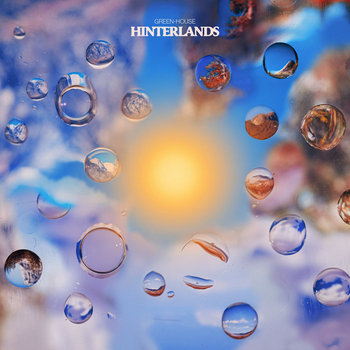
Carolyn Zaldivar Snow: You know, as I listened to Hinterlands, it reminded me of a good memory: playing Final Fantasy VII with friends in my dorm at a small rural college in the late 90s. Then I read your liner notes, which completely clock the Final Fantasy soundtracks as a comparison. Have you ever played it?
Olive Ardizoni: I'm really glad that you picked up on that. That's a really big compliment, because the Final Fantasy music is so damn good. I've never played it, but I listen to the music all the time, so I think, yeah, definitely an influence.
Michael Flanagan: I grew up playing those games. Final Fantasy X, I think, was the one I grew up with. And, yeah, the music is really awesome. There are such fun worlds to get into.
Carolyn: I see a lot of synthesizers in the background, Michael. I always wonder how people come to electronic music and what that evolution is, through playing an instrument, or their parents' weird record collections.
Olive: I'm a good person to start with, because my story with electronic music is shorter. I never really played electronic music until I met Michael, and I was curious about it since Michael had a lot to share and give in that realm of things. Also, it was because I started listening to YMO. In my childhood home, my parents didn't have a lot of records, which is crazy. I would go to garage sales and buy tapes myself, like funk and disco. When I was a teenager, I got into Shpongle, a little psy-trance moment.
Carolyn: Did you hit a point where you said, “Hey, let's go to Guitar Center, and I'm gonna pick up a MicroKorg,” or something like that?
Olive: Oh, yeah. We were living with our friend, who worked at a music store, and I told him that I was interested in some starter synths. He got me the little Korg [Volca] series, and brought home a couple of those. I just started jamming; that was such a good starting point. Then Michael started showing me how to use Ableton. At the time, we were listening to some stuff on Orange Milk Records, like Foodman—that was a big one. So we would make some fun, weird stuff. I think stumbling on Orange Milk made things feel accessible and open in an experimental way. That made me excited about all the bleeps and bloops I was making, which probably weren't very good.
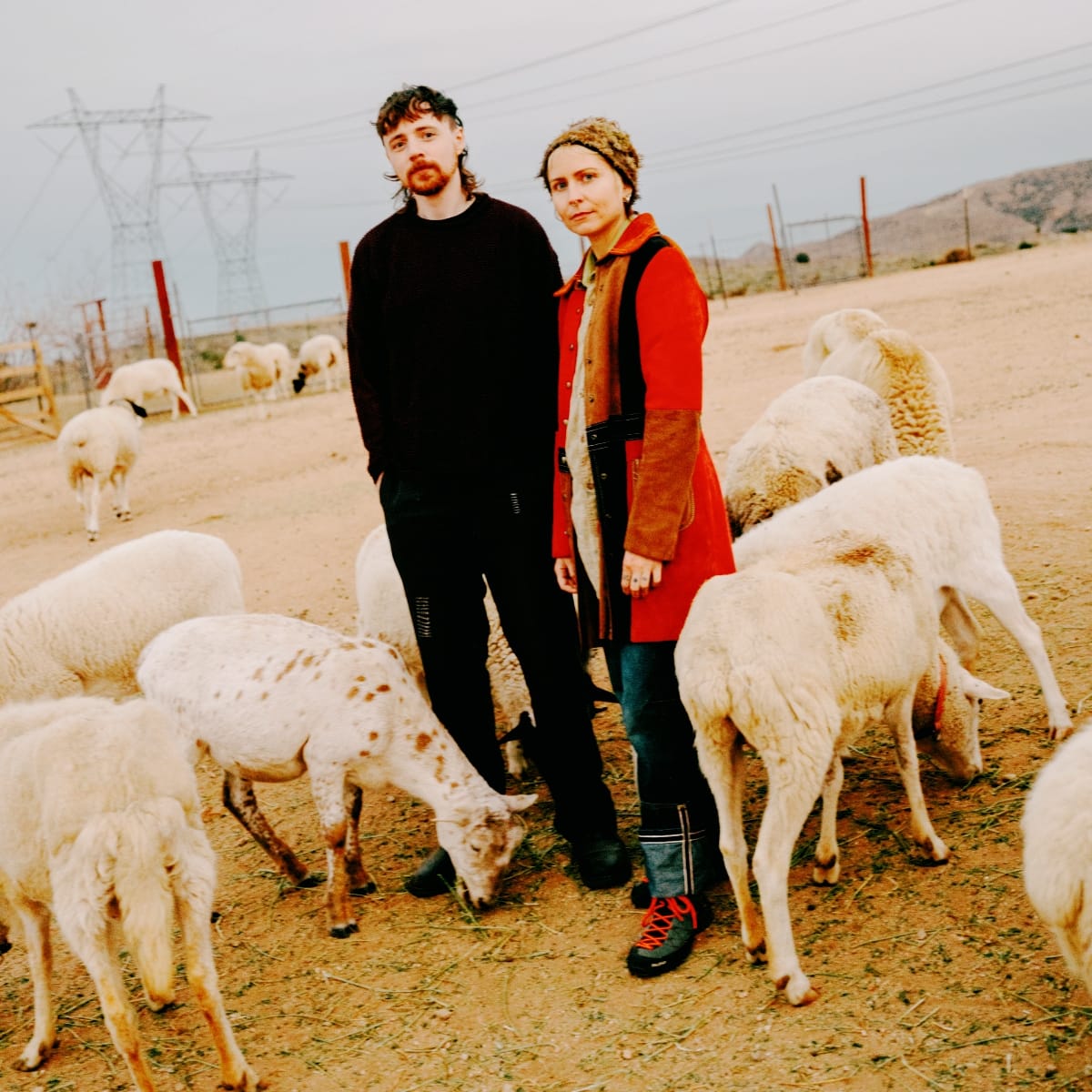
Carolyn: I think there's something lovely to a beginner's mindset where you don't have all those expectations.
Michael: I think the stuff I connected with the most early on was Warp Records, which would have been like Aphex Twin and Boards of Canada—those are all really strong influences early on, and then it progresses through that. I went into more experimental improv stuff, and kind of got into that world. That's less about the electronics, but I think it teaches you a way of listening that is very applicable to ambient and electronic things. Then it all kind of circles back together. Then there's also the thing of what your family is listening to. You don't always consider it when you're coming up as an artist, and then you come back around to some of these things, like listening to Tears for Fears, which was always on, and you're like, “This stuff is amazing." Incredible songwriting, incredible production.
Carolyn: Everybody's looking for these little pieces, the way we kind of stitch together our atmospheres as people, the way we signal each other with our preferences. Olive, did you grow up in Florida? Did I read that right?
Olive: I mostly grew up in Naples, Florida. When we first moved there from Pennsylvania, I was around three, and we lived in Cape Coral.
Carolyn: Did you collect shells and things like that?
Olive: Yeah, definitely. One of our songs on this record is named after Sanibel Island, which is close to Cape Coral, and we would go there all the time, and that was like some of the best shelling in the country. Of course, it got over-shelled because it's not a great idea for everyone to go there and take all the shells, and then the hurricanes over the years messed up the island. I don't know if it's a shelling destination anymore, but I have so many fond memories of walking along those beaches and picking up shells and exploring, finding sand dollars with my feet in the shallow water, and then tossing them back like discs. It's cool. I mean, subtropical beaches, you can't beat them.
Carolyn: That sounds so great, right now. It's snowing in Baltimore. How about you? Michael, where did you grow up?
Michael: I grew up in North Carolina, 40 minutes outside of Raleigh. It was very suburban, so I think I gravitated to being on the computer and doing lots of deep dives and things like that. You pick up so much stuff from the internet, teaching yourself how to do music. It gave me a lot of access to things like learning how to do Fruity Loops, then graduating to Ableton. It's this long process of learning about the world through this very strange lens, which is the internet.
Olive: To this day, you’re more of an indoor guy, and I’m more of an outdoor guy.
Carolyn: In my head, I imagine you, Olive, being like, "and the waves sound like this, and the wind feels like this." Then Michael's like, “Here's my signal chain in Ableton with my wall of white noise to model this." Maybe it's not like that at all.
Michael: (Laughter) That's almost more accurate than any other description we've gotten.
Olive: Michael's fully conjuring all those good nature sounds. "Sun Dogs" is the most tropical-sounding song, and that's Michael's song for sure.
Carolyn: How do you work together? Do you guys email each other? Do you have work days? Do you just text each other erratically at 3 am like, "I have this idea."
Olive: We work together in the studio for a lot of it, and then also we both separately will start some songs, then come together and finish writing them. Sometimes, though, we'll just completely write a song together from start to end in the studio. No 3 am texts, because Michael stays up late and I don't, but I definitely get exciting texts from Michael of little demos that he comes up with all the time. I love getting texts from Michael with those songs, even when we’re not working on anything. He wrote this entire EP based on a video game called Monkey Island. So he's been sending me Monkey Island tracks. Michael's just kind of doing amazing shit all the time.
Carolyn: Monkey Island is imaginary, right?
Olive: Yes. An imaginary video game, and Michael just went ahead and wrote a whole bunch of songs for it.
Carolyn: Tracks for speculative video games; I love this. What happens in Monkey Island? What would be the objective for the player?
Michael: There's been a lot of video game talk lately with regards to this album, which I feel like is appropriate, but I think what was in my mind is a PlayStation 2 platformer. There's some weird anthropomorphic thing, like, you're working in the city, but you're a monkey. You've got all kinds of tasks to do that you don't want to do. Maybe it's a monkey that has to go to work and is trying to quit his job. There's a lot of freedom in video game music that you don't get in other places, because there's not this expectation of what genre it's supposed to be or what it is. There's this pure thing of just needing to evoke an energy and a space of all these different things. It's the same reason I really liked music for horror movies when I was growing up, because you could do so much experimental stuff and kind of subversively get people to listen to things they would never listen to otherwise.
Olive: With video game music, there's also freedom in sound selection. You can do the goofy synth sounds that you would have better taste around for other music. But in video games, you could be like, "we've got an accordion and fake bongo sound . . .”
Michael: Like an exploration of bad taste, almost!
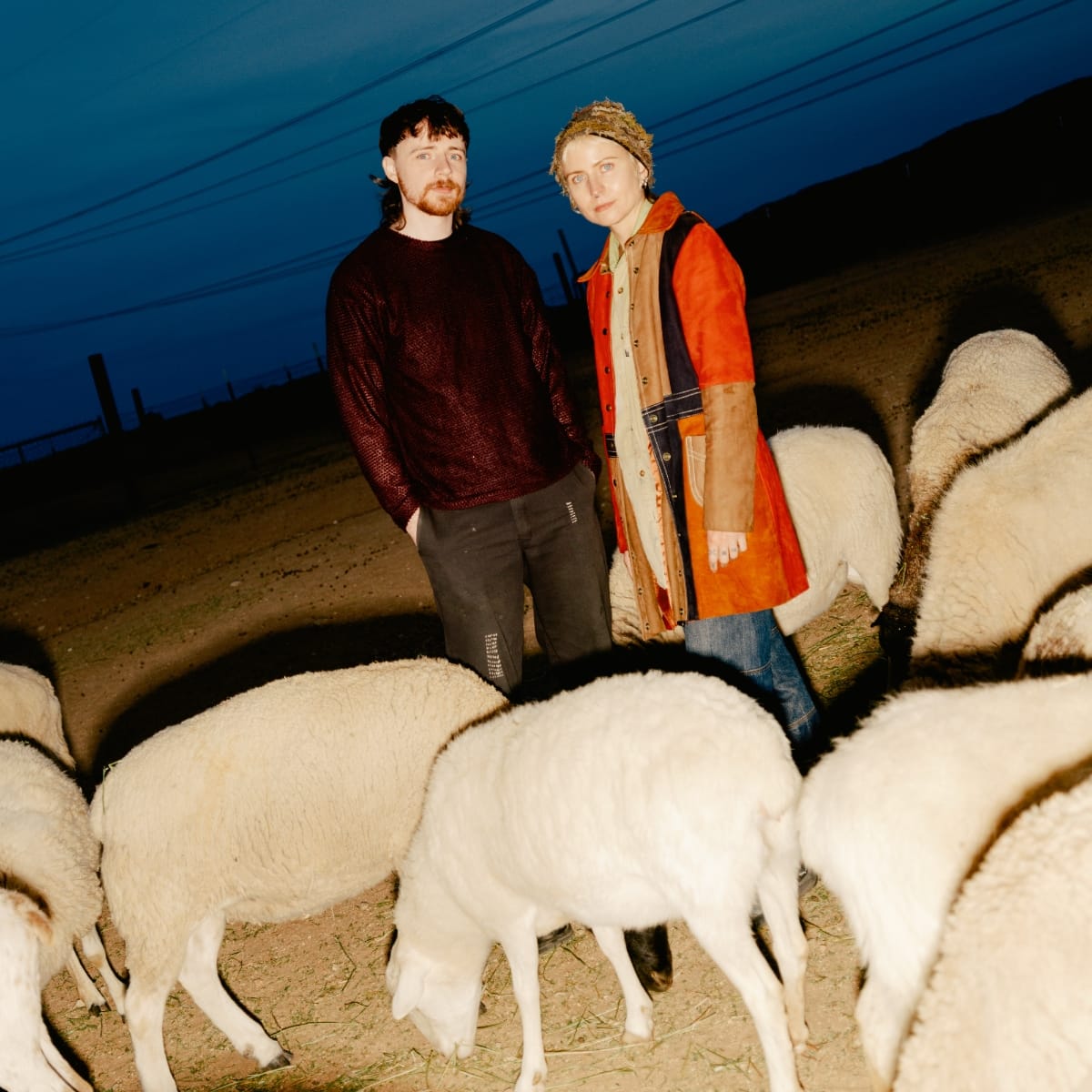
Carolyn: It's nice to be responsive to an environment, even if it's the pretend, fictitious environment of Monkey Island. So, in Los Angeles, you live in a sound environment that I would argue might be a little contrary to your record as far as atmospheric sounds and what's happening around you. What are some sounds in your environment that you find comfort in, and what are some that you find discomfort in?
Olive: LAPD helicopters take the cake for uncomfortable sounds. That was the first thing that came to mind. Good sounds? There are so many birds here, but the Pasadena parrots that live in LA are amazing. There's a population of maybe a couple of thousand. They fly really high, and they're so loud because of the really tall palm trees. They seem to like to take refuge in those. They're just so delightful.
Michael: Leaf blowers are just ever-present, terrible all the time. You're trying to record, and then there are a million leaf blowers, and there are no leaves, so they're just blowing around dust. It's terrible. Good sounds? My answer was also going to be a bird sound, which is the crows. There are a lot of crows around, and they make that clacking noise. It's a percussive noise they're making in the back of their throat.
Olive: It sounds like a wood block!
Michael: It's a clave sort of sound. It's such a cool sound. That's absolutely one of my favorite things. It's also finding those moments of quiet. I think it's a really worthwhile thing to do, walking through one of the many large parks we have. Griffith Park is the main one for me. You find these little areas between two hillsides, and suddenly, the road noise goes away. That's a beautiful moment.
Carolyn: I think telling stories through instrumental compositions is difficult. What do you think it takes to tell these stories and have them be good? I feel like your work together has some incredible storytelling atmospheres, which is why I am curious about the sounds around you both each day. What do you think goes into telling a story when you don't work with lyrics, and there's no pretext?
Olive: I think one thing that Michael and I have in common is how much we love films. I think we both go off a heavy visual imagination when we're writing songs together. I mean, even the Monkey Island video game thing, as silly as it is, that's just kind of the vibe of how we both think. It's like world-building.
Michael: That's a good way to put it. I think when Olive writes, they often directly describe a scene, and will tell me—this sort of story that they build up. For me, it's more about creating an environment that goes on. I think maybe we have low attention spans, in a sense, where we just want songs to continually evolve. It's hard for us to make a song that stays in one sonic space for long. We just love movement, evolution, and growth in that. I think it naturally lends itself to that story atmosphere. Maybe some of it's coming from growing up listening to Pink Floyd and psychedelic music designed as a journey, with a programmatic vibe. Maybe we carry that over subconsciously.
Carolyn: What are some things you've seen lately that resonate, or films that carry over for you and inspire your work?
Michael: Eraserhead is my favorite film of all time, and I think anything from David Lynch. Eraserhead in particular has always been a guiding light for a lot of what I think about with art and what it's capable of doing. There's something spectacular about that film where it hits this magical level, where I don't think they were even aware of the effect that it could have—they created something that is sort of otherworldly. Aside from that, I have just loved so many different things. I was watching The Green Ray the other day, which is an '80s Eric Rohmer film. Very low-key, like improvisational dialogue. I hate to use the word 'mumblecore,’ but it was an early example of something you would maybe put in that category. I mean, I'll watch anything. I love Jackie Chan movies, I love all kinds of stuff.
Olive: I'll literally watch anything, I'm like, feed me. I was talking the other day about The Wicker Man because horror, especially folk horror, is one of my favorite film genres. A modern one would be Midsommar. They're incredible. I'm also obsessed with European folklore, so I was just like, this is everything. I love that sort of folklore that evokes fear in people who’ve been indoctrinated into Christian ideologies and beliefs about the strange and the weird, and the magic that's outside of that.
I have to shout out Blood Tea and Red String. I've never talked about this in an interview with anybody. It's a stop motion movie that I think took 13 years to make. It's this dark fantasy with these little creatures, and there's no dialogue. I'm so obsessed with it. I think Mark Growdon did the score—beautiful, minimalist music with flutes and textural sounds, little bells and fun little crunchy noises, and then accordion. They built these amazing little puppet creatures that are running around. It's dark and cute at the same time. So that encapsulates everything that I like.
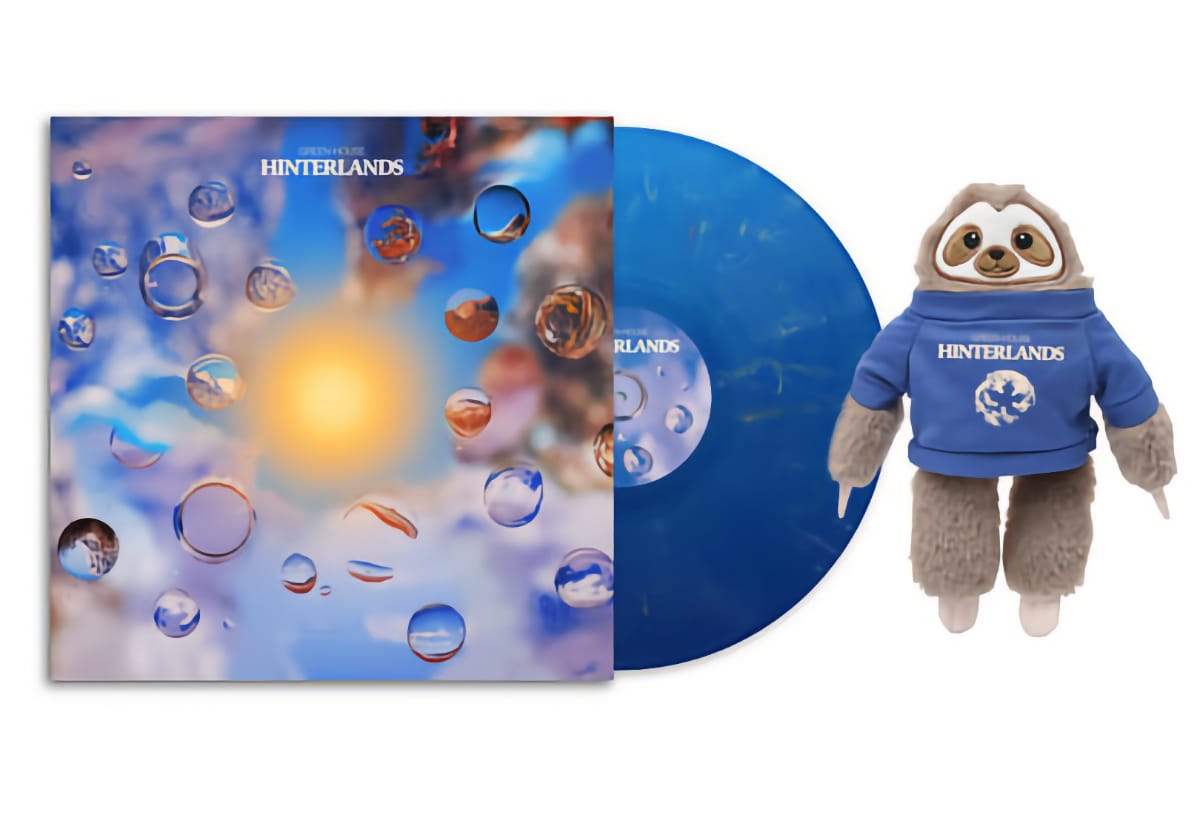
Carolyn: That reminds me, I noticed there was a stuffed sloth as part of your merch for Hinterlands—what's the story? Why sloths?
Olive: I have a little sloth family at home. I have about 14 of them. I don't have any in this room with me right now.
Michael: Two live in the studio here!
Olive: Oh, there you go, that's Flanby, and that's Fritter. They've been around for a while.
Carolyn: They look really loved on and tour ragged. Are they friends?
Olive: It's been over ten years since I got my first sloth. They're all from the same company that has now discontinued them, so I've bought the last few on eBay. I just love the little guys. There's something about those stuffed animals that just did something for me. I usually bring one or two of them to our live shows. We usually always have a sloth playing our live set with us and, like, waving at the crowd. I feel with Green-House they're part of the band. Somebody at Ghostly was like, do you think we should make some little sloths?
Carolyn: That's a really sweet thing to pay attention to as a label.
Olive: I know, right, we're so lucky.
Carolyn: What's your favorite track on Hinterlands where you feel like you come together as a band, and Flanby wants to throw down, too?
Olive: "Hinterland II."
Carolyn: All right, so good that we have a title track twice.
Olive: It's a good example of what we were going for with this record, trying to fit more organic sounds in there, and have more of a band vibe than electronic duo vibe in some ways, which I think comes across on multiple tracks.
Carolyn: Will you tour this year, given the wonderful economic stakes of trying to go anywhere or eat food away from home?
Olive: Right? I think we're selectively going to do some small runs here and there, rather than a big tour for financial reasons. I want to be accessible to people, and also, I don't know how much of this is reality or internet fear-mongering, but looking queer or different and traveling around to certain cities just doesn't feel like something I want to do right now.
Carolyn: I think that's fair and valid. We are in crummy times.
Olive: It sucks, because at the same time, I feel like I want to do the work in any and every way that I can. I do think art is very important for sanity, and I want to be able to show up for it and share it with people. We opened up for Homeshake on a tour, I think last year, and it felt so good to see other trans people in smaller cities or in cities where you just know there's a much smaller population. I want to be able to do that for people. I want to give other queer people a reason to come out and show them that I care about them in Oklahoma or Kansas, you know.
Carolyn: Something that really stuck out to me is when other people write about Green-House, they definitely use words that evoke gentleness and ascribe them to both of you. Sometimes I feel like music is not a place where gentle things happen. What are things we can do in this climate to actually make music a safe space or a gentle space, instead of a competitive space or a capitalism-driven space?
Olive: I think maybe finding ways to make music or performance feel a little bit more like a hangout. We work a lot with our friend Noah, who runs the Living Earth series here in LA, and we're on the same page about finding spaces to play music that aren't necessarily bars or club venues. You have this elevated stage, and everybody's kind of funneled in like cattle, get in line for the bar, get their drink, and then stand around on this hard, sticky floor. Noah is always booking shows outdoors, in public parks and spaces that are child- and pet-friendly. I like environments where people can feel more a part of something, and they're not just a number or a ticket sale. Sometimes I think taking the money out of it is the best thing. Even though I'm struggling so much financially, it's not even funny, but art and money sometimes kind of fucks things up.
One of my favorite things is this puppet show that happens in K-Town once a month and has been going on for almost 20 years. It's called Almighty Opp, and it's a free puppet show that starts at 9 or 10 p.m. on a random street corner, and all these people show up. It's just this weird, experimental puppet show where this guy's like, singing and has these marionettes, and he'll say, in between every song, “Talk to your neighbor, introduce yourself to somebody that you've never met before." It's almost like church, and you do feel that pressure to turn to somebody you don't know and shake their hand and talk to them, and you end up making friends. It just dissolves the tension we feel all the time at a show or in a community space, where we're so walled off from everybody else and so unwilling to have a conversation with a stranger.
Michael: I think the end goal with music is to make it free and accessible to people, but we need to build the infrastructure so artists are paid first. We need to make sure that people have a livelihood, you can have food, you can have shelter, and all these things. In some ways, we work backwards, where it's much easier to make music free through file sharing than to pay musicians fairly. It's a complicated back-and-forth.
I think LA has a nice scene, at least the pocket that we're in. There is this sense of we're in this together, and we're trying to build something collectively. It's great to have people who establish something. Like dublab, which has been around for, I think, 25 years, and Carlos Niño, who’s so heavily involved in what's going on today.
Olive: Oh yeah, he's a beacon, like, the way that he pulls people in and connects people.
Michael: You need people who act as mentors at different levels, and having Carlos be so approachable puts everybody on the same level. It feels welcoming. So I don't know how you build that—you just find somebody that's willing to, you know, forgo ego and build community.
Check out more like this:
 Dave Segal
 Carolyn Zaldivar Snow


Comments