


Peter Baumann has had a fascinating career. Long before founding the indie record label Private Music and even longer before establishing the Baumann Foundation think tank in San Francisco, Baumann was a strong melodic force within the German electronic music pioneers Tangerine Dream. While still with that group, he launched a solo career, crafting a quartet of albums in the '70s and early '80s, beginning with Romance 76. He also worked closely on projects with celebrated experimental musician (and groundbreaking pioneer in krautrock) Conrad Schnitzler.
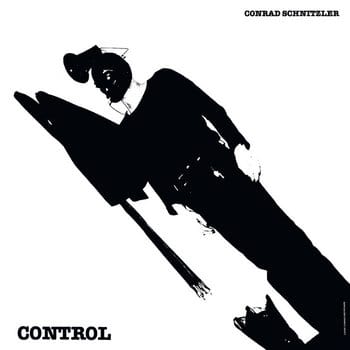
Bureau B has recently released vinyl reissues of Baumann's Romance 76 and two of Schnitzler's challenging albums, Convex and Control. I spoke with Peter Baumann about his solo debut and about his friendship and working methods with Conrad Schnitzler.

Bill Kopp: Before Tangerine Dream, you played organ in a covers band. What kind of material were you doing?
Peter Baumann: At first, it was everything that you would hear in an American Forces GI club in Germany. We played a lot of old classics. "The House of the Rising Sun" and things like that; really standard American fare of the time. The reason we got there was that the guy who put the band together was American, so he had access to the clubs in Berlin. Every weekend we had a gig there for six hours in the evening. We had to repeat ourselves a few times, playing the same songs.
That went on for a couple of years, and then a bass player friend of mine and I were interested in doing experiments. And that led to where I ended up.
Bill: You joined Tangerine Dream in time for the making of their third album, 1972's Zeit. How did your entry into the group change the group's direction from what they had been doing with Steve Schroyder as a member?
Peter: Well, that's an interesting question. Obviously, it's hard to pinpoint. I always tended to be very spacious: the more echo and reverb, the better. And not too much high-end, which can be aggressive in and of itself. So I was emphasizing a lot of warm, low-end atmospheric sounds with some accents that had that high end on them.
Bill: Tangerine Dream used a wide array of instruments. Did you yourself have a primary machine that you worked with?
Peter: Really, anything that made noise!
Bill: Speaking of which, how did you first encounter the landmark EMS VCS3 synthesizer?
Peter: I remember vividly. Christopher [Franke] said, "In London, there's this company that makes these things called synthesizers." They had a great [promotional] line: "Every picnic needs a Synthi." We visited them in a little townhouse, and we were in the backyard starting to play with this thing. You had all the sounds in this little box! First, it was an L-shaped [setup], and then they had the whole Synthi in a suitcase. We were just fascinated. Edgar [Froese] bought one, Christopher bought one, and I bought one.
Bill: How do you think that the discovery of that instrument changed your compositional and performance approach?
Peter: Well, never compositional, because we didn't compose anything, ever; it was all improvised. And now that you ask me, I think that one of the core elements that worked for our approach to music was that it was always a process of discovery. You would feel something: "I want to go further down that road." And you could subconsciously feel that, in the music, there’s some kind of looking forward to "What else could relate to where I am right now?" It was a very interesting process.
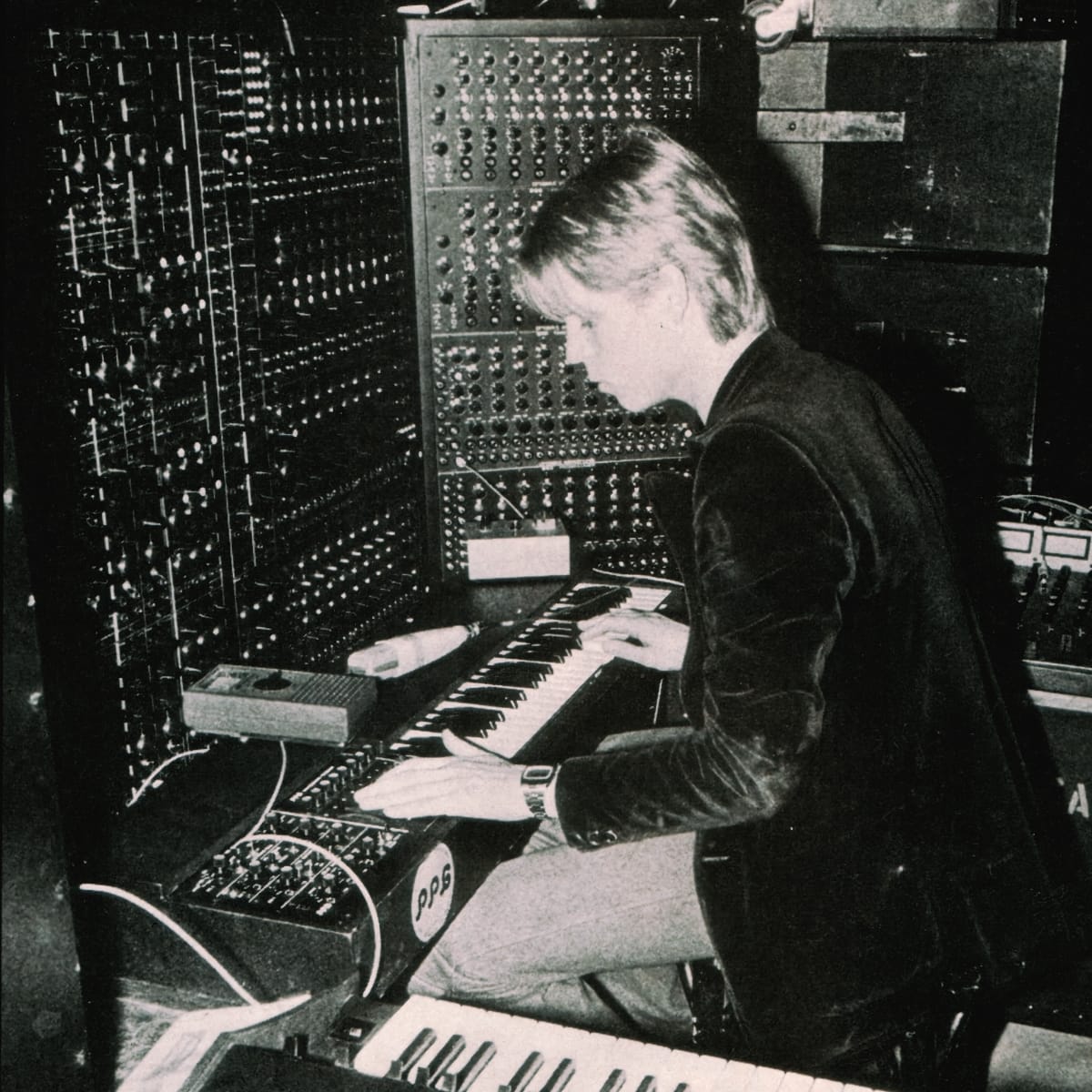
Bill: In an era when synthesizers had no presets or "save" feature, were there times when you would stumble across a particular texture that you liked, only to lose it forever?
Peter: We didn't concern ourselves with that. There was no option to do that. I had a Farfisa organ with a couple of presets, so that was about as far as I could reconstruct anything.
Later, when we did [1974's] Phaedra, for instance, we would record something and then fly it into different sections, or we would keep it for later because it was a cool sound. But as far as the sound itself, we didn't have the ["save"] option, and we didn't sweat it.
Bill: In the '70s, what did you see as the relationship between studio recordings and live performance?
Peter: Well, you can take a pee break when you're in the studio!
I think that the core of the [live and studio] pieces had a similar origin, but [in the studio] we did some overdubs, we did some editing, and also we could fine-tune the outboard gear. We could certainly do all that much better in the studio than live.
Bill: What were you intending to do with Romance 76 that you felt that you couldn't within the context of Tangerine Dream?
Peter: I made Romance 76 while I was still a member of the band. Edgar was doing a solo record called Aqua. We had some extra time between tours, and we never really rehearsed. We tried out new instruments, but there was plenty of time. And in one of the rooms where we tried out new things, I took an eight-track recorder and started to play around: "Oh, this is fun! Let me do some more of it." It was really just the enjoyment of recording. There was no big idea behind it.
Bill: So you didn't necessarily begin with the goal of making a solo album?
Peter: It was in the back of my mind, but I didn't construct it. It really was improv, or a similar process. "Oh, I like this. I'll do a little bit more of that." I tried a lot of things, half of which I threw away. But it never was like, "Oh, I have to make a record."
Bill: How did David Bowie influence the character of Romance 76?
Peter: He lived in Berlin at the time, and we met; as a whole band, we would have dinner with him. And sometimes Iggy Pop was there as well.
Bowie heard that I was in the studio playing around, and he said, "I'll come by. I have time." So he came by, and I had a refrigerator full of small champagne bottles; he just loved that. He said, "Let's have a little champagne."
So we had a couple of those, and I played him some of the tracks I was working on. I said to him, "I'm thinking of doing this and that." And he categorically said, "No, don't touch it. It's great the way it is." So he really pushed me in the direction of keeping it simple.
Bill: There's a cinematic quality to some of the tracks, especially "The Glass Bridge." Since you were not working with lyrics with these pieces, were you attempting to communicate specific feelings and atmospheres?
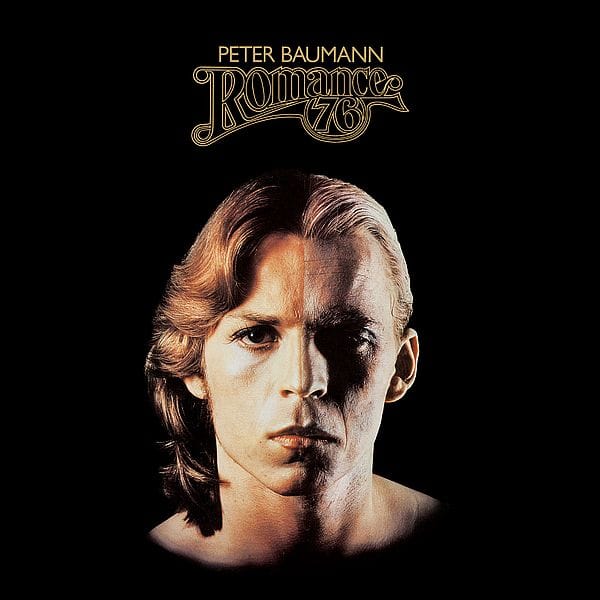
Peter: Individually, we all have different preferences and sensory favorites. And if you look at the album cover, it came about the same way as the name; I like juxtaposition. "Romance" is a romantic word, and 76 is just a number, though it also happened to be the year I did it. [The cover photo] is a juxtaposition of two halves of the face, so that [theme] seems to be reappearing all the time. And "The Glass Bridge" bridges the two aspects of the personality: the analytical and the feeling.
Bill: Romance 76 has been reissued a number of times in the years since its first appearance. Does it surprise you that the album continues to appeal to listeners nearly half a century after you made it?
Peter: I feel good about it. It's fun to see that it's still alive. When I did the record, it was the same as with Edgar's Aqua: a side project. It never got full attention at the time. Looking back at the original period of Tangerine Dream, everything that we did had a unique quality, and Romance 76 was part of that. You can't recreate that anymore; I couldn't make a record like that today, and I don't think anybody could. It was specifically from that time, and it was kind of a landmark time for that particular style.
Bill: You worked fairly extensively with Conrad Schnitzler. He was briefly a member of Tangerine Dream, but had left some time before you joined. How did you come to know him?
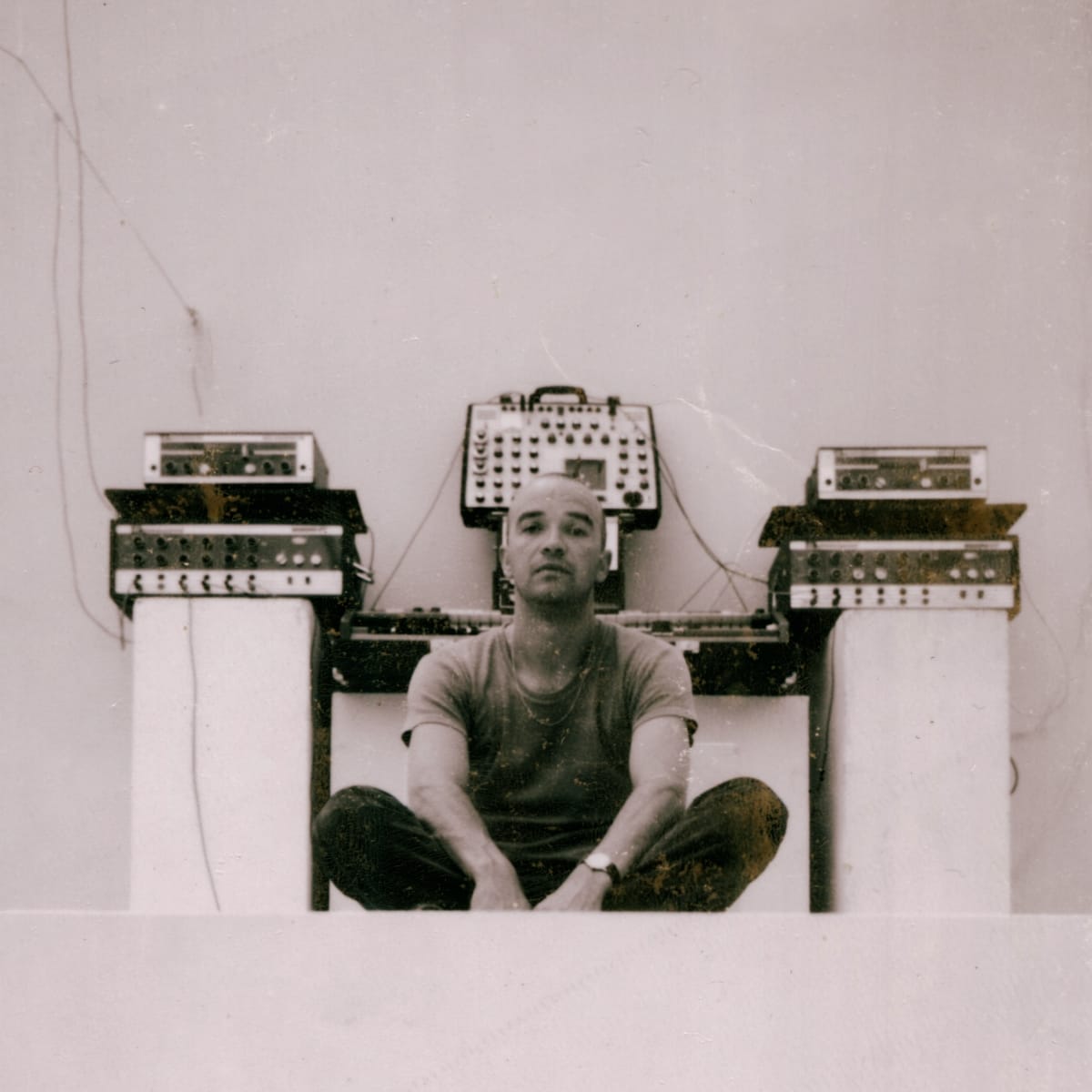
Peter: He was in the scene where we were hanging out. I always loved Conrad; he was such an oddball! He always said, "I'm not a musician. I just make noise. I let the other people do the music, and I destroy it." That's literally what he would say.
Bill: Yes! His work is, shall we say, much less rooted in melody than yours. What about what he was doing appealed to you enough to want to work with him?
Peter: Oh, I just thought he was a great character. And it was fun. There was a little record company in France, Egg; I had a contract with them to produce three records. Roedelius [Jardin Au Fou, 1979] was one of them, and Asmus Tietchens [Nachtstücke (Expressions Et Perspectives Sonores Intemporelles), 1980] was one of them, and Conrad Schnitzler.
I just enjoyed Conrad as a person. And I liked to work with him in the studio because I was part of it. There are a lot of pieces where I just said, "Hey, let's start with this." And he said, "Oh, yeah, that's great. Now let me destroy it." The record I did with him, [Con, 1978] was much more coherent than a lot of his other work. And that was because I produced it. I gave it a little bit more of a commercial bent than a lot of his other work. But we just had a ball hanging out and joking about the world.
What I really liked about Conrad was that he made no bones about it. You know, he would even think, "Why would anybody listen to this?" It was very entertaining.
Bill: In the new liner notes for Convex, Asmus Tietchens asserts that "no one has the authority to interpret" Schnitzler's music. That said, what does it mean to you?
Peter: I've always loved instrumental music of all sorts, because you didn't have a story about it; there was no concept behind it. And that was true for Conrad, certainly.
Interpretation is always a dicey business; I'm not much into interpretation. I'm more into "Let's see how that feels." You listen to a lot of music; you know you can listen to the same track again, and it feels a little bit different. Depending on your age, how often you heard it, whether you slept well last night, it's just slightly different. So there is no interpretation. You can make up any story you want, but what matters is in the moment that you listen to it. And then, how does it affect you?
Check out more like this:
 Dave Segal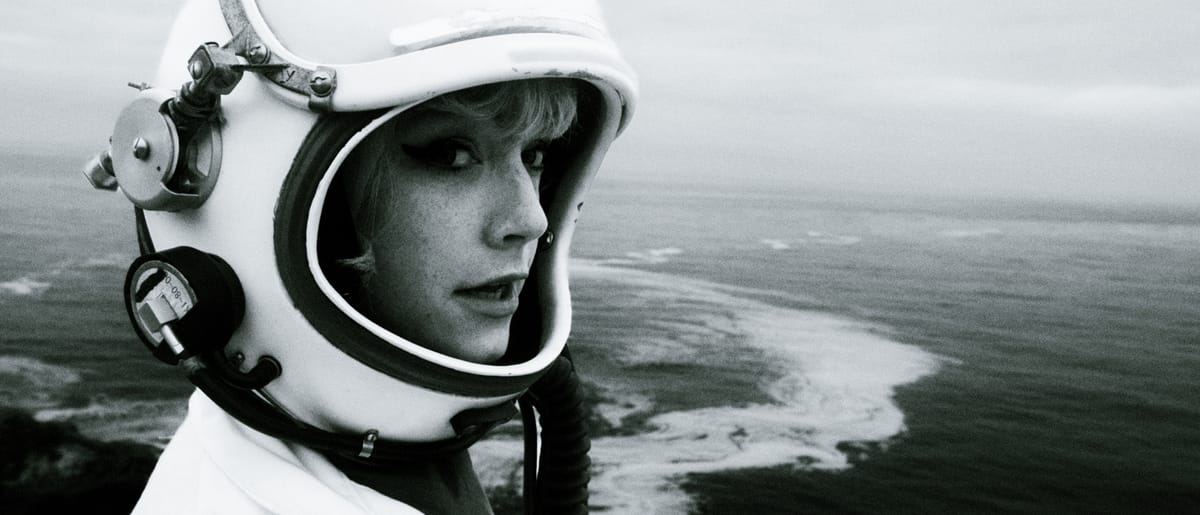
 Bill Kopp


Comments