


Isabel Pine's latest release, Fables, boasts tracks with titles like "Snow," "A Flickering Light," and "Butterfly Lands on a Flower," and it's so immersive, so full of texture, from ripples to scrapes to whooshing, that you'll swear you can hear it all. It's not like she is the first person to have ever thought to venture outdoors, instrument and recording device in hand, to make music in collaboration with natural settings, but what she captures here is a unique catalogue of conversations with the elements: her cello, viola, violin, and 15 distinct locations in the wilderness of British Columbia—a song arising from each.
During my talk with Isabel, I shared that just the night before, during the worst thunderstorm of my pets' lives, my elderly dog was shaking with fear until I put on Fables to drown out the roar of the thunder, and she faithfully followed the sound from room to room. Isabel shared a related anecdote about her elderly dog searching for her in the woods as she recorded what would become "Wandering." This tells me she must have channeled something, though she appears reluctant to own it. She and I spoke virtually about her recording and composing process, her connection to nature, the human-environmental interplay in her recordings, and her relationship to authenticity as a musician.
Meredith Hobbs Coons: You live in British Columbia now?
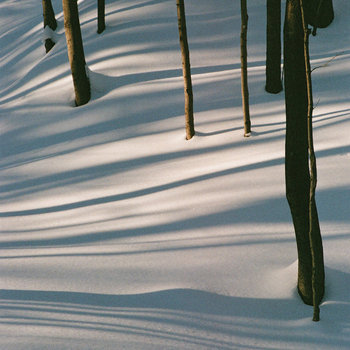
Isabel Pine: I'm not there full-time. My partner's family lives there, so that’s where we spend a lot of time. We're part-time there/part-time in LA. In small towns, there's not as big an artist community, so it's nice to be in cities just to meet other musicians, but a lot of my work is recorded in British Columbia. It's really inspired by it. I also do a lot of film photography, which is rooted there, in nature.
Meredith: So what about the wilderness in that particular place inspired you to make music outdoors?
Isabel: It's the rawness. And it's inherently creative, not at all manicured. I grew up in the US suburbs, and it's just the opposite. The way the branches reach, that there's lichen everywhere, and that the trees are so tall, is different from the way I grew up. I find that inspiring, coming from a more classical music tradition, where things are supposed to be pretty, perfect, and very much how they're 'supposed' to be. Learning from nature, that isn't what felt organic to me. Music could be more like nature—it could be raw. Sounds don't need to be perfect; they can have edges and texture.
Meredith: Prior to your experience recording this album, do you remember having experiences in nature that had really moved you?
Isabel: I always connected with nature growing up, but I had never been somewhere where it felt endless and so wild. Feeling really small by comparison was interesting to me. I've always felt connected with nature, but it wasn't until I started spending a lot of time in BC that I felt like my eyes were fully opened.
Meredith: There's this sense of awe that you're able to capture in these pieces of music. Was there any other artists' work that inspired you to record outside?
Isabel: Jon Hopkins' Music for Psychedelic Therapy was interesting to me. That album has a lot of power. I think a lot of people have done some kind of recording outside and incorporated field recording. I'm definitely not the first person to do it. It's just a grounding process—and enjoyable, too.
Meredith: You're right that you're not the very first person to think of it, but you have done it in your own way, and your influences are your own. I think that’s helpful for understanding when approaching the work you've made. What was the recording process like for you?
Isabel: I try not to get too technical about the recording process. I'll walk down an animal trail or something and set up my portable Zoom recorder. Sometimes I bring the cello, and then I have to bring a chair and everything, so I don't go too far, but if I have my viola, I can go a little further. I like to give myself enough distance from the mic so you can hear the music pretty well, but it’s also just part of the soundscape, not the focus. It's more embedded in whatever else is going on.
When I record, I improvise for a little while, then, after the fact, I go back and work with those recordings, sometimes layering them. It's not just my playing; I also take those recordings and produce with them. I think something special comes out from that.
Meredith: So what role did the locations play in the recording? Did you mix locations, or did you focus on what was done in each spot?
Isabel: Each piece of music is the result of one recording session.
Meredith: Can you tell me about at least one of those locations and how you felt recording there?
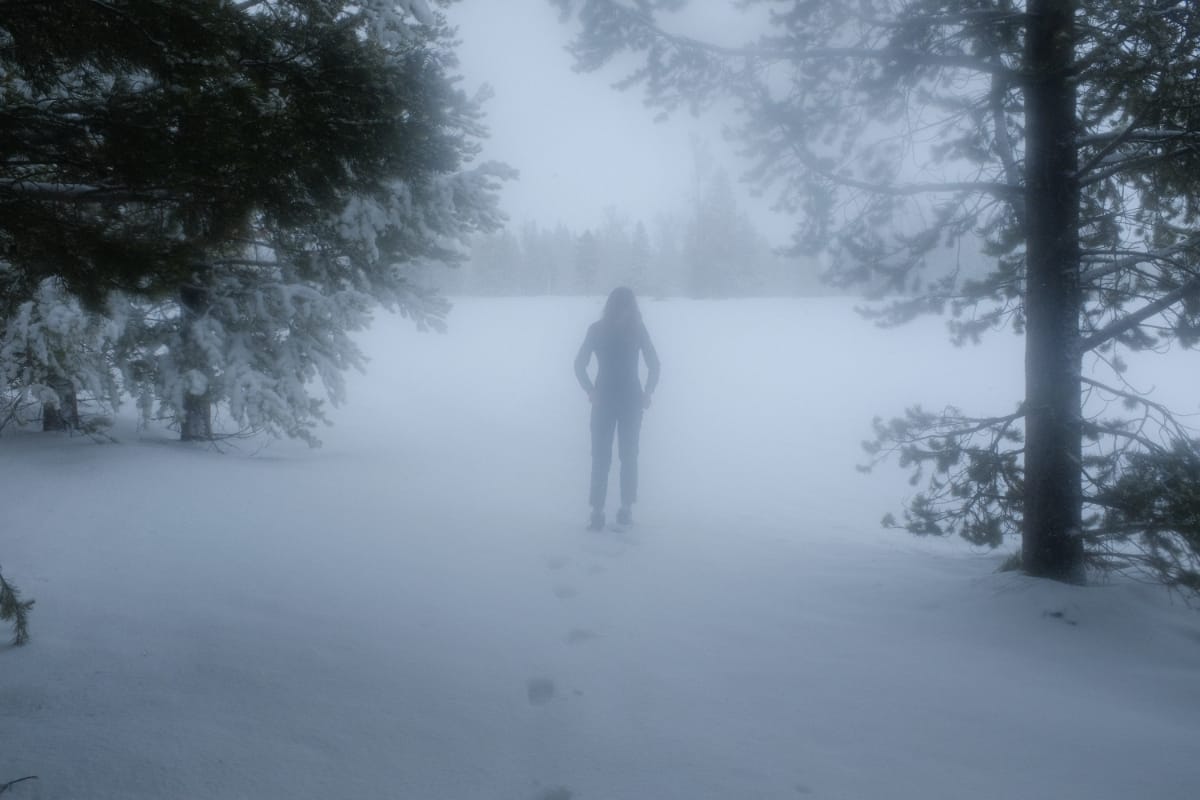
Isabel: One time, I went to this pond, and the sun was rising. I was working with a violin and a viola, two different instruments. That's a special time of day. It's quiet, everything is waking up, and I think that kind of came through in the music. One of the dogs we have is really stubborn—old and kind of blind—and she likes to try and find you. She was trying to find me the whole time I was recording, which was funny. I was in the middle of recording, and she was looking around for me. Like each specific place and recording, I think that really does come through in the eventual piece, whether it's the time of day or what's around. That one was called "Wandering."
Meredith: Do you have any kind of spiritual connection to nature that you feel comes through in this work?
Isabel: For sure. I think a connection to nature is very spiritual. What it feels like to exist, for me, is embedded in music. Nature is spiritual, but I think that music and nature are kind of one and the same, in a sense.
Meredith: That leads me back to what we were talking about with the recording locations. How did you choose those locations for recording, and what energetic qualities did they possess for you to make you feel like stopping there to make music?
Isabel: Sometimes I would find a place when I was out on a walk one day, and then I would want to go back there to record if it felt really quiet. There are certain areas that just feel special. They're not close to a road; they're kind of back there in the forest, enclosed by trees. I've tried doing a couple of recordings where I would go into a field or something, and those didn't lead as far as when I'm in the forest. Those took me further.
Meredith: Yeah, it's interesting to think about, because when there's nothing to reverberate off of in a field, I imagine the sound would just carry and get a little bit lost.
Isabel: Yeah, for sure. It also feels kind of exposed. When I was in the middle of the field, it just didn't feel like I was getting quite as much feedback from the environment and what was around me, not as much immediate inspiration. It's a beautiful place, too, but it didn't communicate as well.
Meredith: What has your journey with self-recording been like?
Isabel: Eight years ago or something, my partner showed me Ableton, which I kind of needed. I'm really grateful for that. It's the most special thing. I started with just my Zoom recorder as my mic and interface. I had that plugged right into my computer, and I would record my viola and layer. Eventually, I started using different mics and got an interface, but I try to keep things pretty simple, because I want to stay true to the music and not get lost in anything else.
Meredith: So you said you recorded outside, and also in a cabin. What did that side of it look like?
Isabel: There's a separate little one-room cabin from the house that we use as a kind of studio, and we alternate sessions in there. It's so focused, so quiet. There's no internet, which I appreciate. Being disconnected helps me feel a lot more connected. I think it's important to try and take ideas as far as you can when you first make them—sometimes when you come back to an idea, it's not there anymore. Sometimes those second recording sessions are important, too, but the first one is super key.
I never re-record things. It's all about the weird things that happen, and if you re-record things, you're trying too hard to be perfect or something. I'll add to recordings, but those weird moments or accidental bow shakes—stuff like that—get me really excited. We've heard a lot of things that are perfect, and I think it's way more interesting and honest to not do that.
Meredith: A lot of us are going to be yearning more and more for things to show that human element.
Isabel: Yeah, absolutely. I think it helps you be way more accepting of yourself, too, like allowing those sounds to come out instead of holding back. When I was growing up, it was like, "Oh, don't make this sound," or, "You have to be perfectly in tune," but I actually find it interesting when things aren't in tune, because you get different feelings from that.
Meredith: And that would be another way that the environment could make itself known in a recording, because of humidity and temperature and all the things that can affect the tuning of an instrument.
Isabel: Oh, absolutely. Everything's always changing, and we're kind of lying when we try to make it always sound the same.
Meredith: What's your relationship to authenticity?
Isabel: I think it's the most important thing. The music I gravitate towards comes through when people have their own thing to say. Everyone's influenced by so much, and no one's recreating music. But if you bring your own voice, then I think people will resonate with that—and I resonate with that. You are also then growing so much more, because you're learning to trust what you actually have to say or what kind of music you want to be making, instead of thinking you're supposed to make music that sounds like somebody else.
Meredith: Can you think of a time when you've felt like you've really embodied that as a creator? A moment when you were like, "Oh, that was me."
Isabel: I try to embody that all the time. Honestly, that's kind of the goal. I'm never trying to make something that sounds like anything I've heard before. I'm just open to what happens, and if what I’m playing ends up sounding too much like something by somebody else, then I don't know if I'm being totally true. Maybe, out of every six days or something, I get an idea that feels like, "This is it." It's that super-connected feeling and that knowing that make me want to see a piece through to the end.
Meredith: You mentioned your dogs, and I told you earlier that my dog was comforted by your music during a thunderstorm. Do you find that animals respond to your music in some way?
Isabel: I don't record piano all that often, but there was this one time when I was recording piano, and I was like, "What the heck is that noise?" And when I checked, the cat was singing along, perfectly on key. (laughter) I don't know if it was so much what I was playing—I'm not that good at piano—but it was a crazy experience. When I'm outside, there's a little bit of a response from animals. Or sometimes there's a chipmunk that maybe doesn't like what I'm playing, and that's okay, too.
Check out more like this:
 Carolyn Zaldivar Snow
 Meredith Hobbs Coons


Comments