


A few hours before I spoke to Elujay, I went on a grocery run. I was in Birmingham (not my usual location, but where I have family), and I drove through the city centre. As I did, I noticed that, on every single speed limit sign, someone—for reasons unclear to me—had taken a can of spray paint and covered the number. The effect was distantly, but not dangerously, unmooring. I had a phone that could tell me the speed limit, and besides, the speed limit was pretty much the same on every street anyway. But there was something unsettling about it nonetheless. I was in a strange city, and I didn't know precisely what I should be doing. It was as though I were driving with one eye closed, or floating rather than pushing down on the accelerator.
Back home, listening again to Elujay's newest album, A Constant Charade, it struck me that I was being hit with the same sensation again. It was one of there being no specific rules, and so the potential for something new, or dangerous, or beautiful coming through. The really stunning moments of the album—and there are many—come through when this floatation is most evident. It suggests a willingness to unmask oneself, sonically.
"I feel like these past few years I've unveiled a deeper side of myself that a lot of people didn't get to see or experience," he tells me. He's calling me from his home in Los Angeles, holding up his phone close to his face to hear me better. Every so often, he pauses to check on his dog. "But even the masks are a piece of me."
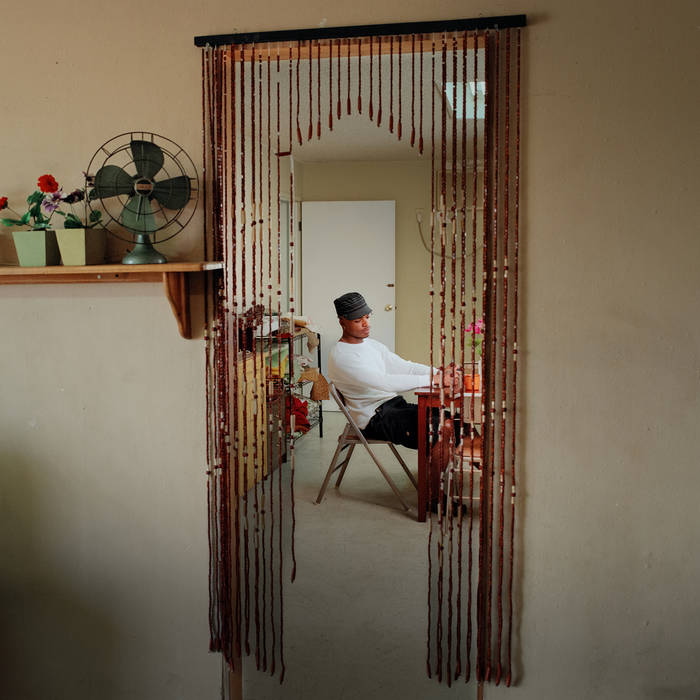
A Constant Charade is the latest solo effort from an artist who seems obsessed with and fascinated by the idea of constantly expanding and evolving, and his first solo album in three years. It bears, however, the fingerprints of the collaborations that have come since, particularly his second album-length collaboration with J.Robb, GEMS IN THE CORNERSTORE II, which was released in 2024. Like GEMS, the new album leans further into the influences of Caribbean music and leftfield electronic from dance to ambient and a dozen strains in between.
In fact, Elujay's main influences seem to be, well . . . everything. Our conversation weaves from Joni Mitchell to Nancy Ajram to yacht rock; every so often, he'll say, "OK, wait, wait, wait . . ." and frown at his phone, attempting to unearth a particular artist or track. When I point out how audible his experimentation is on A Constant Charade, he offers enthusiastic agreement. "And I plan to do that more, to do that continuously, in the future, with more albums. I want to experiment with genre and try stuff that I haven't heard before." He tells me that the provenance of a genre or style isn't what's important; at least not to him. I mention the yacht rock audible in certain parts of the album, for example—influences that come primarily courtesy of jazz guitarist and producer Nicholas Creus, though "it's obviously stuff that I've loved forever"—and he shrugs. "At the end of the day, it's R&B, you know? Like that's really what it is. I think people call it yacht rock because it was white [to begin with]. But I think people categorize music based on what they're used to."
The question of genre seems all-encompassing and yet also somewhat insignificant when listening to the album. Like a lot of contemporary R&B, there's a huge amount of space to fuse musical styles. Elujay attributes the space afforded to him to the collaborators we discuss ("I've been able to bring it out with different characters, with people who I play with"), but it's also down to his own relentless appetite for imagining new sonic experiences for listeners. It's striking on A Constant Charade, which hops between styles without losing its coherence. There's always a feeling, whether through the twangy guitars of yacht rock or the syncopated drums of Al Jeel, that it's just as the artist wants it; an evident musing on the masks we put on for ourselves and each other.
In many ways, the album feels like a microcosm of Elujay's work so far, which started further in the rap and hip-hop space, with his 2016 mixtape Jentrify. For the near-decade since, he's darted around the Bay Area underground, building and consolidating his reputation, but also never quite staying in the same place. Listening to his rap back-to-back with his early singing efforts, which began with the single "Blu" in 2018, offers a map of an artist open to experimentation and to pushing himself in different directions. Whereas Jentrify has something of the swagger of Kendrick Lamar and the genre-bending, laidback flow of Mac Miller, "Blu" and its successors dig out a note of vulnerability. "Tell me what it's like when you feel," he sings. "I need someone to show me that real." It bears the style, in places, of Frank Ocean; it hits the beats of Musiq Soulchild, too, who Elujay has cited as an influence before. More interestingly, however, and as is often the case with artists who came of age in the digital age, it allows a listener to follow him in the directions that he goes in.
But that was then. This, now, has something different to it. Since 2019, Elujay has been termed, almost perpetually, as a 'breakout.' This time, though, it really feels true. There is a confidence that's audible in A Constant Charade, audible not just in the production but in his vocals, which often come in different guises. On "Rogue Heart", the album's opener, they're accompanied for the first few seconds by just a breakbeat, unrooted. "Now you're in the deep end," he offers matter-of-factly, before plunging into a chorus that is dazed and simultaneously mournful. On the standout track "Circles", his voice comes to the listener through distortions: pitched up, syncopated, in rhythm with delicious licks of the guitar. I ask him if any of the tracks might be growers, not showers, for his listeners. At this, he is considering. "I mean, I think a lot of them will be growers," he says. "But I love 'Circles.' 'Chabot Hill' is really good too. I like that one a lot. And 'Deny'. You know what I mean? Those are my special ones." As he's talking, he grows more enthusiastic, running over each song in his mind. It strikes me how nice it is to talk to an artist who genuinely enjoys their own work: each one, he notes, is "such a fun song to play live". Speaking of playing live, I say, he just got off tour, supporting Cautious Clay. How was it?
"It was amazing," comes the immediate response. "There's a sense of gratification, just seeing people vibe to the new music." The album is yet to come out, I point out. How does it feel playing stuff that people haven't heard before? Nerve-wracking? At that, I get a grin, then a shrug. "It was fine." Then, matter-of-factly, he adds: "The majority of the people there didn't know who I was. I'm used to that. That's just kind of what I do. I've always had that." It strikes me that this is probably how Elujay likes it; not necessarily anonymity, but being difficult to pin down. Over and over again in our conversation, the same ideas come up: surprising people, bringing something new to his listeners. It is so clearly what he likes himself as a listener and an artist. "That shit is fire," he might say about an artist. Or: "man, this is the album that, like, changed my shit forever!" (This, in particular, is about Egyptian singer Amr Diab's 1999 album Amarain, the influence of which is evident on "Deadwrong", one of the album's later tracks.)
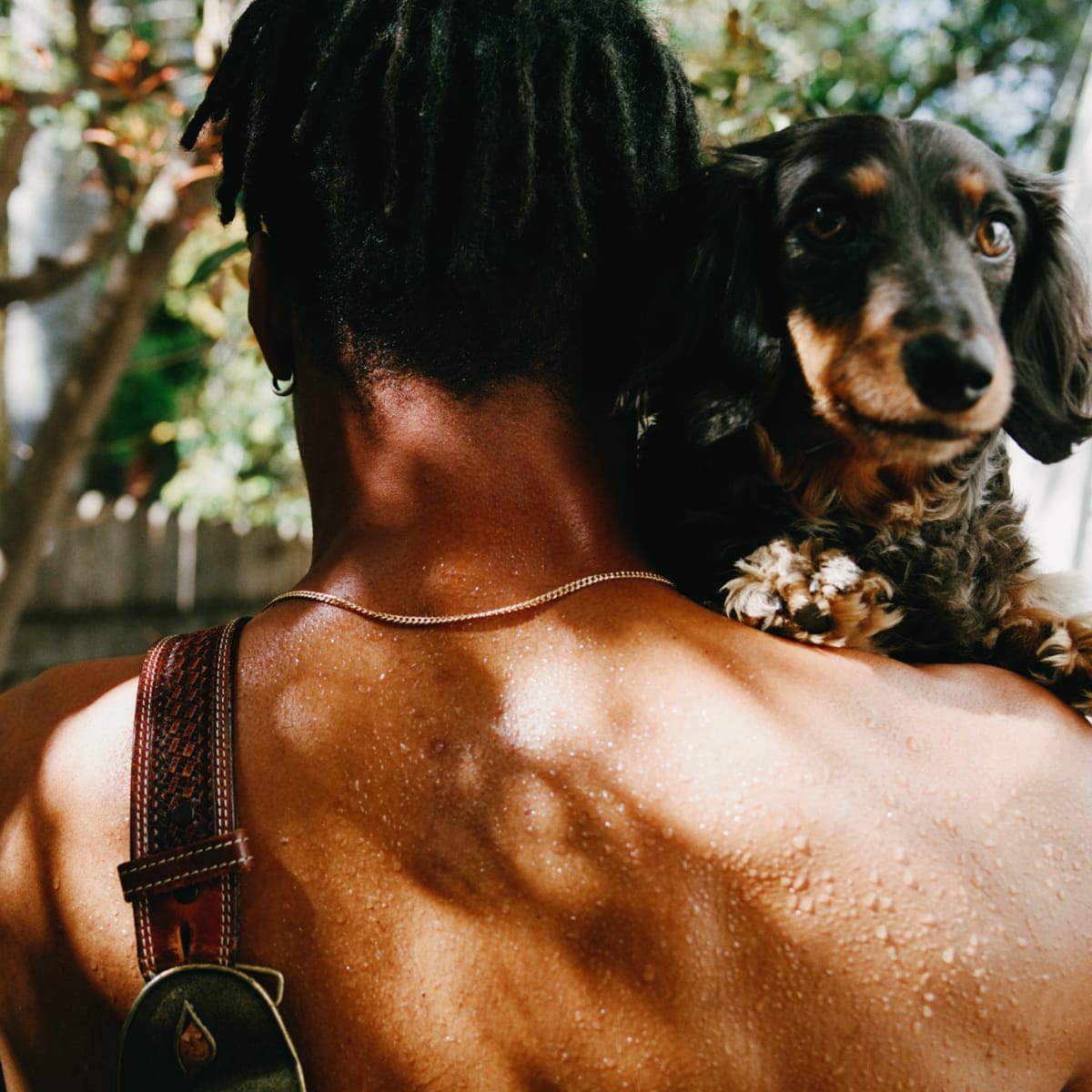
I ask him if that element of the unexpected, of going left when someone might expect him to go right, comes from his time as a graffiti artist around Oakland, when he was younger. When I suggest that there might be things about graffiti art he integrates into his music, he seems distantly surprised.
"Shit, um . . . I don't know," he says, then thinks for a long moment. Although he has spoken at length about his time as a graffiti artist, it has often been with the distance of a previous life. Whilst graffiti has long been a "wobbler" in California law—meaning it has the potential to be charged as a felony or a misdemeanour—the threat of a felony charge became more real in the early 2010s, and Elujay made the decision to stop. Often, he's spoken somewhat euphemistically of his time before music as having had the potential to lead down a "bad path". Now, though, he says carefully, "I don't want to lose my passion to try different things, styles. I want to continue this torch-bearing, of trying new things, pushing boundaries. You know what I mean? I think that's something I was always doing in graffiti. I was always trying different styles of letters, and new techniques, and different places . . . saying what I'm trying to say in different ways, trying new methods of saying things. I think that's something I want to continue from that medium."
That makes sense, I say. In fact, it's audible on A Constant Charade.
"Yeah," Elujay says. Then, a little furtively, he adds, "I mean, to be honest with you, I did it recently. I was doing it in 2023. Um, right around the time when one of my friends died."
The friend in question was actor Angus Cloud, who catapulted to fame in 2019 on HBO's Euphoria. Like Elujay, Cloud was a prolific graffiti artist around Oakland and thoroughly immersed in the music scene of the Bay Area. When, on his audition tape for Euphoria, he is asked about his favorite music artists, he says, "My favorite artists are my friends," and rattles off a list. When he died of a drug overdose in 2023, the entertainment world was shaken; he was just twenty-five.
"He gave me a can of paint right before," Elujay tells me. "It wasn't the last time I saw him, but it was one of the later times . . . 2019. And he said, 'Yeah, I'm going down to L.A. to go film a show with Zendaya.' And in my mind, I was like, you know, what is that gonna be about, you know? And he asked me, 'You still painting?' And I was like, no, not really, bro . . . just doing this music thing. I had a show that night in Oakland . . . it was one of my first headline shows, and it was such a random coincidence . He's going down to shoot this TV show, this prominent thing in his career, I'm doing my first headline show in Oakland . . . we're meeting, and we're talking about these paths and the things we used to do. And he said,' Yo, I'm going to give you this can of paint. You can't stop.' And honestly, I didn't do anything [graffiti], all those years. And then he died. And I felt like it was a duty of mine to go and paint."
He pauses. "I hope this doesn't get me arrested." Then he asks if I want to see the can of paint. When I say yes, it takes him only a few seconds to find it; it's a miniature can, barely big enough to get more than a few sprays out of. "I keep it here," he says. "Just right here." He halts again. "He gave me a confidence to keep going. His death inspired me, in a weird way. Made me want to go deeper into my inner child, because that was a part of that lifestyle, as destructive as it was, it was a part of my childhood."
That sort of takes us full circle, I point out. Even the things we stop doing, the barriers we stop putting up, and the masks we put on and take off are still a part of us.
"Yeah," he says. "There's a thematic, I guess, a meeting point. Just these things we did as children. He didn't stop, you know, he kept doing it, he did it up until maybe the day before he passed. And that's what really hit me. I was like, wow. Because I could see the 'damn, you're not doing it anymore?' in his eyes, when I told him I don't do it anymore. Like, not a sense of betrayal, but like, 'Damn, bro, what, you too good for this?' And I felt like he, you know, he never became too good for it. You know, he was deep into Hollywood, doing movies, and he would still go out and paint."
On A Constant Charade, running is a constant image. Someone, somewhere, always seems to be running: from themselves, from someone else, from the world around them, from the world they've created. But near the end, moments of stillness start to emerge. "I know it's been a while, but I'm right here," says a voice at the beginning of the album's penultimate track, the dreamy, woozy "Chabot Hill", which is by turns self-flagellating ("I don't really know / Why I can't get myself in line") and defensive ("I don't want war / Please put down all your guns at the door"). The final two minutes, "Stereo Blasting", are perfect in their hypnotic stasis. A saxophone floats along above picked guitars, a crash of cymbals and percussion emphasizing each syllable of the vocal line, thrusting it forward. In it, Elujay finally describes a moment almost as terrifying as taking off one's own metaphorical mask: watching someone else take off theirs.
"It took a while to let down your guard," he sings. "Watching you dance as fast as you can." It is everything an act of intimacy can be: a meeting point; a place for two separate paths to converge; a beginning, or maybe even an ending. "Don't assume we will be safe," he warns. But then again, safety isn't the point.
Check out more like this:
 Lawrence Peryer
 Dee Dee McNeil


Comments