


From D. Boon falling out of a tree to Ed Crawford finally getting through on the phone as he was preparing to leave California, Mike Watt's bands and bonds seem to follow serendipity. Recent evidence: Raquel Bell and Jared Marshall were invited as guests on Watt's long-running The Watt From Pedro Show but were concerned about finding a stable wireless connection, as they were living in a van in the early days of touring as Galecstasy. Watt brought the pair to his house for an in-person interview without the newfangled worry of Wi-Fi. A musical friendship formed over the course of an interview, and it wasn’t long before the three planned to perform and record as a combo, yet another project to add to Watt's storied CV. You see, the elder Mike Watt is an eternal collaborator, participating in what a recent New York Times profile called "a dizzying array of creative endeavors." If you want further disorientation, you should check out his touring schedule.
After a pandemic pause in plans, we jump to a recording session in Galecstasy's home-built studio overlooking Joshua Tree. The three participants vibed, truly vibed, planning only technical details (such as mic placement) in advance. The first time the Galecstasy & Mike Watt Trio played together is caught on tape, completely free as a desert bird, keeping their bellies to the ground like a rattlesnake. The result is Wattzotica, a satisfying and instinctively 'together' nine-song platter of sandy explorations of the cosmic thread. To my surprise, Wattzotica wouldn't be out of place on International Anthem or among the earthier releases on Nonesuch. It's improv with heart more than teeth, but still sinks into your skin like the gentlest of bites.
When Watt plays with a combo, his playing is undeniably Watt (how could it not be?), but he allows the musicians to be themselves. There are hints of Minutemen, fIREHOSE, or other Watt undertakings, but these different collaborations sound nothing like them. Take Wattzotica: Raquel and Jared are clearly inspired by the 'exotica' records of Martin Denny, Arthur Lyman, and the like, but Watt is reacting with his own bass spiel. Watt's comment below on influences is significant and sums up his collaborative ethos: he vibes off the players, not the influences, and certainly not any genre expectation. Watt is Watt, and what sputters down from the other musicians in the room drives the thunder in his stick.
I think what makes Watt's interaction with the Galecstasy duo particularly vibrant is that there's so much coming out of the collective spigot for the seasoned bassist to latch onto. There's an endearing hippie-ness to Raquel and Jared that might seem outside of Watt's Venn, but they easily connect in a shared, stringent allegiance to both the DIY 'stick it to the man' plot line and an unapologetically creative life. Get rid of the love beads and flowers, and that combination seems pretty damn hippie to me. Or, as Watt described someone (maybe himself?) in a song that seems like ancient times: "the reality soldier, the laugh child."
I emailed Jared with questions about Wattzotica, expecting a simple one-on-one, and I ended up getting answers from all three members of the Galecstasy & Mike Watt Trio. Delighted, I then realized the answers could be assembled into a sort of oral history of the project. What follows is the story of Wattzotica, told in their own words.
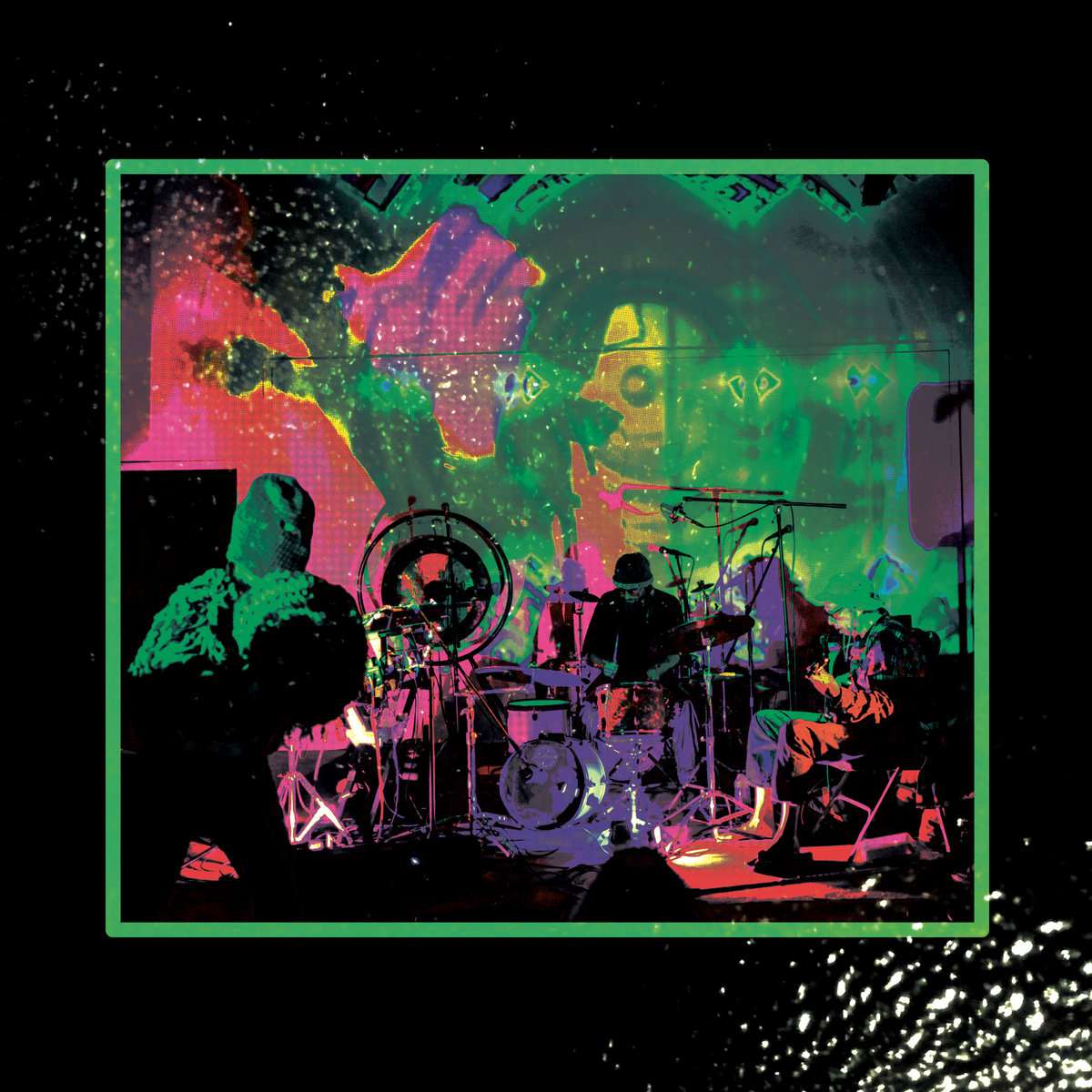
Into the World of Wattzotica
Raquel Bell and Jared Marshall—who record together as Galecstasy—spent much of the pandemic building a studio in a former house on a mountain overlooking Joshua Tree National Park. When they invited Mike Watt to join them for an improvised session, it set something magical into motion.
Raquel Bell: Welcome to the world of Wattzotica. There is a documentary called We Jam Econo that tells the story of the Minutemen. In 1980, the year I was born, Mike Watt, D. Boon, and George Hurley started one of the greatest bands of all time. The documentary captures some of the sizzling energy and life that emanated from the Minutemen. When I was a young New York musician, I would watch videos of Mike Watt playing bass on YouTube, and that is how I learned how to play bass.
D. Boon left this planet when he was a young man, and he was Watt’s best friend—more than a best friend, his fellow astronaut on land. They were historic explorers of what music and life could be. We have all heard a lot of music since 1980 that has emerged from what the Minutemen did. Fast forward 46 years, and we have Wattzotica.
Jared Marshall: If you're approaching this album without any background, you can expect to hear an honest fusion of three musicians with strong personalities who came together for the first time and made music with no boundaries. I hoped for the opportunity itself and knew that, if it happened at all, it would be incredible. So often, you are in search of an elevated state or feeling. I get that feeling when these types of arrangements are fortunate enough to align. It's a combination of triangulating intentions and intersections. Together we accomplished another iteration of reaching this state and the chance to make meaningful art with transcendent artists in collaboration—that in and of itself is a victory as far as I'm concerned!
Raquel: This is primarily instrumental music. The name Wattzotica implies ‘exotica,’ a genre of music that is mostly instrumental and evokes the sounds of tropical islands. Galecstasy is the project that Jared Marshall, aka Primary Mystical Experience, and I started when we first met back in Austin, TX.
When I first heard Jared's drumming (we were rehearsing for our first gig together), I realized that he was a uniquely musical drummer. His rhythm is dynamite, but he has a tonal musical beauty that few drummers have. We are just really musically compatible, and we love making records. Jared and I listen to a ton of exotica records—heavy percussion, gorgeous sounds. We also love hip-hop, soul, synthesizer music, free jazz, and especially spiritual jazz. Mike Watt is one of the greatest bass players to ever live, and his playing is uniquely his own. Watt is also a true artist. He is really worth all the hype and more.
Mike Watt: I was invited to be part of an improvised recording, so I went up to their pad in the desert, where we recorded. There was a gig later at a nearby former fire station in Joshua Tree, but I believe the recording was first. Both events had me using the same approach, creating improvised music with what we had. For me, that was a bass guitar, which I brought from San Pedro, where I've lived since 1966, when I moved there from Norfolk, Virginia. So we accomplished doing both a gig and recording material for an album. The gig ended when we stopped performing, but the album wasn’t finished until Jared and Raquel finished it.
Raquel: When the three of us played music for the first time, both Watt and I were nervous. It is funny to me now, looking back. Watt drove forever to the studio because of bad traffic. I think it was a Friday, from Pedro (on the California coast) out to the desert. Jared and I had set up a recording studio in an old house up on the top of a mountain overlooking Joshua Tree National Park. It was the kind of place that was spooky and inspiring. There was a 360-degree view of the stars every night, crazy sunsets, and bobcats and jackrabbits walking through the yard. Roadrunners. Really loud coyotes would surround the house.
We were also between two huge military bases in Southern California. There would be the most beautiful sunset you have ever seen, and then a giant military craft would fly over the house and shake everything. It was a great place to make records.
When Watt pulled up to the house, he was wearing his yellow raincoat. We hadn't seen each other in a while, so we talked and talked, and then Watt said he needed to go to bed by 8 pm. I told him it was already 9 o'clock, so we had better start recording.
His gear is beautiful. Custom bass, custom pedals, custom amp, just beautiful. Ready to plug in. The studio mics were set up, and we had been testing mic placements for weeks before the sesh. My synths, pedals, and percussion were ready. Everything was ready. Be ready, and great things WILL happen. The pressure building up was great for this kind of recording. Add electricity (Watt) to watery (Galecstasy), and you get what you hear on Wattzotica. A wild ride at sea. And if you buy the vinyl, you will see some secret messages etched near the label . . .
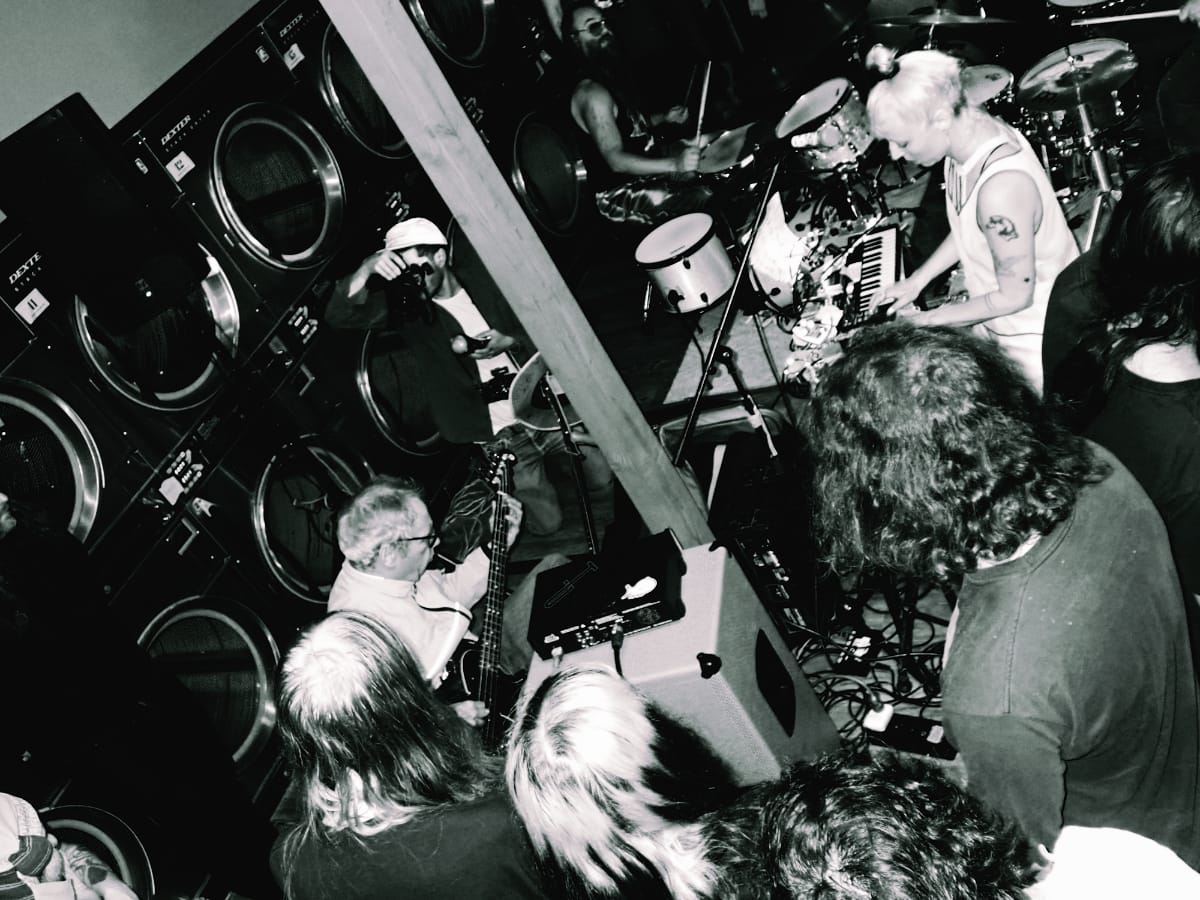
Reference Points
Asked about touchstones going into the session—and whether exotica, with its Martin Denny connotations, was a deliberate frame of reference—each of them landed somewhere different.
Watt: My anchor point was trying to get the bass guitar to dance with Jared's kick drum. I wasn't thinking of other bands or bins in a chain store to 'correctly' sort an album to some marketing scheme. If I were thinking of any musicians, I was thinking of them as people and not as things. I was trying my hardest to be in the moment and try to give each throw-down its own sense of being; time seemed to fly by. I tried to let Jared be my biggest influence for the event.
Jared: The title "Wattzotica" is sort of an indirect reference to what you're talking about. I had known about Les Baxter’s work for about 10 years, but during the pandemic, I went super deep into the world of exotica and discovered a bunch of other records that got a lot of play. I love that sonic universe and concept. As a student and connoisseur of beautiful recordings, I think you have to include some of these records if you're talking about quality and vibe.
The only other discussion I remember was a short one, but it was a meeting place for Watt and me from the jazz world. We mentioned On the Corner by Miles and A Love Supreme by Coltrane. Not exactly rarities, but the approach and aesthetic of those recordings provided an abstract touchstone for us.
Raquel: I love this question of "reference points"—now that the vinyl has been released, I have some larger perspective on how things played out. You picked up on the exotica, and that is there. In the liner notes of Taboo by Arthur Lyman, he explains some of the backstory for these iconic recordings. He explains how the filthy-rich aluminum mogul, Henry J. Kaiser, built the Aluminum Dome, designed by none other than Buckminster Fuller. Lyman credits these gorgeous recordings to the acoustics of the dome and the 'island paradise' of Honolulu. One of my spiritual teachers told me, “You are where you are." Location really influences music. In the case of Wattzotica, the wild desert played a role in the recording.
The strangest part for me is that my musical path crossed with Watt’s at all. It happened gradually; he asked me to be on his radio show. There were Kachina dolls in his house. When I was a kid, I lived with the Navajo and Hopi, and I was around Kachina dolls. The spiritual part of life is not missed by Watt, the mystery.
All three of us love to play free. Not all musicians like to. The three of us are the sort of people who like to run naked in the rain—especially if it might lead to some good art. The reference point is that we all chose to live our lives in service to music. You have to sacrifice everything normal. I am pretty sure you don't get to do this any other way.
We all gave up many normal things to keep working at authentic music. It takes a toll physically to carry heavy gear around, eat on the road, and have a weird sleep schedule. So when you can actually make a moment like this happen and a chance for some art to be created, that is what makes all the hard times worthwhile. Now I can bop around listening to "Neon Mermaid,” and it makes me happy. I really want to give props to Watt and Jared. They are both such serious humans with major chops and passion for life.
Wattzotica is our first record together (more are on the way). It was our destiny to make it. I have synesthesia about this music. It has the quality of the ocean. Like the Pacific Ocean was just pouring out of my fingers. I hear the music, and I am on a ship surrounded by huge waves, sparkling stars, and lots of crazy mermaids. This is the vibe.
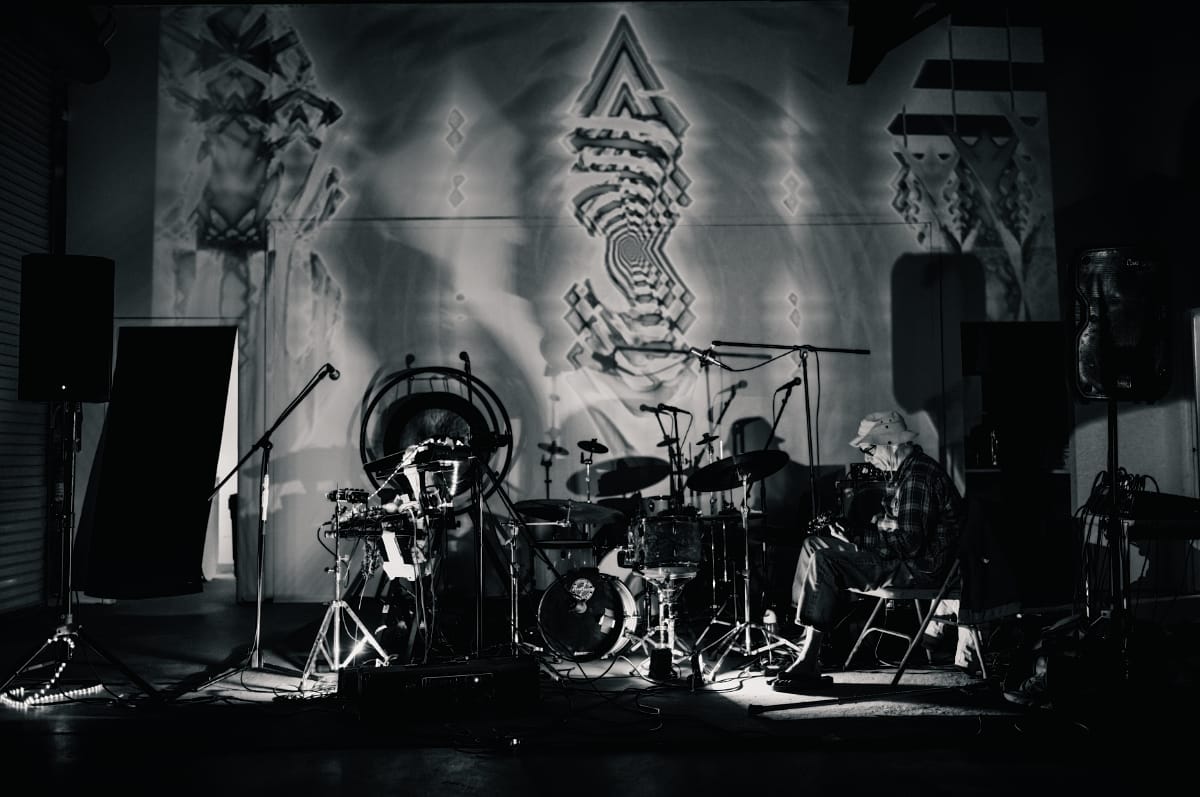
The Snake
On the morning they were due to load out for the Joshua Tree gig, a young rattlesnake was discovered at the front door of the house.
Jared: I didn't even know about the snake myself! It was coiled on the threshold of the front door to our desert house and was discovered by Raquel. We tended to use the back door most often to go out to the patio and yard for chill time, so I never even used the front door that morning. The snake is a symbol, and its appearance was certainly not random.
Raquel: I was the one to discover the snake. I woke up to find Watt on the couch, working on his emails and writing (he is a prolific writer and music historian, and he also writes his operas). The first thing I did was walk over to the front door, which was open a couple of feet away from Watt. In the desert, many houses have a wooden door and then a screen door with a metal threshold between. About three feet away from Watt was a young rattlesnake taking a nap. I remember looking at Watt and back down at the snake many times. The snake was a teenager, perfectly coiled, with its head resting on its back. I remember it opened its eyes from its nap and looked up at me, then went back to sleep. It was so peaceful and cute.
I asked Watt if he knew he was sitting next to a rattlesnake, and he said, "They were here before we were; we are in their house." I remember smiling because I knew it was an omen. The sacred spiral of life, the coil. The snake looked so pleased to be there! I thought of D. Boon and the tender, fleeting magic of life. It really touched my heart!
Watt: I can't remember much about this. I am so sorry.
Raquel: We didn't have rattlesnakes at the studio, but we had other snakes. The Rosy Boa is a pink boa constrictor native to California. And the Red Racer. These are pretty cool snakes. Well, as much as I liked having the snake there, I knew we had a gig to get to, and we had to load our gear out that door.
In the desert, there is a miraculous person named Danielle Wall. I think that she was a model who became a snake whisperer, worth finding her amazing videos. Everyone in the desert had her number saved because she would come and get the snakes. I had seen other people chop up the rattlesnakes, and that didn't sit well with me. Danielle came with her aquarium and a little stick-thing with a hook on the end, and she gently picked up the snake from the doorway. I wish I could have stayed to talk to her more about her work, but we were already back in another recording session when she came for the snake. She said she would be carrying it many miles away, so it couldn't find its way back to our house.
As I have gotten older, I have really come to see the symbolic nature of life. The coiled snake, the kundalini, the record spinning on the turntable, playing the music recorded while the snake was dreaming. It is all in there. Maybe the snake made the record.
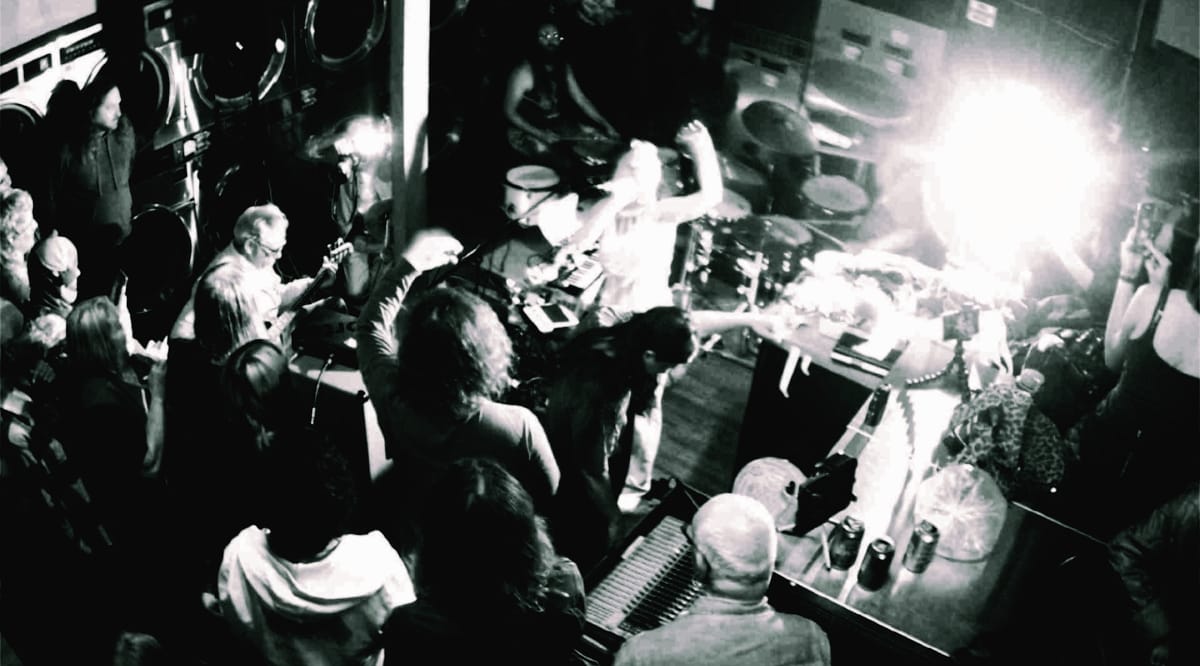
Why We Do This
Asked to name something they love that more people should know about, all three ended up somewhere larger than the question.
Watt: I recently just finished a re-read of Herman Melville's Moby-Dick, one chapter a day without interruption, I highly recommend! Written 175 years ago, you will not believe the fuckin’ parallels! I found lots of resonances in myself with the book and with where I am now, at sixty-eight years old. Crimony. Another thing about these days with me is cooking like 90% of my chow, and I can’t recommend it enough; I wish I had started doing this back in my Minutemen days. Just the act of doing, but also having more control over what goes down your intake hatch. The third thing is that today is 1141 days without alcohol for me. Big sea change after a fifty-year shift! Your mileage might vary . . .
Jared: I'm very into the idea that the universe, and therefore the world, is directly interactive with your consciousness in real-time. Your heart is a biological toroid that is creating an electromagnetic field, your unique life signature. This, combined with your consciousness and soul, creates your 3D spaceship for navigating and interacting on this planet. Your thoughts and feelings are projected outwards, with intentionality or without, and literally shape the world around you as you move through it. The more you become aware of this prima facie interface, the more life opens up as a fully magical experience beyond what we can possibly imagine. Be yourself to the max, enjoy your time here, and try to help those around you to the best of your ability. Meet people where they are at, everyone is trying to heal—it's all a wild trip!
Raquel: I love how Jared used this question as a metaphysical road map—he really does love sharing what he knows! Many people don't know that Jared is a really good astrologer, an expert. He is really a wizard. Watt, too. I love Watt because he scares me (he is really tall and a Sagittarius, a fire sign), but we speak the same mystical language, so I feel like I can be myself around him. We each have our own radical ways of resisting tyranny. Independent music is a form of resistance because we get to be authentic and go against the grain. Free music is naturally subversive. Any expression of freedom, of love, especially beauty, is great. Beautiful music, art, that sort of thing is a good way to fight tyranny. Free music is radical!
I love free jazz. I love going to shows where people are risking it all to make something fresh. I LOVE meditation. My dad read me a story when I was a baby about a yogi who levitated in the forest while meditating. That story blew my mind, and I have been trying to levitate ever since. Meditate, my fellow Earthlings, and unlock your potential. It is in there. I was really badly depressed growing up; meditation freed me.
Love life. It is wild to be alive. Love all humans, even the most flawed of us. We are all flawed. Above all else, love yourself. Earth is a hard planet to live on. It is crazy. Give yourself hugs and keep going. Mahalo.
Check out more like this:
 Sam Bradley
 Lawrence Peryer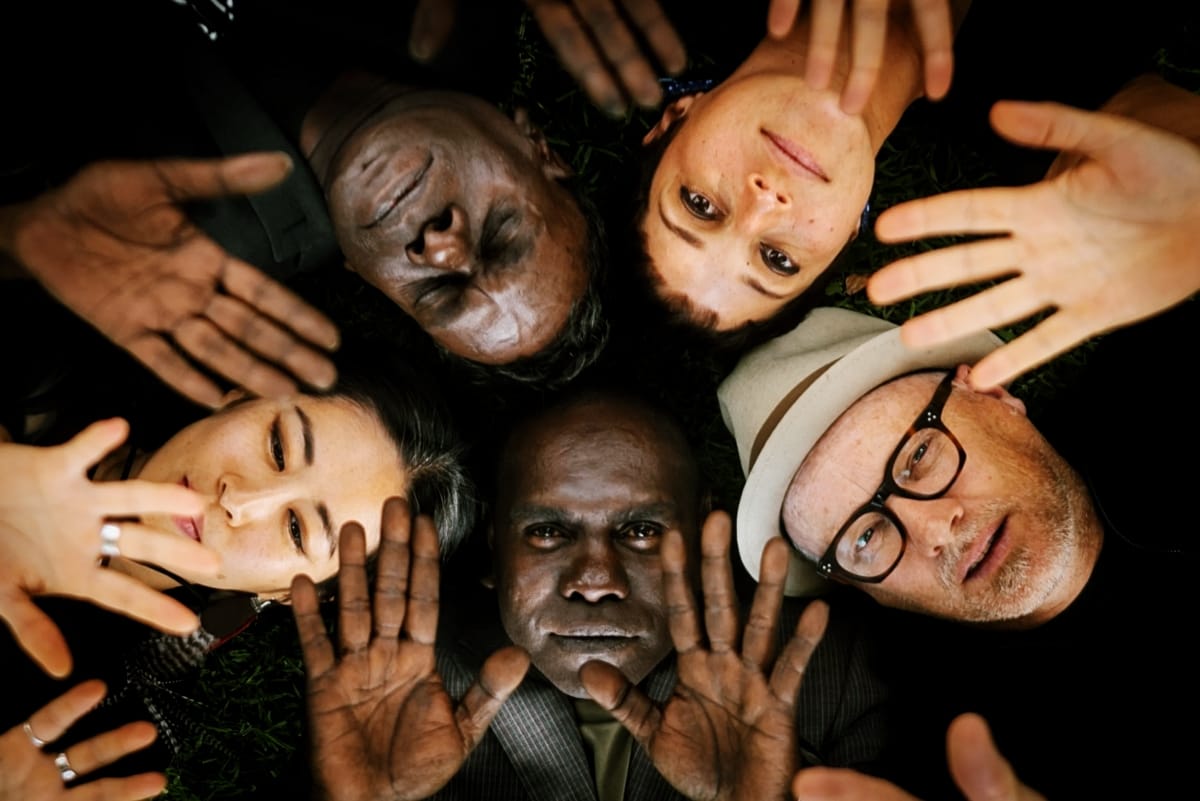


Comments