


Geography is perhaps a moot point when it comes to Nubiyan Twist. Though the band first emerged in the landlocked West Yorkshire locale of Leeds, their rich sound draws from far wider currents of migration, collaboration, and a restless global exchange. Described colloquially as a fusion of jazz, Afrobeat, soul, and hip hop, my conversation with producer and bandleader Tom Excell sheds light on a broader lineage of influence, citing the digi-dub reggae project Chief Rockers, where he spent formative years playing through sound systems in Norfolk and Suffolk, alongside his long-held contribution to Africa Express, Damon Albarn's celebrated cross-cultural project. This global influence echoes throughout Nubiyan Twist's discography and catalog of collaborators, boasting features from industry greats including Nile Rodgers, Seun Kuti, Tony Allen, Fatoumata Diawara, and Mamani Keita, and others.
Some might say I have a northern bias when it comes to UK music. Chasing dreams in the Big Smoke feels a little too on the nose for me. Tirelessly plugging away at music in a regional pocket of this wild isle ignites something altogether more enchanting—the pay-off feels sweeter, the endeavor more romantic. Echoing this, Nubiyan Twist first formed in 2011 at Leeds College of Music, in a northern city of remarkable stature and legacy that has long been fertile ground for genre-crossing collectives. Here, jazz students spill out of rehearsal rooms into dub sound system nights, and house-share projects grow into bands large enough to fill the stage. For Tom, protecting the art form of the large ensemble remains central to Nubiyan Twist's identity as a nine-piece band. "It's sacred," he tells me. I can only agree.
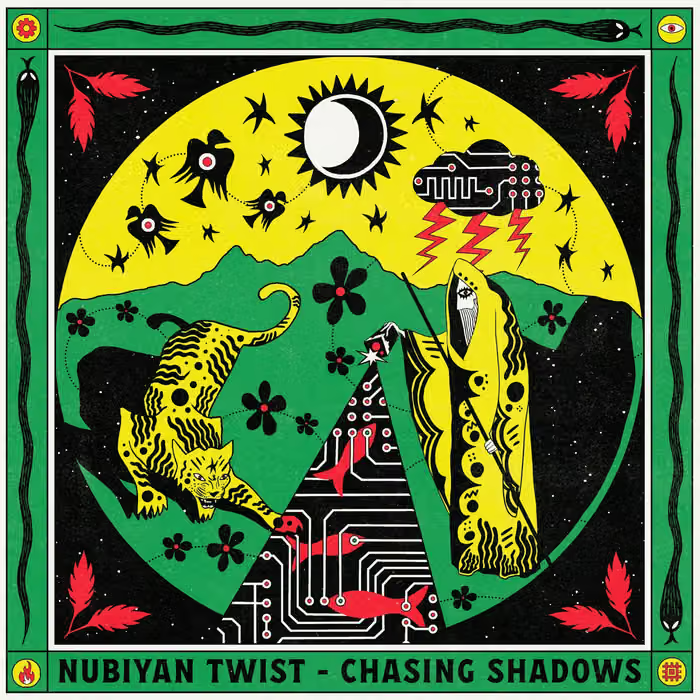
Chasing Shadows, the band's fifth studio album, is a beautiful, sprawling eleven-track record released by the storied Strut Records imprint. My conversation with Tom Excell explored a renewed dedication to music as an expression of humanity, rather than the output of a machine, interrogating the murky digital thresholds transgressed by AI generation. For Tom, making music in good company still carries something close to the spiritual, a connection forged in the room. "Sometimes it feels like nothing short of telepathy," he shares, recalling the 'aliveness' of live performance and music making. "That's the one thing a machine can never do."
Elsa Monteith: You've drawn a distinction between creative mathematics and algorithms built to commodify music. Where does Nubiyan Twist sit in that tension, especially when digital production is also part of your toolkit?
Tom Excell: I guess I see it quite black and white—all the production tools I use are powered by human ideas, and the creativity behind our music is fully human. I don't even mind people using AI necessarily if they enjoy it or want to be creative, but there's a deeper problem of this crazy corporate shift of power and money going upward within an industry that's already on its knees in many regards. It's scarier than “Can it sing a song?”
It could save you time, but what for? If saving time means you can work harder for the system and tire yourself out because you're just required to work more and more to exist in life and pay your bills, then I don't want to do that. I want to slow down, if anything. It's sold to us as something that will help us, but I don't think any of the end goals are what people actually want. We want to be smarter, have more time, and have more money to pass down to our kids and our families, and protect all of that, but it’s the opposite of the outcome I'm seeing at the moment.
Elsa: I think what you're saying about this kind of structural oppression is really interesting. This capitalist societal architecture that we're occupying and fulfilling the profit drive by optimizing our time and energy to line other people's pockets . . . it's a dichotomy when paired with human creativity.
Tom: Being able to completely clone culture for some tech bros to profit . . . it's disgusting, and it raises so many ethical questions about commodifying all these sacred cultures that we love and how we express ourselves and collaborate with all these amazing people that represent amazing lineages of musical heritage and culture. To be able to commodify that and extract it all for the profit of people outside those communities is just quite terrifying.
Elsa: The album brings together heavyweight collaborators, including Fatoumata Diawara, Bootie Brown, and Patrice Rushen. What were you listening for when inviting those voices into the room?
Tom: Every featured artist on there is a friend of ours that we've met through this journey, apart from perhaps Patrice Rushen, where the connection was through Strut Records, our label. It's a massive blessing and seems like a rare treat that she was up for it. And there are obviously loads of others: Joe Armon-Jones from Ezra Collective, who's bringing together the UK dub and jazz scene in an interesting way, which is very in line with some of my tastes; Bootie Brown (from The Pharcyde) and M.anifest, two incredible MCs—they came about through Damon Albarn's Africa Express Project that I was part of; and Mr. Williamz who's one of the UK's finest dancehall MCs. I used to work with him on a project called Chief Rockers, a digi-dub reggae project, during some of my formative years producing and playing dub through sound systems in Norfolk and Suffolk. It was cool to come full circle and get him on a Nubiyan Twist tune, which is quite a different vibe to that more typically UK sound system; it's kind of an Ethio-rock riffy mad tune that he's on, which is cool.
And then there's the Zawose Queens as well, which was another feature that I was really excited to get going on. That track is one of the most interesting musical fusions I've ever put together, which always excites me. Kind of joining the dots of things between UK broken beat jazz mixed with Wagogo, traditional and deep like ancient Tanzanian music, which obviously seems like worlds apart, but as soon as they heard the tune, it was just like second nature to jump on it because it's so syncopated and they're the gods of syncopated rhythm.
Elsa: You've described the magic of musicians "locking in together." What actually happens in that moment, physically and sonically, that couldn't be generated by code?
Tom: Sometimes it feels like nothing short of telepathy. There are certain moments with people that you've played with for years, or sometimes strangers, where you'll both do something at the exact same time that seems impossible; it's like no one could possibly plan that. I think music can sometimes give you a shortcut to that kind of almost enlightened spiritual state of mind that people might aspire to through meditation or religious practices. That's so completely at odds with the purpose of tech. I guess there's no comparison in that sense, because it's about as deep as it gets and about feeling, and that's the one thing a machine can never do.
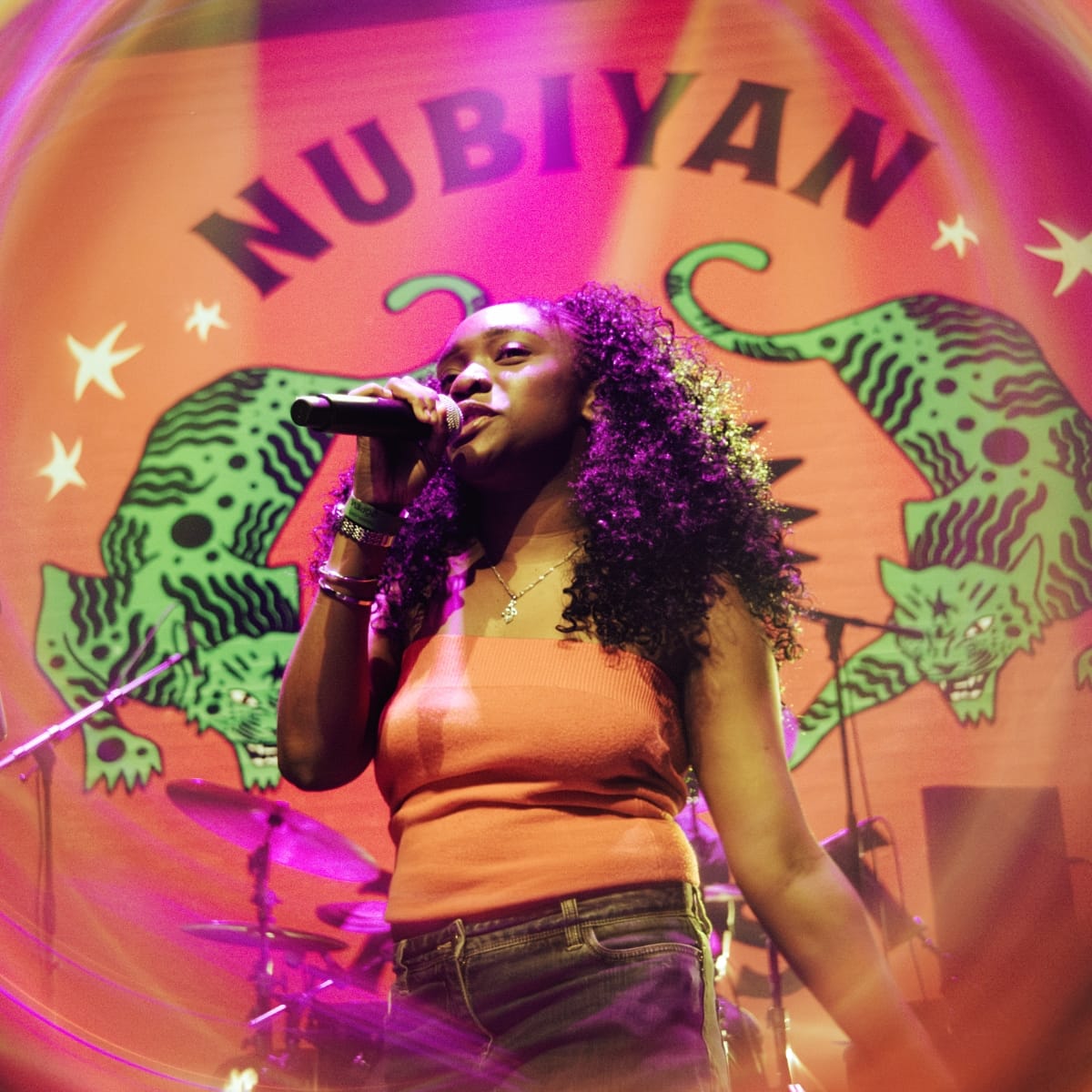
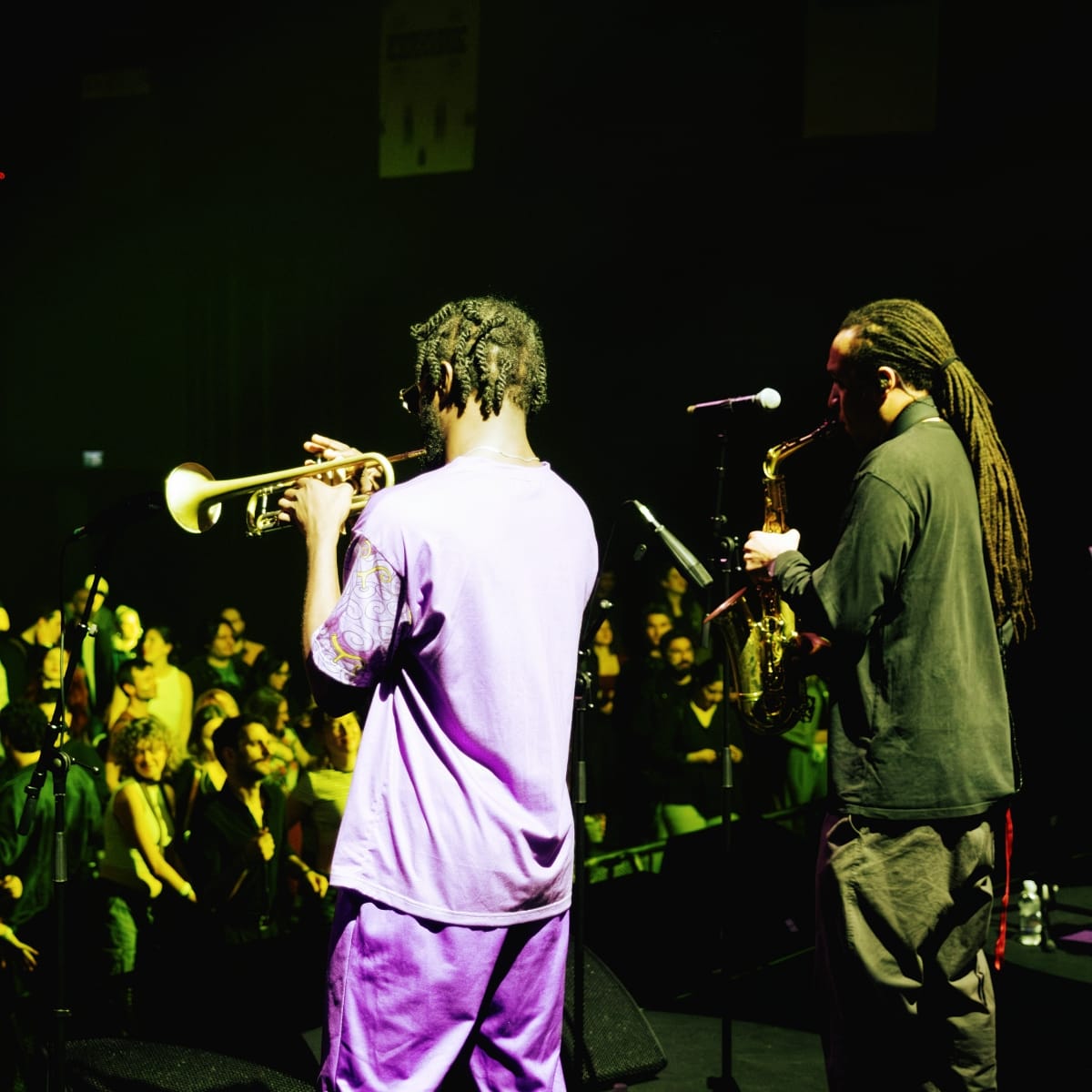
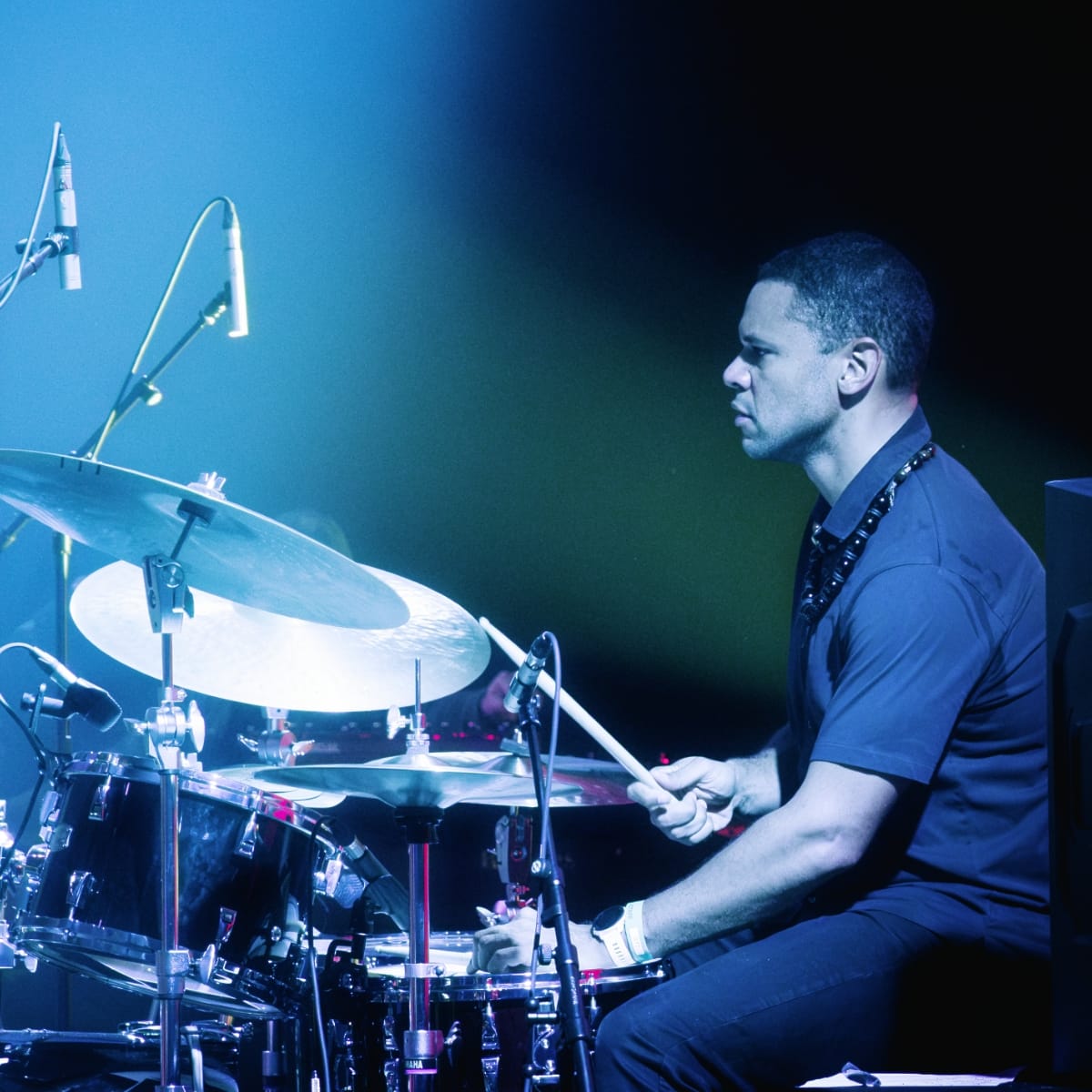
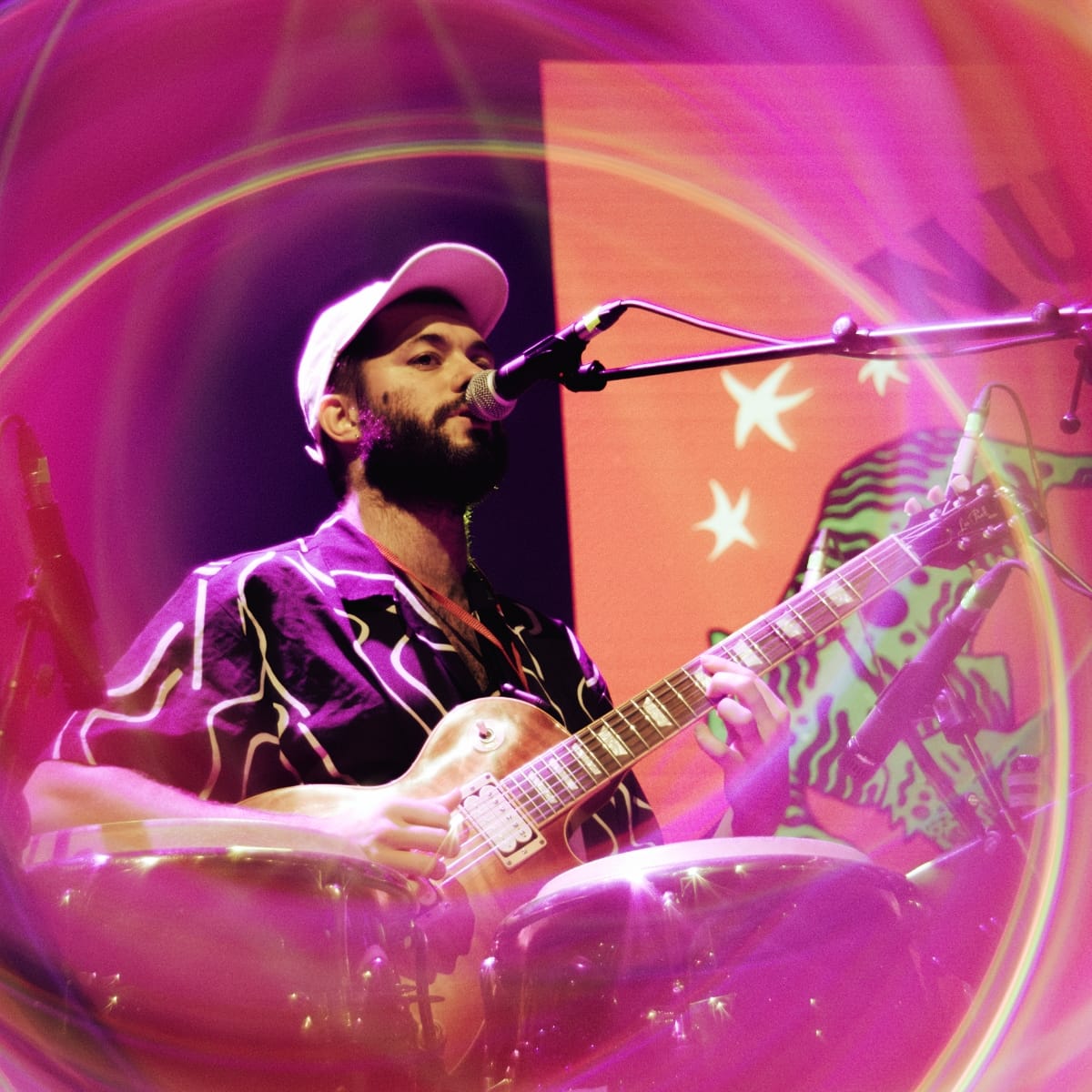
Elsa: Logistically, a nine-piece band spread across cities is already complex. Did that practical reality shape the sound of Chasing Shadows, or push it somewhere new?
Tom: Yeah, it's a nightmare (laughter). We've been spread out for the majority of the band's life now, so it's kind of second nature. The process has definitely evolved a lot; the early albums were much more so when we lived in the same place, and we didn’t have as many responsibilities. This is the first album I've done with two kids as well, so I'm quite proud I've managed to finish anything (laughter) and surprised myself that it's come out pretty good, but I think that's probably a testament to the fact that this is album number five, and we've been growing the team around us.
We've all been honing our craft for so many years. Now there's a maturity I can hear, and a bit more message in the music than there used to be, but everyone will have their own take on it. I love chatting to people and hearing all that stuff. It's one of the reasons I do it—to see how it hits other people. It's a cathartic thing; once you've made it and said those things, you pass the conversation over. Now it's not me that's owning that narrative anymore; it's over to the audience to interpret and use it as they want to, which is an interesting part of the social experiment of writing records.
Elsa: It's the death of the author, in a way.
Tom: Yeah, for sure. I kind of enjoy that feeling. It’s refreshing.
Elsa: The title suggests something elusive, perhaps even intangible and ethereal. What are the 'shadows' here—nostalgia, digital overload, lost connection?
Tom: Again, it's purposefully one of those titles that you can choose your own meaning for. I'd always encourage that. It very much comes from the subconscious. It can sometimes be after I've toured an album for like a year that I go, “Oh, that's what that song is about."
It's kind of a nod to the ancestral teachings that we all rely on having, the forerunners of the culture, and also our own family history, those sort of generational lessons. I feel like we're at a generational tipping point, moving away from no-screen, no-internet to complete surveillance and screen obsession. It's like we evolved for millions of years, carrying our genetics and the shadows of the past—the same sun that shines on us all casts the same shadow, but somehow we've just tipped over so quickly into this quite dystopian future that's in front of us. It's kind of like trying to chase the shadows of the past a little bit before they flicker away and disappear. That's my take on it, I think. It may change (laughter).
Elsa: Your sound balances density of horns, rhythm, and layered grooves, with dub-informed soundscapes. How intentional was that push and pull on this record?
Tom: It's quite organic. I'll just make music freely, and try to push a little bit to somewhere new and different. It's a dopamine hit, almost, that I'm sort of chasing a new sound, but there are these pillars I come back to as a writer, just because they resonate with me, and they always have done since I was a kid listening to my dad's records. That's like traditional music of the African continent and the diaspora, then jazz, and then the kind of electronic hip-hop beats, which I guess kind of tips into the dub process, not just the live-instrument realm.
I studied production, and I'm into that whole dance music and produced beats side of things, so those are the three pillars I'll always come back to. But within that, it can go anywhere. I always try to cross-reference those a bit, because that's who I am as a musician, what I grew up around, and the musical frequencies that just resonate with my body. I'm extremely happy that the cycle has come round and turned into this thing that I love, and I guess perhaps I've had a part to play in shaping what is now accepted as the UK jazz genre, which is an interesting thing, because it's not that much jazz (laughter). There's a little bit, but there's a lot of other stuff as well, representing the amazing cultures we have in this country, thanks to immigration.
Elsa: I feel like that live energy has always been central to Nubiyan Twist. Was the studio trying to capture the stage on Chasing Shadows, or did you approach this one differently in terms of the production you've spoken about today?
Tom: As much as I am a producer by trade, and I love production, people often say, “Live is so much better,” and I'm kind of like, “Damn, how do I get that on the record!" But I guess it's part of the community experience of being together in a room, so I don't take it too personally. The goal is to make it feel live and have that energy of it being human-powered and played. All the musicians are so talented and amazing, like you really want to hear the rhythm section locking in and grooving, and all those interactions and the kind of spur-of-the-moment things. And then the horn section, it's such a powerful sound, hearing horns, it's such a harmonically rich, organic, acoustic thing, I'm always trying to catch that and the room and the vibe and see how we can inject as much of that in as possible, given the restrictions.
I also try to leave some mistakes in, celebrating the imperfections. I guess with the liveness, the goal is always to be one of the tightest, most hard-hitting live bands in the world, like we're not giving ourselves an easy time. We set our own bar extremely high. But the studio is kind of different because you're accepting the reality that we are going to record digitally, which can make it quite a relaxed environment where you can take more risks than you might do otherwise, and then keep the good bits and not the bad bits. There's something nice about these long hangs in the studio, and you get to know each other as friends. The friendships go back a long, long way, and that's part of the sound, not just the way it's recorded, but us actually having time to hang out and connect.
Elsa: If this album is about holding onto something human, what does the future of that humanity in music look like to you?
Tom: I think music is always going to be an extremely important part of humanity. Having kids has been interesting, seeing how innately ingrained it is from birth, without having learned any of it culturally. Seeing both of my babies responding to music in such a way . . . it’s nice to realize how deep it goes, and how it's unquestionably there in almost every culture and part of the world and part of human history. In terms of its future, it’ll be interesting to see how the AI stuff plays out, because it's not going away.
It's also been interesting to see how protest music seems to be changing, with bands like Kneecap getting taken to court under quite shocking circumstances and seeing all these protesters being arrested in the UK. It's a crazy political landscape at the moment, and I think protest music will be an important part of the future of music for humanity, because it's always been a place to criticize the status quo and examine and speak out. There are a lot of oppressive forces going on politically, from tech to the far right to global conflict. I hope that music and musicians don't get silenced too much, as we’re starting to see with social media and censorship, but I know there will always be musicians standing on top of that hill, shouting their message, no matter the consequences.
Check out more like this:
 Dee Dee McNeil
 Mariam Abdel-Razek


Comments