


There is a listless burnout that maybe others experience at this time of year. The kind where you no longer see the magic of your surroundings. Crowds become a singular mob, weather once found enchanting like snow becomes an exercise in freeing a vehicle from a frozen encasing. Your car, like some kind of moth emerging from a white cocoon, only to drive to the grocery store for $17 eggs.
Composer Lia Kohl doesn't drive. And as I listened back to this interview, I recognized that's part of what makes her attentiveness special. Kohl is the people's sonic historian. It's her cello in the train terminals of Chicago. It's walks home with friends in the night air. It's the Amtrak rides to see her mom. Somehow, the concrete silencing from city infrastructure and foot-on-the-brake circuits has bypassed Kohl. She's exceptionally good at listening and responding from street level, and drawing out the beauty of daily life—remaining curious and open.
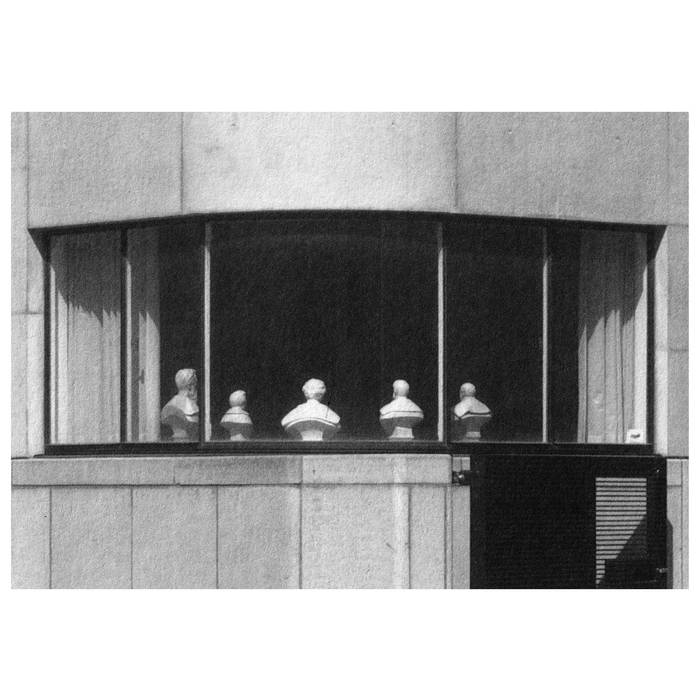
Various Small Whistles and a Song is 16 one-minute sketches of soft resistance to how things are. The pieces open with a voting line in Chicago and exit with a New Year's Eve group sing-along in Barcelona stretching into sunrise. These are cranky scenarios sculpted into micro-masterpieces by the cellist and synthesist. Kohl knows when to enhance a piece with her attuned compositions and when to preserve the moment in its minimalist posterity. The record is structured around Edward Ruscha's work Various Small Fires and Milk, with both artists being affected by their Southern California upbringings.
I can't help but think of Jane Jacobs' The Death and Life of Great American Cities. In the chapter titled "Erosion of Cities or Attrition of Automobiles," Jacobs muses, "City character is blurred until every place becomes more like every other place, all adding up to Noplace." Yet here, Kohl parses out that we exist, and we exist someplace bridging the binary of nowhere and everywhere. This record is special, and my initial impression (it takes only 16 minutes to listen in full) was a sudden self-admission that I am glad to be a citizen of the world.
If you are unfamiliar with Kohl, she is a solid figure keeping company with what I deem our modern poet laureates of noise as the gateway to our humanity. A frequent collaborator with claire rousay, Patrick Shiroishi, and Macie Stewart, often appearing with cello. Various Small Whistles is the follow-up to 2024's Normal Sounds, which was reviewed favorably across critical desks and featured Ka Baird.
Carolyn Zaldivar Snow: So, you're in Boston, you're touring right now?
Lia Kohl: I am. I work with this puppet theater company called Manual Cinema. I've worked with them for about eight years. It's one of the only things that I do where I'm performing someone else's work. They're super awesome. It's kind of shadow puppetry and live-action shadow acting with live music. I play cello and sing.
Carolyn: Are we in John Malkovich territory here? Is the music composed, or do you respond to what's happening as an improvisation?
Lia: The music is composed by someone else, it's really fun, and we're here for two weeks. I'm in this… I guess it's like a hotel room with a kitchen. It has these big windows looking out on Boston Common, so I'm sitting here making music.
Carolyn: So, when we logged into the interview, I noticed you were swiftly putting away an OP-1. What were you making this morning?
Lia: I'm making what will be kind of a process of taking apart the album, which I didn't make as a performance. I made it as an album, and for me, those are pretty separate things, and I'm taking it apart and making it into a performance, which is fun and challenging.
Carolyn: Your record is situational, so are we bringing those sounds through samples, or are we recreating them?
Lia: A little bit of both. I'm definitely playing the field recordings that I took. The field recordings also contain these different whistles, of different kinds—I'm having fun seeing how I can also recreate that. I did buy a police whistle and a penny whistle—I think I'm going to play those things.
Carolyn: Can you whistle?
Lia: I'm actually a terrible whistler, like I'm a terrible mouth whistler. I'm trying to teach myself—I can get a few notes out, but it's pretty funny to make a whistle record and not really be able to whistle.
Carolyn: I was noticing the collaborations, and what I know of claire rousay's work—I've seen her live a few times, that was a very… claire piece. What I know of Patrick Shiroishi, that was a very Patrick piece. I'm wondering why Andrew Bird doesn't appear on this record.
Lia: I didn't hit him up, I should've. I sent an email to friends who I know take field recordings and might have things lying around they could send me. I also did a call in my newsletter and on Instagram, just to be like, I don't know, maybe some randos want to send me recordings? I used what felt inspiring to me, or felt easy to respond to.
Carolyn: What's it like receiving a whistle from a stranger?
Lia: That's a cool question. I feel like whistling—there's something slightly intimate about it, because you often do it when you're not with other people. Or you do it kind of unconsciously. Some people sent me whistles where they were in a space that sounded cool, and so they were whistling in order to hear the space. There's something that feels intimate about that, too, because you're inside their head. They're not thinking about the sound that they're making; they're thinking about the space that they're in. So you get to curl up inside their head and listen with them in this cool way.
I received one from Jesse Perlstein, who's in a band called Sontag Shogun. We shared a bill in LA sometime last year; he's not, like, a close friend. But I admire his work, and he sent me a recording of himself in an extermination camp. He was visiting this camp, I think, in Poland or Germany, where some of his own relatives died. He was having this really meaningful experience, whistling to feel the space. He sent me this recording, and I just felt so honored that he would share that moment with me. It's the only recording that I kind of left by itself. I framed it with other music on either side, but I just kind of was like, "We can't add to this. Too much. We have to just let it be."
Carolyn: Which track is this one? Oh, here we go, it's labeled number 10. I just want to make sure I listen to it in the framing of the two tracks.
Lia: That felt cool because we're having this really meaningful interaction through sound.
Carolyn: I'm thinking about whistles that are offensive—like a catcall. Or maybe that's not offensive for some.
Lia: I think it's mostly offensive. I actually did think about catcalls, and I was like, is there some way I can elicit a catcall and record it? But then I felt—I don't want to get catcalled.
Carolyn: What are some other familiar whistles that we encounter in cityscapes and environments?
Lia: Since I made the record, the meaning of a whistle, especially in Chicago, has really changed. People are using whistles for ICE watches to alert their neighbors to ICE activity. I think it was originally a technique used in LA, and it was super effective, so it's very prevalent in Chicago now. It's cool that it's become this symbol of solidarity and taking care of your neighbors, but it's also one of fear. It's an intense combination.
Carolyn: I moved to Baltimore from Chicago, and I used to live in Lincoln Square. It's been amazing to see Chicagoans organize and what everyone's doing to get families to and from school safely. I always miss Chicago.
Lia: Have you been to Union Station in Chicago?
Carolyn: Yeah, I think I've ridden in on the Metra from the West Suburbs. I think it's called the Metra. I've been gone so long I can't call myself a Chicagoan.
Lia: Yeah! It's the Metra—good memory. So Union Station is a big marble box about the size of a football field. It's huge, and it sounds totally crazy in there. I was waiting for the Amtrak in Union Station, and they were playing some kind of canned music over the loudspeakers, and it just sounded so crazy that I just knew I had to figure out how to make sound in there, however I could—I wanted to work it out. So I got in touch with them, and I got a grant to do this project with ten musicians, including myself. We were playing this piece that I wrote, walking around the station, and using that kind of amazing acoustic architecture. They didn't close the train station; I didn't want them to close the train station. Plenty of people came because they wanted to hear the piece, but there were also Mennonites waiting for the train, random people with their suitcases, and whoever stuck around to listen. Just making something that was public and accessible, and unexpected for people, was really wonderful. I want to do more of that kind of work for sure.
Carolyn: I have a feeling that, as a child, you were a very curious and engaged kid. I kind of have this vision of you. I don't know where you grew up, but maybe collecting bits of lake glass off of Lake Michigan, or being excited to go to a museum gift shop. How did you become the human you are with this attentive practice that's found in day-to-day life? Where do you think that begins?
Lia: I was a curious kid, and I've always been a city kid. I was in New York until I was seven, and then in San Francisco. I feel like my mom cultivated that curiosity. She let me be. I feel like I was really allowed to be an artist in the most expansive, childlike version of that world. You know, drawing and collecting things, walking around—and then musically. Both my parents are musicians. That meant really specific training, but it also meant that I could explore. We had a piano in the house, and I could play around. As a teenager and then a young adult, I went to music school, and I did all these really formal things. But as a young kid, music also felt like a curious space.
Carolyn: When did you start paying attention to sounds? I guess as people, we're always paying attention to sounds, but did you have a moment where you were fixated on a sound and didn't know why?
Lia: I feel like it's more of a point when I sort of accepted my own mind and that I just have to listen to everything all the time. For a while, I was trying to rein myself in. I have trouble not listening to everything. I think this practice of listening to mundane sounds and making them part of my work is more about just accepting myself. Not to sound trite, but it's more about being, like, "No, Lia, your mind is okay. It's okay that you listen to everything; let's use that. Let's turn toward it."
Carolyn: Your record made me happy to be a citizen of the world. I think to make something good, you have to embrace being a weird kid. It's your point of view that gets you there.
Lia: I mean, my favorite response to my work is when people are listening to something, and then they're like, "I was listening to your record, and then there was this other sound that was happening, and it was so cool, the combination." That's the kind of window I want to open up. It's wonderful to pay attention. Because otherwise, why are we here?
Carolyn: So speaking of paying attention, as you're traveling, what's something that captured your imagination, sonically, this week?
Lia: Let's see—last week we were in this funny suburb of Pittsburgh. We were performing in the city, but they put us up in a hotel in one of those suburbs where it's not built for humans, but built for cars. I was having a lot of fun trying to figure out where I could walk. Where can I find trees? Or hills, or anything that's not a Container Store. I found some woods, and there's this kind of tree with big maple-shaped leaves that dry out. They fall slowly onto the ground. I haven't figured out what kind of tree it is. It's not a maple, it's something else. The leaves are like big pieces of paper that are hitting the ground really slowly. I stood for a while, just listening to these big leaves. It's really wonderful.
Carolyn: Did you record it?
Lia: No. I didn't. I go through periods where I'm recording things a lot, and then periods where I'm like—that's not about that. You know?
Carolyn: I understand that. I live next to a river—so it's always changing depending on the weather, and the features change as storms come through. I always want to record—but sometimes I just need to be there in the woods, listening, sitting.
Lia: That's probably my biggest personal challenge in field practice. You go out there, and you're like, "Oh, I wish I had my stuff. It's doing something weird." But then also, maybe that's just my secret with the landscape that I get to experience on my own that day. It's definitely a challenge trying to be an artist who interacts with the world. It's not all material. It's also being alive. There is the temptation to make everything into art, you know. It's good to make things into art, and also it's good to, as you say, sit with the forest.
Carolyn: When did you begin to feel comfortable calling yourself an artist?
Lia: I think after I left school. It was clear to me when I started making things myself. That was a shift in my experience of myself and of being an artist. As classical musicians, you're always making someone else's music. You're always an interpreter. And of course, there's artistry involved in that. I think, as a classical musician, I never thought of myself as an artist in that way. But as I started improvising with other people, that way of thinking about myself came into the picture. I have had an issue with that. I think some people are really like, "Ooh, am I an artist, am I not an artist?" I'm an artist, that's what I do.

Carolyn: So this record opens with sounds of going to vote. Tell me about that day. You're in the voting line, and… I don't even know if we're supposed to record things in voting lines.
Lia: So this was the 2024 presidential election, and the voting lines were very long. I think I was in line for an hour and a half. It was one of those super sites downtown—a big marble building. You're not going to talk in the voting line—it's not a particularly ideal situation. Everyone is like, "Here we go," and this guy started whistling. I think probably unconsciously, and it felt just really human and comforting. I just liked that this guy was like, "Alright, here we are—I'm going to make a little sound." I actually started recording not because he was whistling but because he was singing a Chopin nocturne very quietly.
Carolyn: Wow. That's specific, and you can identify the work even aurally.
Lia: It's like you don't always know what you're recording, you know? Sometimes it's one thing, and then it becomes something else. That's what this case was. I have this beautiful memory of hearing this man sing Chopin, and then a recording of him doing something else. Both of which I love.
Carolyn: What made you choose to open your record with this recording?
Lia: I think the dichotomy of what the situation was, and sort of what it meant—being all together doing our civic duty and feeling a little bit—well, for me—anxious and full of dread. Yet, all being kind of human together, like the sound of whistling feels really, really human. I like that dichotomy. I liked it as an opener—plenty of the recordings aren't of momentous occasions; they're just whistles I heard in the world —but this one felt cool. The closing of the record is also of a specific date. I was in Barcelona with my mom.
Carolyn: This is the "milk" track.
Lia: Yes.
Carolyn: So these are all fires, and this is the milk.
Lia: We were staying in an Airbnb, and the people downstairs were having a party, because it was New Year's Eve. It was six in the morning, and the last of the partiers was singing along to some song as loud as they possibly could. I love the sound of people singing together in any context, but the fact that it was six A.M. in another country on New Year's Eve, that feels kind of like just a more fun context. That feels relatable and cool to me.
Carolyn: What makes it the milk to all the fires?
Lia: I thought a lot about what the fires would be, and what the milk would be. First, I thought about recording fires, trying to be literal about Ruscha's precious book. But then I wanted to expand that and see what a musical version of these kinds of mundane pictures that he's taking would be. So, whistling and singing are both musical acts, but also kind of mundane—or at least in these contexts, they're kind of mundane. I think the milk came from my love of this specific recording, and feeling like, "Okay, this needs a special place somewhere." I also just like New Year's Eve as an end and a beginning.
Carolyn: So you leave us with an open loop.
Lia: Yeah. I pass it on to the next thing.
Carolyn: What's the next thing? What are you thinking about?
Lia: A few things. I'm thinking a lot about speakerphones. I've been making these recordings on the phone and playing with the sound quality and the social situation of playing music over the phone. The phone has all these optimization technologies for speaking to each other, but they're not really for making music. So I'm thinking about that. Then I'm putting out a record next year with Whitney Johnson and Macie Stewart. We're working a lot on the logistics of that. The record is done, but we're thinking about touring. And I want to do more of this public performance. I want to think more about how I can put myself in that situation, because it just felt so life-giving to make music in public. Everything is in a club or in a gallery, or in a specific context, and I just love that feeling of being, like, I don't know, "Music, want it?"
Check out more like this:
 Chaz Underriner
 Carolyn Zaldivar Snow


Comments