


In 1934, Venezuelan author Rómulo Gallegos wrote a chronicle of Florentino Coronado, a wandering singer who traverses the country's plains, singing, performing, seducing, and bearing witness, and ultimately confronting the devil. The novella, in all its quasi-mythological proceedings, became a seminal moment of social critique in both Venezuela and abroad, written while Gallegos was in exile in Spain, hiding from the tyrannical regime of Juan Vicente Gómez. Through the prism of Coronado's eye, Gallegos laid bare the inequity of human life in feudal structures, the blight of regionalism, and the need for social democracy and education. The book was called Cantaclaro.
The term itself has long been part of Venezuelan patois, traditionally referring to both traveling troubadours who engage in improvisational musical duels, and more broadly, to someone who is plain-spoken, viscerally honest, and devoid of pretense. Though in the country's oral and literary traditions, those qualities have on occasion wandered into hyperbole, elaborate mythic portrayals of uncompromisingly blunt and borderline crass agonists, on the whole, what 'cantaclaro' signifies in Venezuelan folklore is a heroic figure—a humble and upright archetype, with a penchant for lyrical ventures.
In many ways, the word is a perfect descriptor for Juanma Trujillo. Though there's little ordinariness or simplicity in the Venezuelan guitarist's virtuosic playing and omnivorous approach to his instrument, the grounded and unostentatious manner in which he conducts his life and art carries a certain valiant quality, one that occasionally betrays the sheer brilliance Trujillo has been pouring into his life's work over the past decade.
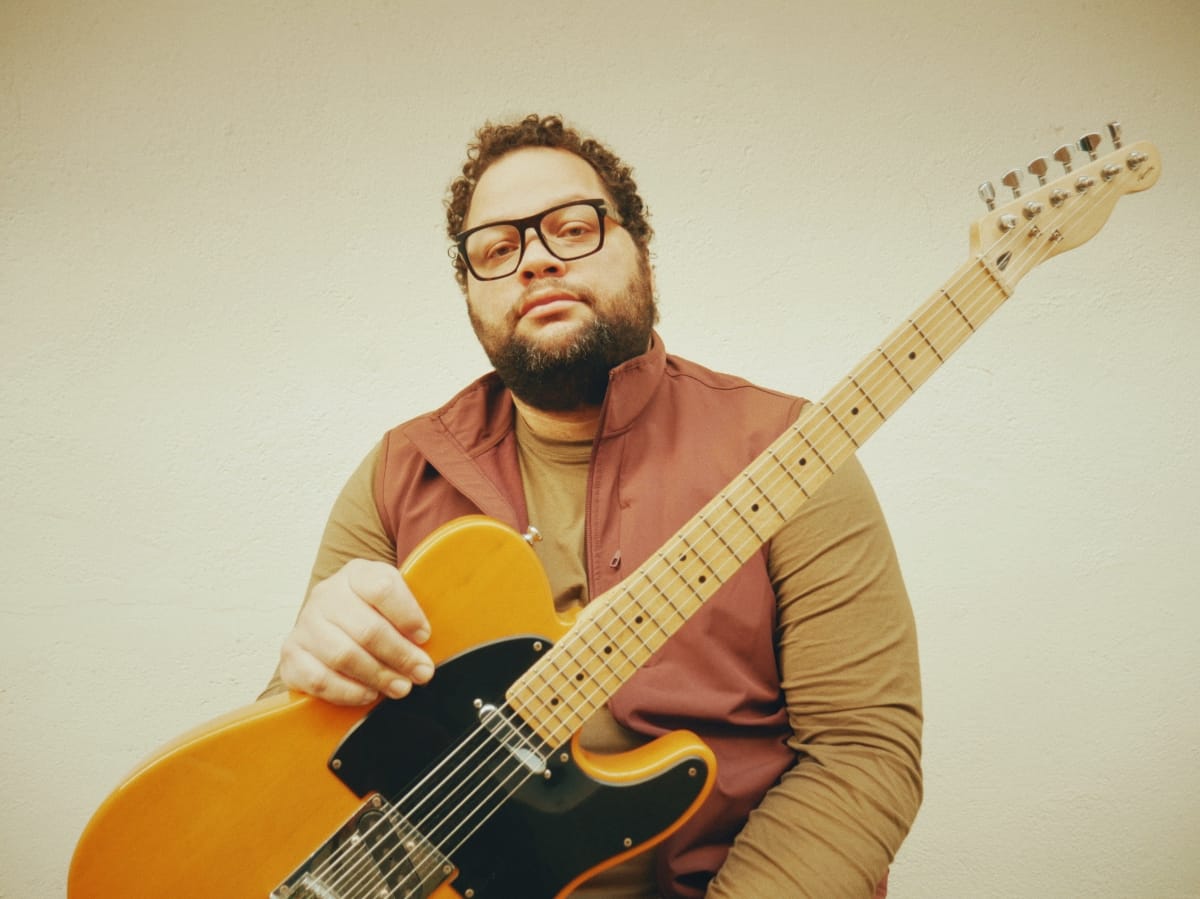
Born in 1984 in Caracas, his love of music was nourished when he was young:
"The initial interest in music came from my father. He grew up in the '60s. He was your stereotypical hippie and has a broad taste in music. We had a very good record collection. He also had a lot of musician friends. My first guitar teacher was my godfather, Gonzalo Micó, one of the most notable figures in the jazz scene in Caracas. And my music teacher in theory and solfège was another childhood friend of my father's, Maria Eugenia Atilano. She was an amazing teacher who created a university-level curriculum and held lectures in her apartment. Even with my going to formal school in the U.S., I still think that most of my theoretical knowledge comes from her."
It didn't take long for Trujillo to find an enduring passion and wunderkind capability within the guitar. By 2005, he left home for Los Angeles to study music in a more ceremonial manner. His rich and varied, but scattered, history of learning music was somewhat of a clash in the new environment:
"In LA, when you go to a jazz school, most of the kids have already been playing in big bands, transcribing Joe Henderson solos, things like that. My background was all over the place. I'd played with rock bands in Caracas. I was already performing professionally, but in a very utilitarian fashion, playing music in restaurants. I had also played with a couple of jazz bands, but I was still pretty green."
Doubtful that his disjointed early education would allow him access to a prestigious music school in Manhattan, Trujillo found the LA Music Academy (now called the Los Angeles College of Music) on the internet. There, he caught the tail end of the school's and the city's penchant for holding vibrant jam sessions among seasoned pros. These sessions granted him his first access to ubiquitous names in the experimental and jazz fields, people who had carved a steady living in the always-unsure business of art:
"Some of my teachers were Mike Shapiro, who played with Sérgio Mendes; Ralph Humphrey, who had been Zappa's drummer; Frank Gambale, who was a major guitar-head. There was a wide range of hyper-professional LA musicians. It was a great experience because the way the school was set up was: after jazz class and after discussing whatever tune we were learning, they would hold an ensemble portion, and they would hire professional rhythm sections to play the tunes. So we were playing every class. Pedagogically, it was quite pragmatic, you know, just getting us to play. I wouldn't say a lot of the material was inspiring. But it made me a professional, and it was good for me."
From there, Trujillo entered the full formal frame of playing, both academically and professionally, as part of the Northridge State University. Aside from playing with teacher and mentor Gray Pratt and musical encyclopedias like Gary Fukushima, he was recognized as an Outstanding Soloist at the Monterey Jazz Festival. Steadily, and with little clamour, he was becoming bona fide. Through Pratt, he also, for the first time, began entering the avant-garde, exploring free-form and collapsing boundaries of where sound could go.
The growing economic crisis in the U.S. briefly brought Trujillo back to Venezuela, where he met his wife, Leonor Falcón, a violinist. Falcón had already been living in New York at that point, and the pair falling in love was the ultimate catalyst for Trujillo's move to the East Coast in 2014. Landing in a new place, with an entirely different pace and scene, once again, he had to start from scratch:
"The first year was an ass-kicking. I was working as a bartender, giving guitar lessons to kids. Then little by little, I began playing with more people. The great thing about New York is that everyone is there to do the same thing. So if you manage to stay afloat and keep yourself open, things begin happening."
Trujillo's so-called big break in that period was meeting and playing with Francisco Mela, a legendary Cuban percussionist, who had spent his life melding jazz drumming with Afro-Cuban and Latin modalities. Through Mela, Trujillo was given an aperture into the world of avant-garde jazz’s old guard, getting to play with living architects of the genre, such as Cooper-Moore and William Parker. It was a brimstone, adaptive education:
"Francisco was an old school pro. He never really planned how a concert should go. And he would always throw you all these curveballs in the middle of sets," Trujillo chuckles. "I'm part of a generation where the general thinking was to be more fluid in how to deal with aesthetics. People who have an intense bebop foundation were very well-versed in playing open forms and noise. Everyone had, more or less, accepted sound as a broad, valid range. It felt very exciting for me at the time. In New York, there were also spaces for all those forms to merge. That's why it's still such an attractive place for people who are developing."
In that crucible of relentless creativity and playing, Trujillo started stretching his perceptions and capabilities in earnest. His stay in New York was marked by a plethora of playing engagements and recordings. While his agile, highly inventive playing was the secret weapon on many albums by other prominent leaders in the ensuing decade, it was his solo and lead undertakings that would produce one heart-rending work of art after another.
With 2018's El Vecino, Trujillo integrated his intricately woven melodies into vast, improvisational spaces. On 2020's Folklore, he created an oddly unified mesh, with each musician supplying improvisation remotely, for a final result that felt as desolate and uniquely life-affirming as the pandemic that gripped the world. A year later, on Ímpetu, he mounted a series of monolithic electric guitar passages, a tribute to the stoicism and resolve of his grandfathers, Rogerio and Rubito. And, on Contour, the listener was exposed to a sequence of pointillist nuance, fractal rhythmic patterns, and jagged textures. These singularly incredible albums came at a steady clip, charting the path of an artist in an intensely prolific phase of flourishing.
Then came Howl. The 2024 effort saw Trujillo shift to acoustic guitar, abandoning the rich haven of electric and electronic effects, and delving fully into a study of sheer resonance and tonality. Stripped of all embellishments, the pieces formed vistas entirely different from those in his past projects. In quartet formation, Howl's stormy parts gained a remarkable pastoral fury, and its more hushed, meditative parts became imbued with a peculiar hanging ambience.
Then, just a few months later, Trujillo threw himself back into the electric mist, embarking on an entirely different rumination with Bestias. Inspired by his kid's obsession with animals, the album was a masterpiece of conception, taking each of its primordial elements and fusing them into a single multi-pronged organism, a pulsing, living fauna of sound.
Throughout this embarkation, Trujillo's passion and exploration remain at the forefront. Neither the academic background that shaped his beginnings nor his own humble, somewhat pragmatic nature could dull the sense of how alive and how giving this music feels. Any guitarist worth their salt forges their own fingerprint. And aside from pure technical prowess, what distinguishes Trujillo is how expertly chameleonic and exceptionally present his sound is. His journeys have necessitated a level of adaptation that now inhabits his chords, in all their bent, cavalcading glory.
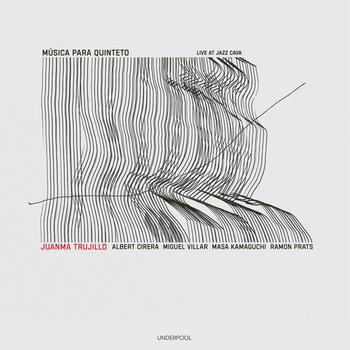
All of this ultimately leads to Trujillo's latest project, Música Para Quinteto: Live at Jazz Cava, which was preceded by another drastic move in his life and the life of his family. In 2025, at the tail-end of that winsome run of records, Trujillo left New York for Barcelona. His reasons for wilfully transitioning out of one of the most vivid jazz and experimental scenes are as clear and unassuming as everything else he says throughout our chat:
"The move to Barcelona was meant to bring some balance to our family life. We had a baby, and he's four years old now. We have family close here. My mother's in France, my father's in Bulgaria. The economic realities of being in the U.S., let alone a city like New York, we felt like if you decide to stay there, you commit to accepting a certain quality of life that may never arrive."
Here, Trujillo takes a moment to point out that he has tremendous admiration for anyone who sticks around to brave the city's uncertainty and frenetic lifestyle. Yet, his priorities crystallized without much doubt.
"People get career-obsessed. And not because they're sociopaths. But the financial aspect of a city like New York is very pressing. There are people who appear on the scene and seem to immediately shoot into the sky. The rest have to hustle. Hustle to meet people, hustle to get gigs, then hustle to get better gigs. All the while you're working to make ends meet. We would have these insane fourteen-hour days—day jobs, rehearsals, gigs, commutes. I don't think that pairs well with parenthood. And if I can have a rich personal life, it feeds into my music."
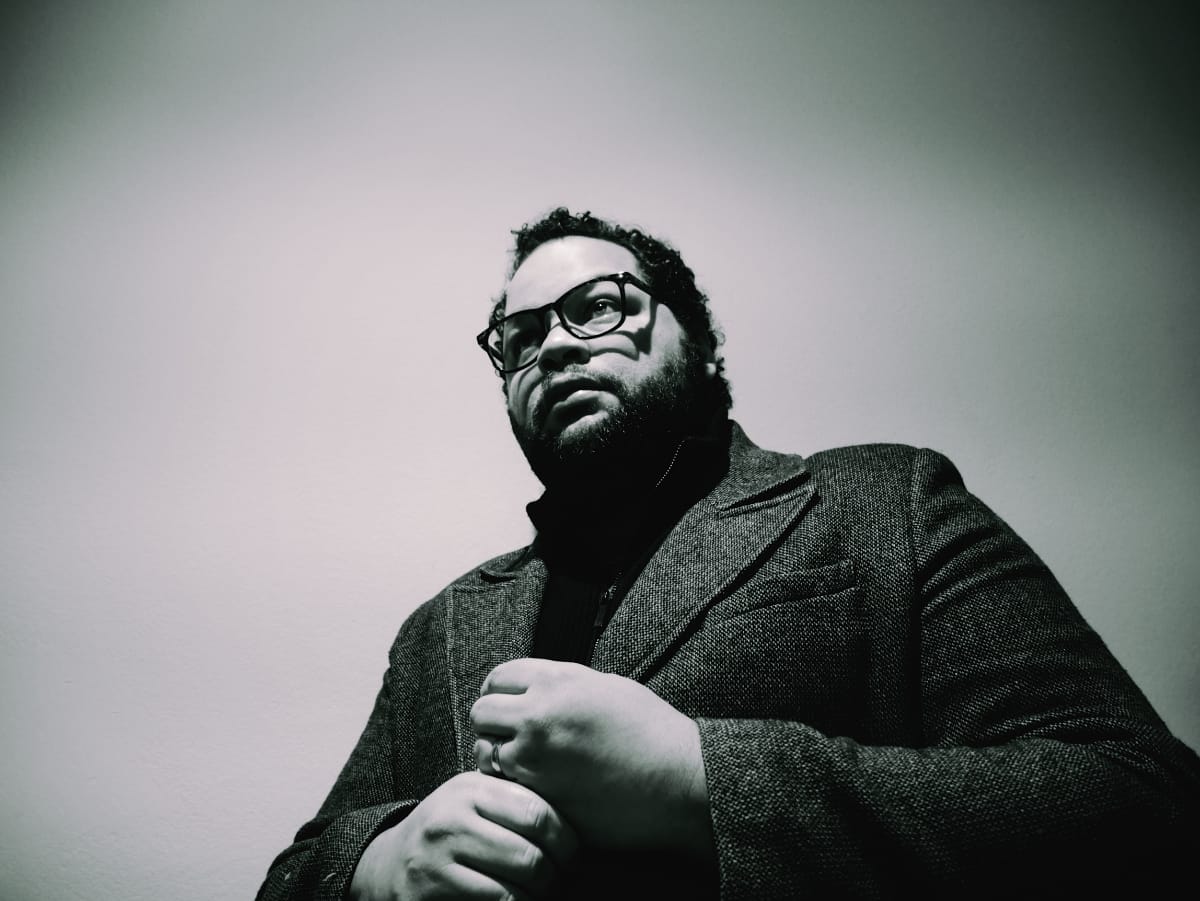
Leaving New York, at least to some degree, meant abandoning his established position, and Trujillo once again found himself in a new place, with its own genre diasporas, inner circles, and sub-scenes. It again necessitated indoctrinating himself into the fold. Yet, Trujillo's talent has never kept him on the outs too long, and the quintet he assembled for Live at Jazz Cava already sounds like they've spent decades resonating and playing off each other.
"It all happened fortuitously. I had been here for some time already, playing with different people. One day, on a whim, I thought that it'd be good to play with some horns again. There's a small club here called Robadors. It's a club and a workshopping space. No one will ever tell you what to play at Robadors. So I put together some compositions and booked some musicians. It worked so well. We reviewed the charts before soundcheck, and I didn't write anything too hard, you know? All the musicians are amazing."
Pep Mula and Sergi Felipe, two local musicians, then offered to put out a concert by the newly established quintet on their label, Underpool. With a gig at the Festival Jazz Vic looming, all of it aligned perfectly for Trujillo, who was then able to hit another threshold in his life—having his own work pressed on vinyl, a tangible piece of permanence that feels more and more important within the far more ephemeral and spoiled notion of immortality of music in the digital age.
The compositions Trujillo brings here are patently his—beatific suites that contain an inherent scaffold, yet lend the players endless windows into improvisation. The twin tenor sax frontline of Albert Cirera and Miguel Villar lends the record a thick orchestral feel, allowing the quintet to fuse into an extended expedition in texture and tone. Live at Jazz Cava contains everything there is to love about music that is free—by turns, highly lyrical and rough-hewn, it comes at the listener both in dense sheets of melodicism and fractured shards of tumult. It all captures him at the height of his powers, comfortable, but not settled, and ready to burn.
"I wanted to write music that meant something. And then have the band play a great set. It all worked out perfectly. It all felt very unobtrusive. We set up like for any other gig. And so the recording really captures the energy we have as a band. That's the most important thing you can hope for in a band like that. It's less about fidelity, and more about catching that vibe."
As we wind down our conversation and speak about the general state of experimental music today and its dearth of financial support, I bring up how, barring a few anomalies, even the most talented, visionary players on the scene are often left to play to niche crowds, gear-heads, aficionados, and fellow artists. Here, Trujillo interjects and offers some soulful solace, and once again, his passion, so cloaked within this quiet un-fraught person, comes blistering forth:
"Every experimental musician, every single one of us, has had a very specific experience. Every so often, once or twice a year, somehow, the stars align, and a ton of people show up. And it's not the usual people you always see at gigs. It's not people who are connected to the scene. And then you play challenging music for them, and it kicks their ass, and it's an amazing experience for them and for you. And then you get this warm embrace from them. That's not most people, sure. But I do think there is a significant audience for this music that, because of resources or something else, is just not being tapped into. Maybe I'm an optimist."
Check out more like this:
 Lawrence Peryer
 khagan aslanov


Comments