


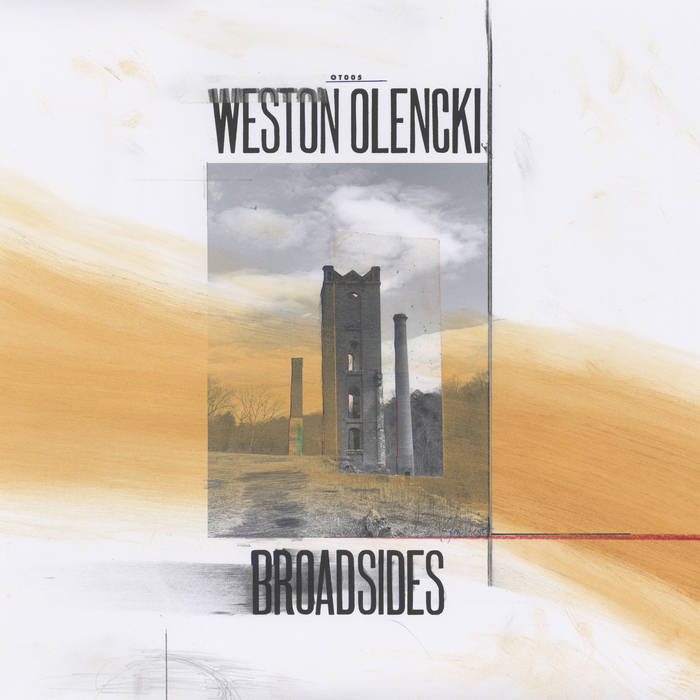
To experience Weston Olencki's Broadsides is to hear the results of a unique process—an occupation with singular instruments, southern musical heritage, and the tools of electroacoustic music practice.
In their recent chapbook For Instruments (Lampo, March 2025), Olencki (they/them) delves into the concepts behind their compositional practice. Trained as a trombonist, Olencki gradually developed as a composer by focusing on instruments themselves—their potential, their history, their objectivity, and more. They write music "with, for, and about instruments" rather than using them as "neutral tools with which to develop, or at least further, ideas." This is an open disputation of composing as the abstract construction of objects through the medium of music, a refreshing alternative to the high modernist music and arch-intellectualism that has influenced generations of composers (see this NYTimes article by Joshua Barone for more on that).
For getting a comprehensive experience of Olencki's work, I highly recommend picking up For Instruments and Broadsides together. It's an unusually revealing and special treat to have both a substantial artistic work and a deep conceptual dive into the work by the artist together, and it's certainly worth the time and energy to experience them as a pair.
In both Broadsides and For Instruments, Olencki explores their relationship to their musical heritage as someone from the mountains of the American South. This is a reckoning we have in common, including using traditional instruments from the region, such as banjo and fiddle in Olencki's case and pedal steel guitar in mine. In a section on "The Rural," Olencki reflects that "Up north, I became suspicious of art-world attitudes that viewed cities as the only places for progress, relegating everything else as a bucolic retreat or uneducated backwater." To "center a more rural perspective" in their work is meaningful to me as someone in a small town in the South, an opening up of creative possibilities beyond the established cities on the northeastern coast of the US. We agree that the South is not artistic flyover country.
In Broadsides, Olencki doesn't just explore instruments as material themselves, but also develops a distinctive music language. From the complex textures of field recordings combined with instrumental and electronic sounds to tasty microtonal banjo and mournful autoharp, Olencki creates a compelling musical journey. There are truly special uses of field recording in particular, especially the reveal of a bluegrass jam session at the end of "Foggy Mountain Breakdown." I find Broadsides to be a recontextualization and re-presentation of sounds of the South, a collage of real-world experiences, and a unique reinterpretation of musical tradition.
I spoke with Weston while they were touring the music from Broadsides in Germany. This interview has been lightly edited for length and clarity.
Chaz Underriner: You're owning being from the South, and I feel like I'm one of those people who openly says that about myself and my artwork, too. It seems more artists are also owning regionalism as a trend. As opposed to people like Robert Rauschenberg, Pauline Oliveros, or Ornette Coleman, who were all from Texas but didn't really acknowledge it as a part of their work or themselves (that I know of).
Weston Olencki: Totally. The interesting one I found out recently is that Ellen Fullman is from Memphis.
Chaz: With all that in mind, how do you want to be perceived as an artist from the South, as a person who owns it?
Weston: It's got a few layers, because this attitude of 'owning regionalism' within the arts sometimes feels like a reaction to a certain homogenization I see happening in the world. I'm referring to a kind of 'reducing' of things or experiences to a single definition, where local culture and its particularities (especially in places like the US that are so internally diverse) are becoming increasingly flattened (digitized? monetized?) by the current powers-that-be. There seems to be a desire right now to make one thing, or outlook, or culture stand in for everything, basically.
I'm interested in pushing against that flattening as much as I can, but I do also find regionalism an engaging pursuit more broadly, not just as a reactive position. It allows me to dig into many other things I'm interested in creatively, like site-specificity, material histories, and non-linear temporalities. It's also a way to stay connected to and learn about one's place in the universe. I don't know if I feel like (or want to feel like) I have control over how I'm perceived anymore in that way.
The biggest thing, for me, was just owning being from there as a human being. I grew up in upstate South Carolina, left when I was 17, and went to school on the north side of Chicago. I then lived in California, moved to New York, then Vermont, Berlin—I've done the city-hopping thing for a while now. At first, I was definitely trying to run farther away from home—my earlier complex feelings about being from the South were more of a personal thing then. How I want to be perceived now is a core part of who I am. Now I'm more comfortable with who I am and where I'm from. I'm not running anymore, but trying to embrace what I can of it.
I do think it's important, maybe even our duty, to push back against the dominant picture of what people from the outside think the South is like, especially to show that it's not homogeneous in the way it is typecast in media and culture. It's not even homogeneous within itself from region to region, and never has been.
The more difficult layer of this is being a white southerner, which has a whole other set of baggage. It's a particularly tricky path to navigate, and I'm trying to do that with as much grim honesty as possible by learning my own implications in the larger arcs of history, my parents', their parents', and so on. I'm of Eastern European and Irish heritage, and we don't have any family records from before the 1900s, but that doesn't excuse oneself from any current or past injustices. The systemic violence inherent to the structure of the South is, and was, unignorable. In my case, it's more about finding the aspects of its culture or history, however small, that you resonate with and feel you can take with you, and then building something new and different from that.
I do want to be clear that my position in this work is not about pride or reclamation of heritage. 'Southern Pride' means something very different down there, and is rooted in a brutal racism that must be stamped out at all costs. That stolen land was home to some of the most reprehensible horrors humanity has seen, some of which are still playing out in new guises. Those in power are currently hellbent on erasing the memory of its genocidal past while enabling what's happening today. As someone who was raised down there, I feel it's my imperative to learn the history as much as I can, to deeply understand that fucked-up past, and from there change the way we move through the world.
These prevailing narratives, while dominant and widespread, are also not the whole history of what actually happened! Many alternate timelines are lost to history, but more are now being told. Many major civil rights movements started in the South; many forms of socialism and mutual aid were cultivated there; there are many fascinating records of land reclamation; and much more (in particular, see research by folks like Robin D. G. Kelley and Emory Campbell). Here again, I'm trying to ward off that specter of flattening: everywhere has some degree of heterogeneity to its past, paths not taken or able to be taken. That heterogeneity is just a real condition of being in this complex world, and learning about it, in most cases, will really alter one's conception of a place's past and its sedimented present. So I think for the South, it's about finding and telling those different stories, and trying to shift away from a blanket legacy that's been constructed around it.
Chaz: Do you feel like you're representing Southern culture to a European audience? Are you being exoticized?
Weston: It's complex. I try to represent the aspects of it that resonate with me. But I don't feel like I can or want to speak on behalf of other people. I'm not saying, "Oh, this is authentic. I speak for the real thing," whatever that is. I'm confident in the work I make because I don't feel like I'm trying to generalize or essentialize anything about my source materials or lived experience. I'm definitely not staking a claim towards ownership over this place or its many cultures. I'm maybe more of an ambassador for my own narrative, which is fundamentally intertwined with the American South. I'm also trying to avoid doing it in a hyper-individualistic, self-aggrandizing way. As my mom would say, I'm trying to 'not get too big for my britches.' I'm most interested in the ways these personal stories interact with larger, more shared ones.
To answer your question, though, I'm sure there's some part of the European consciousness that might find my playing banjo flat on a table with a threaded bolt exotic. If people want to interpret it that way, that's not my purview. No matter what, I'm going to treat this instrument with the same seriousness, the same care, respect, and capacity for extension or invention as you would treat a violin, a piano, a gamelan, or anything else with a rich cultural heritage. You can't shape people's frames of reference, but maybe at best, I can hopefully play with them, nudge them a bit wider.
In those spaces, I do want to communicate that the South is not all MAGA and megachurches and gun rights and all this kind of neo-fascist shit. For sure, that's rampant down there, and we have to grapple with these problems seriously, but the backroads of the South have historically fostered resilience and resistance, too. It's chock-full of amazing folks fighting for liberatory politics, anti-racist action, gender equality, etc. And also, it feels important to show that other socially deemed 'progressive' places aren't above or beyond these issues either. We're all in this struggle together, even if our governing parties are different.
Chaz: Tell me about your relationship with notation. When I listened to the album, I heard it as unnotated. And thinking about your other music, I know that you are definitely fluent with notation, especially as a performer.
Weston: Totally. I'm a classically trained trombonist and specialized in contemporary classical music pretty early on. I didn't really come from a strict orchestral background, though; when I was in high school, I marched DCI (Drum Corps International), and my formative experiences were in marching band and community wind bands. From there, I went to a conservatory for classical performance and grew further through the European Neue Musik lineage.
Your question about notation is interesting, especially thinking back to 2010–2016 when I was coming into my own. In those communities of composers and performers, many people were developing idiosyncratic forms of notation. Not so much 'graphic scores,' but precise documents that extended the visual language of how to represent sound and sounding actions. In my early 20s, I loved it. It was exciting, a bit manneristic, and also ridiculous. I think what I took from that is how flexible different writing systems could be, and how you could really conceptualize a score as a map of a piece's sonic outcome. Like, what parameters of the piece do you want to fine-tune and control? What are the things you want to leave open for interpretation?
So my relationship with notation is more pragmatic now. Basically, "Is it convenient or not?" Does it serve the music-making? For my solo material, there's no reason for me to write a score for myself or someone else to reinterpret. I just write directly in MaxMSP and Logic, then make a setup I can play and tweak in real time.
For this record, I composed and built the patches so that none of them is fixed to an exact timeline. I work very meticulously with material, but it's not composed to yield an identical micro-level structure each time. Every room, every audience is slightly different, and it's important to adapt one's phrasing, timing, and dynamics to the space you're playing in. I'm committed to the practice of composition, but in this method I've found that this always leads to my best live performances rather than fixing everything down. So all the banjo stuff on the record, it's running loops and little chunks of bluegrass tunes through this dual Markov chain synth that I built. Even if the moment-to-moment development is different each time, by programming the speeds, the choice of syncopations, and controlling how it's getting interpolated in time . . . all these things are, in this case, actually much more specific than what notation could give me.
However, when working with new music ensembles (like when I wrote a piece for TAK ensemble last year), I do try to write in a way that can be fully notated, and that makes sense for that context. I don't really feel ideologically on one side or another. But for albums like Broadsides or Old Time Music, I do think more traditional notation would just get in the way of the music.
Chaz: So this album was put together for you to play. Would you let anyone else play it? Or how would they? Because it uses your patch and instruments, right?
Weston: For me, the piece comes from research, first-hand experiences, and tinkering with all this stuff, all over a long period of time. Theoretically, someone else could play it all, but especially on "all my father's clocks," it's more narrowed down, because it's about that one specific instrument. The whole point is that I found and built this little mythology around an autoharp I found in a thrift store in Tennessee. I guess I don't feel like someone else shouldn't play these pieces, but there's nothing for others even to begin realizing them within the performance practice of notated music.
I don't replay the record live either. I see the album and the live sets as different objects made from the same materials. Each is a different iteration of the bigger project, where studio recording affords certain things, and live performance affords others. So my main concern is usually: how do we get immediately to the ideas and sounds?
Chaz: Going back to southern things, can you talk more about how you felt like an outsider growing up here?
Weston: Feeling like an outsider was a big part of it. Social situations and activities felt very gendered, and I had so few friends who were boys—there was just this constant confusion of "Oh, I don't fit in with any of this." But when I was young, the feeling of not fitting in was cosmic, too. There was always this insecurity, or just the feeling that the world was happening somewhere else. It was never important where you were, and "the world" seemed always just out of reach.
I don't feel this anymore. The world is wherever you are or wherever you feel it to be, or wherever your family is. The center of the world is everywhere. My friend Turner Williams put it beautifully: "Everyone is from a place." And that place just happens to be one point that I know about, and you have your points that you know about. All seven billion of us are the center, in our own way. As a listener, I love hearing someone share what they know about their corner of the world, how these corners are all connected. Sure, certain places have particularly rich historical constellations, but this doesn't mean that other places are somehow lesser-than. Or as you said in your interview, "there's art that's not from New York."
I think it's the sense of connection that I'm drawn to, these flows of energy and time and influence and tradition and breaks from tradition. I've felt and heard from folks all over about this shared feeling of being away from the world in some way, whether they're from a rural place or living in the ivory tower. Both of those are kind of fallacies, though, because everything is connected, and that's the beauty and the horror of it. I tend to be skeptical of attitudes or methods that encourage a critical distance from one's materials and subject matter. Even something like a white cube is provided for, paid for, and facilitated by flows of ideas, people, and capital. Everything is connected to everything else, I think that's the key. And it's this sense of scale and a sense of awe in that for me that I really try to get to in the work. Even things that seem insignificant or peripheral tie back into the bigger picture.
Chaz: I see on SoundCloud that you labeled your releases Broadsides and Old Time Music as country. Have you gotten any responses to that from a country audience or the country music community?
Weston: Not really. I have some friends who grew up in the old-time scene, and I've met some folks in the last few years who are similarly curious listeners coming from those traditions. But proper "country"? I don't think I can or want to control those reactions.
I thought about approaching the Floyd Country Store or something like that and, maybe a bit naively, asking "Hey, can I play here?" I'm curious about presenting in those spaces, because you and I are familiar with the brand of conservatism found in experimental music, and have to work around those ideological people who defend "this is what new music is" to the hilt. So I imagine it's similar for that world as well. I've met the people who are curious, and I don't think I've met the people who are not so curious. I don't know if they would even find the record, so maybe it's self-selective. But the SoundCloud thing is a bit more tongue-in-cheek.
I remember playing a show in Durham, North Carolina, on my first long solo tour in 2022. I had just met the folks from Magic Tuber Stringband, this cool experimental folk group with Evan Morgan and Courtney Werner. Evan was the one who booked me at the Nightlight (RIP), and I had been a fan of theirs, and we got to know each other's music. And the first thing he said coming up after the show was, "You really found the most backdoor way to play those tunes, didn't you?"
I was excited because he recognized that I'm playing the tunes . . . which I am! Underneath all the conceptual stuff, I'm literally playing "Cripple Creek," "Cumberland Gap," "Foggy Mountain Breakdown." At least in its references, it feels just as much like country music as it is experimental music or sound art. And so when I play for an experimental music audience, maybe sometimes the other inspirations are lost in the headier domain. Some people get the other references, and other people don't, but that's totally cool. It's meant to draw on all these different lineages simultaneously, offering different doors through which you can enter into the work. I don't think it's unique to Broadsides, but I like making something you can really see from multiple vantage points.
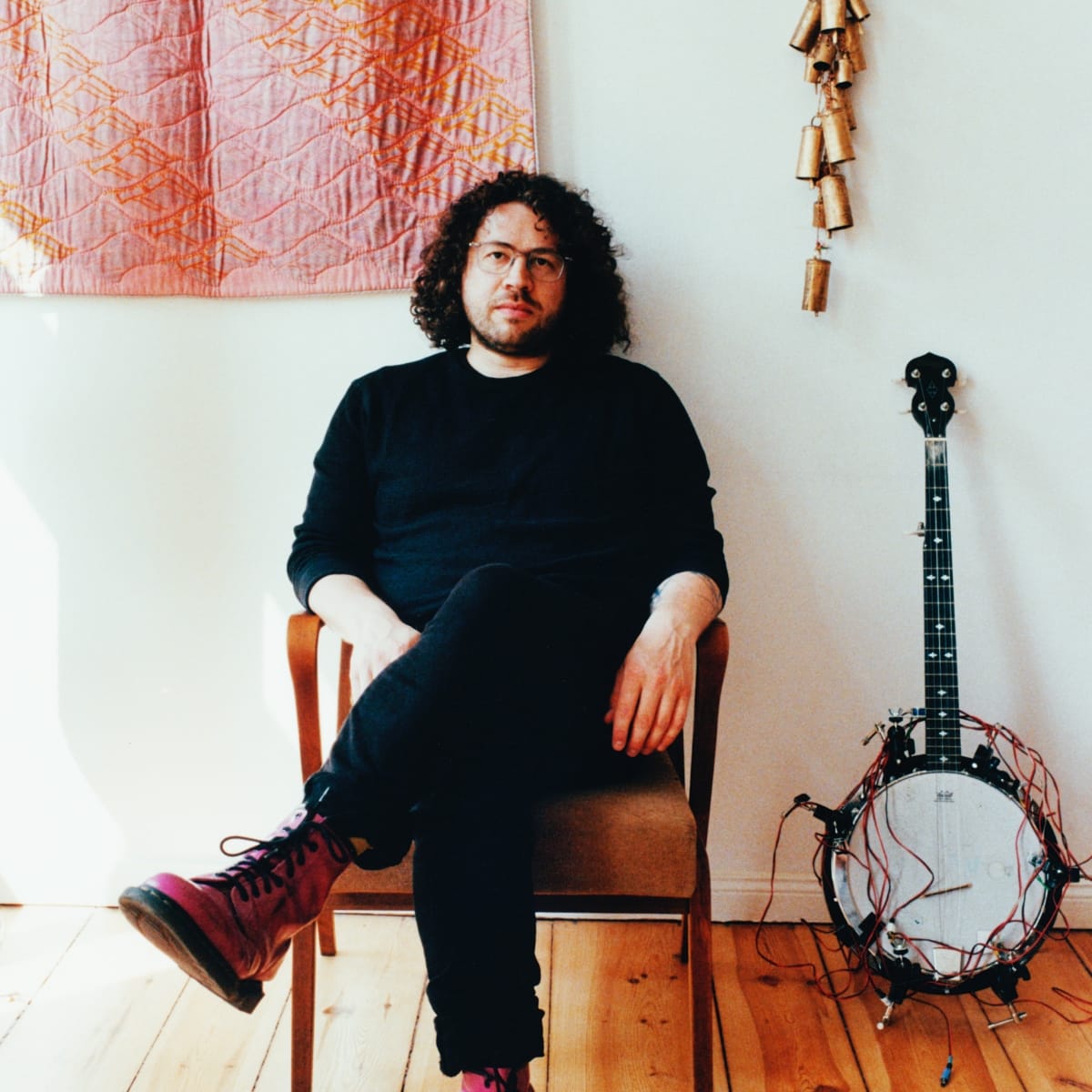
Chaz: Can you tell me about your relationship to the different instruments you use on the album? There's mountain dulcimer, banjo, electroacoustic sounds, a sequencer you built, autoharp, and more.
Weston: Instruments are often my starting point for a piece. Here, every single sound, field recording, instrument . . . everything on the record is from that trip through the South. Its fingerprint is on the core of the album. I'm not sure I could've made anything like this sitting at home in Berlin.
This may relate to my training as a trombonist. I've spent my entire life as an instrumentalist, spending the long hours early on honing the minutia of craft and building a relationship with an object that makes sound. I feel so hardwired to that type of creative process, learning by doing. In listening, too, I'm often paying the most attention to the instruments, the harmony, the orchestration, the texture of what the music feels like, rather than text or lyrics.
Fast forward, and I've been honing this expanded approach towards instruments over the past five or six years. Before the pandemic, most of my creative work was centered around the trombone, but I became interested in these other things, like regionalism and site specificity. I found I couldn't really dig into those interests with the horn; it almost felt like it got in the way. I then realized these instruments are not neutral sound sources that we make abstract sounds with. They're already loaded cultural objects, in terms of who plays them, who doesn't play them, what is deemed correct or incorrect when playing them, where they come from, and what they're made of. It's been interesting to bring this cultural or sociological dimension back to the technical domain, getting into the broader meanings embedded in technique and extended technique and things like that.
It's maybe political (lowercase p)—it's all about humans and our social relationships that are all encapsulated and sedimented in these objects. Some of them are centuries (and sometimes millennia) older than we are. They have this kind of life and history of their own, and we take part in that and join them for a stretch. We then leave and pass them down to others. So I like to imagine what an instrument has seen over its lifetime, what it has heard. What has it experienced? What kind of relationship has it had with a human being? How has it changed form? And then in this record, what do you do with those experiences, and how do you extend, communicate, or reimagine them? How do you work in such a way that you present a new side of the story, or acknowledge its history, and try to do something else with that?
Every note of a banjo is always resonating with every other note ever played, on a cosmic scale. It's maybe a little woo-woo adjacent, but I'm interested in this worldly animism perspective of sound. It gets at things like cross-cultural memory and resonances across time, which I do really believe in. I find instruments to be a really interesting point to start from, using them to explode outward and see all these different sides.
It's the thing where, with the autoharp piece, I could buy a new autoharp that would arguably sound 'better.' I could then retune it to this crazy fucked-up tuning, put everything in order, but the piece wouldn't be the same. Because it's about that instrument. It was about finding that instrument in that store on that trip, taking it out of the case, and then making that big bow motion in my dad's living room, and then all the sudden there was an entire world coming from the strings and the ticking clocks. If I had picked up even a different autoharp or played it in my studio, this spark might not have happened, and this entire piece would not have been made. And so it's about the particularity of these things. This leads you to connect the dots in your brain, and if enough of those links pop up, you make something you didn't think you would ever come up with, which I think is a beautiful thing.
Check out more like this:
 Arina Korenyu
 Chaz Underriner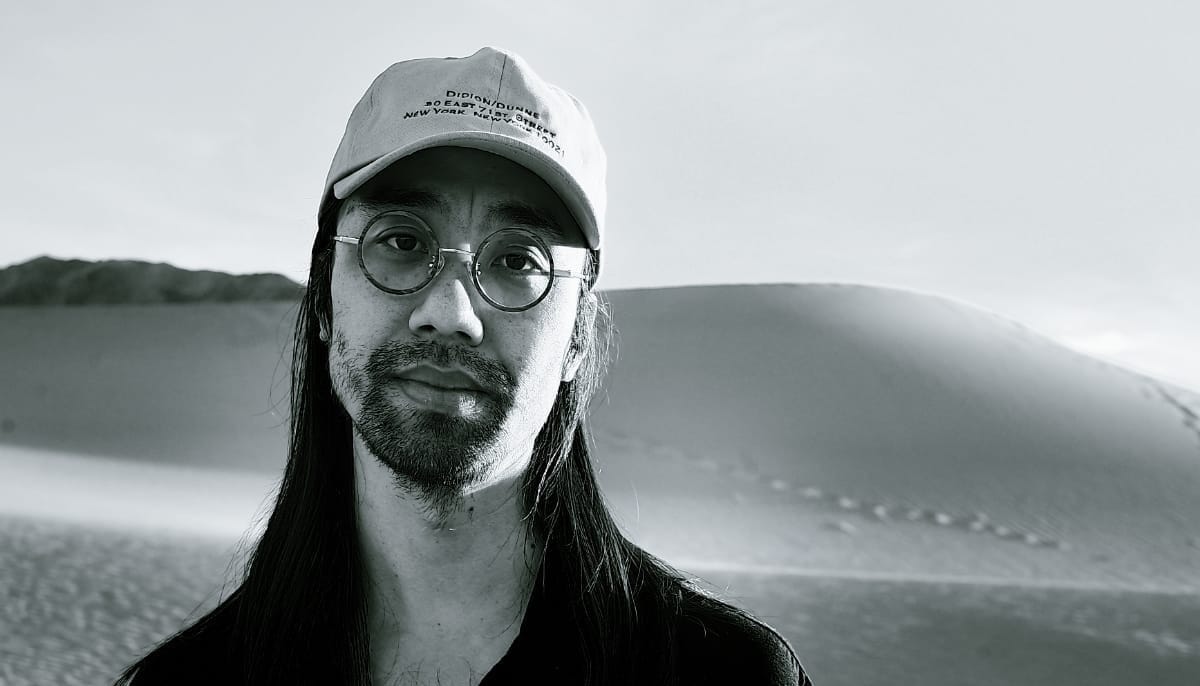


Comments